Does Barmenia's Equine Surgery Insurance Cover Hoof Abscess?
An analysis of hoof abscess cover under Barmenia's equine surgery insurance, including exceptions and conditions.
All details are taken from the provider's linked product page and the contract documents (IPID/policy conditions) published there; the insurer's documents prevail. Premiums, benefits and the insurance product itself may change – please verify the details directly with the partner before signing up; only the information provided there is binding.
 Katrin StraubManaging DirectorInsurance expert with over 20 years of experience in the insurance industry.
Published on
12 min read
Table of Contents
Barmenia's equine surgery insurance (Pferde-OP-Versicherung) does not cover hoof abscesses. Under the general insurance conditions, treatments and operations for hoof abscesses and hoof ulcers are explicitly excluded from cover. The reason is that these conditions are typically treated by a farrier rather than through surgical intervention by a vet. Operations for a vet-diagnosed case of canker (Hufkrebs), however, are not affected by this exclusion and are therefore covered.

Equine surgery insurance
Horse surgery insurance via nextsure: Three flexible tariffs, reimbursement up to twice the GOT rate, and free choice of clinic worldwide. Protect your horse from high surgery costs – digital, transparent and uncomplicated.
Learn moreThe coverage exclusion for hoof abscesses at Barmenia
A clear rule in the insurance conditions
This coverage exclusion directly affects horse owners and calls for a careful review of the contract documents. Barmenia Allgemeine Versicherungs-AG states clearly, in Section 3.2 n of its general insurance conditions, that operations and treatments for hoof abscesses and hoof ulcers, as well as their consequences, are not reimbursed. This rule applies equally across all tariff levels on offer, regardless of whether basic or premium cover was chosen. A hoof abscess is a purulent inflammation of the sensitive laminae, which is extremely painful for the animal. Treatment requires fast action. Even so, the policy does not apply here. Horse owners need to know about these specific exclusions so they aren't caught off guard by unexpected bills in an emergency. The conditions leave no room for interpretation on this point.
Why hoof ulcers are excluded
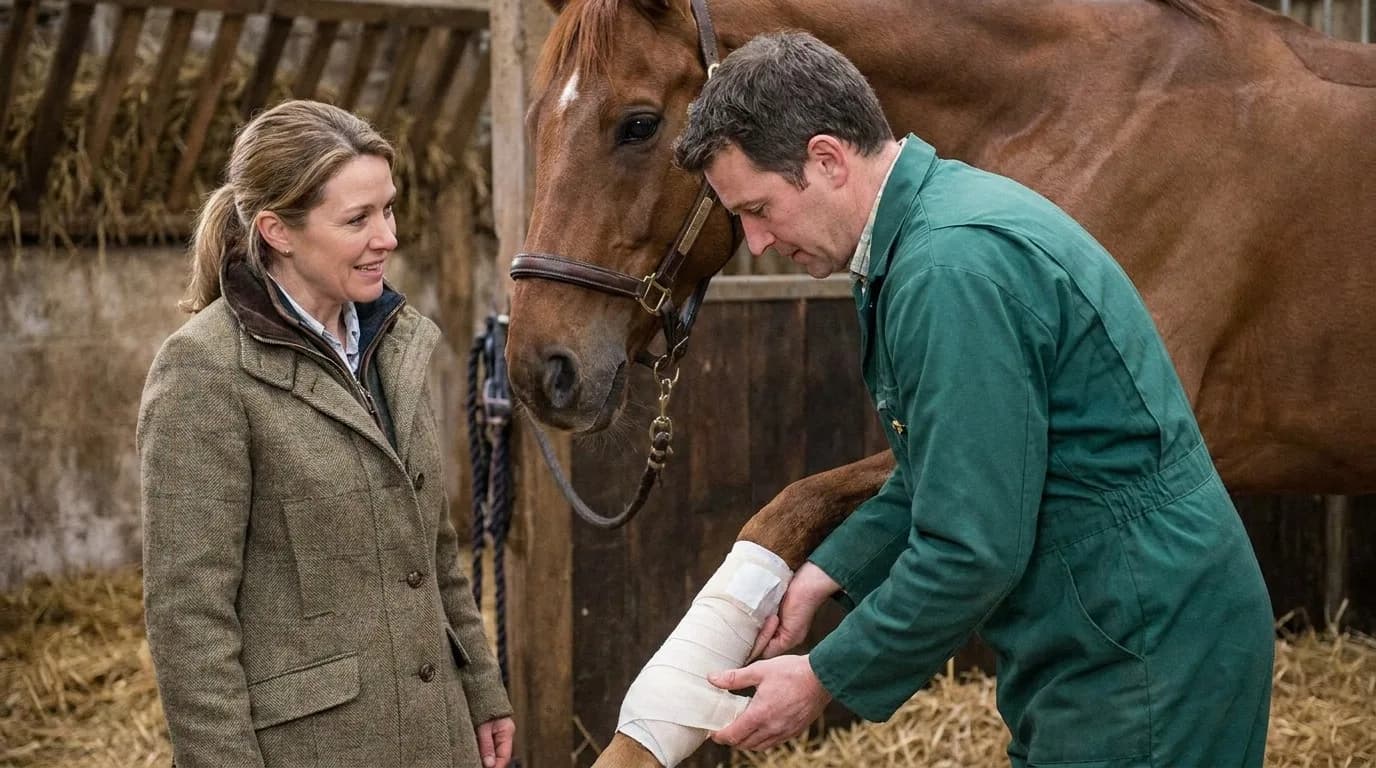
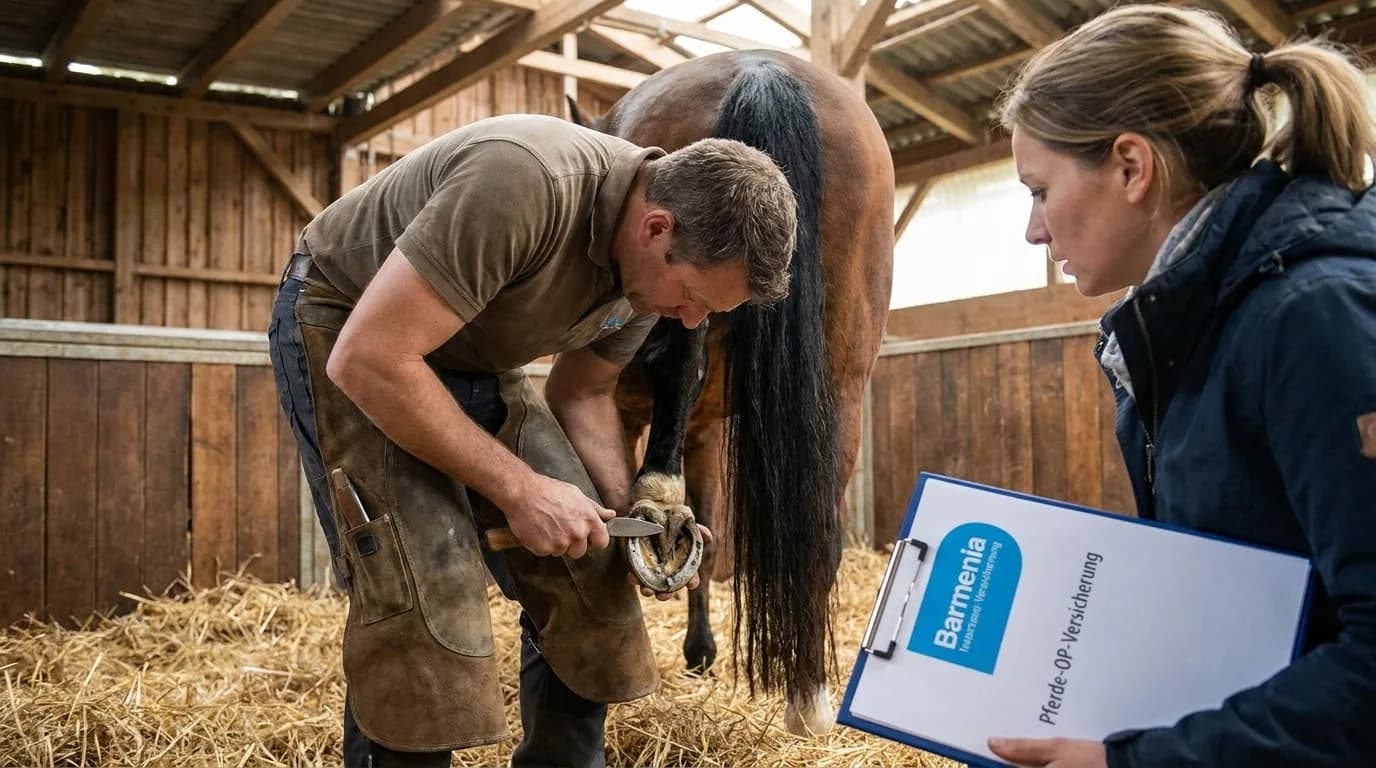
The reason for this contractual restriction lies in how such conditions are typically treated. In practice, hoof abscesses are mostly treated by farriers or hoof care specialists, who open them up using the proper technique [1]. A classic surgical procedure by a vet under anesthesia is not required in the vast majority of cases. The insurer calculates its premiums based purely on veterinary surgical risk. That is why hoof ulcers fall outside the defined scope of cover. This is also confirmed by a well-known portal for animal insurance in its detailed tariff analysis [2]. A pure surgery-cost policy simply isn't full medical cover. It only covers specific surgical risks.
Financial consequences for the horse owner
Horse owners therefore have to pay for hoof abscess treatment out of pocket. These costs vary widely depending on how severe the inflammation is and how much time the farrier or vet needs to spend. If complications arise, the financial burden can rise quickly. A look at high vet costs for horses shows how important it is to check the contract terms carefully before signing up. nextsure structures these tariff details. A precise comparison of contract terms prevents coverage gaps. That way, there are no financial surprises.
Canker and horn column as covered exceptions
Cost coverage for canker (Hufkrebs)
Canker (Hufkrebs) is an important exception within Barmenia's strict insurance conditions. While a simple abscess is contractually excluded, the insurer covers the costs of operations for vet-diagnosed canker [3]. Canker is a chronic inflammation of the sensitive laminae that leads to proliferating, often foul-smelling horn growth. Surgical removal of the affected tissue by a specialized vet is essential to cure the horse. This procedure fully meets the criteria for a covered operation. Cost coverage is contractually guaranteed. Owners of affected horses can rely on this protection. However, the diagnosis must be unambiguous.
Risks from a horn column (Hornsäule)
Another serious hoof condition is the so-called horn column (Hornsäule), which often has to be treated surgically. An untreated hoof ulcer or chronic inflammation of the sensitive laminae promotes the development of a horn column [4]. This forms a cylindrical mass of horn on the inside of the hoof capsule that grows inward. This horn column exerts massive pressure on the sensitive coffin bone. In the worst case, this ongoing pressure can lead to a fracture of the coffin bone [4]. Surgical removal of a horn column is a complex procedure, usually carried out at equine clinics. This is generally covered by the surgery policy.
Diagnosis and documentation
If such an operation is carried out under general or standing anesthesia by a vet, Barmenia's insurance cover generally applies. Distinguishing between an excluded hoof ulcer and a covered secondary condition such as a horn column requires a precise veterinary diagnosis. Horse owners should take a close look at the typical exclusions in equine surgery insurance to avoid misunderstandings. Careful documentation by the treating vet is absolutely crucial for the insurer's claims review. A complete medical record speeds up the reimbursement process considerably. Only this way can the medical necessity of the procedure be proven beyond doubt. This ensures smooth processing.
Defining a surgical procedure in the insurance conditions
What counts as an operation
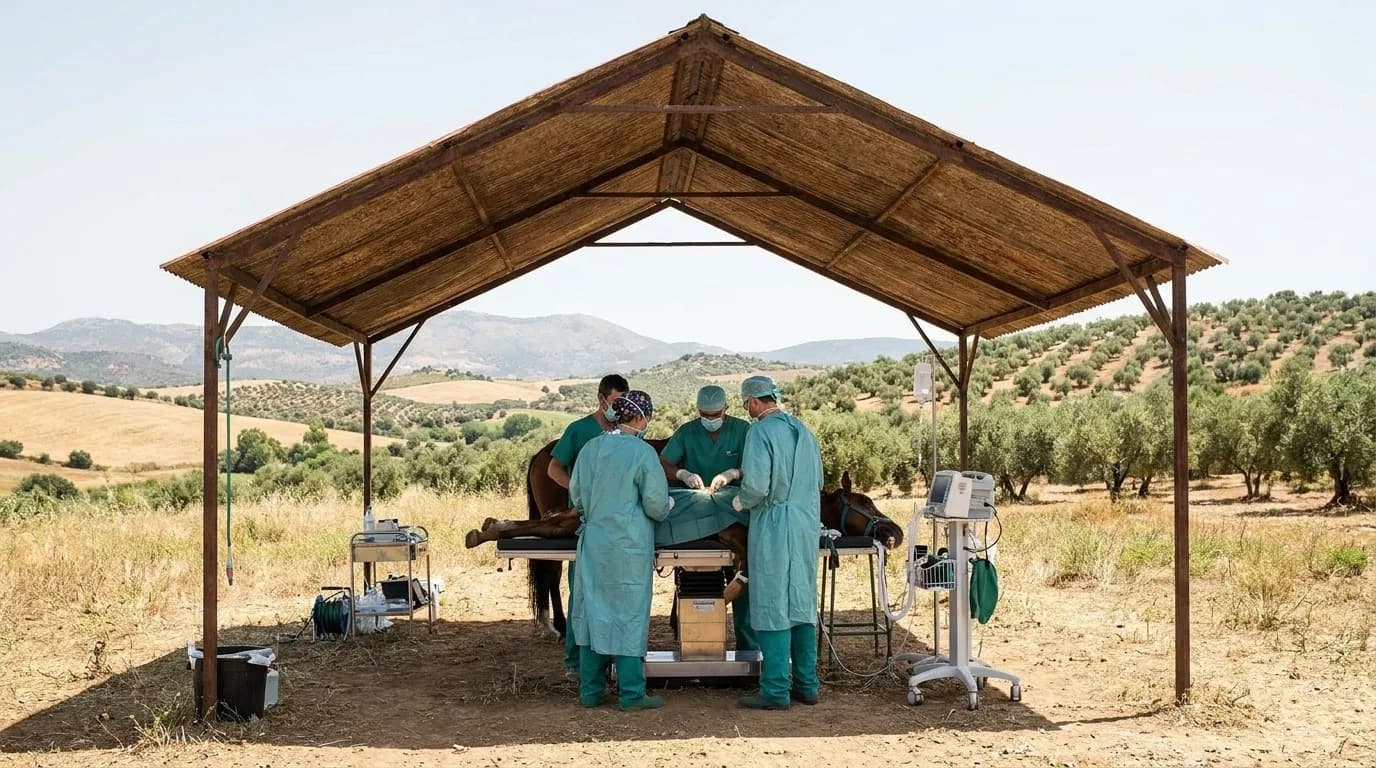
The definition of a surgical procedure sits at the core of the whole policy. Under Section 2.1.1.1 of the general insurance conditions, an insured event occurs when a veterinarily necessary operation is carried out due to illness or accident. An operation is defined as a surgical procedure on or in the animal's body. This procedure must be carried out under general anesthesia, sedation, local anesthesia, or standing sedation. The goal must always be to restore the animal's health. The skin or underlying tissue must be cut through more than just superficially. A simple injection does not meet these criteria. The precise definition protects against unjustified claims.
Co-insured procedures and dental treatments
Besides classic surgical procedures, certain other interventions are explicitly co-insured under the contract. This includes wound care by suturing or stapling, i.e. primary and secondary wound closure after an injury. Tooth extractions, including the surgical removal of so-called wolf teeth, are also covered by Barmenia's insurance. Root canal treatments are likewise covered, provided they take place under the anesthesia conditions mentioned above. Routine treatments such as simple tartar removal or cosmetic dental treatments, on the other hand, are strictly excluded. The exact benefits of equine surgery insurance are listed in detail in the contract text. It always pays to take a close look at the conditions. This avoids disappointment later on.
Pre-operative examinations
The pre-operative examination is also a fixed part of the covered scope. If an operation is actually carried out, the insurer reimburses the cost of the examination needed to establish the diagnosis. Further examinations that directly serve to prepare for the operation, such as X-rays, endoscopies, or lab tests, are also included. If the horse dies after anesthesia has begun, the operation is deemed to have been carried out. This applies even if the actual surgical procedure had not yet started. This clause covers the financial risk of anesthesia-related death. It gives the owner extra security in critical moments.
Requirements for a covered surgical procedure
- Veterinary necessity due to illness or accident.
- Carried out under general anesthesia, sedation, local anesthesia, or standing sedation.
- More than a superficial cut through the skin or tissue.
- The goal is to restore the horse's health.
Routine examinations and cosmetic treatments are excluded.
Waiting periods and their effect on cost coverage
General waiting periods and colic
Waiting periods play a central role at the start of the policy and for cost coverage. Cover for each insured horse begins only after a contractually defined waiting period has elapsed. The general waiting period for insured events due to illness is three months at Barmenia. An extremely important exception is abdominal surgery for life-threatening colic. For this emergency operation, a much shorter waiting period of just five days applies. If clinically relevant symptoms of an illness appear before the waiting period ends, that illness is permanently excluded from cover. This prevents people from taking out a policy for animals that are already sick. This rule protects the pool of policyholders.
Special waiting periods for joints and castration
Special waiting periods apply to specific joint operations and medically necessary castrations. A special waiting period of twelve months applies to joint operations for isolated shadowing, osteochondrosis (OC), osteochondrosis dissecans (OCD), Birkeland fractures, or chips. A waiting period of six months applies to castrations that are medically necessary due to gynecological, andrological, or oncological conditions. This includes inflammation or tumorous changes of the horse's reproductive organs. Voluntary castration without a medical indication is generally excluded from cover. Horse owners must factor in these deadlines when planning elective procedures. Forward planning is essential here.
Waiting period waived for accidents
For accidents, the waiting period is waived entirely — cover applies immediately. If the treatment is exclusively and demonstrably the result of a sudden accidental event, the insurer pays from day one. Health damage from the unintentional ingestion of poisoned bait or contaminated feed also counts as an accident. In addition, the waiting period can be waived if there was previous cover that continues without a break in time. The existing insured period under the prior policy is credited toward the waiting period of the new contract. This offers a seamless transition for policyholders switching to optimize their tariff. A switch is therefore possible without risk.
| Event / diagnosis | Waiting period |
|---|---|
| General illnesses | 3 months |
| Abdominal surgery (colic) | 5 days |
| Joint operations (OC, OCD, chips) | 12 months |
| Medically necessary castration | 6 months |
| Accidents and poisoned bait | No waiting period |
The waiting period is partly waived when switching seamlessly from a prior policy.
Aftercare and physiotherapy under premium cover
Cost coverage for aftercare
Aftercare is an essential part of the horse's full recovery. The reimbursable costs of an operation also include the expenses for aftercare that follows directly afterward. This must be directly connected to the surgical procedure. The goal is to restore the horse's health or prevent an impending deterioration. The number of covered aftercare days is documented precisely in the individual policy. If the insurance contract ends before aftercare is complete, ongoing treatments remain covered. This gives the horse owner planning certainty during the critical healing phase. Recovery comes first.
Additional benefits under the premium tariff
Barmenia distinguishes between different tariff levels that offer different benefits for rehabilitation. Under premium cover, extended physiotherapy benefits are included. Up to five physiotherapy treatments of a maximum of 60 minutes each are additionally covered. Vets or certified equine physiotherapists carry out these treatments following a referral. Alternative and complementary treatment methods such as acupuncture, homeopathy, laser therapy, or magnetic field therapy are also reimbursable. The condition is that their effectiveness is supported by veterinary science. Such therapies often considerably speed up healing after major orthopedic procedures. Premium cover offers real added value here.
Medication and inpatient stays
Reimbursement of medication and consumables is clearly regulated across all tariffs. The insurance covers the cost of medication, consumables, and aids if these were prescribed by the treating vet. Inpatient costs at an equine clinic, as well as regenerative therapies such as stem cell therapy, are covered to a limited extent depending on the chosen tariff. Horse owners should understand the difference between surgery insurance and full health insurance for horses. A pure surgery policy does not cover conservative treatments that don't involve a surgical procedure. Anyone looking for all-round cover needs to extend their insurance scope accordingly. Only then is the animal comprehensively protected.
Waiver of termination and contract terms in detail
Security through waiver of termination
A waiver of the right to terminate offers horse owners long-term security and protects against losing cover. Barmenia offers a particular advantage regarding contract duration under premium cover. Provided the insured horse was no older than seven years at the start of cover, the insurer waives its ordinary right of termination at the expiry date from the start of the seventh year of insurance. This waiver also applies to extraordinary termination after a claim has occurred. That means the insurer cannot cancel the policy just because the horse needs surgery more often as it ages. This represents a measurable quality advantage. It guarantees lifelong cover.
Customer-friendly notice periods
The regular notice periods are extremely customer-friendly and flexible. During the originally agreed contract term, the policyholder can terminate the contract in text form at expiry, without having to observe a specific notice period. From the start of the first renewal year, the contract can even be terminated daily. The policy then ends at the end of the day on which the notice of termination was received by the insurer. The insurer itself has an ordinary right of termination with three months' notice as of the respective expiry date. This flexibility lets the customer respond to changed circumstances at any time. You are not locked into a rigid contract.
Exceptions to the waiver of termination
Exceptions to the waiver of termination apply in the case of serious breaches of duty by the policyholder. The insurer retains its right of termination if the pre-contractual disclosure duty is breached, if contractual obligations are not observed, or if due premiums are not paid. Revoking the SEPA direct debit mandate also entitles the insurer to terminate the contract immediately for cause. The nextsure platform advises customers in detail on these complex contract clauses. Transparency about rights and obligations prevents coverage gaps in the event of a claim. A well-informed policyholder can assert their claims much better and faster in an emergency. Knowledge protects against nasty surprises.
Alternatives and additions to pure surgery-cost insurance
Full equine health insurance
Sensible alternatives considerably expand the owner's financial protection. Since pure surgery-cost insurance does not cover conservative treatments such as for a hoof abscess, many owners look for more comprehensive solutions. Full equine health insurance offers a much broader safety net for the animal. It covers not only the cost of surgical procedures, but also outpatient and inpatient medical treatment. This includes diagnostics, medication, and dressing materials for illnesses that don't require surgery. Premiums for full cover are naturally calculated higher. In exchange, the financial risk from everyday illnesses drops drastically. It is an investment in security.
Specialized offerings from nextsure
nextsure focuses as a platform on these niche products. Besides brokering pure surgery tariffs, nextsure also offers comprehensive full health insurance. A particular focus is on cover for hobby and farm animals. nextsure analyzes individual needs and compares specific tariffs. This ensures that common but non-surgical conditions, such as hoof ulcers, colic that doesn't require surgery, or respiratory illnesses, are also financially covered. A tailored tariff prevents costly coverage gaps in everyday life. Expert advice is essential here.
Combining with horse owner liability insurance
Combining different components is often the best way to achieve full protection. Besides health insurance, horse owner liability insurance is absolutely essential for every owner. It protects against existence-threatening damage claims from third parties if the horse causes injury to a person, property damage, or financial loss. nextsure lets customers manage all these specific policies digitally and compare them transparently. The clear advantage lies in bundling all policies in one place. This considerably reduces the administrative burden for the horse owner and ensures maximum clarity. Everything stays in one place.
Billing process and direct payment to the equine clinic
Deadlines and invoice requirements
The billing process is clearly and bindingly regulated in the insurance conditions. When a claim is made, the policyholder must promptly prove the costs incurred by submitting the invoice. The deadline for this is at the latest one month after the veterinary treatment ends. The invoice must show the owner's name, the horse's identification number, the diagnosis, and the billed items according to the veterinary fee schedule (GOT). Special examination documents must be submitted on request from the insurer. Correct invoicing considerably speeds up payment. Errors delay the process.
Advantages of direct billing
Direct billing with the treating equine clinic is straightforward with Barmenia. At the policyholder's explicit instruction, the insurer settles the services provided directly with the vet or equine clinic. The reimbursable amount is transferred directly to the service provider. This is a huge relief for the horse owner, since they don't have to front thousands of euros for expensive operations. It is strongly recommended to clarify this approach with the clinic in advance. Not every clinic accepts direct billing with the insurer. Clarifying this beforehand is important.
Reimbursement under the fee schedule (GOT)
Reimbursement is always based on the official rates of the veterinary fee schedule. For veterinary services provided as part of emergency care, the tariffs reimburse fees up to four times the standard rate, plus the statutory emergency service fee. The condition is that the services were provided at night, on weekends, or on public holidays, and that a genuine emergency existed. HUK-COBURG, incidentally, offers its equine surgery insurance in cooperation with Barmenia as the risk carrier [5]. Processing follows the same strict quality standards. Horse owners benefit here from established, proven processes. The standards are high.
Frequently asked questions
- Are hoof abscesses excluded at Barmenia?
Yes, under Barmenia's general insurance conditions, operations and treatments for hoof abscesses and hoof ulcers, as well as their consequences, are explicitly excluded from cover. These treatments are typically carried out by a farrier and do not fall under the insured surgical risk.
- Does Barmenia pay for canker (Hufkrebs)?
Yes, operations for vet-diagnosed canker are exempt from the general exclusion for hoof abscesses. If a surgical procedure to treat canker is medically necessary and carried out under anesthesia, Barmenia covers the costs agreed under the tariff.
- Which hoof conditions are not covered?
Besides hoof abscesses and hoof ulcers, all conservative treatments of hoof conditions that don't require a surgical procedure under anesthesia are also not covered. A pure surgery-cost policy only pays out if the skin or tissue is cut through more than superficially.
- Why does Barmenia exclude hoof ulcers?
In practice, hoof ulcers are mostly treated by farriers or hoof care specialists by opening up the hoof, without requiring a vet or anesthesia. Since the surgery insurance covers purely veterinary surgical procedures, these treatments are contractually excluded.
- What does Barmenia pay for hoof conditions?
Barmenia only pays for hoof conditions if they result in a covered operation. One example is the surgical removal of a horn column or the treatment of canker, provided the procedure is carried out by a vet under general or standing anesthesia.
- Is there a waiting period for colic surgery at Barmenia?
Yes, there is a waiting period, but it is much shorter. For abdominal surgery due to colic, Barmenia applies a waiting period of just five days from the start of cover. For regular illnesses, the general waiting period is three months.
Sources
Conclude directly online
Verified partner tariffs at no extra cost. The button takes you straight to the provider's calculator.
 Barmenia
Horse surgery insurance
Surgery cost cover for horses in case of illness and accidents, including diagnostics and after-care.
- Waiting period:
- 3 months (colic surgery: 5 days, accidents: none)
- Coverage abroad:
- worldwide, up to 12 months
- Maximum benefit:
- depends on the cover level, as stated in the policy
- Surgery costs for illness and accidents, including tooth extractions and root canal treatment
- Pre-surgical examination (X-ray, endoscopy, biopsy, lab work)
- After-care including acupuncture, homeopathy, physiotherapy, laser therapy
- Emergency veterinary service up to 4x the standard veterinary fee schedule (GOT) rate plus the emergency callout fee
- Premium cover: up to 5 physiotherapy sessions (max. 60 minutes each) after the after-care period ends
- Once per animal: surgery costs for a birth-related, medically necessary caesarean section
Key exclusions
- Illnesses and developmental abnormalities known at the time of application
- Hoof abscesses and hoof ulcers (exception: hoof cancer)
- Surgery due to cryptorchidism
- Neutering that isn't medically necessary
Service-Champions GOLD: Nr. 1 der Versicherer im Multikanalvertrieb (ServiceValue, 10/2024)
Barmenia (Anbieter der Pferde-OP-Versicherung)
Special waiting periods: 12 months for joint surgery (chip fragments, OC/OCD, Birkeland fractures), 6 months for medically necessary neutering; Premium cover includes a waiver of the insurer's right to cancel from the 7th insurance year.
Fact sheet: benefits, exclusions and waiting periods in detail
All details are taken from the provider's linked product page and the contract documents (IPID/policy conditions) published there; the insurer's documents prevail. Premiums, benefits and the insurance product itself may change – please verify the details directly with the partner before signing up; only the information provided there is binding.
Information last updated: July 2026 · Source: provider product information (IPID/policy conditions)