Does Barmenia pay for an MRI scan on a horse?
An MRI is covered as imaging under a sublimit, but only where surgery follows. What a standing scan costs and when you pay it yourself.
All details are taken from the provider's linked product page and the contract documents (IPID/policy conditions) published there; the insurer's documents prevail. Premiums, benefits and the insurance product itself may change – please verify the details directly with the partner before signing up; only the information provided there is binding.
 Katrin StraubManaging DirectorInsurance expert with over 20 years of experience in the insurance industry.
Published on
6 min read
Table of Contents
Under clause 2.3.2 b), the Barmenia horse surgery policy reimburses an MRI scan as imaging, subject to a sublimit — but only where an operation actually follows.
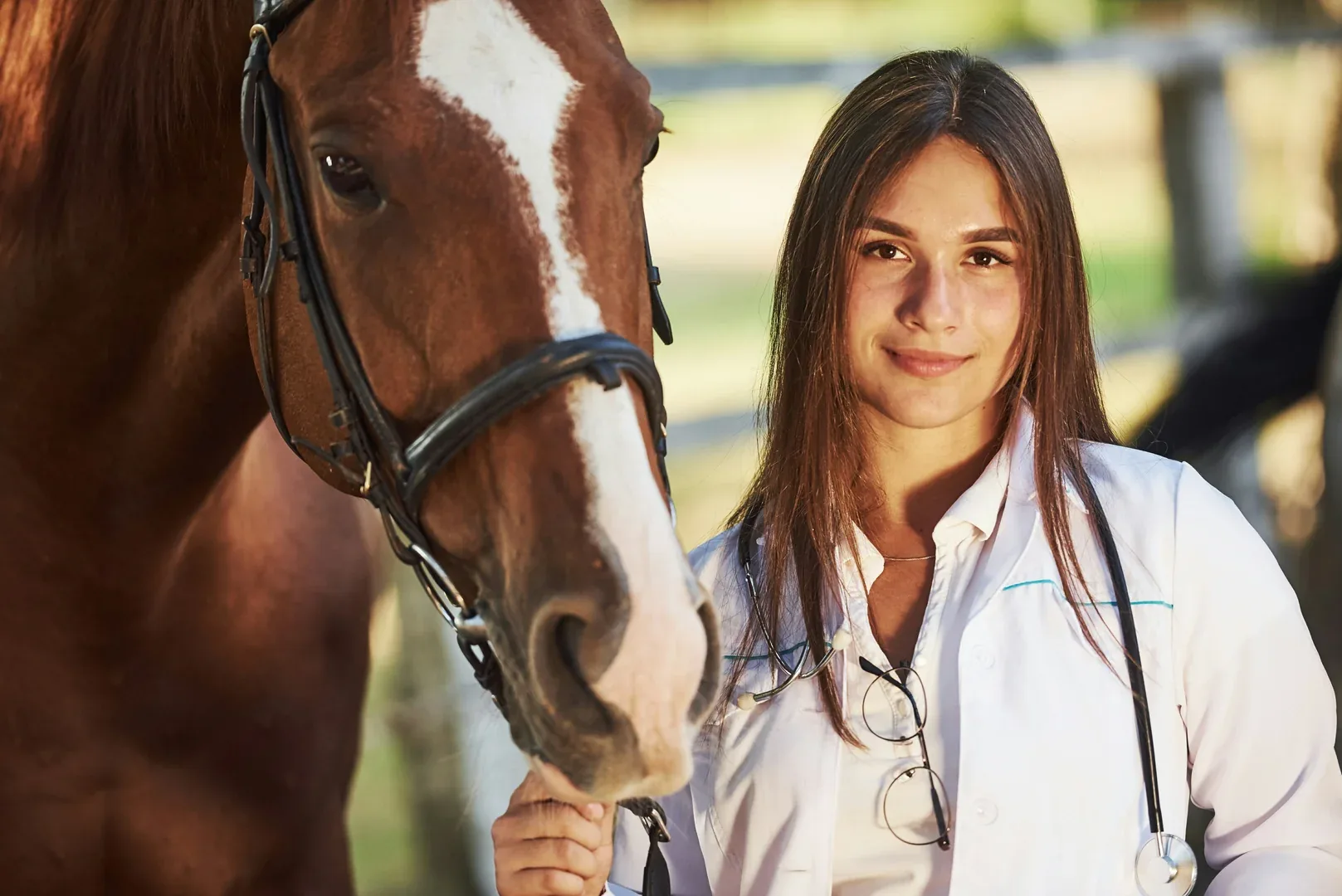
Equine surgery insurance
Horse surgery insurance via nextsure: Three flexible tariffs, reimbursement up to twice the GOT rate, and free choice of clinic worldwide. Protect your horse from high surgery costs – digital, transparent and uncomplicated.
Learn moreDoes the Barmenia horse surgery policy pay for an MRI?
Yes, the Barmenia horse surgery policy covers magnetic resonance imaging (MRI) on a horse, but ties it to particular contractual conditions. In the policy wording an MRI counts as diagnostic imaging and is covered under clause 2.3.2 b) of the conditions (AVB as at 01.01.2024) as part of a covered operation.
The contractual framework and the sublimit
Reimbursement for imaging does not run without limit against the main sum insured; it is capped by a specific sublimit per insured event or per policy year. Customers will find the ceiling that applies to them in their own policy schedule.
- Veterinary necessity: the MRI must be required to diagnose an acute illness or injury.
- An operation must follow: the scan is only reimbursed where surgery is carried out directly afterwards.
- The contractual sublimit: the maximum for imaging agreed in the policy schedule applies.
For owners, that gives financial predictability — provided the sequence of investigations is agreed in advance with the vet and the insurer.
When does a horse actually need an MRI?
In modern equine orthopaedics, magnetic resonance imaging is the leading method where the cause of lameness in the lower limb is unclear. Because the thick hoof capsule is impenetrable to ultrasound and digital X-rays show mainly bony structures, deep soft-tissue damage often goes undetected without an MRI.
The medical indications at a glance
Vets turn to MRI above all where conventional investigations produce no clear cause but surgery is on the table. Typical conditions involve navicular syndrome, tears in the deep digital flexor tendon or inflammation of the navicular ligaments.
| Method | Tissue it shows | Where it is used |
|---|---|---|
| X-ray (digital) | Bony structures and joint spaces | An overview for fractures and bone spavin |
| Ultrasound (sonography) | Superficial tendons and ligaments | Assessing tendons in the suspensory apparatus |
| Magnetic resonance imaging (MRI) | Soft tissue in the hoof, cartilage and bone marrow | Navicular disease, deep flexor tendon, ligaments |
The scan gives the surgeon a precise slice-by-slice picture of the tissue, so the procedure can be planned exactly and the operative risk kept to a minimum.
Costs: why is an MRI so expensive?
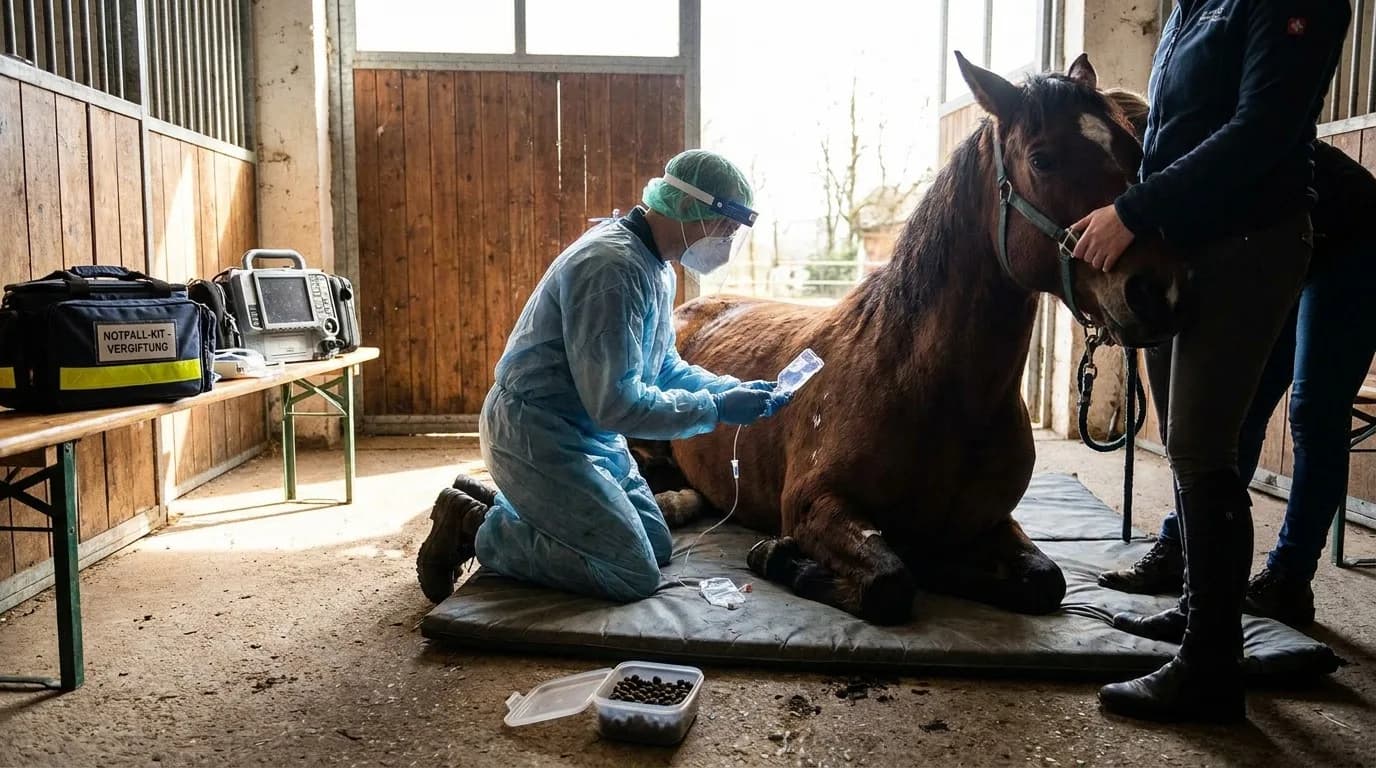
Magnetic resonance imaging is among the most expensive single investigations in veterinary medicine. Beyond buying and maintaining the scanner, imaging a horse calls for specialist staff and careful monitoring under medication.
Standing MRI versus high-field MRI under general anaesthetic
Equine practice distinguishes between a standing MRI on the sedated horse and a high-field MRI under general anaesthesia. Magnetic resonance imaging appears as its own item in the schedule to the scale of fees for veterinary surgeons (GOT 2022); under section 2(1) GOT, each fee is set, unless provided otherwise, at one to three times the fee rate. At the usual double rate, and including sedation and interpretation, a standing MRI of a leg at an equine clinic generally comes to 900 to 1,500 euros in total.
- The basic GOT fee for the MRI: the scan is its own item in the schedule and is normally billed at one to three times the rate.
- Sedation and monitoring: continuous medication to keep the horse still through one to three hours of scanning.
- Specialist interpretation: detailed reading of the images by veterinary radiologists.
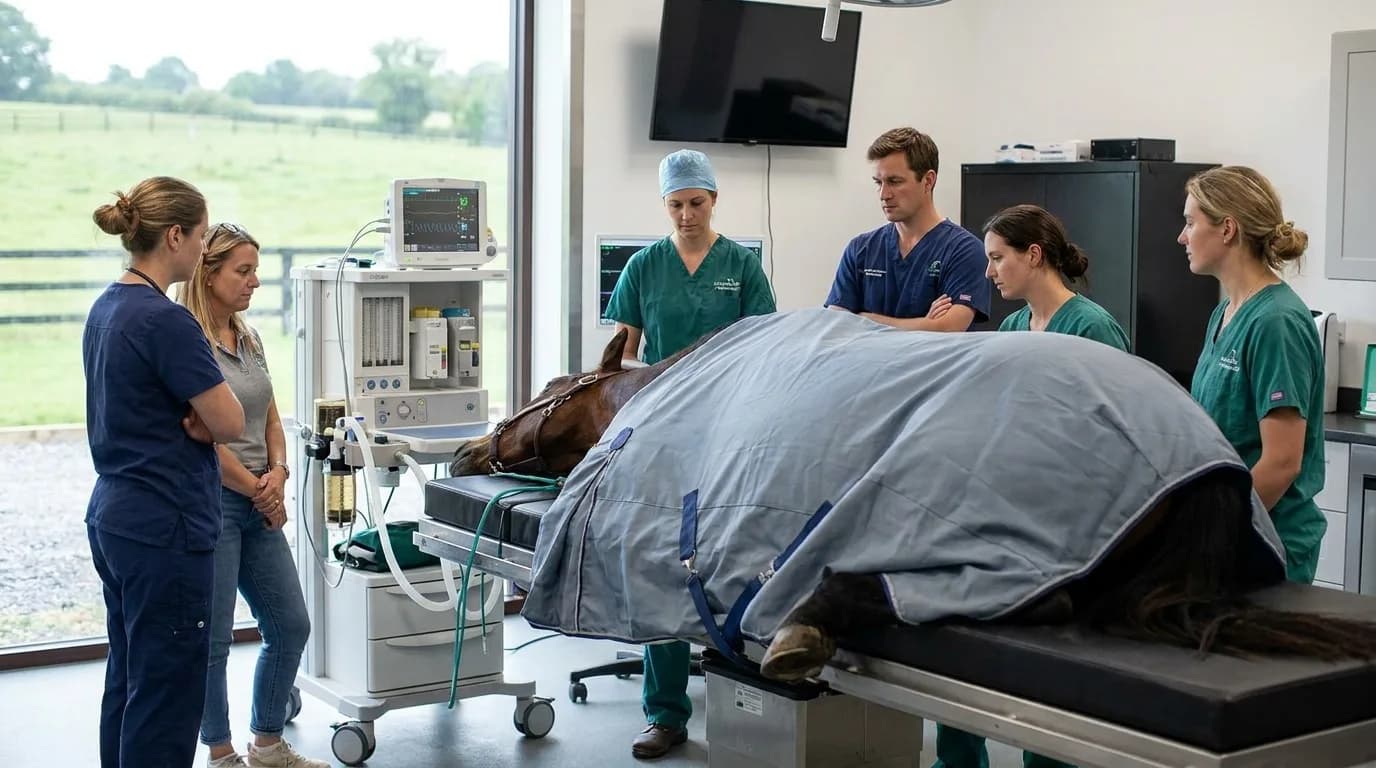
- General anaesthesia and clinic stay: high-field scans add anaesthetic costs and inpatient care.
Where scanning happens under general anaesthesia, owners should also weigh the anaesthetic risk to the horse — which the policy does cover.
Does an MRI count as the work-up or as the operation?
Barmenia's conditions draw a strict line between the operation itself and the work-up. Contractually, an MRI is not a surgical procedure in its own right.
How clause 2.1.1.1 defines an operation
Under clause 2.1.1.1, an operation is a veterinarily necessary surgical procedure under anaesthesia, local anaesthetic or sedation in which skin or tissue is divided over more than a single point. Since an MRI divides no tissue, it falls under the pre-operative examinations.
Where the images are taken on the day of surgery or the day before, Barmenia reimburses them within the agreed sublimit for imaging.
What happens if no operation follows the MRI?
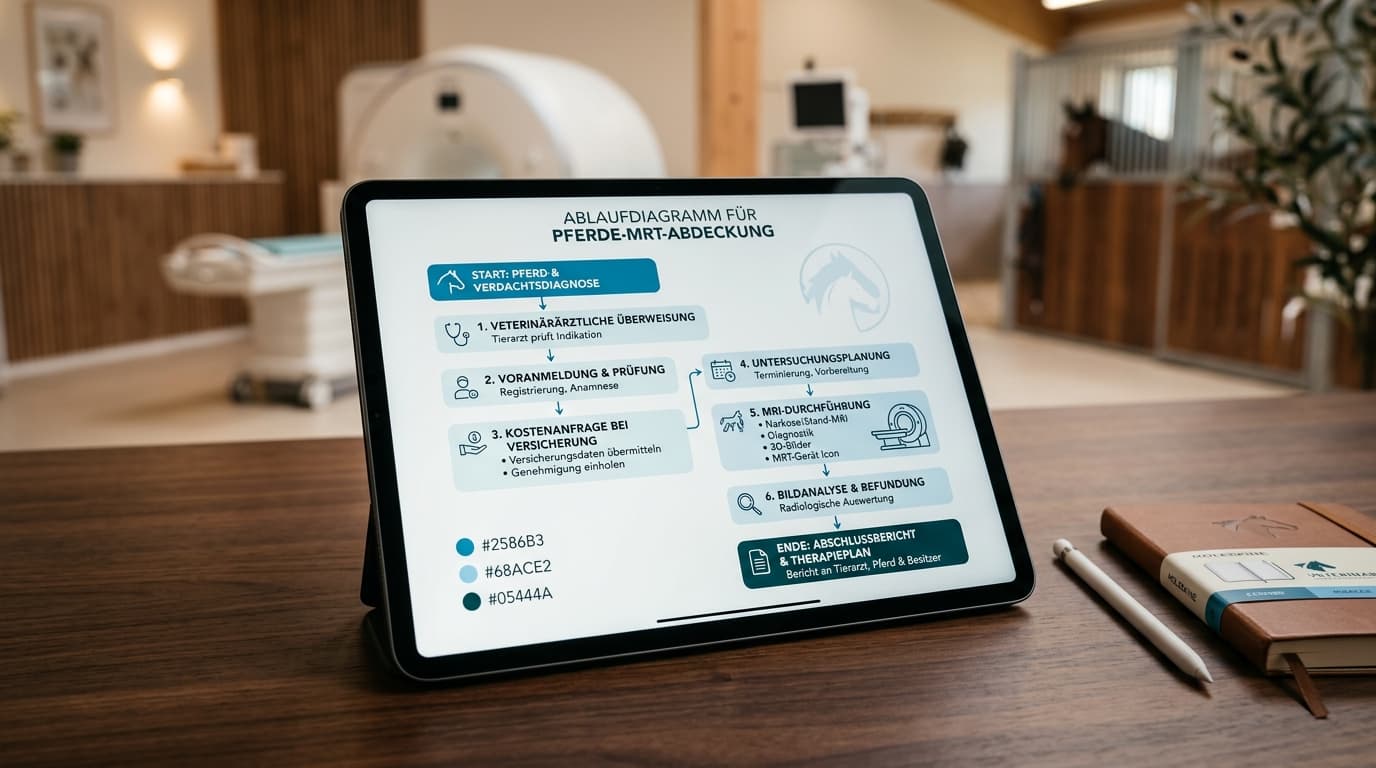
This is where the greatest financial risk sits for many owners: if the scan reveals a condition that cannot or should not be treated surgically, a surgery-only policy refuses to reimburse the cost of the diagnosis.
No insured event where treatment stays conservative
Under the conditions, the pre-operative examination is expressly insured only where a covered operation actually follows. If the scan shows that rest, physiotherapy or specialist shoeing is all that is needed, no insured event arises and the owner carries the cost of the MRI.
- Discuss it with your vet: before booking the scan, establish how likely an operation afterwards really is.
- Check the conditions and the sublimit: look up the ceiling for imaging in your policy schedule.
- Talk the strategy through: where conservative treatment is likely, settle in advance who pays.
The same criteria apply to treatment at specialist clinics abroad; our guide to cover at clinics abroad has the detail.
Conclusion: check the conditions and brief the clinic
An MRI delivers valuable insight where joint and soft-tissue problems are unclear, but it is a substantial financial investment. The Barmenia horse surgery policy covers it where the scan prepares for an operation that is actually carried out and the amount falls within the contractual sublimit.
A checklist for owners before the scan
- Check the sublimit in your schedule: what maximum for imaging is agreed for your horse?
- Establish whether surgery will follow: ask the vet to confirm that a matching finding will lead to an operation.
- Brief the clinic: point out the contractual sublimit early.
- Take independent advice: for questions about policies and conditions, the transparent comparison on nextsure helps.
At nextsure we help you find cover tailored to your horse. Check your policy conditions now, or compare strong horse surgery policies.
Frequently asked questions
- When does a horse actually need an MRI?
An MRI is often needed to diagnose injuries to soft tissue, tendons or ligaments inside the hoof capsule precisely. Ordinary ultrasound cannot penetrate the horn, so magnetic resonance imaging is indispensable if surgery is to be targeted.
- Does the MRI count as the work-up or as the operation?
Contractually an MRI is not an operation, because no surgical procedure takes place. Under a horse surgery policy it counts as a pre-operative examination (imaging) and is therefore tied to an operation actually happening.
- What happens if no operation follows?
If the scan shows that an operation is not necessary, or no longer possible, no insured event arises under a surgery-only policy. The policy then does not cover the MRI, and the owner has to pay for the scan.
- What does an MRI scan on a horse cost?
An MRI is a demanding investigation. For a standing MRI of a leg, the scan costs between 900 and 1,500 euros at the usual double fee rate. Including the work-up, sedation and aftercare, or under general anaesthesia, the total can be considerably higher.
- Does Barmenia cap what it pays for an MRI?
Yes. Imaging such as X-rays, CT and MRI is capped by a sublimit under clause 2.3.2 b) of the conditions. The exact ceiling is set out individually in each customer's own policy schedule.
- How long does an MRI scan on a horse take?
An MRI on the standing, sedated horse generally takes between one and three hours. Hundreds of slices are acquired to separate the different layers of tissue precisely, which is why the horse has to be kept still throughout.
Sources
Conclude directly online
Verified partner tariffs at no extra cost. The button takes you straight to the provider's calculator.
 Barmenia
Horse surgery insurance
Surgery cost cover for horses in case of illness and accidents, including diagnostics and after-care.
- Waiting period:
- 3 months (colic surgery: 5 days, accidents: none)
- Coverage abroad:
- worldwide, up to 12 months
- Maximum benefit:
- depends on the cover level, as stated in the policy
- Surgery costs for illness and accidents, including tooth extractions and root canal treatment
- Pre-surgical examination (X-ray, endoscopy, biopsy, lab work)
- After-care including acupuncture, homeopathy, physiotherapy, laser therapy
- Emergency veterinary service up to 4x the standard veterinary fee schedule (GOT) rate plus the emergency callout fee
- Premium cover: up to 5 physiotherapy sessions (max. 60 minutes each) after the after-care period ends
- Once per animal: surgery costs for a birth-related, medically necessary caesarean section
Key exclusions
- Illnesses and developmental abnormalities known at the time of application
- Hoof abscesses and hoof ulcers (exception: hoof cancer)
- Surgery due to cryptorchidism
- Neutering that isn't medically necessary
Service-Champions GOLD: Nr. 1 der Versicherer im Multikanalvertrieb (ServiceValue, 10/2024)
Barmenia (Anbieter der Pferde-OP-Versicherung)
Special waiting periods: 12 months for joint surgery (chip fragments, OC/OCD, Birkeland fractures), 6 months for medically necessary neutering; Premium cover includes a waiver of the insurer's right to cancel from the 7th insurance year.
Fact sheet: benefits, exclusions and waiting periods in detail
All details are taken from the provider's linked product page and the contract documents (IPID/policy conditions) published there; the insurer's documents prevail. Premiums, benefits and the insurance product itself may change – please verify the details directly with the partner before signing up; only the information provided there is binding.
Information last updated: July 2026 · Source: provider product information (IPID/policy conditions)