Is medication after horse surgery reimbursed?
Does horse surgery insurance reimburse medication? The facts on cover for painkillers and antibiotics under Barmenia's conditions.
All details are taken from the provider's linked product page and the contract documents (IPID/policy conditions) published there; the insurer's documents prevail. Premiums, benefits and the insurance product itself may change – please verify the details directly with the partner before signing up; only the information provided there is binding.
 Katrin StraubManaging DirectorInsurance expert with over 20 years of experience in the insurance industry.
Published on
6 min read
Table of Contents
After a horse operation Barmenia covers the cost of medication such as painkillers and antibiotics, as long as a vet has prescribed them. Supplementary feed and vitamins are excluded, even when they are meant to support healing.
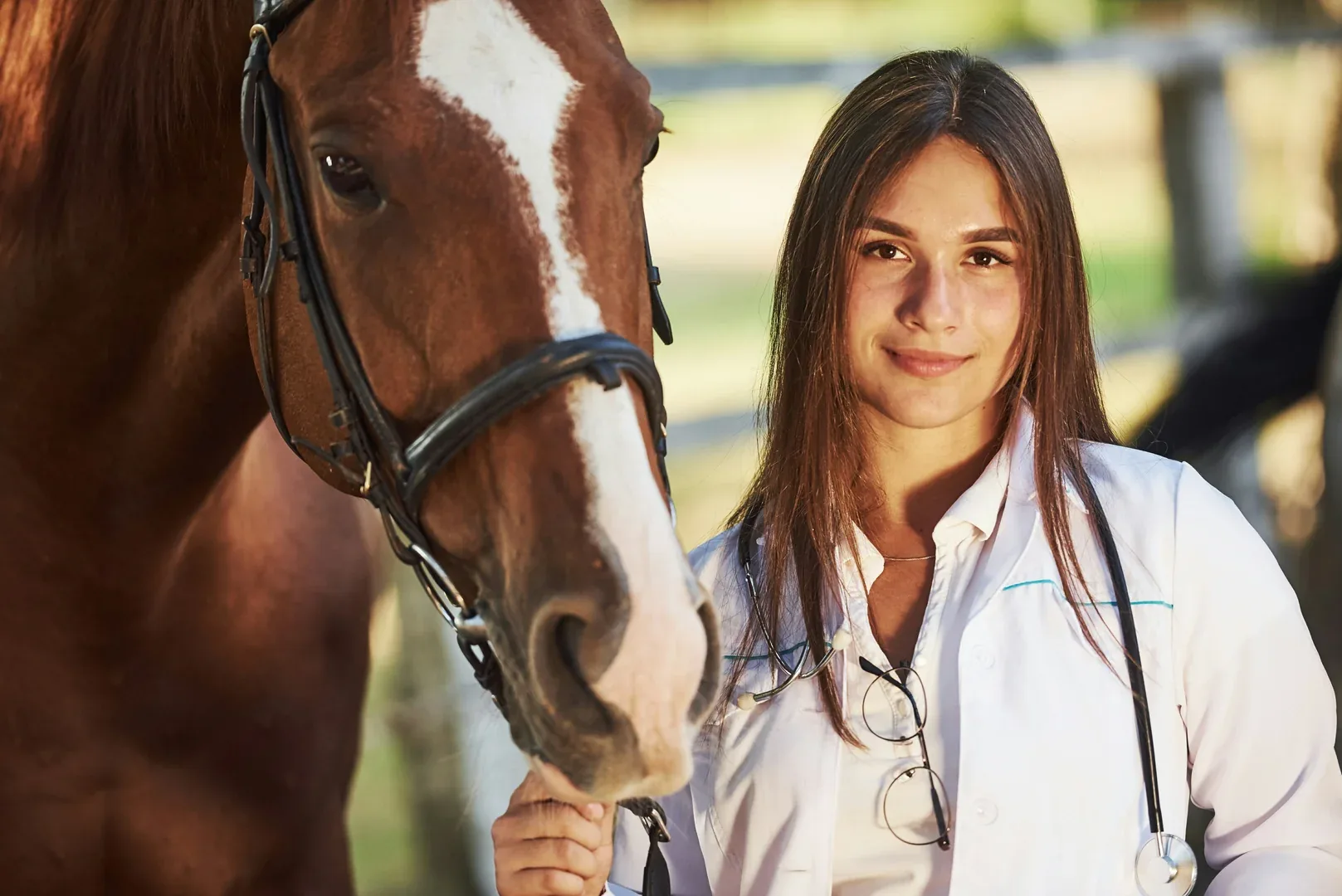
Equine surgery insurance
Horse surgery insurance via nextsure: Three flexible tariffs, reimbursement up to twice the GOT rate, and free choice of clinic worldwide. Protect your horse from high surgery costs – digital, transparent and uncomplicated.
Learn moreThe short answer: reimbursement of medication after horse surgery
Yes, medication and consumables are reimbursed in principle after an operation on a horse. The condition is that the medicines are directly connected to the insured surgical procedure and that the treating vet has prescribed or dispensed them. This cost coverage is set out explicitly in clause 2.3.5 of the general insurance conditions; the authoritative document is Barmenia's AVB Pferde-OP-Kosten as at 01.01.2024.
The coverage is not unlimited, however. Clause 3.2 f) of the insurance conditions draws a clear line: nutritional supplements, dietary feed and preventive vitamin and mineral preparations are not covered. That holds even when the vet recommends using them to support the healing process.
- Insured medicines: medication administered directly by the vet or prescribed on a prescription, such as painkillers, anti-inflammatories and antibiotics.
- Co-insured consumables: dressings, cannulas, suture material and infusions used during the operation or the follow-up treatment.
- Non-insured products: dietary and supplementary feed as well as vitamin or mineral preparations (excluded under clause 3.2 f).
For horse owners this gives reliable guidance in the event of a claim: medically necessary medicines for direct post-operative care are paid for, while purely supportive feed supplements remain the owner's own expense.
A veterinary prescription as the basic requirement
Reimbursement of medicines always requires a formal veterinary prescription or direct administration as part of the treatment. Buying over-the-counter medicines or care products on your own initiative without a veterinary diagnosis is not covered by the insurer. In Germany, veterinary services are billed strictly under the scale of fees for veterinary surgeons (GOT).
Under section 1 subsection 1 of the GOT, the charges for medicines and consumables count — alongside fees, compensation and disbursements — as remuneration determined by that regulation. The vet's invoice must transparently list the prescribed preparations, the dosage and the respective amounts. Only this precise documentation lets the insurer check whether the medicines belong to the post-operative treatment.
- Clear attribution: the prescribed medication must relate directly to the diagnosis or the consequences of the operation.
- Billing under the GOT: medicines and materials must appear as separate items on the invoice in line with the scale of fees.
- Prescription and proof: where a pharmacy dispenses the product, the veterinary prescription serves as proof of claim.
The timing of the diagnosis also plays a decisive role. If the treatment extends beyond the primary follow-up period, the formally documented course of treatment determines the end of the insured event.
The 14-day period in follow-up treatment
Post-operative care has a fixed time frame for the reimbursement of medication. Barmenia reimburses the follow-up treatment and the medicines prescribed during that time within the insured follow-up days, meaning the calendar days after the day of the operation, the number of which is documented in the policy. In the common tariffs this window covers the first 14 days after the day of the operation.
That 14-day period covers the critical phase of wound healing and acute recovery. Medication the vet prescribes or hands over during those two weeks falls within the scope of the surgery policy.
| Treatment phase | Period | Reimbursement status for medication |
|---|---|---|
| Preparation for surgery | Day before the operation & day of the operation | Fully reimbursable where medically necessary |
| Acute follow-up treatment | Up to the 14th day after the operation | Fully reimbursable under clause 2.3.5 of the conditions |
| Long-term medication | From the 15th day after the operation | No longer covered by the surgery policy |
If the horse needs medication beyond the 14th day because of chronic complaints or delayed healing, the pure operation policy's obligation to pay for those follow-on costs ends. Supplementary rehabilitation measures such as accompanying physiotherapy after horse surgery are governed by separate tariff modules and deadlines.
The exclusion under clause 3.2 f): feed additives and vitamins
When invoices are checked after a procedure, questions often arise about where genuine medicines end and supportive preparations begin. The exclusion clause in clause 3.2 f) of the conditions states unambiguously which products are excluded from reimbursement.
That exclusion covers dietary and supplementary feed as well as preventive vitamin and mineral preparations. It is important to know that this exclusion is absolute. Even if the treating vet explicitly prescribes a particular supplementary feed to strengthen tendons, support the gut or rebuild cartilage, the insurer does not reimburse those costs.
- Supplementary feed: build-up preparations for joints, tendons or gut flora count as a feed additive and are not insured.
- Vitamins and minerals: preparations for generally strengthening the immune system fall under the exclusion in clause 3.2 f).
- Medical remedies: pure therapeutics such as painkillers or anti-inflammatories remain fully reimbursable.
The distinction rests on the legal status of the preparation. Only products authorised as veterinary medicines and serving the targeted cure of a disease fall within the obligation to pay.
Typical examples from practice: from painkillers to wound care
To make the clauses tangible, it is worth looking at concrete treatment cases from everyday stable life. After a surgical procedure such as joint surgery, a wound closure operation or a tooth extraction, various medicines and materials are needed.
Reimbursable items include classic painkillers, anti-inflammatories, antibiotics for infection prophylaxis as well as dressings and consumables such as swabs, cannulas or suture material. This protection matters most in serious emergencies: a complex colic operation with subsequent intensive care can, according to practice data, cause total costs of between 3,000 euros and 12,000 euros. A significant share of that goes on infusions and pain medication during the clinic stay.
- Colic surgery: infusion solutions, antispasmodics and pain medication during the intensive phase are covered.
- Joint procedure: anti-inflammatory medicines and sterile dressing changes up to day 14 are fully covered.
- Wound suture: local anaesthetics, antibiotic injections and suture material fall under the reimbursement.
Besides covering medication costs, horse owners value long-term planning certainty. The contract governs questions about cover or termination rights transparently, for instance in the case of termination after a claim.
Financial security through horse surgery insurance
A surgical procedure on a horse brings not only worry about the animal's wellbeing but often a considerable financial burden as well. The costs of pre-operative examinations, the operation itself and the medication that follows can quickly add up to large sums.
With Barmenia's horse surgery policy offered at nextsure, horse owners get a reliable foundation that protects them against unforeseen emergency costs. Because prescribed medicines and consumables are reimbursed clearly and transparently up to the 14th day after the procedure, the financial risk stays manageable.
- Comprehensive cover: costs met for operations, pre-operative examinations and follow-up treatment.
- Clear deadlines: transparent rules on medication reimbursement within the 14-day follow-up window.
- Protection against major risks: cover for high emergency costs in colic operations and severe injuries.
Anyone who wants certainty about the scope of cover before or after a claim should check the details of the conditions. The horse surgery policy offers transparent comparisons and tailored tariffs so that horse owners are optimally protected when it matters.
Frequently asked questions
- Are painkillers for use at home covered too?
Yes. If the vet prescribes the painkillers as part of post-operative care or hands them over for administration in the home stable, they are insured under clause 2.3.5. The condition is that they are dispensed within the 14-day follow-up period.
- What applies to antibiotics beyond the period?
The Barmenia horse surgery policy reimburses follow-up treatment and the associated medication up to the 14th day after the operation. If further doses of antibiotics are needed after that, horse owners have to carry those costs themselves.
- Do joint preparations count as medication?
As a rule, no. Joint preparations mostly fall into the category of supplementary feed. Under clause 3.2 f) of the conditions they are excluded even when they are used specifically to cure or treat a condition.
- Are dressing material and syringes reimbursed?
Yes. Medical consumables such as cannulas, swabs or dressings fall under clause 2.3.5 and are reimbursed if they are necessary for the veterinary treatment after the operation.
- Is medication paid for without an operation?
A pure surgery policy only responds to a surgical procedure. Treatment of illness without an operation, including the medication needed for it, is only covered by full horse health insurance.
Sources
Conclude directly online
Verified partner tariffs at no extra cost. The button takes you straight to the provider's calculator.
 Barmenia
Horse surgery insurance
Surgery cost cover for horses in case of illness and accidents, including diagnostics and after-care.
- Waiting period:
- 3 months (colic surgery: 5 days, accidents: none)
- Coverage abroad:
- worldwide, up to 12 months
- Maximum benefit:
- depends on the cover level, as stated in the policy
- Surgery costs for illness and accidents, including tooth extractions and root canal treatment
- Pre-surgical examination (X-ray, endoscopy, biopsy, lab work)
- After-care including acupuncture, homeopathy, physiotherapy, laser therapy
- Emergency veterinary service up to 4x the standard veterinary fee schedule (GOT) rate plus the emergency callout fee
- Premium cover: up to 5 physiotherapy sessions (max. 60 minutes each) after the after-care period ends
- Once per animal: surgery costs for a birth-related, medically necessary caesarean section
Key exclusions
- Illnesses and developmental abnormalities known at the time of application
- Hoof abscesses and hoof ulcers (exception: hoof cancer)
- Surgery due to cryptorchidism
- Neutering that isn't medically necessary
Service-Champions GOLD: Nr. 1 der Versicherer im Multikanalvertrieb (ServiceValue, 10/2024)
Barmenia (Anbieter der Pferde-OP-Versicherung)
Special waiting periods: 12 months for joint surgery (chip fragments, OC/OCD, Birkeland fractures), 6 months for medically necessary neutering; Premium cover includes a waiver of the insurer's right to cancel from the 7th insurance year.
Fact sheet: benefits, exclusions and waiting periods in detail
All details are taken from the provider's linked product page and the contract documents (IPID/policy conditions) published there; the insurer's documents prevail. Premiums, benefits and the insurance product itself may change – please verify the details directly with the partner before signing up; only the information provided there is binding.
Information last updated: July 2026 · Source: provider product information (IPID/policy conditions)