How much does horse insurance cost?
How much does horse surgery cost? Find out why procedures like colic surgery can cost up to €12,000 and how insurance can protect you.
All details are taken from the provider's linked product page and the contract documents (IPID/policy conditions) published there; the insurer's documents prevail. Premiums, benefits and the insurance product itself may change – please verify the details directly with the partner before signing up; only the information provided there is binding.
 Katrin StraubManaging DirectorInsurance expert with over 20 years of experience in the insurance industry.
Published on
10 min read
Table of Contents
In emergency service, veterinarians may charge up to four times the standard rate. Horse surgery insurance protects owners from this financial risk and covers the high surgical and clinic costs.
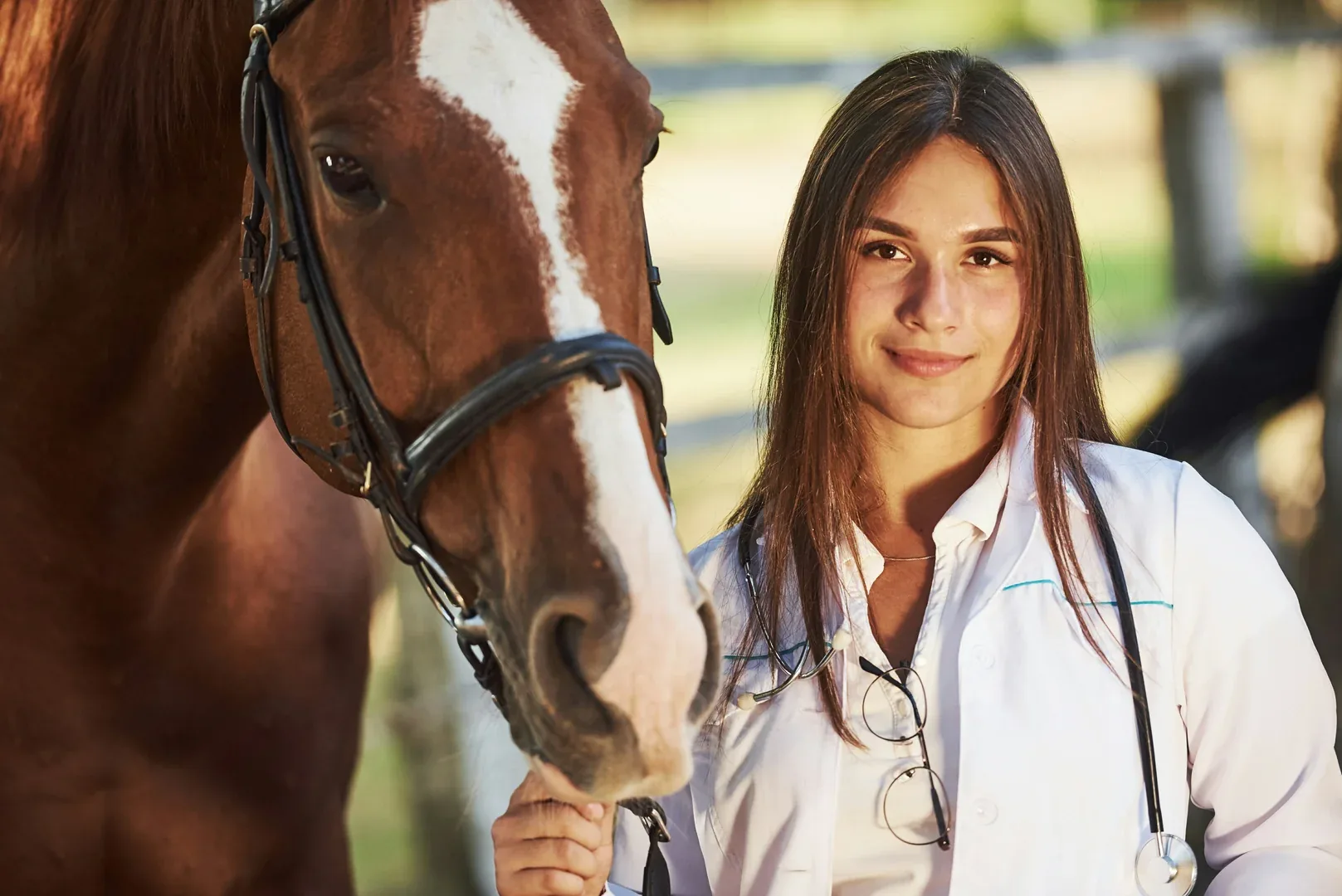
Equine surgery insurance
Horse surgery insurance via nextsure: Three flexible tariffs, reimbursement up to twice the GOT rate, and free choice of clinic worldwide. Protect your horse from high surgery costs – digital, transparent and uncomplicated.
Learn moreHow much does horse surgery cost?
Horse surgery costs anywhere from a few hundred euros to over €12,000, depending on the severity, complications and timing of the procedure. Minor surgical procedures stay at the low end: a tooth extraction costs around €500, while a wound suture averages about €1,250.[1] An acute emergency such as abdominal cavity surgery for severe colic, by contrast, typically results in total costs of €5,000 to €12,000 — and in complex cases with a long inpatient aftercare stay, considerably more.[2] Owners without insurance cover must finance these sometimes existence-threatening amounts entirely from their own savings.
The actual amount of the veterinary bill depends largely on the type of procedure, the anaesthesia method and the subsequent intensive care. For orthopaedic procedures, fractures or interventions on the musculoskeletal system, preliminary examinations, imaging diagnostics, surgery and aftercare quickly add up to considerable sums.
| Type of surgery | Typical costs | Common causes & special features |
|---|---|---|
| Colic surgery (laparotomy) | [2]€5,000 to €12,000 | Emergency procedure for intestinal twisting or displacement, usually at night or at the weekend |
| Splint bone surgery | [1]€1,000 to €4,000 | Fractures caused by kick injuries or trauma, often including X-ray and ultrasound diagnostics |
| Joint surgery (chip removal / arthroscopy) | [1]€1,000 to €4,000 | Minimally invasive procedure for osteochondrosis (OCD) or free joint bodies |
| Dental and jaw surgery | [1]around €500 for an extraction, up to €5,000 for complex procedures | Dental misalignment, root inflammation or procedures inside the mouth |
| Wound suture for severe cuts or lacerations | [1]on average around €1,250 | Surgical treatment under standing sedation or general anaesthesia after paddock accidents |
Since surgical procedures on horses almost always have to be performed under general anaesthesia or deep sedation, the vet's basic fees are only part of the final bill. Anaesthesia monitoring, medication and inpatient clinic stabling come on top.
The cost drivers: GOT, emergency service and veterinary clinic
Veterinary services in Germany are billed according to the Gebührenordnung für Tierärzte (GOT), a nationwide legally binding fee structure that sets a fixed fee framework for veterinarians. Vets may normally charge services at 1 to 3 times the fee rate, depending on the level of difficulty, the time required and local conditions.
A major price driver is unpredictable emergencies outside regular practice hours. If a life-threatening condition occurs at night, at the weekend or on a public holiday, the emergency service clause of the fee schedule applies:
- Emergency service fee: For treatment during emergency service hours, a flat fee of 50.00 euros (net) is charged.[3]
- Increased fee rate: During emergency service, at least 2 times the GOT rate must be billed, and up to 4 times the fee rate may be billed instead of the usual maximum of 3 times.[3]
- Clinic and intensive care costs: Large animal clinics keep specialized surgical teams, anesthesiologists and intensive care boxes available around the clock. The fee level at specialized clinics in the city is usually higher than at simple practices in rural areas.[4]
Another significant cost block is the inpatient stabling of the horse after a procedure. The box rent and basic care alone add up to around 100 to 250 euros per day in 2026. If intensive care patients need to be monitored around the clock, checked rectally and supplied via continuous infusion, the daily ward costs are even higher.
When does horse surgery insurance apply?
A surgical costs insurance covers the veterinary and clinic costs when a medically necessary surgical procedure is required. As a rule, the prerequisite is that the procedure is performed under general anesthesia, standing sedation, sedation or local anesthesia and that skin or underlying tissue is incised more than just a pinpoint. In addition to the actual procedure, coverage typically includes the preliminary examination the day before, the anesthesia, medications and consumables, as well as aftercare up to the 14th day after the operation.
Whether the insurance coverage applies depends largely on the contractually agreed deadlines and conditions. A central role is played by the waiting period, i.e. the contractually defined period of time between the start of the insurance and the first entitlement to reimbursement:
- General waiting period: For illnesses, a waiting period of 3 months after signing the contract regularly applies in 2026.
- Abdominal surgeries (colic): For acute colic surgeries, the waiting period is shortened to 5 days in high-performance tariffs.
- Special waiting periods: For joint surgeries in the presence of chips, osteochondrosis (OCD) or isolated opacities, a waiting period of 12 months often applies.
- Exclusions: Illnesses already existing before the contract was signed or known conformational defects are not insured; likewise, pure routine examinations, horse transports, dental care or cosmetic procedures are not reimbursed.
Before signing, check carefully whether your horse has already had pre-existing conditions or whether surgery has been recommended, as such cases can restrict insurance coverage. If you are looking for financial security for your horse in unexpected emergencies, you can calculate your premium directly online and compare tailored tariffs.
Worked example: The costs of colic surgery
An acute colic late on a Saturday evening is one of the most feared scenarios in the stable. If antispasmodic medication does not work and an intestinal torsion threatens, only immediate transport to the equine clinic and an emergency laparotomy can save the animal's life. Based on a typical billing statement for 2026, it becomes clear how colic surgery costs are made up.
In this example scenario, the horse is admitted to the clinic at night, operated on as an emergency, and then spends 10 days in the clinic's intensive care unit for aftercare and stabilization:
| Treatment item | Service | Cost |
|---|---|---|
| Emergency vet at the stable | Initial examination, painkillers, decision on clinic referral | €500 |
| Transport to the equine clinic | Emergency transport by special vehicle or trailer | €400 |
| Clinic admission & stabilisation | Admission examination, blood panel, abdominal tap, IV fluids | €600 |
| Surgery & anaesthesia | Laparotomy and anaesthesia, at emergency rates up to 4 times the GOT rate | [2]€5,500 |
| 14 days of inpatient monitoring | Clinic box, daily rounds, wound checks, special feed | [2]€3,200 |
| Intensive medication & follow-up procedures | Continuous infusions, antibiotics, painkillers, two follow-up surgeries | €2,500 |
| Discharge & aftercare | Final examination, suture removal, rehab plan | €600 |
| Total veterinary bill | Sum of all veterinary services | [2]around €13,300 |
Without suitable insurance cover, a bill of this magnitude must be settled within just a few days of the horse's discharge. Anyone unable to raise such a sum at short notice from their savings depends on an instalment agreement with the clinic or on third-party financing. If the horse owner, on the other hand, has powerful surgery cost cover, the insurer covers the reimbursable costs of the emergency operation as well as the aftercare and clinic stay within the scope of the tariff.
Outlook: Will veterinary costs remain stable in the future?
The costs of veterinary treatment and surgery for large animals have risen noticeably in recent years. Billing is based on the fee schedule for veterinarians (Gebührenordnung für Tierärztinnen und Tierärzte) in force since 22 November 2022, which sets no fixed prices but a graduated fee framework ranging from one to three times the base rate. How high the final bill turns out to be therefore also depends on the equipment, specialisation and location of the treating clinic.[4]
Whether and to what extent the fee rates will continue to rise in the coming years is currently open and depends on future regulatory adjustments, the general rate of inflation and cost developments at specialist clinics. The following factors shape the cost structure:
- Rising technical complexity: Modern diagnostics such as mobile endoscopy, computed tomography and high-resolution ultrasound improve treatment quality, but are reflected in the overall bills.
- Skilled labour shortage and emergency service structure: Fewer and fewer clinics offer 24-hour emergency cover for large horses, leading to a concentration in highly specialised centres with correspondingly calculated hourly rates.
- Energy and material costs: Increased expenditure on medicines, sterile supplies, anaesthetic gases and clinic upkeep influences the incidental costs of inpatient stays.
Because cost developments in veterinary medicine remain dynamic, taking out a policy early is advisable. Anyone who insures their horse at a young, healthy age without pre-existing conditions avoids later benefit exclusions and benefits from predictable monthly premiums.
Suitable cover: How to insure against surgery costs
As a general rule: a specialised surgery cost insurance reliably protects horse owners against the incalculable financial peaks of a serious accident or a life-threatening illness, without burdening the budget with the high premiums of a full health insurance.
Which tariff is optimal for your horse is decided case by case, primarily by two criteria: the age of the animal and its prior health condition. The choice of a suitable excess (Selbstbeteiligung) - i.e. the contractually agreed share of costs that the owner bears per insurance claim - also significantly influences the monthly premium. In addition, the applicable waiting periods for special joint or colic surgeries must be observed.
A general guide cannot conclusively assess the individual factors of your horse, existing pre-conditions and your personal preferences regarding the level of reimbursement. The precise tariff selection therefore always requires a tailored review of the respective acceptance criteria and insurance terms and conditions.
As an independent digital marketplace and broker, nextsure compares transparent tariffs for horse surgery insurance on the market and brokers precisely fitting cover for you. Calculate your premium online now, easily and conveniently, and reliably protect your horse against high surgery and clinic costs.
Frequently asked questions
- How much does surgery for a horse cost?
The costs vary greatly depending on the procedure. A splint bone surgery usually ranges between 1,000 and 4,000 euros. The most common and most expensive emergency surgery is colic surgery, which in a standard course costs between 5,000 and 12,000 euros.
- How much does a horse cost per day at the veterinary clinic?
An inpatient stay at an equine clinic costs around 100 to 250 euros per day after surgery. This amount includes intensive monitoring, for example in the form of an intensive-care box surcharge. Additional medication or bandage changes are billed separately.
- When does surgery insurance for a horse pay out?
The insurance covers medically necessary veterinary procedures performed under general anesthesia or sedation that involve cutting through the skin. Cover applies once the policy's waiting period has expired, which for abdominal surgeries such as colic can be shortened to just 5 days.
- What is the most expensive surgery for a horse?
The most expensive procedures include complicated intestinal torsions (colic) followed by a long inpatient intensive-care stay, as well as complex fractures that require elaborate screw fixation. Such emergency surgeries are among the costliest treatments of all.
- How much does laminitis treatment cost?
Conservative laminitis treatment often costs several hundred euros for the vet and farrier, and monthly medication costs may also arise. Since this is usually not a surgery, these costs are not covered by a pure horse surgery insurance policy.
- How much does insurance for a horse trailer cost?
A horse trailer used privately for sporting purposes is often exempt from the mandatory motor vehicle insurance requirement. Nevertheless, a separate horse trailer insurance policy makes sense to cover damage. This liability or comprehensive insurance is not part of horse surgery insurance.
Sources
Conclude directly online
Verified partner tariffs at no extra cost. The button takes you straight to the provider's calculator.
 Barmenia
Horse surgery insurance
Surgery cost cover for horses in case of illness and accidents, including diagnostics and after-care.
- Waiting period:
- 3 months (colic surgery: 5 days, accidents: none)
- Coverage abroad:
- worldwide, up to 12 months
- Maximum benefit:
- depends on the cover level, as stated in the policy
- Surgery costs for illness and accidents, including tooth extractions and root canal treatment
- Pre-surgical examination (X-ray, endoscopy, biopsy, lab work)
- After-care including acupuncture, homeopathy, physiotherapy, laser therapy
- Emergency veterinary service up to 4x the standard veterinary fee schedule (GOT) rate plus the emergency callout fee
- Premium cover: up to 5 physiotherapy sessions (max. 60 minutes each) after the after-care period ends
- Once per animal: surgery costs for a birth-related, medically necessary caesarean section
Key exclusions
- Illnesses and developmental abnormalities known at the time of application
- Hoof abscesses and hoof ulcers (exception: hoof cancer)
- Surgery due to cryptorchidism
- Neutering that isn't medically necessary
Service-Champions GOLD: Nr. 1 der Versicherer im Multikanalvertrieb (ServiceValue, 10/2024)
Barmenia (Anbieter der Pferde-OP-Versicherung)
Special waiting periods: 12 months for joint surgery (chip fragments, OC/OCD, Birkeland fractures), 6 months for medically necessary neutering; Premium cover includes a waiver of the insurer's right to cancel from the 7th insurance year.
Fact sheet: benefits, exclusions and waiting periods in detail
All details are taken from the provider's linked product page and the contract documents (IPID/policy conditions) published there; the insurer's documents prevail. Premiums, benefits and the insurance product itself may change – please verify the details directly with the partner before signing up; only the information provided there is binding.
Information last updated: July 2026 · Source: provider product information (IPID/policy conditions)