When does the insured event begin for equine surgery?
The insured event starts at the examination that makes the diagnosis, not on the operating table. What that means for waiting periods and aftercare.
All details are taken from the provider's linked product page and the contract documents (IPID/policy conditions) published there; the insurer's documents prevail. Premiums, benefits and the insurance product itself may change – please verify the details directly with the partner before signing up; only the information provided there is binding.
 Katrin StraubManaging DirectorInsurance expert with over 20 years of experience in the insurance industry.
Published on
6 min read
Table of Contents
Under the policy conditions, the insured event for equine surgery does not start in the operating theatre but at the examination that establishes the diagnosis. Cover responds as soon as that diagnosis is made once the relevant waiting period has run — and after an accident there is none at all.
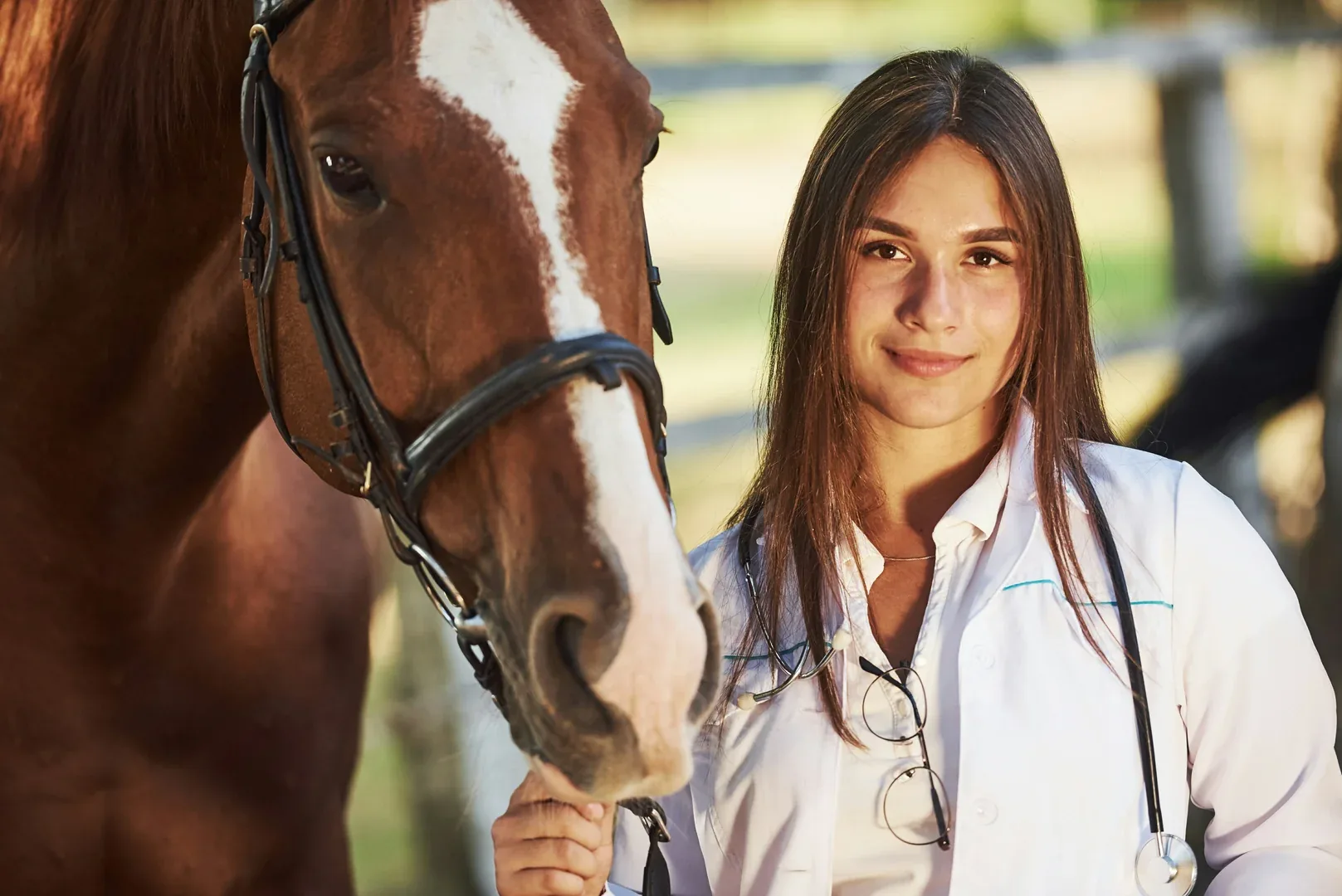
Equine surgery insurance
Horse surgery insurance via nextsure: Three flexible tariffs, reimbursement up to twice the GOT rate, and free choice of clinic worldwide. Protect your horse from high surgery costs – digital, transparent and uncomplicated.
Learn moreThe starting point: when the insured event begins
Whenever surgery is involved, the fair question at claim stage is at exactly which moment the insured event is triggered in legal and contractual terms. Under clause 2.1.2.1 of the policy conditions (as at 01.01.2024), the insured event for an operation that goes ahead does not begin the moment the horse is on the operating table. It begins earlier, with the veterinary examination that leads directly to the diagnosis, which in turn establishes that the procedure is medically necessary. That rule keeps policyholders from being left with the often substantial cost of diagnosis, since veterinary examinations are billed under the scale of fees for veterinary surgeons.
- Initial diagnosis: the first examination to investigate the symptoms officially marks the start of the insured event.
- Preparation for surgery: every diagnostic step immediately preceding it — X-rays, ultrasound, laboratory values — belongs to the insured event once it has begun.
- The condition attached: reimbursement of the diagnostics requires, contractually, that the operation actually be carried out afterwards.
For owners, this clear definition brings certainty when it matters. Look at the detail of the Barmenia horse surgery policy and you will see that the work-up and the procedure are treated as one medical whole. If the planned operation does not take place, for medical or any other reasons, the obligation to pay for the work-up alone falls away retrospectively under a surgery-only policy.
The end of the claim: aftercare closes the file
The end of a claim is defined just as precisely as its start. Under clause 2.1.2.2, the insured event does not end with the last stitch or with the horse waking from the anaesthetic, but only when the agreed aftercare period expires. The treatment phase therefore covers the critical recovery in the stable or at the equine clinic. The number of insured aftercare days is recorded in the policy schedule, and the services have to be billed under the GOT.
- The operation itself: the procedure under general anaesthetic, sedation or standing sedation is the heart of the claim.
- Inpatient stay: clinical observation directly after the operation falls inside the covered period.
- Aftercare deadline: dressing changes, follow-up medication and wound checks are covered until the contractual period ends.
The aftercare period agreed in the schedule therefore sets the outer time limit for reimbursing vet's invoices after the procedure. It ensures that healing can be seen through properly, without financial pressure on the owner.
Several procedures: the extended insured event
In veterinary medicine, a complicated course of illness or a serious accident sometimes calls for more than one operation. Clause 2.1.2.3 deals with this expressly as the extended insured event. Where several operations are veterinarily necessary because of the same illness or the same accident, they count — together with their respective pre-operative examinations and aftercare — as one connected insured event, which ends when the aftercare period following the last operation expires.
| Situation | How it is classified | Effect on aftercare |
|---|---|---|
| A single procedure | Standard insured event | The aftercare period runs from the first operation |
| Follow-up surgery for the same cause | Extended insured event | The aftercare period extends past the last operation |
| An unrelated new illness | A new insured event | Separate deadlines and a fresh assessment of the diagnosis |
Rolling everything into a single insured event matters most where a contractual maximum or an agreed excess is in play. Where several operations share one origin, the excess is not deducted again for each individual procedure, because the claim continues until the last course of aftercare is complete.
Waiting periods: illness versus accident
Any claim depends on the insured event occurring after the contractual waiting period has run. Clause 2.2 draws a firm line between an acute accident and an illness that develops over time: insured events caused by illness carry a waiting period of three months, abdominal surgery (colic) one of five days. Injuries from an accident are covered immediately, whereas illness is subject to staggered deadlines running from the agreed start of cover.
- Surgery after an accident: 0 days. Sudden external trauma or a poisoned bait is covered from day one.
- Abdominal surgery (colic): five days. The threat to life is so immediate that the period is cut sharply.
- General illness: three months. Ordinary elective or illness-related procedures fall under the standard three-month rule.
If life-threatening colic surgery becomes necessary on the sixth day after cover starts, the insured event is fully covered. General illness, by contrast, requires the whole period to have run. Owners will find every deadline set out in our overview of waiting periods.
Special deadlines for joint conditions
Joint surgery occupies a special place in equine medicine, because it so often traces back to developmental disorders of the skeleton. Under clause 2.2.3.1, insured events involving joint operations for isolated radiographic shadows, OC, OCD, Birkeland fractures or chips carry a special waiting period of twelve months. That longer deadline therefore targets exactly those findings that can be laid down early, while cartilage and bone are still growing.
- Osteochondrosis (OC) and osteochondrosis dissecans (OCD)
- Joint chips (loose bodies in the joint)
- Birkeland fractures and isolated shadows on the X-ray
For the insurer to cover such a procedure, the vet must not have made the first diagnosis before this first policy year has run. Insuring a young horse early is what makes sure that chip surgery later on is covered in full once the twelve-month deadline has passed.
Early symptoms and permanent exclusion
The decisive hurdle when a claim is assessed is when the first signs of illness appeared. Under clause 2.2.1, clinically relevant symptoms or a diagnosis made before cover starts, or during the relevant waiting period, mean that the illness in question and everything following from it are permanently uninsured. The principle behind it: damage that has already occurred, or is already foreseeable, cannot be insured retrospectively.
- Symptoms starting before the contract was signed: the specific illness is excluded permanently.
- Symptoms starting during the waiting period: the same outcome as a known history — no benefits for that illness.
- Veterinary documentation: the clinical record and the clinic's examination report settle the question of timing.
Complete candour on the health questions is therefore essential. As a digital comparison platform, nextsure helps owners analyse horse surgery policies transparently and understand every contractual provision before they sign.
Frequently asked questions
- From what point exactly does my horse count as an insured case?
Where an operation is carried out, the insured event starts precisely with the first examination that led to the final diagnosis — not on the operating table.
- Are there cases with no waiting period at all?
Yes. After an accident, tailored cover responds immediately. The waiting period is 0 days, so your horse is financially protected against accident-related fractures or wound repair from the first day.
- What happens if symptoms appear before the waiting period ends?
If your horse shows clinically relevant symptoms before or during the waiting period — for illness, within the first three months — that particular condition is permanently uninsured.
- When is an insured event officially over?
The claim does not close the moment surgery succeeds, but when the agreed aftercare period expires. That way the important costs of the healing phase are covered too.
- Is the excess charged again for several operations after one accident?
No. Several medically necessary operations arising from the same cause count as one connected insured event, so an excess agreed in the schedule is charged only once for that extended claim; how much it is depends on the policy you chose.
Sources
Conclude directly online
Verified partner tariffs at no extra cost. The button takes you straight to the provider's calculator.
 Barmenia
Horse surgery insurance
Surgery cost cover for horses in case of illness and accidents, including diagnostics and after-care.
- Waiting period:
- 3 months (colic surgery: 5 days, accidents: none)
- Coverage abroad:
- worldwide, up to 12 months
- Maximum benefit:
- depends on the cover level, as stated in the policy
- Surgery costs for illness and accidents, including tooth extractions and root canal treatment
- Pre-surgical examination (X-ray, endoscopy, biopsy, lab work)
- After-care including acupuncture, homeopathy, physiotherapy, laser therapy
- Emergency veterinary service up to 4x the standard veterinary fee schedule (GOT) rate plus the emergency callout fee
- Premium cover: up to 5 physiotherapy sessions (max. 60 minutes each) after the after-care period ends
- Once per animal: surgery costs for a birth-related, medically necessary caesarean section
Key exclusions
- Illnesses and developmental abnormalities known at the time of application
- Hoof abscesses and hoof ulcers (exception: hoof cancer)
- Surgery due to cryptorchidism
- Neutering that isn't medically necessary
Service-Champions GOLD: Nr. 1 der Versicherer im Multikanalvertrieb (ServiceValue, 10/2024)
Barmenia (Anbieter der Pferde-OP-Versicherung)
Special waiting periods: 12 months for joint surgery (chip fragments, OC/OCD, Birkeland fractures), 6 months for medically necessary neutering; Premium cover includes a waiver of the insurer's right to cancel from the 7th insurance year.
Fact sheet: benefits, exclusions and waiting periods in detail
All details are taken from the provider's linked product page and the contract documents (IPID/policy conditions) published there; the insurer's documents prevail. Premiums, benefits and the insurance product itself may change – please verify the details directly with the partner before signing up; only the information provided there is binding.
Information last updated: July 2026 · Source: provider product information (IPID/policy conditions)