Festival Event Cancellation Insurance
Protect your festival against financial losses due to cancellation. Request your personalised risk analysis now and protect your event.
 Katrin StraubManaging DirectorInsurance expert with over 20 years of experience in the insurance industry.
Published on
Last updated on
11 min read
Table of Contents
Cancelling a festival can mean losses in the six- or seven-figure range. A specialised event cancellation insurance policy protects your investment and secures the continuation of your event.
Analyse risks and minimise financial losses
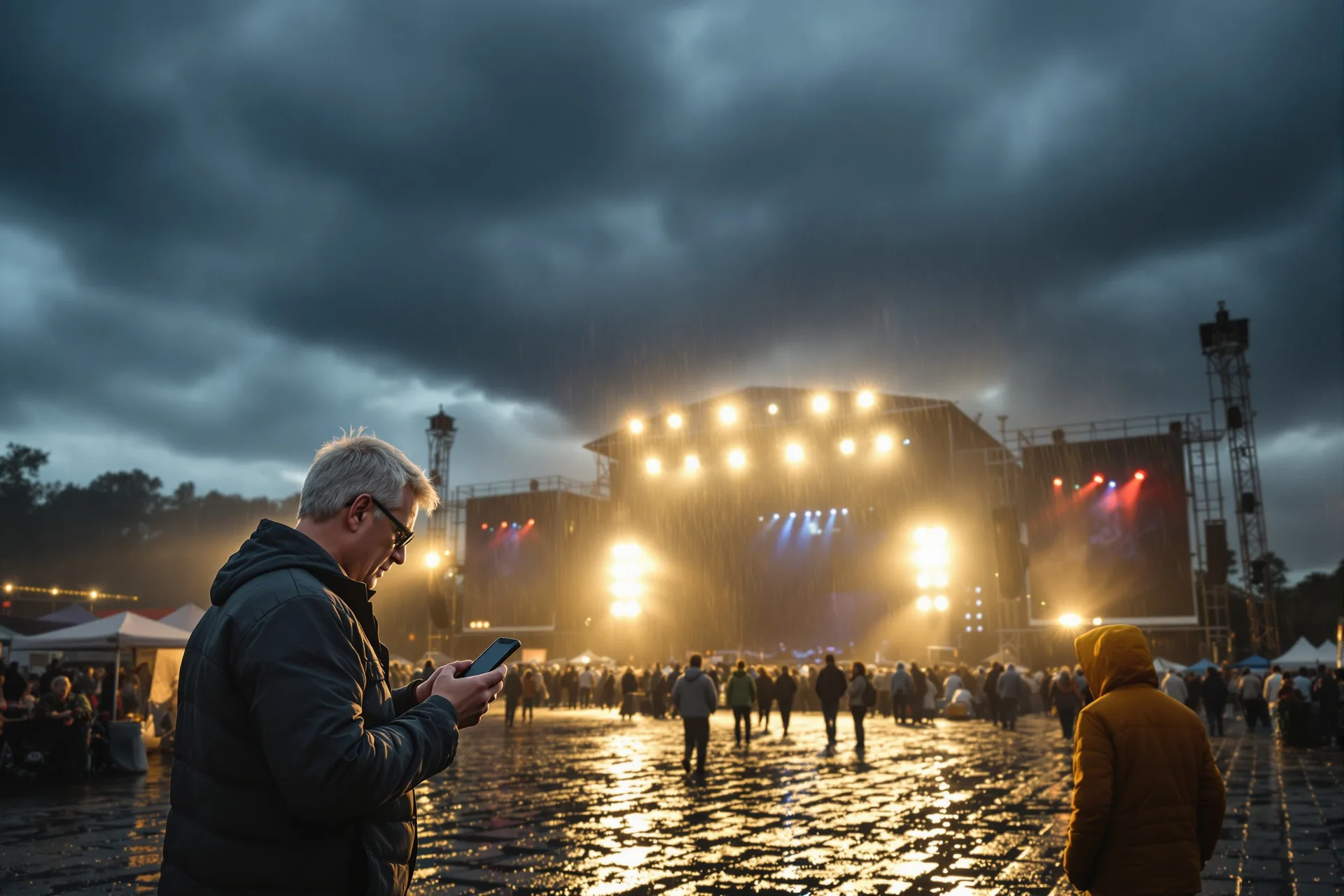
Planning a festival involves numerous risks that can quickly lead to losses of over €250,000. Extreme weather events alone have increased the number of festival cancellations by 15 per cent over the past three years. Among the most common sources of risk, apart from severe weather, is the sudden cancellation of a headline act, which alone can incur appearance fees of over €100,000. Technical faults or regulatory bans also pose significant financial risks. A precise risk analysis is the first step in calculating the insurance sum correctly. A robust event cancellation insurance policy covers these unforeseen events. Identifying these risks is crucial for the next step: selecting the right level of cover.
Choosing the right level of cover for your festival
A powerful policy reimburses more than just expenses already incurred. It also covers lost profit, which often accounts for 20 per cent of total revenue. The core benefits of good insurance include financial losses caused by interruption, cancellation or a short-term relocation. It is important that the policy is tailored individually to your event. An event cancellation insurance should explicitly include specific risks such as artist cancellations or adverse weather conditions. Pay attention to the details in the contract, because not all policies are the same.
Good insurance typically covers the following points:
- Costs caused by severe weather: damage that makes it impossible or dangerous to proceed.
- Failure of key individuals: cancellation due to illness, accident or the death of the headliner.
- Unavailability of the venue: fire, flooding or power failure at the event location.
- Official orders: unexpected bans, for example due to terror warnings.
- Technical failure: breakdown of stage or sound equipment for more than three hours.
Check carefully which exclusions are noted in the contract, for example pandemics or lack of audience interest. With knowledge of the cover options, you can better assess the costs.
Calculate insurance premiums realistically
The cost of event cancellation insurance varies significantly and depends on several factors. For a small festival with a sum insured of EUR 20,000, the premium can be around EUR 260. For a major event with costs of EUR 75,000, you should expect premiums from EUR 1,025. The premium is determined by the sum insured, the type of festival, the event location and the selected additional cover. A festival in an urban area can have a higher premium than one in a rural area. Loss of profit can often be insured for an additional premium of ten to 15 per cent. A detailed breakdown of all costs and potential income is the basis for an accurate quote. An concert cancellation insurance for organisers follows similar calculation principles. Once the policy has been taken out, you need to know what to do in the event of a claim.
Act correctly and quickly in the event of a claim
If the worst happens and your festival has to be cancelled, quick and documented action is crucial. Report the damage to your insurer immediately, often within 48 hours. A late notification can reduce your claims by up to 25 per cent. Document all circumstances that led to the cancellation with photos, official weather warnings or official letters. In addition, keep a detailed list of all costs incurred and any non-refundable expenses already paid.
Follow these five steps for a smooth claims process:
- Immediate notification: Contact your insurer as soon as the event occurs.
- Loss mitigation: Take all reasonable measures to keep costs as low as possible.
- Detailed documentation: Gather all contracts, invoices and receipts.
- Communication: Keep in regular contact with your point of contact at the insurance company.
- Meet deadlines: Submit all required documents within the deadlines set out in the contract.
On average, a well-documented claim is processed 30 per cent faster. Understanding the legal framework can help avoid pitfalls.
Navigating legal pitfalls such as force majeure
The term “force majeure” is often cited as a reason for refusing performance, but the legal situation in Germany is consumer-friendly. Even in the event of force majeure, such as a storm, you as the organiser are generally obliged to refund ticket prices. However, visitors usually do not have a claim to further compensation for damages. The financial risk therefore clearly lies with you. Our expert tip: define “force majeure” precisely in your agreements with service providers and in your terms and conditions to regulate the allocation of risk clearly. A possible adjustment of the contract due to the disappearance of the basis of the contract under Section 313 of the German Civil Code (BGB) can be an option, but is often a lengthy process. A good event ticket insurance can also be a sensible addition for your visitors here. The right structure for your policy is therefore crucial.
Design and customise insurance policies optimally
A standard policy rarely provides the optimal protection for a complex event such as a festival. Tailor the insurance cover to your individual needs. Carefully assess the sum required to cover all costs – from artist fees and equipment hire to marketing expenses. Underinsurance of just ten per cent can mean, in the event of a claim, that you are left with a five-figure sum to pay. Consider additional modules such as an “adverse weather clause” for weather-related risks that go beyond normal storms. Our expert tip: Have your contracts with artists and service providers legally reviewed and aligned with your insurance policy to close any gaps in cover. This will ensure that your cancellation cover really does apply. Request an individual risk analysis now: have your insurance situation checked free of charge and receive concrete suggestions for improvement.
Frequently asked questions
- What is the difference between event organiser liability insurance and event cancellation insurance?
Event organiser liability insurance covers damage suffered by third parties (e.g. visitors) at your event. Event cancellation insurance, on the other hand, protects you as the organiser against your own financial losses if the event has to be cancelled or abandoned.
- Can I also insure loss of profit?
Yes, most insurers offer to cover not only the pure costs, but also the expected profit. This is particularly important, as profit often makes up a significant part of total revenue.
- What happens if my festival is cancelled due to poor ticket sales?
A failure due to insufficient spectator interest or poor marketing is generally not insured. The insurance only covers unforeseeable events acting from outside.
- From when should I take out event cancellation insurance?
Take out the insurance as early as possible, ideally as soon as the first essential contracts (e.g. with the venue or the main performers) have been signed. This means the initial major expenses are protected too.
- How is the sum insured correctly determined?
The sum insured should cover all costs you would incur in the event of a cancellation on the day of the event. These include fees, hire costs, staff, marketing, technology and all other non-cancellable expenses.
- Is there an excess?
Yes, most tariffs include an excess. The amount can often be adjusted contractually. A higher excess generally leads to a lower premium, but increases your own risk in the event of a claim.
Sources
- [1]Statista offers detailed statistics on events and participants in the German events market.
- [2]The BDKV (Federal Association of the Concert and Events Industry) provides up-to-date data and information on the German ticket market.
- [3]The Initiative Musik publishes a press release on a study that examines the diversity and challenges of music festivals.
- [4]The Federal Statistical Office (Destatis) offers comprehensive content on culture, education and research in Germany.
- [5]The DGUV (German Social Accident Insurance) provides important information on safety at events and productions.
- [6]The Consumer Advice Centre provides information on customers’ rights at festivals, concerts and sporting events, particularly in the event of cancellation.
- [7]An article by Tagesschau highlights the important topic of sustainability in the festival market.