Pet Health Insurance for Parrots: Providers and Mandatory Registration
Which parrots must be registered? Learn about BArtSchV registration, current vet costs, and the benefits of small animal insurance.
All details are taken from the provider's linked product page and the contract documents (IPID/policy conditions) published there; the insurer's documents prevail. Premiums, benefits and the insurance product itself may change – please verify the details directly with the partner before signing up; only the information provided there is binding.
 Katrin StraubManaging DirectorInsurance expert with over 20 years of experience in the insurance industry.
Published on
11 min read
Table of Contents
Keeping parrots requires compliance with strict species protection regulations and entails financial risks due to high veterinary costs. Learn which birds are exempt from mandatory registration under Annex 5 BArtSchV and how small animal insurance protects against egg binding.
Small pet insurance
Small pet insurance for rabbits, guinea pigs, parrots and reptiles: Cleos Welt from 6.99 EUR a month, up to 4x the GOT rate, no waiting period for accidents.
Learn moreParrots as Pets: Between Fascination and Species Protection
When keeping parrots in Germany: Yes, mandatory registration generally applies to almost all parrot species with the relevant Lower Nature Conservation Authority if they fall under statutory species protection. No, mandatory registration is waived only for a few explicitly legally designated exceptions such as the budgerigar or the peach-faced lovebird. At the same time, specialized small animal insurance is worthwhile if owners do not wish to pay the often four-digit treatment costs at avian veterinary specialists entirely out of pocket.
Parrots are among the most demanding domestic pets of all. Alongside their complex social needs and a life expectancy often spanning several decades, most exotic birds are subject to strict international and national conservation regulations. The 1973 Convention on International Trade in Endangered Species of Wild Fauna and Flora (CITES) regulates global trade in endangered animal species to ensure their survival in the wild. At the European level, this convention is implemented through the EU Wildlife Trade Regulation, while in Germany the Federal Nature Conservation Act (BNatSchG) and the Federal Species Protection Ordinance (BArtSchV) define the legal framework.
Anyone acquiring a parrot not only assumes responsibility for species-appropriate housing, but also binding public-law keeper obligations. A violation of the reporting or identification requirements of the BArtSchV constitutes an administrative offence that can be punished by environmental authorities in 2026 with heavy fines or, in extreme cases, the confiscation of the animal. For keepers of exotic animals, it is therefore essential to know the precise legal status of their bird and maintain complete documentation.
- Legal basis: Convention on International Trade in Endangered Species of Wild Fauna and Flora (CITES) of 1973 and the German Federal Species Protection Ordinance (Bundesartenschutzverordnung - BArtSchV).
- Competent authority: Lower nature conservation authority (Untere Naturschutzbehörde) at the owner's primary place of residence.
- Owner obligation: Seamless documentation of legal origin and official marking/identification of the animal.
- Financial preparation: Calculation of specialized veterinary costs and evaluation of suitable coverage options.
Which Parrots Are Subject to Mandatory Registration?
The statutory regulation governing registration is clearly defined: Under Section 7 (2) of the Federal Species Protection Ordinance (BArtSchV), all vertebrates of specially protected species—excluding the species listed in Annex 5—must be reported in writing by the owner to the competent state authority immediately after keeping begins. Because virtually all parrots (order Psittaciformes) fall under protection status under Annex A or Annex B of the EU Wildlife Trade Regulation, mandatory notification applies as a baseline rule for almost every parrot owner in Germany.
However, there are statutory exemptions for widely kept pet bird species: According to Annex 5 to Section 7 (2) BArtSchV, certain species that are regularly bred in captivity are explicitly exempt from the inventory notification requirement. These exempt species include the budgerigar, cockatiel, peach-faced lovebird (Agapornis roseicollis), Fischer's lovebird (Agapornis fischeri), and masked lovebird (Agapornis personatus). In contrast, all large parrots such as African grey parrots, Amazons, macaws, or cockatoos remain subject to mandatory registration without exception.
| Species / Genus | Scientific Name | Protection Status (BArtSchV) | Registration Requirement under Section 7 BArtSchV |
|---|---|---|---|
| African grey parrot | Psittacus erithacus | Strictly protected (Annex A) | Yes, immediate notification mandatory |
| Blue-fronted amazon | Amazona aestiva | Specially protected (Annex B) | Yes, immediate notification mandatory |
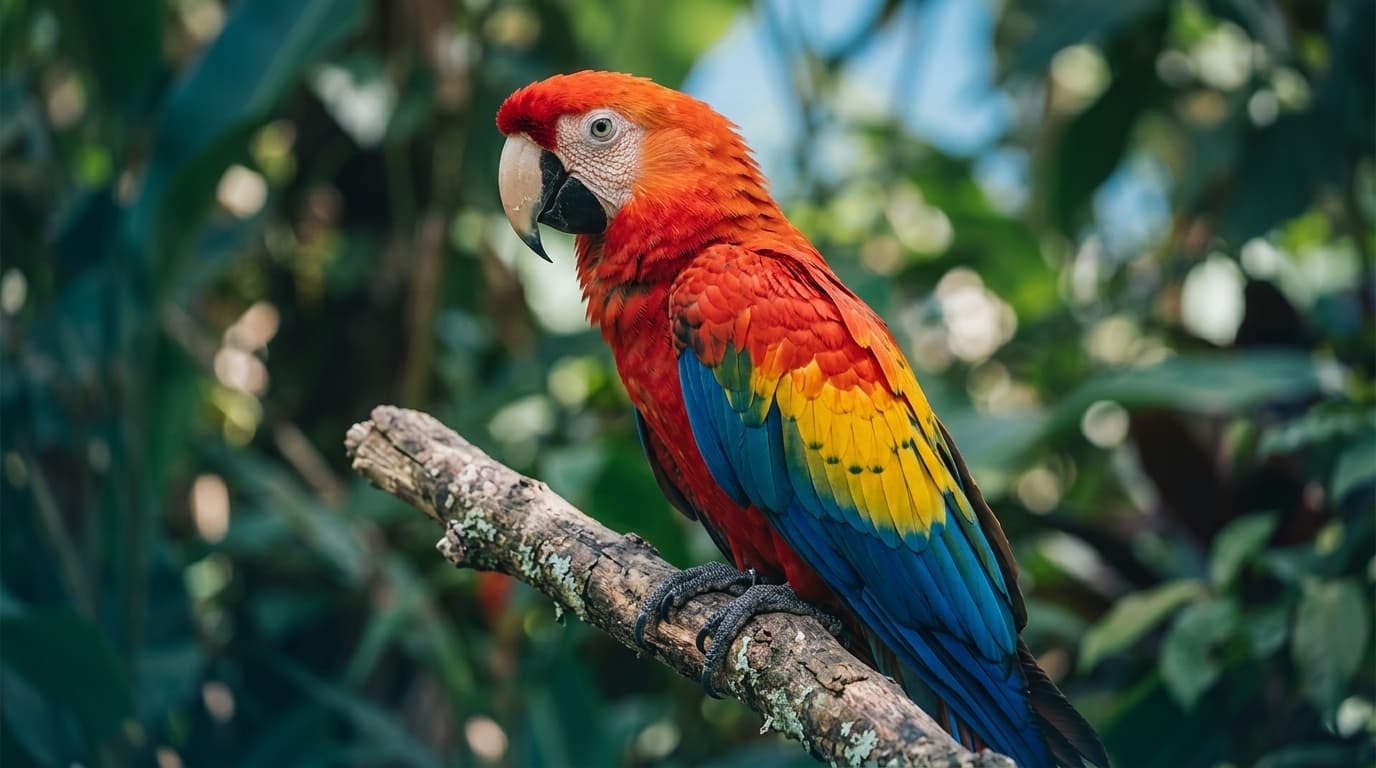
| Scarlet macaw | Ara macao | Strictly protected (Annex A) | Yes, immediate notification mandatory |
| Peach-faced lovebird | Agapornis roseicollis | Specially protected | No, exempt under Annex 5 |
| Budgerigar | Melopsittacus undulatus | Not specially protected | No, no registration required |
For formal registration with the lower nature conservation authority, owners must submit two core documents: seamless proof of origin demonstrating legal breeding or an EU commercial activity certificate (formerly CITES certificate), as well as the individual ring number of the officially recognized closed species protection ring (or alternatively the microchip transponder number). Anyone looking to check which essential insurance policies make sense for specific life risks should also structure protection for exotic pets in good time.
Specific Diseases: From Aspergillosis to Psittacosis
Parrots possess a highly specialized avian anatomy featuring air sacs and a delicate respiratory system, making them particularly vulnerable to certain infectious diseases. One of the most frequent and insidious conditions in veterinary practice is aspergillosis. This is a chronic fungal infection of the respiratory tract and air sacs, most commonly triggered by the mold Aspergillus fumigatus. Because birds instinctively conceal symptoms of illness for as long as possible, the disease is often detected only at an advanced stage, requiring prolonged inhalation and medication therapies.
Another severe condition is psittacosis, also known as parrot fever or ornithosis. This bacterial infection is caused by the intracellular bacterium Chlamydia psittaci. In birds, it often presents with respiratory symptoms, eye and nasal discharge, and diarrhea, though it can also persist asymptomatically. As a zoonosis, the pathogen can be transmitted directly to humans, where it can cause severe flu-like illness or atypical pneumonia.
- Aspergillosis: Chronic fungal infection of the air sacs and lungs, requiring diagnostic imaging and months of antifungal therapy.
- Psittacosis (Chlamydia psittaci): Bacterial zoonosis, subject to mandatory nominal reporting under Section 7 of the Infection Protection Act (IfSG) upon acute infection.
- PBFD (Psittacine Beak and Feather Disease): Viral disease affecting the beak and plumage that compromises the immune system.
- Bornavirus infection (PDD): Neurological disease of the digestive tract (proventricular dilatation disease) requiring lifelong dietary management and pain management.
Due to the risk of zoonotic transmission, detection of Chlamydia psittaci in humans is subject to strict mandatory reporting to the public health department under the Infection Protection Act. In breeding flocks, official veterinary disease control measures also take effect in the event of an outbreak. The treatment of such specialized conditions belongs exclusively in the hands of avian veterinary specialists, which entails corresponding diagnostic and treatment expenses.
Life-threatening emergency: Egg binding in parrots
One of the most acutely life-threatening emergencies in female parrots and parakeets is egg binding. In this condition, the bird is physiologically unable to naturally expel an egg lodged in the oviduct or cloaca. The causes are diverse: they range from calcium deficiency and deformed or excessively large eggs (soft-shelled eggs) to oviduct inflammation, exhaustion, or husbandry errors such as inadequate UV lighting.
A parrot with acute egg binding displays unmistakable signs of illness: the bird often sits apathetically on the floor, fluffs its plumage, strains unsuccessfully, and exhibits heavy, pumping breathing. Because the stuck egg presses against vital blood vessels, nerves, and the kidneys, circulatory collapse, necrosis, or shock can occur within a few hours. Affected birds must be transported immediately as an emergency to an avian vet practice or animal clinic.
- Immediate emergency stabilization: Heat provision, oxygen administration, circulatory stabilization, and calcium injections by the veterinarian.
- Conservative treatment: Administration of labor-inducing medication and lubricants under veterinary supervision.
- Surgical intervention: If conservative methods fail, the egg must be punctured, crushed, or surgically removed via a laparotomy under anesthesia.
- Post-operative care: Inpatient monitoring, pain management, and antibiotic therapy to prevent peritonitis.
Surgical emergency procedures for egg binding carry high risks for the bird's organism and involve substantial costs for the owner. Because emergencies often occur outside regular clinic hours, at night, or on weekends, additional emergency service fees and elevated rate multipliers apply, which can catch household budgets off guard with bills ranging from several hundred to over a thousand euros.
Vet cost pitfalls: How the GOT billing scale works
Veterinary services in Germany are billed according to the official Scale of Veterinary Fees (GOT). Veterinarians are legally required to charge at least the single base rate (1x). Depending on complexity, time required, the animal's value, and local conditions, veterinary practices in 2026 are entitled to increase the fee multiplier up to 3x the base rate. In veterinary emergency service (Section 4 GOT), a mandatory minimum of the 2x rate up to a maximum of the 4x rate applies, plus a flat emergency service fee of €50.00 net.
Even for a basic service such as a general examination with consultation, noticeable amounts apply: under GOT item number 15, the single base rate for large psittacines (large parrots) is €23.62 net, while for smaller pet birds (GOT item number 14), the base rate is €11.26 net. These values are purely net amounts excluding VAT; since the actual fee scales between the single and triple rate—and in emergency service at least double up to quadruple rates apply—the final invoice total multiplies accordingly.
| GOT service (excerpt) | GOT item code | Single base rate large psittacines (net) | Single base rate pet birds (net) |
|---|---|---|---|
| General examination with consultation | Item no. 15 or 14 | €23.62 | €11.26 |
| Follow-up examination for the same case | Item no. 33 or 32 | €19.74 | €9.23 |
| Inhalation anesthesia | Item no. 342 or 340 | €32.99 | €20.54 |
| Inpatient accommodation per day (without treatment) | Item no. 82 or 81 | €20.93 | €12.57 |
| Emergency service fee (flat rate, per incident) | Section 4 para. 1 | €50.00 | €50.00 |
In practice, severe illnesses rarely stop at a simple examination. In-depth avian diagnostics require multi-view digital X-rays, endoscopic examinations of the air sacs, microbiological laboratory swabs, anesthesia monitoring, and inpatient hospitalization in a heated oxygen tent. Combined with administered medications, medical supplies, the applied fee multiplier, and statutory VAT, complex treatments quickly reach several hundred euros—and often four figures for inpatient care. Pet owners should therefore understand precisely how a contractual policy period and its associated maximum reimbursement limits are structured.
All-around protection with small pet insurance
Anyone asking whether pet health insurance for parrots makes sense receives a clear answer from experienced owners and avian veterinarians: yes, coverage is an economically very sensible decision for most owners. Because avian veterinarians are highly specialised experts with cost-intensive practice equipment, treatment costs in the event of illness are significantly higher than for standard routine check-ups.
In response to this specific coverage need, small pet insurance (available through Cleos Welt and the underwriter Uelzener Allgemeine Versicherungs-Gesellschaft a.G., among others) provides targeted protection for exotic pets and ornamental birds. Small pet insurance reimburses the costs of medically necessary surgeries as well as outpatient and inpatient treatments up to the agreed maximum GOT rate. A key coverage advantage for bird owners: specific emergencies such as surgical procedures for egg binding are explicitly included in the terms, keeping even unforeseen emergency rescue measures manageable.
The general rule states that solid pet health insurance cushions the existential cost risk of severe illnesses and surgeries. However, the decisive factors for each specific individual case are personal parameters: the entry age of the bird, pre-existing chronic conditions, the chosen deductible (the agreed out-of-pocket share per claim), and the contractual waiting period (the time between signing the policy and the first claim eligibility). A general guide cannot definitively assess your specific keeping conditions and the appropriate scope of benefits for your bird population.
nextsure is an independent digital marketplace and broker for specialised and niche insurance based in Hamburg, not an insurance company. We compare plans transparently, provide independent advice, and assist you in selecting the right coverage. Book a personal consultation if needed to tailor the optimal small pet insurance for your parrots easily and digitally.
Frequently asked questions
- Which parrots are exempt from the registration requirement?
According to Annex 5 of the Federal Species Protection Ordinance (Bundesartenschutzverordnung – BArtSchV), several commonly kept and captive-bred species are exempt from the registration requirement. These include, for example, peach-faced lovebirds, budgerigars, and cockatiels. For these species, the otherwise mandatory notification to the competent authority does not apply.
- Where and how do I need to register my parrot?
A parrot subject to mandatory registration must be registered with your local Lower Nature Conservation Authority (Untere Naturschutzbehörde) in your district or city immediately after acquisition. For successful registration, you will need official proof of origin, such as a CITES certificate, as well as the ring number of the closed species protection ring.
- How much does a veterinary examination for a parrot cost?
Costs strictly follow the German Veterinary Fee Schedule (Gebührenordnung für Tierärzte – GOT). For the general examination of a large parrot, the single rate is €23.62 net; veterinary practices may raise this rate depending on the complexity, and emergency services incur higher rates and an emergency fee. With elaborate diagnostics such as X-rays, blood tests, or specialised surgery, costs quickly rise to several hundred euros.
- Is parrot fever subject to mandatory reporting?
Yes, parrot fever (psittacosis) is a bacterial infection that can also be transmitted to humans (zoonosis). Due to this serious risk of infection, it is subject to mandatory reporting by the attending veterinarian in Germany.
- Does insurance also cover species-specific emergencies like egg binding?
Yes, comprehensive small pet insurance for exotics covers the costs of medically necessary veterinary procedures. For instance, the small pet insurance from Cleos Welt covers surgeries and medical treatments for ornamental birds—explicitly including the emergency treatment of egg binding—up to the agreed maximum GOT rate.
Sources
Conclude directly online
Verified partner tariffs at no extra cost. The button takes you straight to the provider's calculator.
 Cleos Welt
Small pet health insurance
Health insurance for small mammals, birds and reptiles in three tariffs: surgery, treatment, diagnostics and medication up to 3 or 4 times the GOT rate.
- Premium:
- from 6.99 EUR a month
- Annual benefit:
- 3,000 EUR, 5,000 EUR or unlimited
- GOT rate:
- 3 times, Rundum 4 times
- Deductible:
- 0 EUR
- Waiting period:
- 30 days, 6 months for specific surgeries
- Cover abroad:
- up to 12 months
- Surgery, treatment and after-care up to the agreed maximum GOT rate
- Laboratory and imaging diagnostics, medication, boarding and feeding in the clinic
- Specific surgeries (egg binding, otitis, malocclusion) after a 6-month waiting period
- Remote diagnostics and consultation with a veterinarian
- Rundum tariff: unlimited annual benefit, 4 times the GOT rate, 200 EUR preventive-care budget
- Accidents without a waiting period, previous insurance counts towards it
Key exclusions
- Pre-existing conditions and treatments begun or recommended before the policy started
- Preventive care, vaccinations and parasite products unless agreed as an add-on
- Neutering/spaying without a separate agreement
- Routine dental work in mammals without the dental add-on
- Travel and transport costs, reports, and the emergency fee when no operation follows
- Epidemics, pandemics, war, earthquake and flood
Google Rezensionen: 4,5/5 Sterne (210 Bewertungen)
Cleos Welt insgesamt (Anbieterbewertung, alle Versicherungen)
Annual age adjustment of 3% of the premium; cancel monthly with 14 days' notice; sum insured and deductible as stated in the policy. Insurer: Uelzener Allgemeine Versicherungs-Gesellschaft a.G.
Fact sheet: benefits, exclusions and waiting periods in detail
Cleos Welt
Rabbit insurance
The same small pet health insurance with rabbit premiums and the dental add-on that makes the difference for teeth that grow for life.
- Premium:
- from 34.99 EUR a month
- Rundum:
- from 62.99 EUR a month
- Dental add-on:
- from 20.00 EUR a month
- Deductible:
- 0 EUR
- Waiting period:
- 30 days, malocclusion 6 months
- Malocclusion surgery (tooth misalignment) covered after a 6-month waiting period
- Dental add-on from 20 EUR a month: 500 EUR tooth extractions and corrections plus 200 EUR dental prevention a year
- Rundum: unlimited annual benefit, 4 times the GOT rate, 200 EUR preventive-care budget
- Myxomatosis and RHD covered if vaccination is proven by an international vaccination certificate
- E. cuniculi covered if a negative test from no more than one year before the start of cover exists
- Accidents without a waiting period, cancel monthly with 14 days' notice
Key exclusions
- Myxomatosis/RHD without proof of vaccination in the international vaccination certificate
- Damage from Encephalitozoon cuniculi without a negative test that is at most one year old
- Tooth trimming, extractions and dental prevention without the dental add-on
- Neutering/spaying without a separate agreement
- Pre-existing conditions and treatment during the waiting period
Google Rezensionen: 4,5/5 Sterne (210 Bewertungen)
Cleos Welt insgesamt (Anbieterbewertung, alle Versicherungen)
Husbandry duty under the terms: rabbits per section 35 of the German animal welfare livestock husbandry ordinance. Annual age adjustment of 3%. Insurer: Uelzener Allgemeine Versicherungs-Gesellschaft a.G.
Fact sheet: benefits, exclusions and waiting periods in detail
Cleos Welt
Parrot insurance
The same small pet health insurance with bird premiums: egg binding and beak treatment are the cases that matter for parrots.
- Premium:
- from 10.49 EUR a month
- Rundum:
- from 20.99 EUR a month
- Deductible:
- 0 EUR
- Waiting period:
- 30 days, egg binding 6 months
- Egg-binding surgery with diagnostics and after-care covered after a 6-month waiting period
- Beak treatment included in all tariffs according to the product page
- Treatment, diagnostics and medication up to the agreed GOT rate
- Rundum: unlimited annual benefit, 4 times the GOT rate, 200 EUR preventive-care budget
- Accidents without a waiting period, cover abroad up to 12 months
- Also insurable for finches, chickens and pigeons as well as reptiles
Key exclusions
- Cosmetic beak and tooth trimming to breed or show standard
- Examination and treatment of young animals after hatching
- Preventive care, vaccinations and parasite products unless agreed as an add-on
- Pre-existing conditions and treatment during the waiting period
Google Rezensionen: 4,5/5 Sterne (210 Bewertungen)
Cleos Welt insgesamt (Anbieterbewertung, alle Versicherungen)
Species-appropriate husbandry (housing, temperature, rest periods) is a policyholder duty. Annual age adjustment of 3%. Insurer: Uelzener Allgemeine Versicherungs-Gesellschaft a.G.
Fact sheet: benefits, exclusions and waiting periods in detail
Cleos Welt Small pet health insurance: Monthly premium by species and tariff (product pages, as of July 2026)
| Species | Basis (up to 3,000 EUR/year, 3x GOT rate) | Standard (up to 5,000 EUR/year, 3x GOT rate) | Rundum (unlimited, 4x GOT rate) |
|---|---|---|---|
| Cheapest species | from 6.99 EUR | from 13.99 EUR | from 17.49 EUR |
| Parrot | from 10.49 EUR | from 17.49 EUR | from 20.99 EUR |
| Guinea pig | from 20.99 EUR | from 31.49 EUR | from 34.99 EUR |
| Rabbit | from 34.99 EUR | from 48.99 EUR | from 62.99 EUR |
All details are taken from the provider's linked product page and the contract documents (IPID/policy conditions) published there; the insurer's documents prevail. Premiums, benefits and the insurance product itself may change – please verify the details directly with the partner before signing up; only the information provided there is binding.
Information last updated: July 2026 · Source: provider product information (IPID/policy conditions)