Protective Symbols for the Home: Tradition & Meaning
Learn all about protective symbols for your home, their meaning and effect. nextsure provides information on traditions for greater well-being.
 Katrin StraubManaging DirectorInsurance expert with over 20 years of experience in the insurance industry.
Published on
Last updated on
7 min read
Table of Contents
Protective symbols for your home: More than tradition – security and well-being
Do you really feel safe and secure in your own home? Discover how traditional protective symbols for the home not only have a rich history spanning more than a thousand years, but can also still contribute to well-being today – a fascinating addition to modern protection.
The variety of protective symbols: a quick overview of the most important signs
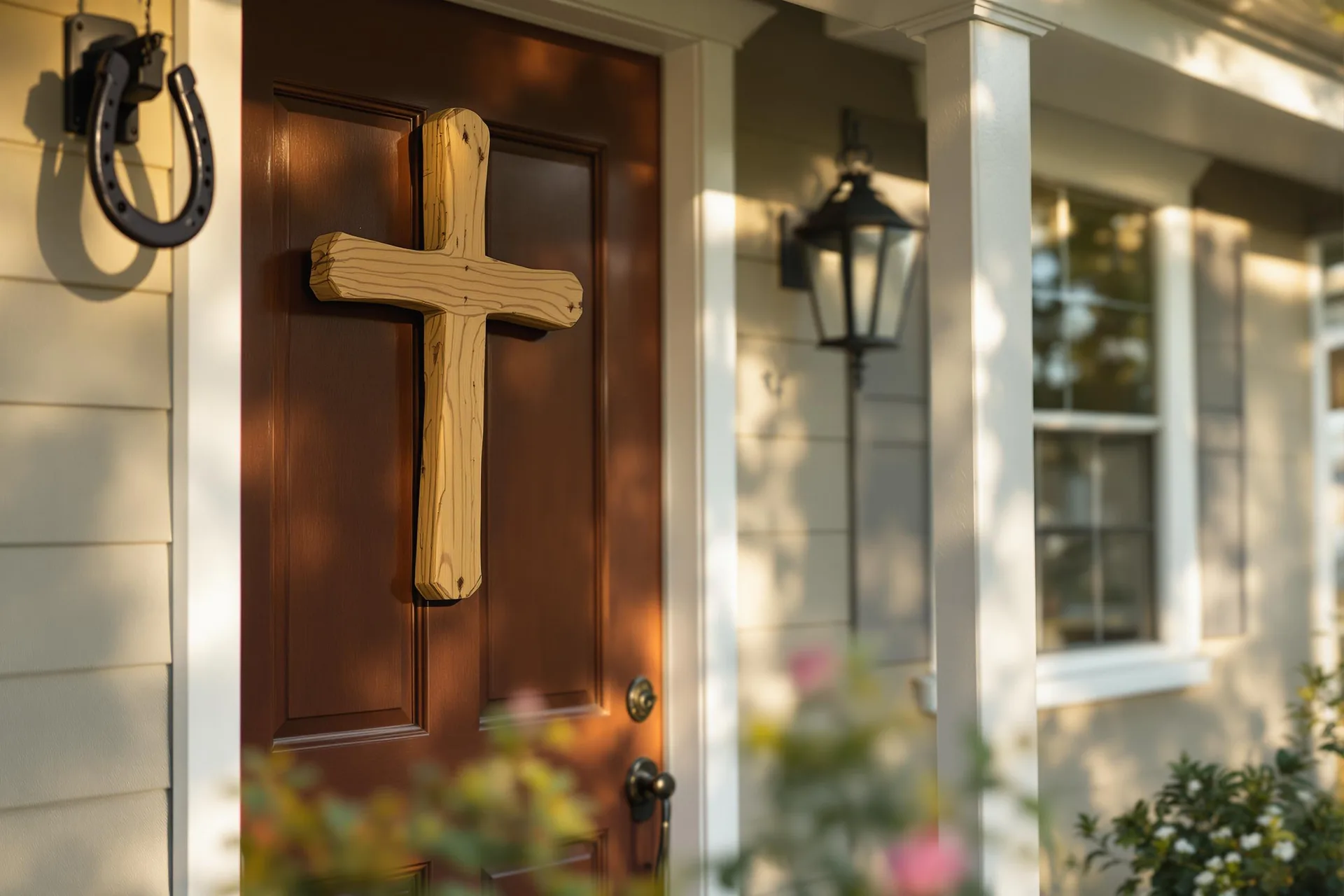
Protective symbols are signs to which a protective power has been attributed since time immemorial. Their origins can be found in almost all cultures and eras, often dating back several thousand years. They were meant to keep evil spirits, misfortune or envy at bay and bring luck and blessings to the inhabitants. A well-known example is the horseshoe, which is hung with the opening facing upwards to "catch" luck. The four-leaf clover, a rare find in nature (around one in a thousand), is also widely regarded as a lucky charm. The sun wheel, one of the oldest symbols, has represented vitality and positive energy for over five thousand years. These symbols can be found on doors, walls or as small amulets in the home. Choosing a symbol is often a very personal decision based on one’s own beliefs and traditions. For a completely secure feeling in the home and living space, the combination of tradition and modern protection is ideal.
Application and cultural significance: protective symbols in practice
The use of protective symbols on a house often follows old traditions and varies according to culture and symbol. Many symbols are placed clearly visible above the front door to ward off negative energies before they can even enter the house. Others are attached to windows, façades or even directly onto roof tiles. In Germany, particularly old half-timbered houses bear witness to this tradition; here one often finds artistically carved symbols such as the Saint Andrew's cross, wheel crosses or grotesque faces, which are said to have kept misfortune at bay for more than four centuries.
Christian blessing signs such as the letters C+M+B (often interpreted as “Christus Mansionem Benedicat” – Christ bless this house) are written each year by the Epiphany singers on door beams and have been widespread since the Middle Ages. The Hand of Fatima, also called Khamsa, a symbol with five fingers and often an eye in the centre, is widespread in the Orient and has protected against the evil eye for over fifteen hundred years. The pentagram, a five-pointed star, has been used since antiquity as a powerful protective sign against negative forces.
The tree of life, with its roots deep in the earth and branches reaching towards the sky, symbolises stability and growth and has been revered in many cultures for more than three thousand years. Choosing the right symbol and placing it correctly can greatly increase the sense of security in one’s own home. Comprehensive contents insurance also offers material protection.
Typical placements for protective symbols on the house are varied:
- Above the front door (e.g. horseshoe, C+M+B)
- On window frames or shutters (e.g. carved ornaments)
- On the façade, especially on the gable (e.g. sun wheel, Saint Andrew's cross on half-timbered houses)
- On the roof or on the chimney (rare, but historically documented)
- Inside the house, near the door or in central rooms (e.g. house blessing, amulets)
- On courtyard gates or property boundaries (e.g. wayside crosses, gate arches with symbols)
These traditions show how people have been trying for centuries to make their homes a safe place.
When symbols warn: understanding thieves’ marks as negative protection symbols
Alongside the positive protective symbols, there are also signs that represent a warning: the so-called Gaunerzinken. These secret symbols were historically used by beggars and travelling groups since the sixteenth century to exchange information about houses and their residents. Although their present-day prevalence is disputed, reports of Gaunerzinken keep resurfacing, and a certain degree of caution is advisable. These signs, often discreetly marked with chalk or by carving, can indicate whether a burglary would be worthwhile, whether the residents are often away, or whether, for example, there is a dog in the house.
In this way, a simple cross can mean “There is something to steal here”, while several circles could signal “There is money here”. Knowledge of such signs is a small building block for greater security. However, it by no means replaces modern security measures and good burglary insurance. If you discover suspicious signs on your home, it is advisable to photograph them and report them to the police. Remove the signs immediately afterwards.
Some examples of Gaunerzinken and their possible meanings are:
- A horizontal line: “There is nothing to steal here”
- A cross: “Feign piety” or “There is something to beg for here”
- A triangle: “Single woman” or “Caution, vicious dog” (depending on orientation/additional mark)
- Zigzag line: “Vicious dog”
- Several small circles: “There is money here”
- A circle with a dot in the middle: “Police in the house” or “Government official”
- An arrow: “Already robbed” or “Continue in this direction”
The exact meaning can vary, but being alert is always a good first step towards protecting your home.
Expert knowledge: The deeper meaning and psychological effect of home protection symbols
Engaging with protective symbols leads deep into cultural history and the human psyche. Many symbols, such as the sun wheel or the ankh, have been in use for over four thousand years and have spread across continents. Symbol research shows that people use universal signs to express complex ideas such as protection, good fortune or spirituality. From a psychological perspective, symbols can have a strong effect on our well-being, even if we are not always aware of it. They often speak directly to our subconscious and can trigger or reinforce feelings of security and comfort.
Belief alone in the protective effect of a symbol can reduce stress and promote a positive mood – an effect that has been used by people for centuries. However, it is important to recognise that traditional protective symbols are no substitute for concrete security measures. They are a culturally valuable and personally enriching addition. Our expert tip: When it comes to historic buildings, pay attention to original symbols and their preservation – they often tell a centuries-old story and are part of our cultural heritage. Professional home and property advice can provide valuable guidance here.
The combination of respect for tradition and modern protection concepts often offers the best path to a secure home.
Tradition meets modernity: protective symbols in the digital age and their enduring value
In our highly technological world, the question arises as to the relevance of centuries-old protective symbols. Do pentagrams, house blessings or horseshoes still have a place alongside alarm systems and smart home security systems? The answer often lies in the human psyche. While modern technology provides indispensable physical protection, symbols fulfil a deep human need for emotional security and connection to traditions passed down through generations. Many people feel deep satisfaction in placing a symbol with personal meaning on their home – it is an act that gives the home an individual character and imbues it with positive energy. These symbols can serve as a kind of visual affirmation and strengthen the feeling of control and peace in one's own home. They often represent values such as stability, hope and belief in something good, which for many people in a rapidly changing world is an important anchor.
Integrating traditional protective symbols does not have to contradict modern security solutions; rather, they can complement one another and contribute to a holistic sense of protection and well-being. In this way, the circle is completed from age-old customs that have existed for over two thousand years to the possibilities of the twenty-first century.
Frequently asked questions
- Which is the strongest protective symbol for a house?
There is no universally “strongest” protective symbol, as its effect depends greatly on the belief and cultural significance that a person attaches to the symbol. Popular symbols historically regarded as powerful are the pentagram, the Eye of Horus or the Hand of Fatima.
- Can I combine protective symbols with modern security technology?
Yes, absolutely. Traditional protective symbols and modern security technology are not mutually exclusive. Symbols can enhance emotional well-being, while alarm systems and good insurance provide physical and material protection.
- Where is the best place to put protection symbols on my house?
Traditionally, protective symbols are often placed above the front door, on windows, on the façade (especially on the gable) or inside the house near the entrance. The choice of location depends on the symbol and personal preference.
- Are there regional differences in protective symbols in Germany?
Yes, there are regional differences. On old half-timbered houses in certain regions, you can find specific decorative forms such as St Andrew’s crosses or sun wheels. Christian blessing signs such as C+M+B are more common in Catholic-influenced areas.
- What should I do if I discover a suspicious sign (Gaunerzinken) on my house?
Photograph the sign as evidence, report your observation to the police and then remove the sign. Be especially vigilant afterwards.
- Does a protection symbol replace contents insurance or buildings insurance?
No, definitely not. Security symbols may convey a sense of safety, but they offer no material or legal protection against damage such as burglary, fire or natural events. For this, a contents insurance and a buildings insurance are essential.
Sources
- [1]K-Einbruch offers a study on burglary statistics (PKS burglary).
- [2]Federal Statistical Office provides information on justice and the administration of justice.
- [3]Consumer Advice Centre gives advice on planning burglar-resistant and easy-to-use windows.
- [4]Consumer Advice Centre offers tips for designing attractive, secure and energy-saving home entrances.
- [5]Police Advice provides information on technical security measures against burglary.
- [6]Federal Office for Information Security (BSI) provides a brochure on IoT security in smart homes.
- [7]Wikipedia offers an article on amulets.