Horse liability insurance for carriage driving: Your protection
Is your carriage ride insured? Find out when horse liability insurance applies and when you need specialist carriage insurance. Find out more now!
 Katrin StraubManaging DirectorInsurance expert with over 20 years of experience in the insurance industry.
Published on
Last updated on
4 min read
Table of Contents
A carriage ride is a special experience, but it also carries significant liability risks. Many horse owners feel a false sense of security, as standard horse liability insurance is often not sufficient. This article shows you how to insure private and commercial rides correctly.
Risk analysis: Why standard horse liability insurance often isn't enough
As a horse owner, you are liable for damage caused by your animal, which makes horse liability insurance an indispensable form of cover. However, when driving a carriage, the risk doubles, as hazards arise from both the draught animal and the operation of the carriage. A bolting horse can cause a road traffic accident resulting in personal injury amounting to more than EUR 100,000. Many standard policies expressly exclude the so-called carriage risk or only cover purely private journeys. Nine out of ten policies do not provide cover for journeys for remuneration. This distinction is crucial for your insurance cover. The cover depends largely on the type of use.
Private carriage rides: When basic cover applies and where its limits are
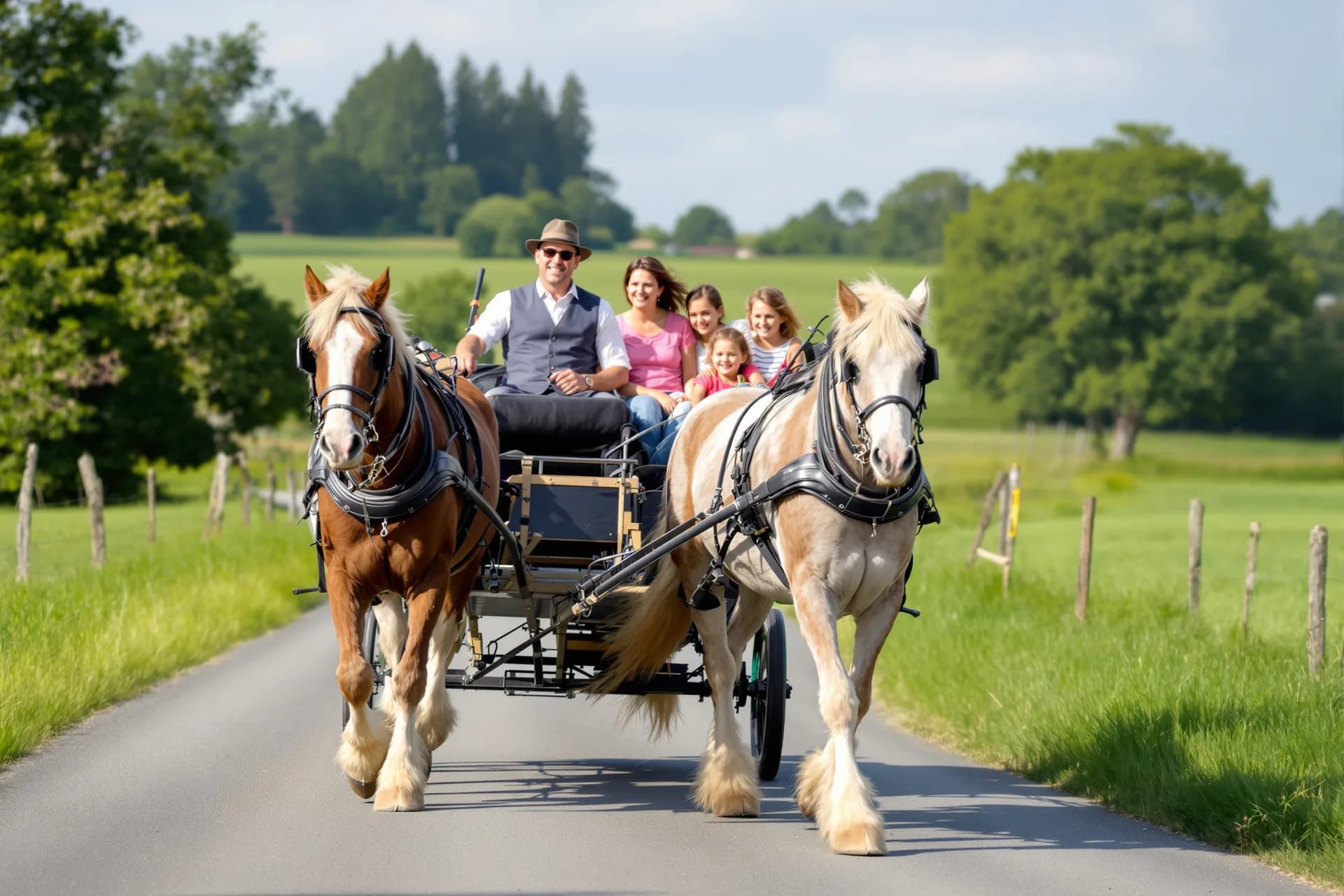
For purely private use, the carriage risk is in fact included free of charge with some providers in horse liability insurance. A private journey is, for example, a Sunday outing with the family, during which you do not receive any money. Some insurers define this very precisely and limit the number of passenger seats to a maximum of six. The HUK-COBURG, for example, covers damage caused during a private journey with a carriage. Check your policy carefully, because a trip for friends to celebrate an anniversary may already be regarded as a gratuitous service with increased risk. A comparison of horse liability insurance policies reveals significant differences here. As soon as even a small fee is involved, the cover of the private policy ends.
Commercial use: The need for special carriage liability insurance
As soon as you charge for carriage rides, you are operating commercially and need a specific carriage liability insurance policy. This applies to wedding rides, tourist tours or taking part in processions for a fee. A normal horse owner's liability insurance is unsuitable for this and would not pay a single cent in the event of a claim. The specialised policy covers the higher risks associated with transporting paying passengers. Premiums are often calculated according to the number of horses insured and the desired sum insured. The following points are decisive for commercial cover:
- Cover for paid passenger transport
- Cover for damage to hired property on the carriage
- Liability at events and celebrations
- Insurance cover for employees (coachmen)
- Adequately high sum insured for personal injury
Without this protection, you risk your entire financial existence in the event of an accident.
Coverage details: What a good carriage insurance policy must cover
A high-performing carriage insurance policy should offer a sum insured of at least five million euros on a lump-sum basis for personal injury, property damage and financial loss. Personal injury is the greatest risk and can lead to costs running into the millions, for example for lifetime pension payments. Make sure that damage to the passengers themselves is also covered. An important point is also protection against damage to a borrowed or hired carriage. Some policies also cover the risk if you rent the carriage to third parties. The question of how high the sum insured should be is therefore crucial. An insufficient sum can, in the worst case, mean financial ruin.
Legal pitfalls: The strict liability of animal keepers under Section 833 of the German Civil Code
The German Civil Code (BGB) regulates animal keeper liability in section 833. This section establishes what is known as strict liability. This means that, as the keeper, you are liable for damage caused by your horse, even without any fault on your part. If a horse breaks out and causes an accident, you are liable even if the fence was actually secure. The question of who is liable in the event of an escape is clearly regulated by law. This strict liability also applies without restriction to carriage rides and is further heightened by the operating risk of the carriage. In the event of damage, a court will examine whether you fulfilled all duties of care, but the basic liability remains. Insurance is therefore not a luxury, but an absolute necessity.
Expert tip: How to find the right insurance cover
To find the right policy, you should carry out a thorough needs analysis. Clarify whether your journeys are exclusively private or have a commercial character. Our expert tip: document your journeys so that, if in doubt, you can prove their private nature. Compare the terms and conditions of different providers in a targeted way. Pay attention not only to the price, but above all to the cover included. The following checklist will help you choose:
- Is the carriage risk explicitly mentioned in the policy?
- Is there a limit on the number of passengers?
- What is the sum insured for personal injury?
- Are third-party riders or carriage drivers also covered?
- Is there an excess in the event of a claim?
Careful review of these five points protects you from unpleasant surprises. This ensures that your insurance cover matches your individual risk.
Frequently asked questions
- Do I need extra insurance for each carriage ride?
No. If purely private carriage rides are covered under your existing horse liability insurance, you do not need an additional policy. However, for all rides offered for a fee, a separate commercial carriage liability insurance policy is required.
- What happens if I cause an accident without adequate insurance?
Without suitable insurance cover, you are liable with your entire personal assets for all damage incurred. In the case of personal injury, this can lead to lifetime pension payments and costs running into the millions, which means financial ruin.
- Are journeys by horse-drawn sleigh or covered wagon also insured?
The terms generally apply analogously to horse-drawn sleighs, wagons or sulkies as well. It is important that the towed vehicle is explicitly named in the policy or that the general "carriage risk" is insured. Check this in detail in your policy terms.
- How many horses are insured under the carriage liability insurance?
It depends on the contract. Often, one to three draught horses are included in the premium. If you use more horses in front of the carriage, these must be declared and insured separately, which adjusts the premium accordingly.
Sources
- [1]German Equestrian Federation (FN) offers figures and facts about the German Equestrian Federation (FN) and equestrian sport in Germany.
- [2]DEKRA provides information on carriage inspection.
- [3]TÜV Nord describes the carriage inspection.
- [4]German Equestrian Federation (FN) provides information and tips on horse husbandry.
- [5]Lower Saxony Chamber of Agriculture provides information on what you should know about horse husbandry.
- [6]German Equestrian Federation (FN) provides an overview of various horse insurance policies.