Equine Surgery Insurance & Tendon Injury: Costs & Coverage
Does equine surgery insurance cover tendon surgery? Diagnostics, follow-up care, waiting periods, and pre-existing tendon conditions.
All details are taken from the provider's linked product page and the contract documents (IPID/policy conditions) published there; the insurer's documents prevail. Premiums, benefits and the insurance product itself may change – please verify the details directly with the partner before signing up; only the information provided there is binding.
 Katrin StraubManaging DirectorInsurance expert with over 20 years of experience in the insurance industry.
Published on
12 min read
Table of Contents
Equine surgery insurance covers the costs of tendon surgery, provided the injury was not known when the contract was signed and the waiting period has elapsed. Reimbursement usually includes pre-operative diagnostics such as ultrasound or MRI, the surgical procedure itself, and follow-up treatment for a defined period. Tariffs differ in how they cover regenerative therapies.
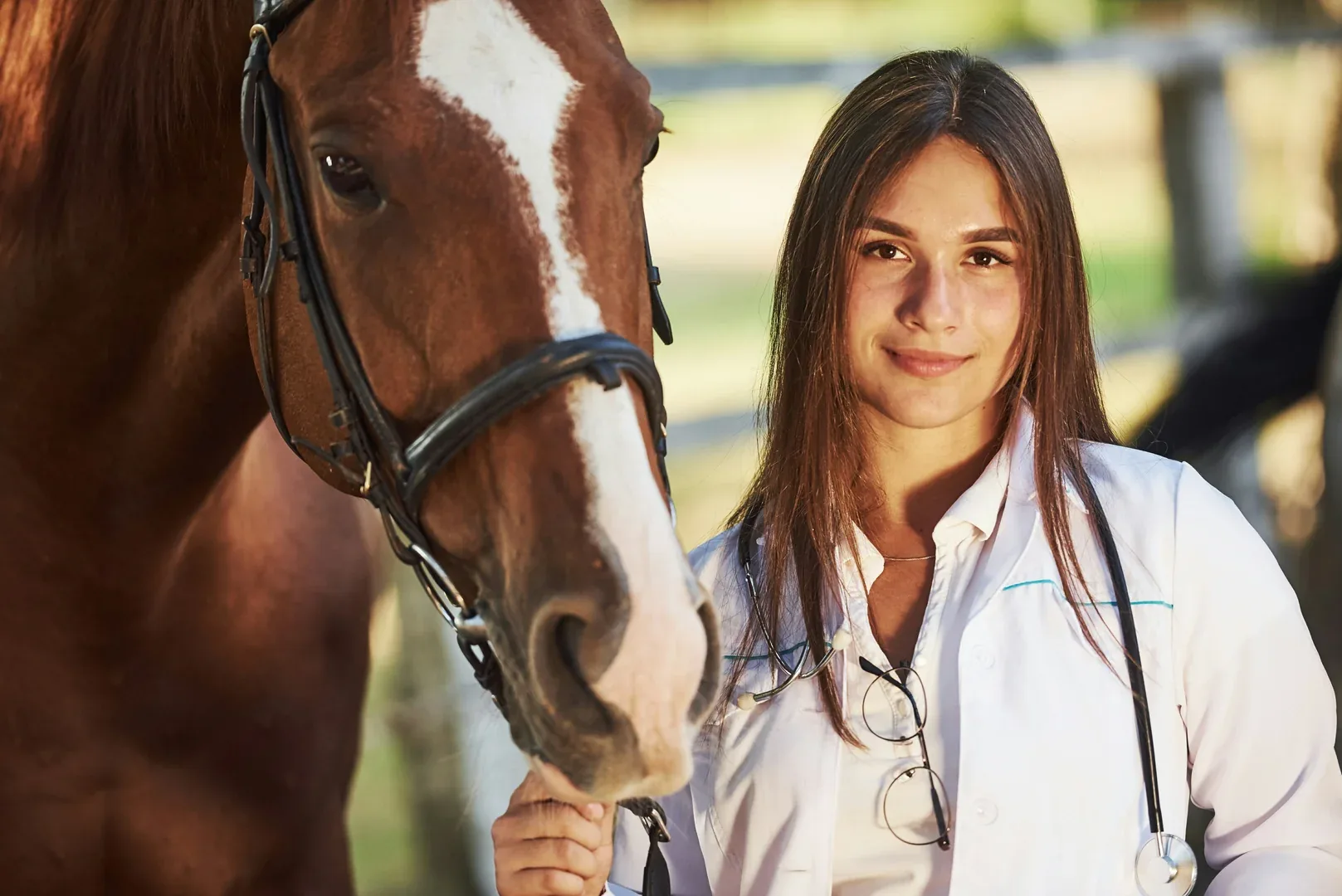
Equine surgery insurance
Horse surgery insurance via nextsure: Three flexible tariffs, reimbursement up to twice the GOT rate, and free choice of clinic worldwide. Protect your horse from high surgery costs – digital, transparent and uncomplicated.
Learn moreThe tendon injury cost trap and surgery cover
Financial risk with tendon injuries
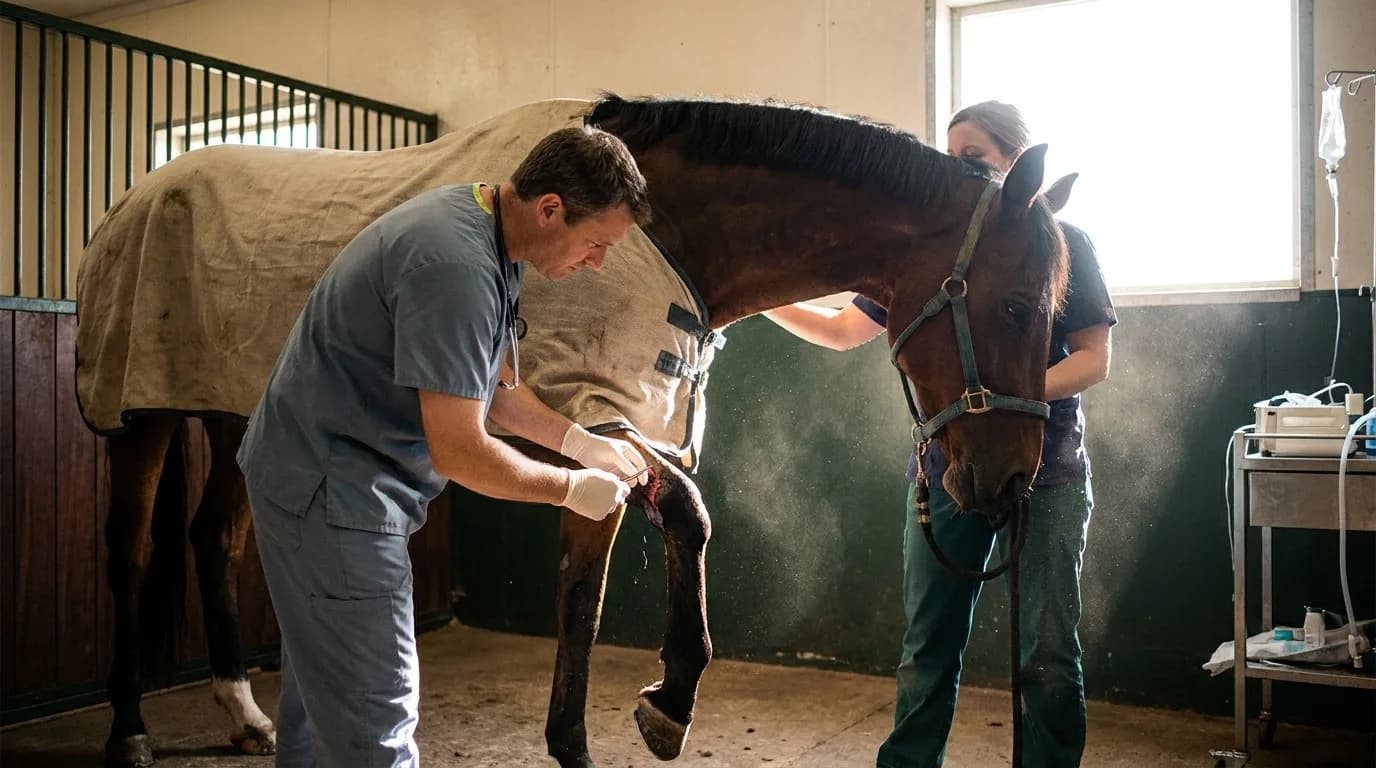
A tendon injury often causes incalculable costs. A tendon injury in a horse shows up as lameness and swelling and can be treated surgically [1]. The veterinary expenses for such specialized treatment quickly add up to several thousand euros. Surgery on tendons or tendon sheaths requires state-of-the-art clinics, experienced surgeons, and elaborate anesthesia procedures. Horse owners often underestimate the enormous financial risk that comes with high veterinary costs for horses. Without a suitable policy, owners bear the full economic risk of the surgical procedure and the subsequent long rehabilitation. This financial risk often forces owners without suitable cover into difficult decisions. Modern tariffs fortunately also cover procedures under standing sedation. According to Barmenia's insurance terms, this also includes primary and secondary wound sutures as well as tooth extractions.
Coverage through surgery cost insurance
Surgery cover kicks in at exactly this critical point and reliably covers the most expensive items of veterinary treatment. R+V's surgery cost insurance covers endoscopic operations on tendons and tendon sheaths [2]. This includes the costs of standing sedation or general anesthesia as well as the actual surgical service according to the veterinary fee schedule. Choosing a tariff that pays up to three or even four times the GOT rate is important here. Emergency call-outs on weekends or at night massively drive up billing rates. A strong tariff reliably absorbs these incalculable peak costs and protects the owner from financial overload. This can save someone's livelihood. Providers such as Barmenia also explicitly clarify in their terms that procedures under standing sedation, sedation, or local anesthesia are fully covered. In emergencies at night or on public holidays, Barmenia even reimburses up to four times the GOT rate, including the statutory emergency call-out fee.
Example: fetlock annular ligament surgery
A concrete example of such a complex procedure is fetlock annular ligament surgery. Fetlock annular ligament surgery in a horse, including anesthesia and a clinic stay, can quickly cost several hundred to a thousand euros [4]. Surgically severing the annular ligament relieves the underlying tendon structures and restores pain-free mobility. Such procedures require the utmost surgical precision and a sterile clinical environment. Surgery cost insurance covers these expenses provided the contractual requirements are met. When choosing a tariff, owners must make sure endoscopic procedures are explicitly included in the terms. Only then does cost coverage apply in an emergency, and the horse receives the best possible medical care. This safeguards recovery.
Diagnostics before the procedure: who pays for MRI and ultrasound?
The importance of imaging procedures
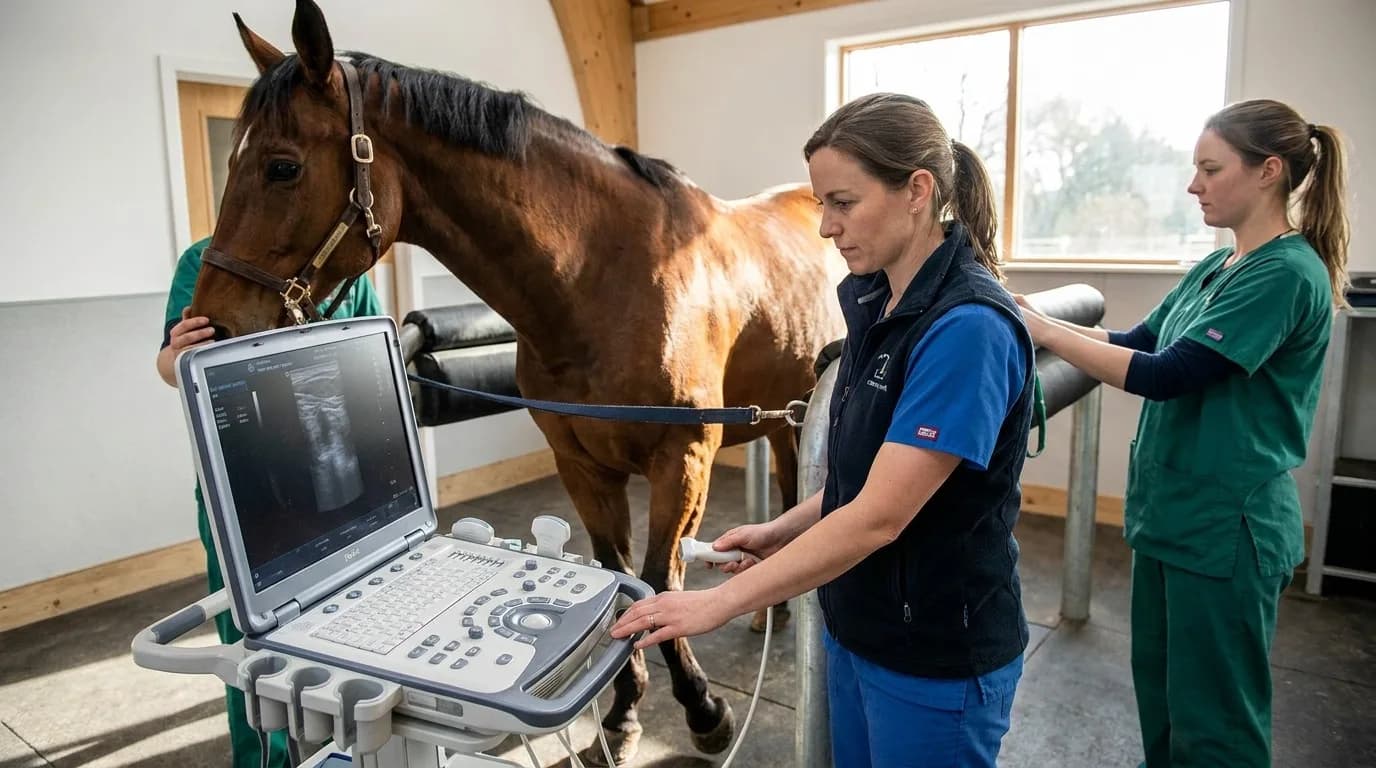
Diagnostics form the foundation for every successful tendon operation. Before the surgeon picks up a scalpel or endoscope, the exact extent of the tendon injury must be visualized through imaging. High-resolution ultrasound devices, digital X-ray systems, or even magnetic resonance imaging (MRI) are used here. These imaging procedures are extremely costly. An MRI on a standing horse alone often costs over a thousand euros. Precisely locating the damage, however, is essential. Only then can the veterinarian plan the surgical approach exactly and treat the injured tissue in a targeted way. Without this preparation, the procedure lacks anatomical precision. Barmenia explicitly lists X-ray, CT, and MRI as reimbursable imaging procedures.
Cost coverage when surgery follows
Cost coverage for these pre-examinations is clearly regulated in the insurance terms. If an operation is carried out, the insurance claim begins with the examination that was necessary to establish the diagnosis. Concretely, this means: if the MRI or ultrasound directly leads to the decision to operate on the horse, equine surgery insurance covers these costs in full. If the insured animal dies after anesthesia has begun, the operation is still contractually treated as having been carried out. The pre-examination therefore remains reimbursable. This rule protects the owner from being left with high diagnostic costs when the procedure was unavoidable. This provides financial security. All veterinary measures used to establish a finding are covered in this context.
Distinction from full health insurance
There is, however, an important distinction to note. If the diagnostics show that conservative treatment without surgery is sufficient, pure surgery cover does not apply. In this case, the owner bears the costs of the MRI or ultrasound themselves. This is where the key difference from full health insurance becomes clear. Full insurance reimburses diagnostic measures regardless of whether surgery follows. For horse owners, this means a strategic decision when structuring the contract. Nextsure analyzes these scenarios in detail and recommends the right coverage module that matches the individual security needs and budget exactly. Advice is essential here.
| Scenario | Surgery insurance | Full health insurance |
|---|---|---|
| MRI leads to tendon surgery | Costs are covered | Costs are covered |
| MRI leads to conservative therapy | No cost coverage | Costs are covered |
| Horse dies under anesthesia | Costs are covered | Costs are covered |
The exact reimbursement depends on the chosen tariff and the agreed maximum limits.
Follow-up treatment and regenerative therapies for tendon injuries
The critical rehabilitation phase
Follow-up treatment plays a decisive role in complete healing after tendon surgery. Tendon structures need a lot of time to regenerate and become fully load-bearing again. Aftercare and veterinary treatment are covered by many providers for up to 15 days from the day of surgery [2]. Other insurers extend this period to 17 calendar days after the procedure. During this phase, the insurer covers the costs of medication, dressing materials, and necessary follow-up checks by the veterinarian. This covers the first critical healing phase and prevents financial constraints from jeopardizing medically necessary care. Healing takes time.
Use of PRP and stem cells
Today, particular focus is placed on modern healing methods that actively support the healing process. Regenerative therapies such as IRAP, PRP, or stem cell therapy are covered by strong tariffs up to €1,000 per claim [3]. These methods use the body's own substances to speed up tissue regeneration in the tendon and minimize scarring. GHV even reimburses regenerative therapies such as IRAP, PRP, and stem cell therapy up to an amount of €1,500 [5]. Such amount limits are standard in the industry and must be considered carefully when comparing tariffs, to keep the best possible treatment option open for the horse. This is enormously important.
Accommodation and alternative healing methods
Besides the direct veterinary measures, costs for accommodation at the clinic often arise. Strong tariffs cover accommodation costs at the veterinary clinic after an operation for up to 10 days at a fixed daily rate [3]. Alternative healing methods such as acupuncture and physiotherapy performed by a veterinarian are also covered by certain providers up to €300 [5]. These complementary approaches support muscle building and mobility during the rehabilitation phase. A comprehensive tariff therefore doesn't just cover the incision — it accompanies the horse back to pain-free movement. Barmenia's premium cover even offers up to five physiotherapy sessions of up to 60 minutes each.
Typical benefits during the follow-up treatment phase
- Cost coverage for medication and dressing materials
- Veterinary follow-up checks and wound care
- Regenerative therapies such as PRP, IRAP, or stem cells (often amount-limited)
- Inpatient accommodation costs at the veterinary clinic (note the daily rates)
- Physiotherapy treatments by certified therapists
The exact follow-up treatment period varies by tariff between 10 and 17 days.
Pre-existing conditions and waiting periods for tendon surgery
Handling known injuries
Pre-existing conditions are a key criterion in application review and later claims processing. Illnesses, accidents, or acquired developmental defects that were already known at the time of application are excluded from cover. So if the horse already had a diagnosed tendon inflammation at the affected spot before the contract was signed, a later operation on exactly that tendon is not covered. Owners must maintain absolute transparency during the health assessment. False statements can result in the loss of all insurance cover. Honesty is the top priority here, so as not to jeopardize cover for future, unforeseeable events. This protects both sides.
General and special waiting periods
Besides the health questions, contractual deadlines play an important role. For claims arising from illness, the general waiting period is usually three months. Different rules, however, apply to certain procedures. Most insurers apply a general waiting period of three months to fetlock annular ligament surgery [4]. If the tendon injury results from an acute, provable accident, this waiting period generally does not apply at all. The term "accident" is strictly defined as an event suddenly affecting the body from outside. Chronic overuse injuries, by contrast, fall under the definition of illness and are subject to the waiting period. Barmenia also defines a special waiting period of 12 months for joint operations involving isolated shadowing, OC, OCD, or chips.
Interpreting the terms correctly
To avoid unpleasant surprises in the event of a claim, a close review of the contract terms is essential. The exclusions for pre-existing conditions vary in detail between insurers. Some companies offer the option of lifting an exclusion again after a certain symptom-free period. Nextsure helps horse owners understand these complex clauses and find the provider with the fairest risk assessment. A transparent comparison protects against coverage gaps and ensures that the policy delivers exactly what the horse owner expects in an emergency. This builds trust. Castrations for medical reasons are also often subject to a special six-month waiting period.
Scope of benefits compared across tariffs
Differences in reimbursement rates
The scope of benefits varies considerably in the animal insurance market. Not every policy offers the same protection for complex procedures on the musculoskeletal system. Uelzener's equine surgery insurance offers tariffs with 100 percent reimbursement independent of the GOT rate [1]. Other providers only cover twice the rate as standard and demand significant premium surcharges for higher rates. The exact definition of the benefits of equine surgery insurance determines, in an emergency, how much money the owner has to pay out of pocket. A tariff with no GOT cap offers the highest financial protection for nighttime emergency operations. Comparing pays off.
Special rules for joints and tendons
Another differentiator is how special joint operations and isolated shadowing are handled. With some providers, a special waiting period of 12 months applies to joint operations involving isolated shadowing, OC, OCD, or chips. Some tariffs also cap the surgery costs per day, including anesthesia, for these specific procedures. Such detailed rules are often hidden deep within the terms and conditions. A professional broker filters out these restrictions and makes them transparent for the customer. Only this way can a tariff be found that fits the horse's breed and use perfectly. Barmenia, for example, explicitly excludes gold acupuncture and operations due to hoof abscesses from insurance cover.
Deductibles as a strategic tool
Choosing the reimbursement rate and a possible deductible directly affects the monthly premium. Tariffs with a deductible of €250 or €500 per claim noticeably lower the ongoing premium. For horse owners who primarily want to cover the existential risk of a €5,000 operation, this is an economically sound strategy. Nextsure calculates these scenarios individually and objectively compares the cost-benefit ratio of different tariff options. This way, every owner finds the balance between affordable premiums and reliable cover in the event of surgery. This saves real money. Routine examinations and cosmetic dental treatments remain generally excluded from reimbursement across all providers.
The path to the right cover for your horse
Curated tariffs instead of confusing lists
Insuring a horse requires a tailored strategy. The market is confusing, and comparison portals often direct users to unsuitable tariffs. Nextsure takes a different approach here. Instead of a confusing grab-bag of products, the platform offers hand-picked tariffs. This curated approach ensures that only policies that reliably pay out in the event of a claim are brokered. The digital needs analysis captures the horse's specific risks, such as age, breed, and type of use. Based on this, an individual risk profile is created that serves as the basis for selecting a tariff. Quality comes first. Niche products such as equine surgery insurance require deep expertise.
Independent advice from the broker
The process up to signing the contract is fully digitized and transparent. Horse owners receive a clear tariff proposal within minutes. Nextsure acts as an independent insurance broker under Section 34d of the German Trade Regulation Act (GewO). This means the experts work for the customer, not for a particular insurer. This independence guarantees objective advice. Anyone looking for the right cover for their animals benefits from this clear representation of their interests. The broker is liable for their recommendation and provides advisory support even on complex health questions. This provides security. Customers do not incur any additional fees, since the broker is paid through commissions.
Digital management of all contracts
Besides pure surgery insurance, complementary modules can also be usefully combined. Horse owner liability insurance is an absolute must, while rider accident insurance protects the person in the saddle. Nextsure bundles these contracts in a clear digital management system. Customers have access to their policies at any time and can make changes online with no hassle. This saves time and significantly reduces the administrative burden for the horse owner. In the event of a claim, all relevant documents are immediately at hand, which massively speeds up processing with the clinic and the insurer. Everything is stored centrally. The platform is specifically aimed at digitally savvy private customers.
Reporting a claim and direct billing with the clinic
Fast processes in an emergency
Reporting a claim requires efficient processes in an emergency. When the horse is brought to the clinic with an acute tendon injury, administrative processing takes a back seat. Modern insurers allow digital submission of invoices and findings directly through an app or web portal. The invoice must state the owner's name, the horse's identification number, and the exact diagnosis. The billed service items must also be broken down in detail according to the applicable fee schedule. A cleanly documented process enormously speeds up review by the claims department. This saves valuable time. Barmenia requires invoices to be submitted no later than one month after treatment ends.
Protecting liquidity through direct billing
A huge advantage of strong tariffs is the option of direct billing. On the policyholder's explicit instruction, many insurers settle the services provided directly with the treating veterinarian or the veterinary clinic. The insurer transfers the reimbursable amount directly to the medical facility. In this case, the horse owner does not have to advance several thousand euros. This protects liquidity and reduces financial pressure in an acute situation. It's advisable to raise this option already when the horse is admitted to the clinic. This provides enormous relief. Barmenia offers this direct billing on the customer's explicit instruction.
Support from the broker
To avoid delays in payment, all documents should be submitted in full. Completeness is crucial. If special diagnostic procedures such as MRI or ultrasound were necessary for treatment, insurers often require the corresponding examination documents to be submitted. Nextsure supports its customers in the event of a claim and helps with communication with the insurer. This service ensures that legitimate claims are settled quickly and without unnecessary follow-up questions. Having a competent point of contact at their side gives horse owners the security they need to focus fully on their animal's recovery. We're happy to help. Barmenia reserves the right to have the animal examined by its own veterinarian.
Frequently asked questions
- Does equine surgery insurance pay for tendon surgery?
Yes, strong equine surgery insurance covers the costs of tendon surgery. This includes endoscopic procedures on tendons and tendon sheaths as well as fetlock annular ligament operations. This requires that the injury was not known when the contract was signed and that any waiting periods have elapsed. Reimbursement usually covers the anesthesia, the surgical procedure, and accommodation at the veterinary clinic.
- Does an already known tendon injury count as an excluded pre-existing condition?
Yes, illnesses or injuries that were already known at the time of application are excluded from insurance cover. If the horse already had a condition affecting the tendon in question before the contract was signed, the insurer will not cover the cost of a later operation on exactly that spot. Honesty is crucial here. Answering the health questions on the application completely truthfully is essential so as not to jeopardize insurance cover.
- Are imaging procedures for diagnosis before the operation covered?
The costs of pre-operative examinations such as ultrasound, X-ray, or MRI are covered, provided they directly lead to the decision to operate on the horse. If the diagnostics show, however, that conservative treatment is sufficient and no operation takes place, pure surgery insurance does not cover these examination costs. In such cases, only full health insurance would pay out.
- Are regenerative therapies such as PRP included in follow-up treatment?
Many premium tariffs now reimburse regenerative therapies as part of follow-up treatment after an operation. Methods such as IRAP, PRP, or stem cell therapy are often covered up to certain maximum limits, for example €1,000 or €1,500 per claim. These modern methods significantly speed up the healing of tendon structures. A close look at the terms of the respective tariff is essential here.
- How long is follow-up treatment covered after tendon surgery?
The duration of covered follow-up treatment varies by provider and tariff. Periods of 10, 15, or 17 calendar days from the day of surgery are common. During this phase, the costs of medication, dressing materials, follow-up checks, and sometimes physiotherapy treatments are reimbursed. Ongoing follow-up treatment often remains covered even if the contract ends during this period.
- Does the waiting period not apply for a tendon injury caused by an accident?
Yes, for claims that are demonstrably due to an accident, the general waiting period generally does not apply at all. An accident is defined as an event suddenly affecting the horse's body from outside. The cause is decisive. If the tendon injury results from chronic overuse or wear, however, the regular waiting period for illnesses, usually three months, applies.
Sources
Conclude directly online
Verified partner tariffs at no extra cost. The button takes you straight to the provider's calculator.
 Barmenia
Horse surgery insurance
Surgery cost cover for horses in case of illness and accidents, including diagnostics and after-care.
- Waiting period:
- 3 months (colic surgery: 5 days, accidents: none)
- Coverage abroad:
- worldwide, up to 12 months
- Maximum benefit:
- depends on the cover level, as stated in the policy
- Surgery costs for illness and accidents, including tooth extractions and root canal treatment
- Pre-surgical examination (X-ray, endoscopy, biopsy, lab work)
- After-care including acupuncture, homeopathy, physiotherapy, laser therapy
- Emergency veterinary service up to 4x the standard veterinary fee schedule (GOT) rate plus the emergency callout fee
- Premium cover: up to 5 physiotherapy sessions (max. 60 minutes each) after the after-care period ends
- Once per animal: surgery costs for a birth-related, medically necessary caesarean section
Key exclusions
- Illnesses and developmental abnormalities known at the time of application
- Hoof abscesses and hoof ulcers (exception: hoof cancer)
- Surgery due to cryptorchidism
- Neutering that isn't medically necessary
Service-Champions GOLD: Nr. 1 der Versicherer im Multikanalvertrieb (ServiceValue, 10/2024)
Barmenia (Anbieter der Pferde-OP-Versicherung)
Special waiting periods: 12 months for joint surgery (chip fragments, OC/OCD, Birkeland fractures), 6 months for medically necessary neutering; Premium cover includes a waiver of the insurer's right to cancel from the 7th insurance year.
Fact sheet: benefits, exclusions and waiting periods in detail
All details are taken from the provider's linked product page and the contract documents (IPID/policy conditions) published there; the insurer's documents prevail. Premiums, benefits and the insurance product itself may change – please verify the details directly with the partner before signing up; only the information provided there is binding.
Information last updated: July 2026 · Source: provider product information (IPID/policy conditions)