Loan for photo equipment
Learn how photographers can secure a loan for high-quality photo equipment. Including tips on costs, bank requirements and taxes.
All details are taken from the provider's linked product page and the contract documents (IPID/policy conditions) published there; the insurer's documents prevail. Premiums, benefits and the insurance product itself may change – please verify the details directly with the partner before signing up; only the information provided there is binding.
 Katrin StraubManaging DirectorInsurance expert with over 20 years of experience in the insurance industry.
Published on
Last updated on
7 min read
Table of Contents
Professional photography equipment can quickly cost over €10,000 and represents a major financial hurdle for many creatives. A well-planned loan to purchase high-quality photography equipment can be the key to achieving your professional goals. This article shows you the way to successful financing.
Camera Equipment Insurance
Secure your valuable camera equipment thoroughly against damage, theft, and loss with the camera equipment insurance from nextsure. Tailored protection for professionals and hobby photographers.
Learn moreThe investment barrier: Why professional equipment costs over 10,000 euros
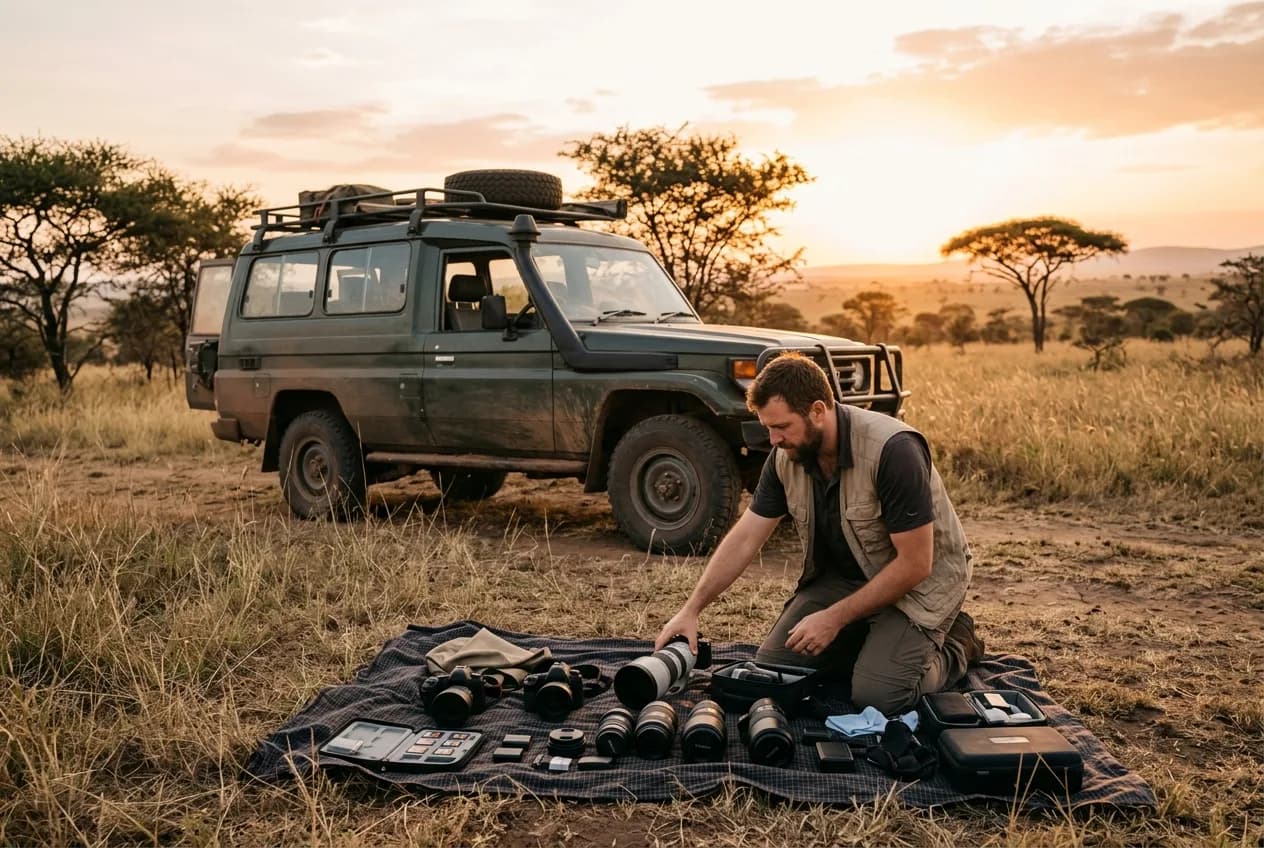
A professional photography kit is a significant investment that quickly exceeds €10,000. A top-of-the-range camera body alone can cost between €3,000 and €6,000. For a single high-quality lens, you should expect to pay a further €2,000 to €4,000. Many professionals need at least three different lenses to be fully equipped for every assignment.
The costs soon add up because of essential accessories. A powerful flash costs around €500, while a sturdy tripod comes in at €300. Some professional photographers write off up to €25,000 a year for their equipment. These sums illustrate why a well-considered financing solution is often unavoidable.
Here is an example cost breakdown for a professional basic kit:
- Camera body (mirrorless full-frame camera): €3,500
- Standard zoom lens (24-70mm f/2.8): €2,200
- Portrait prime lens (85mm f/1.4): €1,800
- Wide-angle lens (16-35mm f/4): €1,200
- Two spare batteries and fast memory cards: €400
- Professional camera backpack: €250
- Tripod and flash unit: €800
This calculation brings the total to €10,150, excluding the cost of software and a powerful computer. The need for a loan becomes obvious in order to remain competitive.
Your financing roadmap: securing the right loan for your camera
There are various loan models available to finance your equipment. A classic personal loan with no restrictions on use offers maximum flexibility. Alternatively, a purpose-bound loan can often offer more favourable interest rates, as the bank considers the equipment’s tangible value as security. The terms typically range between 12 and 84 months.
As a freelancer, you must convince banks of your creditworthiness. Banks usually require the income tax assessments for the last two to three years. A current management accounts report (BWA) is also a key document for the loan application. A carefully maintained household budget shows the bank your financial discipline.
To submit a loan application, as a self-employed person you will usually need the following documents:
- Valid identity card or passport
- The last two to three income tax assessments
- Current management accounts report (BWA)
- Proof of other income and expenses
- An impeccable SCHUFA report
- If applicable, a business plan explaining the investment
The completeness of these documents is the first step towards a positive credit decision and paves the way for acquiring the equipment you want.
Increase your chances of approval: What banks really check
Your creditworthiness is the decisive factor for lending. Banks assess your financial reliability primarily via a SCHUFA report. A score above 95 per cent signals a low risk of default and significantly increases your chances. You can actively improve your creditworthiness through timely payments.
Banks also assess your economic capacity. A positive profit and loss statement (P&L) over recent years is essential here. Missing collateral can be offset by a guarantee, for example via a guarantee bank. This reduces the risk for the bank and makes approval more likely.
Some credit institutions reject applications from self-employed people who have been in business for less than three years. In such cases, a loan for creatives with irregular income from specialist providers can be an alternative. They often assess your potential based on criteria other than your previous business figures alone. Once the financing is in place, protecting your new, expensive equipment comes into focus.
Investment protection: Why camera insurance is essential from day one
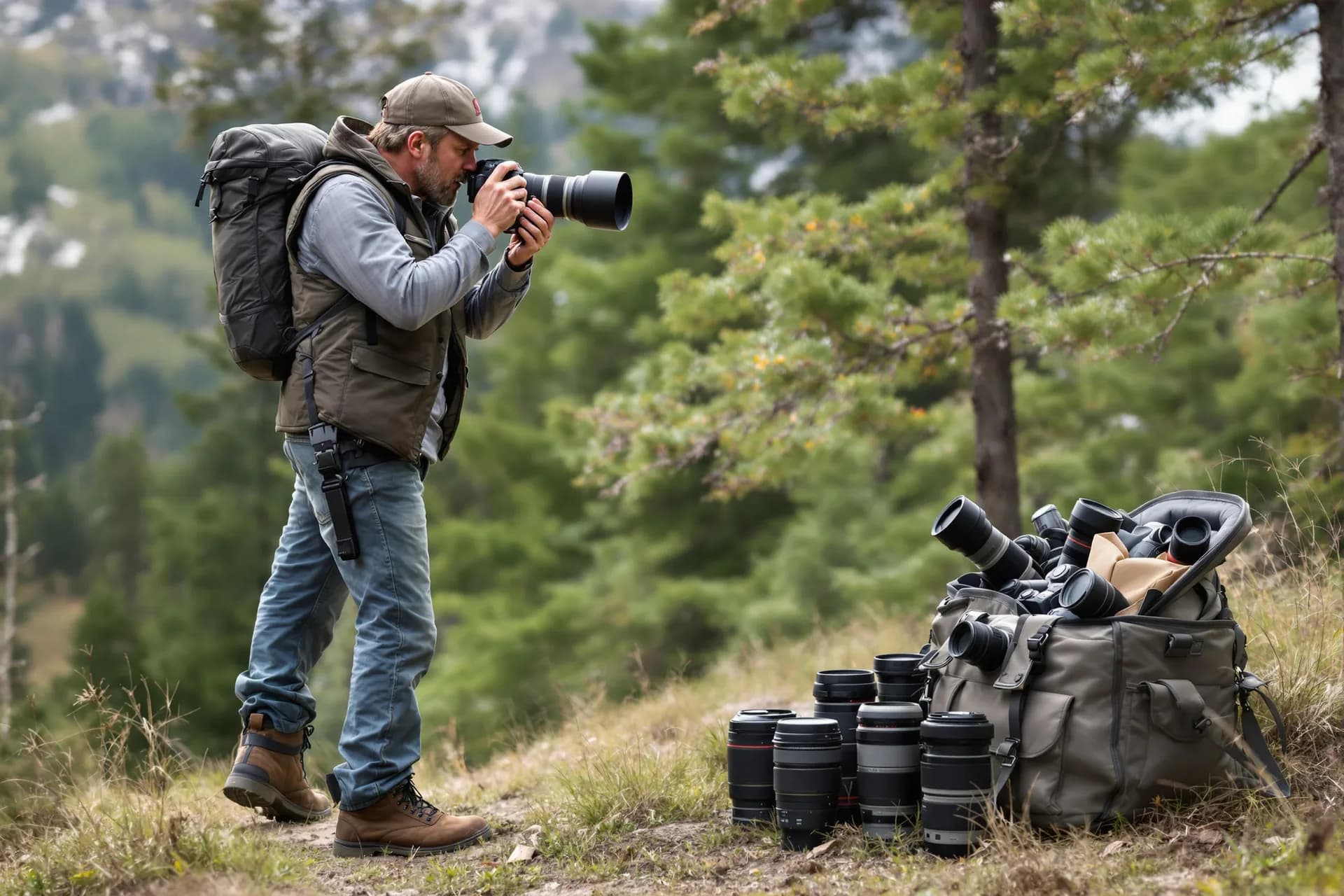
A fall, water damage or theft – your new equipment worth over 10,000 euros is exposed to many risks. A comprehensive camera equipment insurance policy is therefore not an option, but a necessity. The cost of such insurance is low compared with the potential loss. It amounts to around one to two per cent of the equipment value per year.
For equipment worth 10,000 euros, that means an annual premium of 100 to 200 euros. Good policies offer replacement-at-new-value compensation, so in the event of a claim you receive an equivalent new device. Make sure that cover applies worldwide and also in cases of gross negligence. Many policies also cover accessories such as lenses, tripods and even hired equipment.
A good camera insurance policy should cover the following damage:
- Drop and breakage damage
- Liquid damage
- User error and clumsiness
- Theft, burglary and robbery
- Damage caused by fire, short circuit or power surge
- Vandalism and sabotage
This ensures your hardware is protected. But what happens if, due to unforeseen events, you can no longer pay the instalments?
Risk management: When residual debt insurance is worthwhile for a loan
A debt protection insurance policy (RSV) steps in if you can no longer meet your loan repayments due to incapacity for work, involuntary unemployment or in the event of death. This protection can be required by the bank as a condition for the loan, particularly in the case of weaker creditworthiness. However, the costs are considerable and can increase the loan amount by ten to twenty per cent.
For loans above €25,000 or if you are the sole earner in your family, an RSV can make sense. However, consumer advocates often advise cheaper alternatives such as separate life or income protection insurance. These often offer more comprehensive cover on better terms. A fast business loan should not be burdened with unnecessarily expensive add-on products.
Check the insurance terms carefully. There are often waiting periods of several months before the policy pays out in the event of unemployment. In addition, the commissions for banks are high, which further drives up the costs for you as the borrower. Sound financial planning also includes the tax advantages of your investment.
Make the most of tax benefits: How to smartly deduct your new equipment
The purchase of your photo equipment is a business expense that you can claim for tax purposes. Expensive capital assets costing more than 800 euros net must be depreciated over their normal useful life. According to the official AfA table (depreciation table), the useful life for photographic equipment is seven years.
This means you can deduct the purchase costs from your taxes over seven years. With equipment worth 7,000 euros net, you can claim 1,000 euros a year as a business expense. This reduces your taxable profit and therefore your tax burden. The interest on the loan with unrestricted use is also fully deductible as a business expense.
Accessories costing less than 800 euros net can often be fully written off in the year of purchase as low-value assets (GWG). This provides an immediate tax advantage. Careful bookkeeping and advice from a tax adviser help you make full use of all legal options. That means the loan for purchasing high-quality photo equipment becomes not only a creative, but also an economically smart decision.
Frequently asked questions
- Can I get a loan as a newly self-employed photographer?
It is more difficult, but not impossible. Banks like to see a business operating for at least two to three years. However, a solid business plan, equity capital or a guarantor can significantly improve the chances. Some specialist providers also grant loans to founders.
- What is the difference between a loan for any purpose and a purpose-bound loan?
A loan for unrestricted use gives you the flexibility to use the money for any purpose. A purpose-specific loan is, as the name suggests, tied to the purchase of the photo equipment. The latter often has slightly better interest terms, as the equipment serves as security for the bank.
- How high should my monthly loan instalment be?
The monthly instalment should be comfortably affordable from your average monthly surplus. Prepare a detailed household budget (income minus fixed and variable expenses) to determine a realistic and manageable instalment that does not jeopardise your liquidity.
- What happens if my camera is stolen during the loan term?
If you have taken out good camera insurance, it will reimburse you the value of the equipment. The loan agreement with the bank continues unaffected. Without insurance, you must keep repaying the loan even though you no longer own the equipment.
- Can I repay the loan early?
Yes, with most personal loans, free special repayments or early full repayment are possible. Check the exact terms in your loan agreement. Sometimes an early repayment fee may apply, but this is legally limited.
- Are the interest payments on a loan for my photo equipment tax deductible?
Yes, if you can prove that you took out the loan for your professional activity as a photographer, you can claim the interest paid in full as business expenses in your tax return. This reduces your taxable profit.
Sources
- [1]Bundesbank offers statistics on interest rates and yields for consumer loans to private households.
- [2]Bundesbank provides statistics on loans to domestic companies and self-employed persons by economic sector.
- [3]Destatis provides comprehensive information on assets and debt in Germany.
- [4]Destatis provides tables on the average debt of private individuals in Germany.
- [5]KfW provides information on start-up and succession financing for businesses.
- [6]Bankenverband provides comprehensive information on the German banking sector.
- [7]Verbraucherzentrale provides information on loans and savings options.
- [8]Bundeswirtschaftsministerium provides information on start-up financing through the microcredit fund.
Conclude directly online
Verified partner tariffs at no extra cost. The button takes you straight to the provider's calculator.
 Hepster
Camera insurance
Worldwide cover for new and used cameras, including original accessories.
- Coverage area:
- worldwide
- Battery-wear threshold:
- up to 60% remaining capacity, device max. 4 years old
- Minimum term:
- 3 months (monthly subscription)
- Drop, breakage, sand, and liquid damage
- Fire, explosion, power surge, short circuit, sabotage, vandalism
- Battery and screen damage, plus battery wear (where not covered by warranty)
- Operating errors and improper handling
- Theft module: theft, burglary from a car or home, robbery
Key exclusions
- Loss and forgetting outside the insured theft scenarios
- Devices without a known serial/IMEI number
- Damage covered under warranty or manufacturer's guarantee
- Gross negligence or intentional acts
Trusted Shops: 4,5/5 „Sehr gut“ (2.600 Bewertungen)
hepster insgesamt (Anbieterbewertung, alle Versicherungen)
Claims must be reported online within 14 days; theft must be reported to the police within 24 hours. Insurer: Hiscox SA, Niederlassung für Deutschland
Fact sheet: benefits, exclusions and waiting periods in detail
All details are taken from the provider's linked product page and the contract documents (IPID/policy conditions) published there; the insurer's documents prevail. Premiums, benefits and the insurance product itself may change – please verify the details directly with the partner before signing up; only the information provided there is binding.
Information last updated: July 2026 · Source: provider product information (IPID/policy conditions)