Camera Insurance for Screen & Drop Damage
Does camera insurance cover screen breaks and drop damage? Coverage scope, liability, depreciation, and worldwide protection.
All details are taken from the provider's linked product page and the contract documents (IPID/policy conditions) published there; the insurer's documents prevail. Premiums, benefits and the insurance product itself may change – please verify the details directly with the partner before signing up; only the information provided there is binding.
 Katrin StraubManaging DirectorInsurance expert with over 20 years of experience in the insurance industry.
Published on
12 min read
Table of Contents
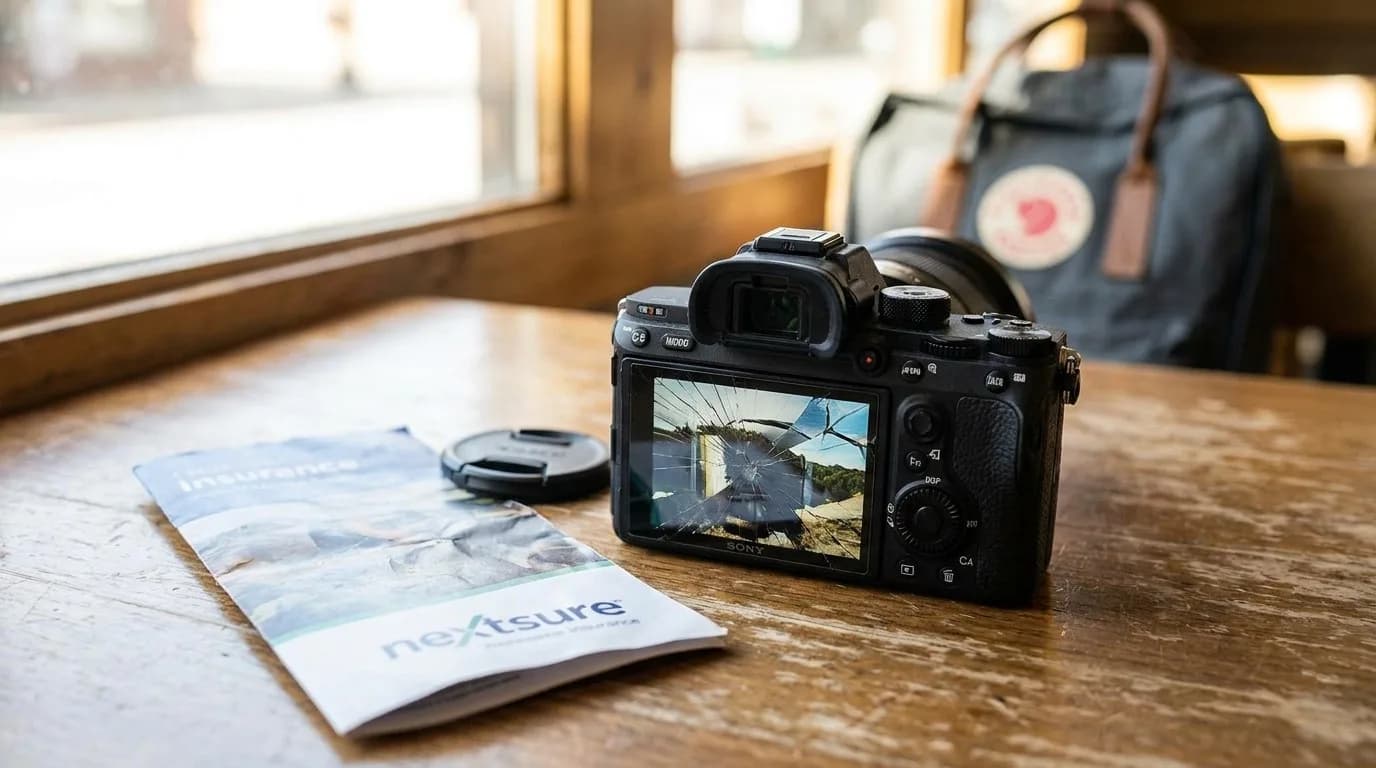
If the camera falls and the screen shatters, a specialized camera insurance policy covers the cost of screen breakage and drop damage, provided the device's intended function is impaired. Purely cosmetic flaws such as scratches are excluded. The payout covers repair costs, or the current value in a total loss, even if the damage resulted from your own carelessness.

Camera Equipment Insurance
Secure your valuable camera equipment thoroughly against damage, theft, and loss with the camera equipment insurance from nextsure. Tailored protection for professionals and hobby photographers.
Learn moreDamage scenarios for screen breakage and drop damage
Mechanical force as the main cause
Damage scenarios around screen breakage or drop damage form the operational core of cover for high-value photo equipment. A careless moment in the studio or on rough terrain is enough for an expensive camera to hit the ground and the housing to shatter badly. Mirrorless system cameras with large, unprotected screens are especially vulnerable. Specialized policies comprehensively cover exactly this kind of mechanical force. Cover applies to drops, breakage, and sand and liquid damage, provided intended use is impaired as a result [1]. A key factor for professional photographers and serious hobbyists alike. Repair costs for modern system cameras quickly exceed a thousand euros. That makes dedicated hardware cover essential. Without this cover, painful liquidity squeezes threaten. When a claim is filed, insurers check precisely whether the mechanical force came from outside. Internal short circuits with no external cause fall under other coverage modules. That's an important detail.
Cover for operating errors
Besides classic drop damage, operating errors and improper handling are also very common causes of expensive defects in modern cameras. A gust of wind is often enough to knock over a lightweight travel tripod along with expensive equipment. Providers such as R+V Versicherung explicitly include such operating errors in their electronics tariffs to close coverage gaps [3]. Schutzklick likewise confirms in its terms that damage from the owner's carelessness is covered as standard [2]. A high-performance camera insurance policy therefore also protects against the financial consequences of your own mishaps in a stressful working day. That creates planning certainty for day-to-day production. If an assistant locks the tripod incorrectly and the camera falls, the cover applies. Such operational mistakes happen even to experienced teams. The policy acts as a financial safety net here. The only requirement is that there was no intent.
Accessories and identifiability
Cover usually extends not just to the camera body itself but also to the original accessories included in the box. If the camera falls onto a hard floor along with an expensive lens, the insurer settles the entire claim in one go. What matters here is being able to clearly identify the insured devices via the serial number or IMEI number. Without this exact registration, insurers strictly refuse to pay for screen breakage [1]. Complete documentation of the equipment is mandatory. Photographers must enter these numbers into the portal directly at sign-up, or at the latest when buying new equipment. Most providers offer convenient online dashboards for managing equipment. Serial numbers reported only after a drop event inevitably lead to the claim being rejected. Precise record-keeping is an absolute must here.
Distinguishing functional damage from cosmetic flaws
The definition of functional damage
The distinction between genuine functional damage and purely cosmetic flaws is a decisive criterion in claims processing. A scratch on the housing is not reimbursable drop damage as long as the camera works flawlessly and records images. Hepster clearly defines that cosmetic flaws such as scratches, scuffs, and cosmetic cracks are excluded from insurance cover [1]. The camera's function must be impaired. This protects the community of policyholders from expensive payouts for purely trivial damage. If a drop merely chips the paint on the magnesium housing, the photographer is left with this cosmetic blemish. A cosmetic blemish lowers resale value but does not trigger a claim. Only once buttons jam or seals tear does the case become claimable. This hard line is standard across the industry.
Screen breakage as a clear insured event
Screen breakage, by contrast, is almost always a claimable case, since it severely limits the viewfinder and control panel. Once the glass shatters, the camera can no longer be used as intended for checking images. In such cases, the policy's cover applies immediately. Insurers check, based on submitted photos or expert reports, whether the mechanical force destroyed functionality. That's the objective standard. Modern touchscreens often stop responding to input entirely after a break. Without touch function, many modern camera systems simply can no longer be focused or configured. This completely blocks the camera's menu controls. The insurer then covers a full replacement of the screen unit. Repairs of this kind often cost several hundred euros.
Exclusion of normal wear
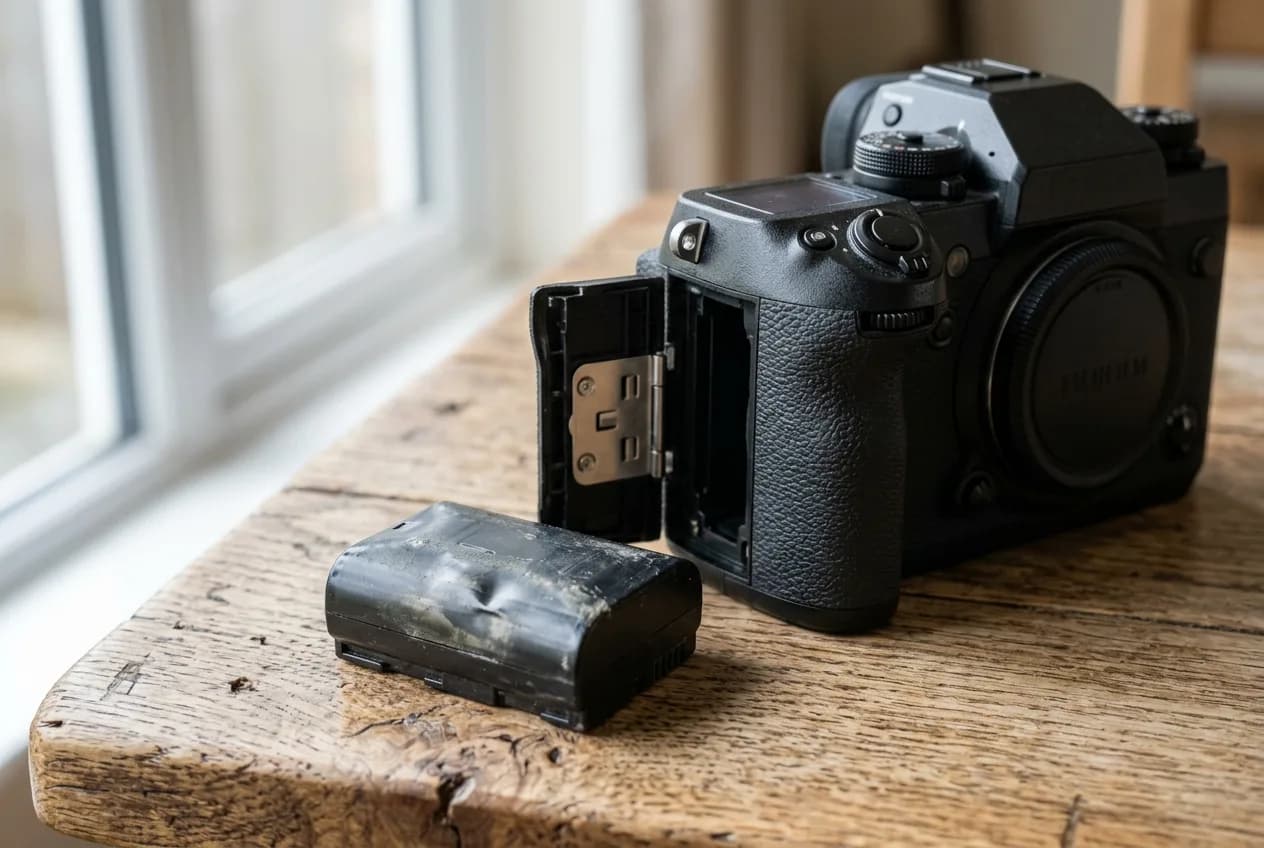
Signs of wear likewise do not fall under the coverage for acute drop damage. Electronics insurance generally does not cover damage from normal wear and tear [1]. Battery wear is often an exception, under strictly defined conditions. Hepster, for example, pays out for battery damage provided maximum battery performance drops below 60 percent and the insured device is younger than four years [1]. Such fine details differentiate tariffs on the market considerably. A shutter that fails after 300,000 actuations is classic wear and not an accident. Insurers often check actuation counts digitally via the camera's EXIF data. If the camera falls, however, and the shutter jams from the impact, that counts as insured drop damage. The workshop's determination of the cause is decisive here.
Own fault versus gross negligence
Simple negligence in everyday use
Own fault is usually the primary cause of drop damage, but must be strictly separated in legal terms from gross negligence. If the camera falls from your hand because you trip, that's simple negligence. This is firmly anchored in insurers' terms and is settled without objection. Grossly negligent or even intentional conduct, on the other hand, leads to a total loss of insurance cover. This line is highly relevant legally. Anyone who leaves their equipment out in the rain is acting with gross negligence. Anyone who slips while changing a lens, however, benefits from the policy's cover. Anyone who properly uses the camera strap and still drops the camera has nothing to worry about. The burden of proof for gross negligence lies with the insurer in a dispute. Even so, photographers should always exercise due care.
Definition of gross negligence
The definition of gross negligence covers actions where the required standard of care is violated to a particularly severe degree. Anyone who places their camera unsecured on a moving car's roof is acting with gross negligence and loses their claim. An accidental bump against a table edge, by contrast, is classic, insured drop damage. Providers like Wertgarantie stress that improper handling is generally covered under specialized device protection [4]. A relevant module for everyday operational use. Using a wobbly tripod without adequate weighting can, in individual cases, also be classed as gross negligence. Photographing in heavy surf without a protective housing is likewise often classed as gross negligence. Case law here is guided by common sense. Every incident is assessed individually against these criteria.
Relevance for content creators
For content creators, this clear distinction is essential, since they often work in dynamic and unpredictable environments. Camera insurance for content creators must reliably cover exactly these everyday risks and mishaps. nextsure checks, when curating tariffs, whether the negligence clauses are worded in a customer-friendly way. This way, cover remains reliable even in hectic production moments. How practical the terms are decides the quality. Vloggers often film one-handed or use unconventional mounts for their cameras. With action cams and drones especially, the line between normal use and risky use blurs. If a mount comes loose and the device falls onto the asphalt, the policy needs to apply. A good tariff doesn't blanket-exclude such industry-standard usage scenarios.
Tariff models and flexible term options
Monthly subscriptions for maximum flexibility
Modern insurers' tariff models offer different term options tailored to individual needs. Consumers can choose between fixed contract terms, annual subscriptions, and highly flexible monthly subscriptions. A monthly subscription offers maximum flexibility but often requires an initial minimum term of three months. After that, an extremely short notice period of just three business days before the end of the respective insurance period applies [1]. That increases operational flexibility. Anyone renting or buying an expensive cinema camera for just a three-month shoot does best with this model. The monthly premium is only marginally higher, but there's no long-term tying-up of capital. Payment is conveniently made by direct debit or credit card, minimizing administrative effort. Such micro-layer policies fit perfectly with the modern gig economy.
Annual subscriptions and fixed terms
Annual subscriptions renew automatically from year to year unless cancelled by the policyholder in time. Here too, providers like Hepster apply a fair notice period of three business days before the end of the period [1]. Fixed contract terms, by contrast, end automatically at the exact agreed date, with no ordinary right of cancellation. These fixed terms are especially suited to tightly time-limited projects. Photographers appreciate this exact predictability. An annual subscription, calculated over twelve months, usually offers the lowest effective price. It's the standard model for professional photographers with their own, permanently used equipment. A missed cancellation deadline ties the customer to the contract for another twelve months. Automatic renewal also prevents dangerous coverage gaps in the following year.
Choosing based on need
Choosing the right model depends heavily on how often the camera is actually used. Anyone who only needs the equipment for a specific trip benefits from short-term options. For permanent, professional use, an ongoing subscription with better rates is recommended instead. nextsure helps users compare these tariff structures transparently and identify the optimal term for their own use case. Transparency is the top priority here. Switching between models is easy with many providers once the initial term ends. Additional devices can also often be flexibly added to an existing contract. This way, a monthly subscription can later be converted into a cheaper annual tariff if ongoing need arises. That saves real money.
| Tariff model | Renewal | Notice period | Ideal use case |
|---|---|---|---|
| Monthly subscription | Automatic, monthly | 3 business days before period end | Short-term projects, high flexibility |
| Annual subscription | Automatic, yearly | 3 business days before period end | Permanent use, best value for money |
| Fixed term | No renewal | Ends automatically | One-off trips, defined production periods |
The exact deadlines may vary slightly depending on the insurer and tariff variant.
Extended cover through theft add-ons
Basic tariffs versus premium cover
Theft add-ons extend pure drop-damage cover with an essential component. Many insurers offer affordable basic tariffs that only cover damage and destruction from mechanical force. Premium tariffs additionally include the high risk of loss through theft, break-in theft, or robbery. This distinction matters, since theft while traveling is a significant risk for photographers. This noticeably changes the cost structure. A stolen lens causes the same financial damage as a total loss from a drop. Theft from a hotel room is likewise a classic scenario for traveling photographers. That's why premium cover is almost always the more economically sound choice for mobile content creators. The surcharge for this add-on is usually in the low single-digit euro range per month.
Strict requirements for theft cover
The conditions for theft cover are strictly regulated and require the policyholder's active cooperation. Simple theft is only covered if the device was carried securely in personal custody. That means the camera must stay in constant sight or physical contact. Break-in theft applies if the device was stored in a locked room or in a car's trunk, out of sight [1]. Cover against opportunistic theft always requires the utmost attention. Anyone who leaves their camera bag unattended at a neighboring table in a café loses their insurance cover. Cameras visibly left on the back seat are an invitation for thieves and are not covered. When theft claims are filed, insurers check very closely whether these custody clauses were strictly followed. Witness statements often play a central role here.
Exclusion of leaving items behind
Robbery and looting under threat of physical violence are also covered in insurers' premium tariffs. Leaving the camera behind, forgetting it, or losing it, however, falls under the general and strict exclusions for almost all providers [1]. This clear distinction protects insurers from unpredictable and hard-to-prove risks. Anyone with expensive equipment should carefully check the surcharges for theft add-ons and weigh them against their own risk profile. A detailed comparison is worthwhile. A device lost in the woods is simply not an insured event. Forgetting equipment on a train or plane remains solely the owner's risk. The policy is no free pass for carelessness. It specifically covers criminal acts by third parties that you could not physically defend against.
Requirements for theft cover
- Carried securely in personal custody with constant sight or physical contact.
- Stored in a locked room of a building in the event of break-in theft.
- Kept in a locked car's trunk or glove compartment, out of sight.
- Reported to the police immediately, within 24 hours of discovery.
Simply leaving the camera behind or forgetting it is generally excluded from insurance cover.
Reporting duties and deadlines in a claim
Reporting the claim on time
Reporting duties after screen breakage or drop damage are strictly and unambiguously defined in the contract. Policyholders must inform the provider of the damage without delay, so as not to jeopardize their claim to a payout. Easy Insurance and Hepster set a clear deadline of a maximum of 14 days after becoming aware of the damage [5]. Nowadays, reporting is usually done entirely digitally via the provider's web portal. Speed is decisive here. Anyone who leaves a defective camera in a cupboard for months before reporting it risks the claim being rejected outright. Meaningful photos of the damage significantly speed up the claims handlers' approval of repair costs. Insurers need timely information to plausibly assess how the damage occurred. Digital processes speed this up enormously.
Police report for theft
For criminal acts such as theft, break-in theft, or vandalism, significantly stricter time requirements apply to the policyholder. Such incidents must be reported to the responsible police station within 24 hours of discovery [1]. The police case number is mandatory to formally submit the claim to the insurer. Without this official documentation, companies consistently and lawfully refuse to pay. The burden of proof lies entirely with the customer. Even abroad, the local police must be contacted without exception. In case of language barriers abroad, English-language forms from local authorities often help. A translated report, or at least the official case number, then serves as evidence for the German insurance company. This administrative step allows absolutely no delay.
Duty to mitigate and documentation
Besides reporting on time, there's a contractual duty to keep the cost of the damage as low as possible. The policyholder must give truthful and complete information about exactly how the incident happened. If a replacement device is provided, its new serial or IMEI number must be reported in writing within two weeks [1]. These administrative steps ensure uninterrupted, ongoing insurance cover for the new equipment. Diligence pays off here. The original invoice for the device must also be presented as proof of ownership in a claim. False statements about how the incident happened count as insurance fraud and lead to immediate termination. Companies increasingly use automated review routines to detect implausible drop patterns. Honesty and transparency are the best companions in a claim.
Current value versus repair costs
Covering repair costs
Current value and repair costs are the two key figures in financial claims settlement after a drop. If the camera suffers screen breakage, the insurance usually covers the resulting repair costs at an authorized specialist workshop. If these costs exceed the camera's current value, however, it counts as an economic total loss. In that case, different calculation models apply for the payout. The compensation limit has then been reached. The workshop draws up a detailed cost estimate for this. Good tariffs also fully cover shipping costs to the certified workshop. The insurer compares this amount against the current market value of the damaged model. If repair isn't economical, the defective device is often kept and disposed of by the insurer.
Calculating current value
In the event of an economic total loss or theft, providers like Wertgarantie reimburse the device's current value at the exact time of the damage [4]. Current value is calculated from the original price minus a percentage deduction for age and technical wear. Some premium tariffs offer replacement-value compensation in the first months after purchase, before switching to the current-value scale. These details are found in the specific insurance terms. They determine the final payout amount. Digital cameras lose significant value in the first two years. Rising list prices for successor models are generally not factored into the current-value calculation. That's why the exact definition of the current-value scale is a hard quality criterion for any tariff. A good contract noticeably cushions this loss in value.
Relevance for expensive equipment
For professional photographers with extremely expensive lenses and bodies, knowing these compensation limits precisely is business-critical. Equipment insurance for professional photographers needs high sums insured to adequately absorb real-world depreciation. nextsure helps identify tariffs that offer fair current-value scales and transparent repair processes. That way, liquidity stays secure even after a major drop-damage incident. That's professional, forward-looking risk management. Anyone using equipment worth tens of thousands of euros shouldn't rely on standard clauses. Some policies even cover the cost of necessary loaner equipment during the repair period. The policy must be tailored precisely to the professional inventory. Only then does a total loss stop being an existential risk for the business.
Worldwide territorial scope for content creators
Global cover while traveling
Worldwide territorial scope is an essential tariff feature for traveling photographers and videographers when choosing a contract. Drop damage often happens exactly when you're out on rough terrain or on international productions. Policies from Hepster and other specialty providers offer this global cover as standard. The services under the insurance contract, however, are always provided in Germany [1]. That greatly simplifies the legal handling. The place of jurisdiction and contract language remain German. On returning to Germany, appropriate customs documentation for the equipment should also be on hand. That saves the policyholder complex disputes with foreign regulatory authorities. Worldwide cover is thus a major operational advantage for anyone producing content outside the DACH region.
Repair approval abroad
Worldwide cover for camera and drone ensures that damage in Asia, America, or Africa is settled just like in Europe. It's important that the claim report, despite the time difference, is filed on time through the online portals. The repair itself usually only takes place after returning to specialist workshops at home. Repairs carried out abroad beforehand require the insurer's prior approval without exception. Acting unilaterally jeopardizes the financial claim. Anyone who suffers screen breakage in New York shouldn't just head to the nearest repair service without asking first. Uncertified workshops abroad can also permanently void the camera's manufacturer warranty. A quick digital check-in with the insurer clarifies approval. That protects against nasty surprises in the later cost settlement.
Exclusions in crisis regions
Excluded worldwide is damage caused by war-like events, civil unrest, pandemics, or seizure by public authority [1]. Anyone traveling to designated crisis regions bears this specific risk themselves. For the vast majority of productions, worldwide cover offers a reliable safety net. nextsure makes sure customers know the geographic limits of their tariffs precisely and can start their next project optimally protected. Security knows no national borders. Seizure by customs due to missing filming permits is likewise not an insured risk. Damage from nuclear energy or ionizing radiation is also excluded from cover across the industry. These classic force-majeure clauses appear in every set of terms. They define the absolute limit of insurability for mobile technical equipment.
Frequently asked questions
- Does camera insurance pay out if the camera falls?
Yes, specialized camera insurance covers drop damage. If the camera falls and is damaged by the mechanical force of the impact, the insurer covers the repair costs. This requires the damage to impair the device's intended use.
- Is breakage and screen damage always covered?
Breakage and screen damage are covered provided they limit the camera's function or viewfinder. Purely cosmetic flaws, such as surface scratches or scuffs on the housing that don't hinder use, are excluded from insurance cover.
- Does cover apply even if it was your own fault?
Yes, damage from simple negligence, carelessness, or operating errors is generally covered. If the camera accidentally slips out of your hand, cover applies. Grossly negligent or intentional conduct, however, voids the payout.
- Does the damage have to impair the camera's function?
Yes, the insurance terms require that intended use is impaired by the drop damage. A shattered screen that makes checking images impossible meets this criterion. Cosmetic flaws with no functional limitation are not covered.
- How quickly must drop damage be reported?
Drop damage must be reported to the insurer without delay. Most providers, such as Hepster or Easy Insurance, set a deadline of a maximum of 14 days after becoming aware of the damage. Reporting is conveniently done through the digital customer portal.
- Is the repair cost or the replacement price reimbursed?
In a claim, the insurance covers the repair costs at a specialist workshop. If these costs exceed the camera's current value (an economic total loss), the insurer reimburses the device's current value at the time of the damage.
Sources
Conclude directly online
Verified partner tariffs at no extra cost. The button takes you straight to the provider's calculator.
 Hepster
Camera insurance
Worldwide cover for new and used cameras, including original accessories.
- Coverage area:
- worldwide
- Battery-wear threshold:
- up to 60% remaining capacity, device max. 4 years old
- Minimum term:
- 3 months (monthly subscription)
- Drop, breakage, sand, and liquid damage
- Fire, explosion, power surge, short circuit, sabotage, vandalism
- Battery and screen damage, plus battery wear (where not covered by warranty)
- Operating errors and improper handling
- Theft module: theft, burglary from a car or home, robbery
Key exclusions
- Loss and forgetting outside the insured theft scenarios
- Devices without a known serial/IMEI number
- Damage covered under warranty or manufacturer's guarantee
- Gross negligence or intentional acts
Trusted Shops: 4,5/5 „Sehr gut“ (2.600 Bewertungen)
hepster insgesamt (Anbieterbewertung, alle Versicherungen)
Claims must be reported online within 14 days; theft must be reported to the police within 24 hours. Insurer: Hiscox SA, Niederlassung für Deutschland
Fact sheet: benefits, exclusions and waiting periods in detail
All details are taken from the provider's linked product page and the contract documents (IPID/policy conditions) published there; the insurer's documents prevail. Premiums, benefits and the insurance product itself may change – please verify the details directly with the partner before signing up; only the information provided there is binding.
Information last updated: July 2026 · Source: provider product information (IPID/policy conditions)