
Hanse Merkur dental insurance
Find the right Hanse Merkur supplementary dental insurance. Reduce dental costs and secure top benefits. Find out more now!
All details are taken from the provider's linked product page and the contract documents (IPID/policy conditions) published there; the insurer's documents prevail. Premiums, benefits and the insurance product itself may change – please verify the details directly with the partner before signing up; only the information provided there is binding.
 Katrin StraubManaging DirectorInsurance expert with over 20 years of experience in the insurance industry.
Published on
Last updated on
12 min read
Table of Contents
High dental costs place a burden on many households, as statutory health insurance often covers only a fraction. A Hanse Merkur dental supplementary insurance policy can provide financial security here and enable access to high-quality treatment. Find out how to choose the right plan for your needs.
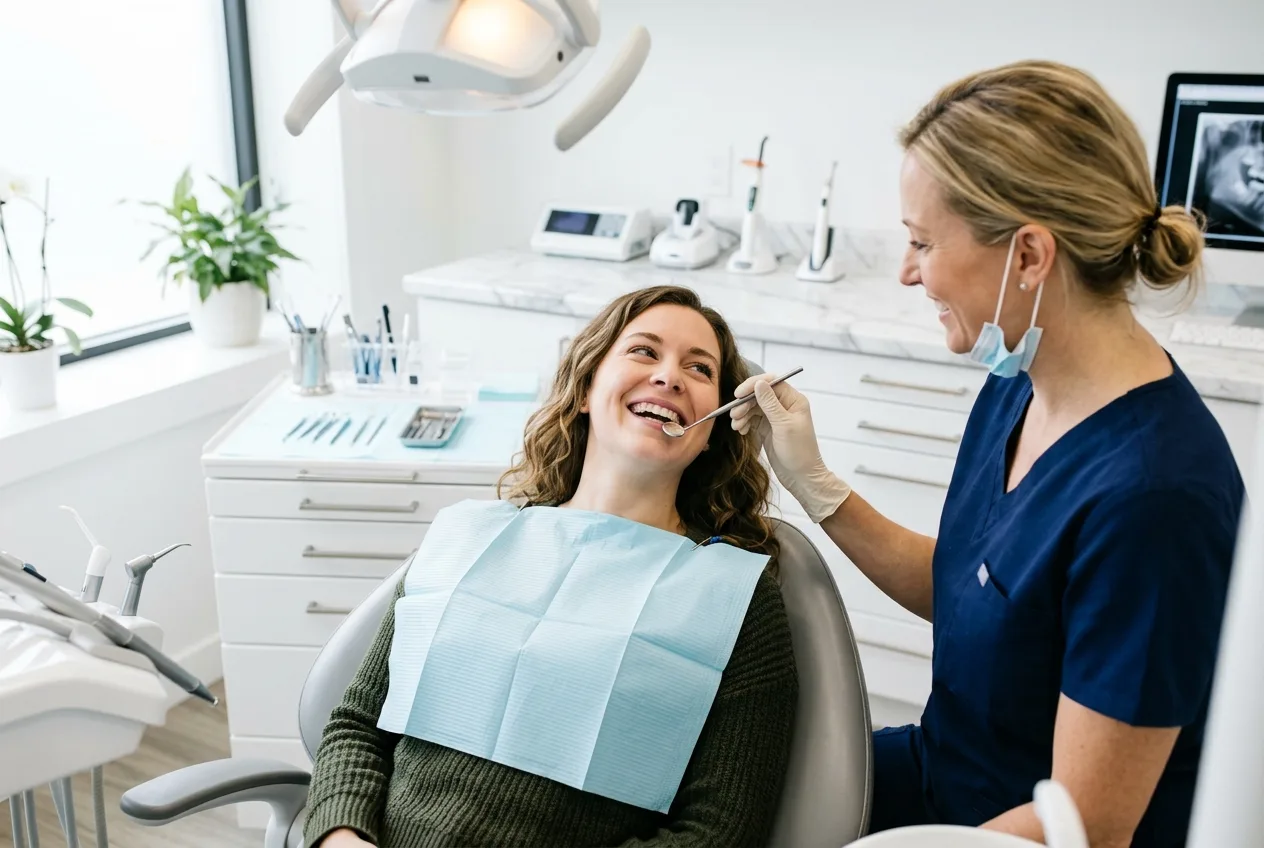
dental supplementary insurance
Find the right dental supplementary insurance at nextsure. Comprehensive protection, digital processing, and tailor-made rates for your most beautiful smile.
Learn moreUnderstanding the need for supplementary dental insurance
Statutory health insurance (GKV) in Germany often covers only basic treatment for dental care. For many modern and aesthetically demanding treatments, patients have to dig deep into their own pockets. For example, a ceramic inlay can cost between five hundred and one thousand euros.
A Hanse Merkur dental supplementary insurance policy effectively closes this gap in coverage. It enables access to high-quality materials and treatment methods without costs spiralling. This turns an expensive necessity into an affordable preventive measure. The dental health is a valuable asset, and its preservation should not fail because of cost. This protection is particularly important as GKV benefits are likely to be reduced further.
The decision to take out supplementary insurance is therefore an investment in long-term dental health and financial relief. In the next section, we look at the specific benefits and tariff options.
Analyse the range of benefits of the Hanse Merkur plans
Hanse Merkur offers various tariff options for dental supplementary insurance to meet individual needs. The tariffs range from basic cover to comprehensive premium packages. For example, the tariff 'Zahn Luxus (EZL)' covers up to one hundred per cent of the costs for dental prostheses.
The core benefits include, depending on the tariff:
- Dental prostheses (e.g. implants, crowns, bridges) with up to one hundred per cent cost coverage.
- Professional dental cleaning, often twice a year up to an amount of, for example, one hundred and thirty euros.
- Dental treatments such as composite fillings, root canal and periodontal treatments.
- Some tariffs, such as 'Zahnvorsorge Top Plus (EZP3)', also cover bleaching costs of up to two hundred euros every two years and extended pain therapies.
Many tariffs from Hanse Merkur have been rated "VERY GOOD" by Stiftung Warentest, underlining their high quality. The dental supplementary insurance therefore offers flexible cover. The exact terms and conditions, such as waiting periods and benefit scales, are important aspects when choosing a tariff.
Calculate the costs and premiums of Hanse Merkur dental supplementary insurance
The monthly cost of a Hanse Merkur dental supplementary insurance policy varies depending on the selected tariff, age at entry and the condition of the teeth. A 25-year-old policyholder, for example, pays around twenty-one point eighty-one euros per month for the 'Zahn Komfort (EZK)' tariff.
For the top tariff 'Zahn Luxus (EZL)', the cost for the same age group is around thirty point eighty-five euros. Children and young people up to the age of nineteen often benefit from lower premiums, which on average can be under ten euros. It is important to know that an additional premium surcharge may be charged if teeth are missing (except wisdom teeth or milk teeth). A cost overview for dental supplementary insurance helps with budgeting. The premiums are designed so that they can remain stable in later life, especially for tariffs with ageing provisions. The exact calculation of your premium is carried out after the health questions in the application have been answered. Next, we will look at the significance of waiting periods and benefit scales.
Please note waiting periods and benefit tiers
Some of the Hanse Merkur dental supplementary insurance plans have no waiting period, enabling an immediate entitlement to benefits after the start of the contract. The 'Zahn Komfort (EZK)' and 'Zahn Luxus (EZL)' plans offer this advantage for new customers.
Other plans, such as 'Zahn Exklusiv (EZ + EZT)', have a waiting period of, for example, six months for dental prostheses. Regardless of this, benefit scales apply, which limit the maximum reimbursement in the first years of insurance. An example of the 'Zahn Komfort' plan shows a maximum reimbursement of six hundred euros in the first year, increasing to two thousand four hundred euros by the end of the fourth year. From the fifth year of insurance onwards, these limits often no longer apply or are waived from the outset for accident-related treatments. These rules are crucial for planning treatment. A comparison of plans without a waiting period can be worthwhile. In the following, we look at special benefits such as prophylaxis and orthodontics.
Specialised services: prophylaxis and orthodontics in focus
Professional dental cleaning (PZR) is an important component of dental preventive care and is covered by many Hanse Merkur tariffs. Under the 'Zahn Komfort (EZK)' tariff, for example, up to one hundred and thirty euros per year are reimbursed for PZR, often split into two treatments of sixty-five euros each.
Coverage of orthodontic measures, especially for children and young people, is another important aspect. While some general Hanse Merkur dental supplementary plans provide no or only limited benefits for orthodontics, there are special dental supplementary insurance policies for braces or child tariffs that offer more comprehensive cover in this area. It is therefore important to check the scope of benefits carefully when orthodontic treatment is foreseeable. HanseMerkur also offers tariffs that cover the costs of bleaching and extended pain therapies. The tax deductibility of contributions is another advantage, which we will now examine.
In-depth expertise: contractual terms and legal aspects
When taking out a Hanse Merkur dental supplementary insurance policy, the health questions must be answered truthfully and in full. Treatments already recommended or underway are generally excluded from cover.
The minimum contract term is often two years, with a cancellation period of three months to the expiry date. Our expert tip: check the rules on exclusions from benefits carefully. For example, restrictions may apply to periodontal treatment if these were already known before the contract was concluded. The tax deductibility of contributions as retirement provision expenses is possible, but limited by maximum amounts of, for example, one thousand nine hundred euros for employees. It is also relevant to know whether you can have two dental supplementary insurance policies, which is generally not sensible. The exact terms can be found in the insurance documents (AVB). Next, we summarise the key points and provide a recommendation for action.
Finding the right cover: recommendations for action
Choosing the right Hanse Merkur dental supplementary insurance depends heavily on your individual needs and financial circumstances. Analyse your dental status and consider which benefits are important to you. Do you need immediate cover, or is a waiting period acceptable?
Here are some steps to help you choose:
- Needs analysis: Estimate your future treatment needs. Do you already have fillings that will need replacing in a few years?
- Tariff comparison: Compare the different Hanse Merkur tariffs (e.g. EZK, EZL, EZP) in terms of the scope of benefits for dentures, dental treatment and preventive care. Pay attention to reimbursement rates of ninety to one hundred per cent.
- Cost check: Calculate the monthly premiums and factor in any possible surcharges. A premium of around thirty euros for a top tariff can be a good investment.
- Contract details: Read the terms on waiting periods, benefit scales and exclusions carefully.
Use independent test reports, such as those from Stiftung Warentest, as a guide. Careful selection will secure you the best benefits in the long term. If you are unsure, professional advice can help you find the optimal cover.
Frequently asked questions
- Why is a Hanse Merkur dental supplementary insurance policy worthwhile?
A Hanse Merkur dental supplementary insurance policy is sensible, as statutory health insurance often only provides fixed subsidies for standard treatments. With supplementary insurance, you can reduce high out-of-pocket costs for dental prosthetics, dental treatments and preventive care, and gain access to high-quality treatment options.
- What benefits are covered by HanseMerkur dental supplementary insurance?
Depending on the tariff, Hanse Merkur dental supplementary insurance covers costs for dental prosthetics (e.g. implants, crowns) up to one hundred per cent, professional dental cleaning (e.g. up to one hundred and thirty euros per year), dental treatments (fillings, root canal treatments) as well as, in some cases, bleaching and extended pain therapy.
- What does "without a waiting period" mean for the HanseMerkur dental supplementary insurance?
No waiting period means that you can start claiming benefits directly after the contract begins, without having to wait for a specific period. The “Zahn Komfort (EZK)” and “Zahn Luxus (EZL)” tariffs from Hanse Merkur offer this advantage. However, please note possible benefit limits in the first few years.
- Are the costs for treatments that have already been recommended covered?
No, the costs of treatments that were already recommended or started by a dentist before the contract was concluded are generally not covered by Hanse Merkur dental supplementary insurance.
- Are the premiums for Hanse Merkur dental supplementary insurance tax-deductible?
Yes, contributions to Hanse Merkur dental supplementary insurance can be claimed in your tax return as part of pension provisions. However, maximum limits apply, which may already be exhausted by contributions to health and long-term care insurance.
- How do I find the best HanseMerkur plan for me?
To find the best tariff, you should analyse your individual needs (e.g. the desired level of reimbursement, the need for orthodontics). Compare the benefits and costs of the various Hanse Merkur tariffs (e.g. EZK, EZL) and refer to independent test reports such as those from Stiftung Warentest. We will be happy to assist you with personalised advice.
Sources
- [1]Federal Statistical Office offers detailed data on health expenditure in Germany, broken down by type of service.
- [2]Federal Ministry of Health provides the report "Data and Facts on Health" from 2021, which gives comprehensive insights into the German healthcare system.
- [3]Federal Ministry of Health provides information on dental treatments and the corresponding regulations in the German healthcare system.
- [4]gesund.bund.de offers comprehensive information on dental care and oral hygiene, supported by the Federal Ministry of Health.
- [5]National Association of Statutory Health Insurance Dentists (KZBV) provides current figures and facts on contracted dental care in Germany in the Statistical Yearbook 2024.
- [6]Association of Substitute Health Insurance Funds e.V. (vdek) provides data on expenditure for dental treatments by substitute health insurance funds.
- [7]Consumer Advice Centre provides objective information on the risks and benefits of supplementary dental insurance from a consumer perspective.
- [8]PKV (Association of Private Health Insurers) highlights in a press release the strong growth in supplementary dental insurance in Germany.
- [9]AWMF (Association of the Scientific Medical Societies) offers access to a scientific guideline on tooth preservation.
Conclude directly online
Verified partner tariffs at no extra cost. The button takes you straight to the provider's calculator.
 Advigon
Supplemental dental insurance
Four supplemental dental tariffs ranging from basic cover to full protection, including children's tariffs with orthodontics.
- Dental Medium premium:
- €5.69-32.30/month depending on age
- Dental Luxus premium:
- €9.20-54.50/month depending on age
- Waiting period:
- none (AZM/AZL)
- Dental treatment: 75% (Dental Medium) or 100% (Dental Luxus)
- Dentures/crowns (Zahnersatz): 75% (AZM; 100% for standard care) or 100% (AZL)
- Preventive dental care: 100% up to €90/year (AZM) or up to €140/year (AZL)
- No waiting periods in Dental Medium and Dental Luxus
- Children's tariffs with orthodontics (KFO): Dental Clever €9.68/month, Dental Premium €18.76/month
- Stiftung Warentest rated Dental Premium "very good" (1.5) (Finanztest 2/25)
Key exclusions
- Reimbursement caps in the first 48 months: AZM €600-2,400, AZL €1,000-4,000 (tiered)
- No explicit benefit exclusions are stated in the available documentation
Stiftung Warentest „SEHR GUT (0,6)“, Finanzen 07/2025 (285 Tarife im Test)
Advigon Zahnzusatzversicherung Dental Luxus (AZL)
MORGEN & MORGEN M&M Rating Zahnzusatz: 5 Sterne „Ausgezeichnet“ (08/2023)
Advigon Versicherung AG, Dental Luxus (AZL)
Reimbursement caps do not apply in the case of an accident, after month 48, or with a recognized prior policy.
Fact sheet: benefits, exclusions and waiting periods in detail
 die Bayerische
Supplemental dental insurance
Supplemental dental cover in three tariffs (Smart, Komfort, Prestige) with no waiting period; the top tariff reimburses 100%.
- Reimbursement:
- 75-100% depending on the tariff
- Waiting period:
- none
- Teeth cleaning:
- €80-200/year depending on the tariff
- Zahn Sofort module:
- €29.90/month, ends after 2 years
- Dentures/crowns and dental treatment: Smart 75%, Komfort 80-100%, Prestige 100%
- Professional teeth cleaning in all tariffs (€80-200 per calendar year)
- No waiting periods in any of the three tariffs
- Orthodontics: €1,500 (including statutory health insurance benefit) or €2,000 (without statutory health insurance benefit) in Komfort and Prestige
- Prestige includes teeth whitening and a Happybrush sonic toothbrush
- Stiftung Warentest 07/2025: Zahn Prestige rated test winner with "very good" (0.5)
Key exclusions
- Treatments recommended or started before the policy began (only covered via the Zahn Sofort module)
- A flat 40% deduction for dentists without statutory-insurance accreditation
- Reimbursement capped at up to 3.5x the dental fee schedule (GOZ) rate
- Abroad, reimbursement is capped at the domestic benefit level
Stiftung Warentest „SEHR GUT (0,5)“, Ausgabe 07/2025 (285 Tarife im Test)
die Bayerische, Tarif ZAHN Prestige
ASCORE „Tarif des Jahres 2024“ (Krankenzusatz Zahn)
die Bayerische, Zahn Prestige 2023
Levelnine Rating „EXZELLENT“ (Stand 11/2024, gültig bis 11/2025)
die Bayerische, Tarif ZAHN Prestige
Benefit tiering: €500 in year 1 (Smart), €1,250 (Komfort), or €1,500 (Prestige); unlimited from calendar year 5; caps also do not apply in the case of an accident.
Fact sheet: benefits, exclusions and waiting periods in detail
Advigon Supplemental dental insurance: Benefits: Dental Medium (AZM) and Dental Luxus (AZL)
| Benefit | Dental Medium (AZM) | Dental Luxus (AZL) |
|---|---|---|
| Dental treatment | 75% | 100% |
| Pain therapy | 75% | 100% |
| Preventive dental care | 100% up to €90/year | 100% up to €70 per treatment, up to €140/year |
| Dentures/crowns | 75% (100% for standard care) | 100% |
| Monthly premium by age | €5.69-32.30 | €9.20-54.50 |
die Bayerische Supplemental dental insurance: Tariff comparison: Smart, Komfort, Prestige
| Benefit | Smart | Komfort | Prestige |
|---|---|---|---|
| Dentures/crowns (above standard care) | 75% | 80-90% | 100% |
| Dentures/crowns (up to standard care) | 75% | 100% | 100% |
| Dental treatment | 75% | 100% | 100% |
| Professional teeth cleaning | €80/calendar year | €100 per treatment, max. €150/year | €100 per treatment, max. €200/year |
| Orthodontics | not included | €1,500 (incl. statutory insurance) / €2,000 (excl. statutory insurance) | €1,500 (incl. statutory insurance) / €2,000 (excl. statutory insurance) |
| Teeth whitening | not included | not included | included |
| Example annual premium (age 33) | €152.40 | €244.80 (rural) / €321.60 (urban) | €405.60 (rural) / €529.20 (urban) |
All details are taken from the provider's linked product page and the contract documents (IPID/policy conditions) published there; the insurer's documents prevail. Premiums, benefits and the insurance product itself may change – please verify the details directly with the partner before signing up; only the information provided there is binding.
Information last updated: July 2026 · Source: provider product information (IPID/policy conditions)