Glass insurance: home contents or building insurance?
Find out whether glass insurance belongs with contents insurance or buildings insurance, and how to insure against glass damage in the best possible way.
 Katrin StraubManaging DirectorInsurance expert with over 20 years of experience in the insurance industry.
Published on
Last updated on
11 min read
Table of Contents
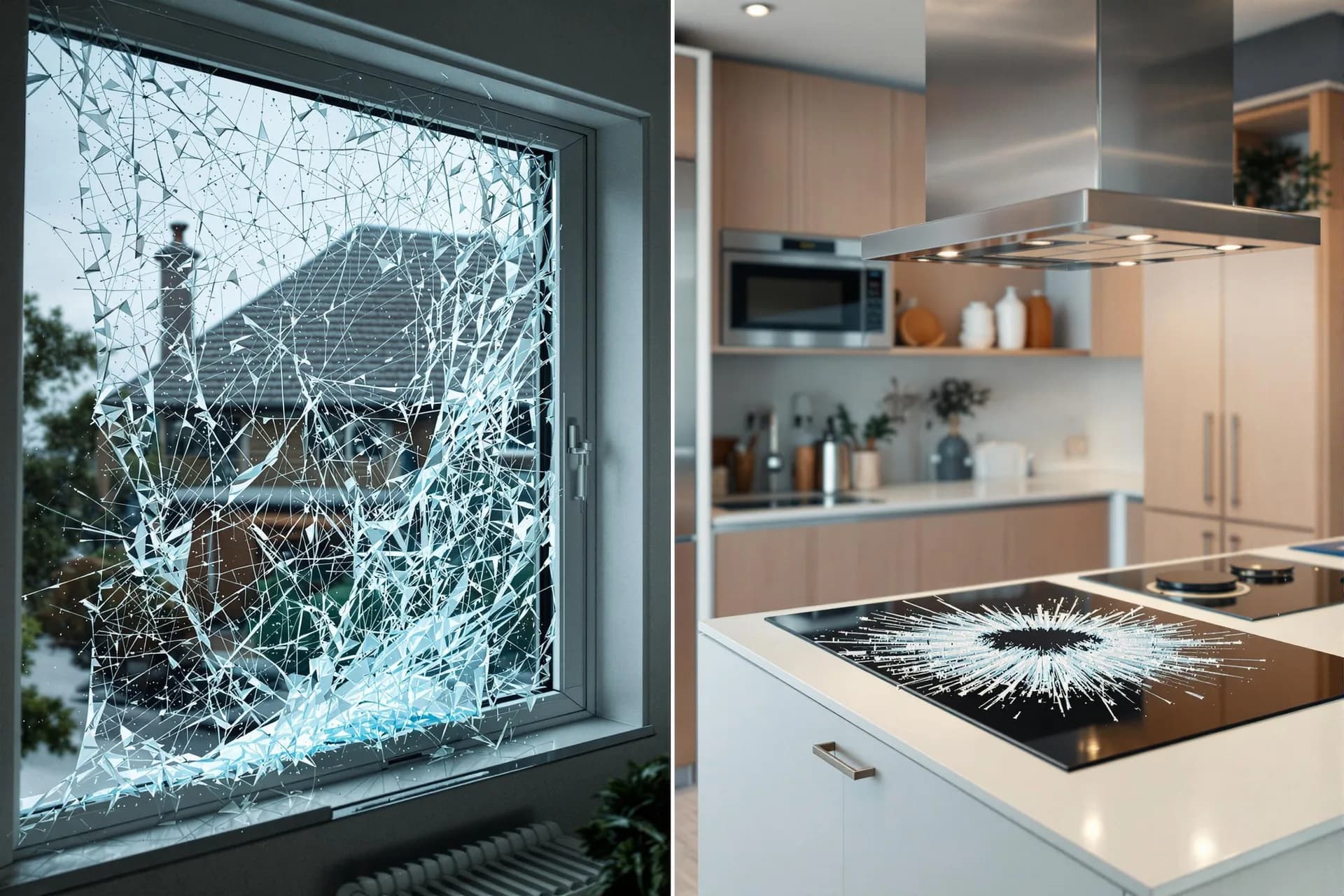
A crack in the ceramic hob or a broken window pane – glass damage is annoying and can be expensive. But which insurance covers it: glass insurance as an add-on to home contents insurance or to buildings insurance? This article sheds light on the matter and shows you how to cover your glass surfaces optimally.
Understanding glass insurance: The basis for your protection
A standalone glass breakage insurance policy comes into play when glass surfaces break. Neither the standard household contents insurance nor the ordinary buildings insurance covers all glass damage. Usually, only damage caused by specific risks such as fire, burst pipes, storm or theft following a break-in is included. Glass insurance fills this gap and also covers everyday mishaps, for example if a ball smashes through the pane. It is generally available as an optional add-on to household contents or buildings insurance.
It is important that glass insurance only pays out in the event of actual breakage. Scratches or scuffs are usually not covered. Hollow glass items such as vases or drinking glasses are often also excluded from cover. The exact conditions for what counts as glass breakage are defined individually by each insurer. A crack running from the front to the back of the pane is often treated as breakage. The distinction between whether glass insurance belongs with contents or buildings insurance is central to ensuring the correct cover.
Contents glass insurance: protection for your movable glass items
Glass insurance as an add-on to contents insurance covers glass damage to movable items in your flat or house. These include, for example, glass table tops, display cabinet panes, mirrors or the glass-ceramic hob. A typical example: a pan falls onto the ceramic hob and it shatters – a case for contents glass insurance, if you have taken it out. Aquariums or terrariums may also be covered here.
The cost of this additional cover is often low and starts at just a few euros per year. For a family in a 90-square-metre flat, the premium can, for example, be around €18 a year, depending on factors such as where you live and the excess. Check carefully which types of glass are included in your policy. Optical glass such as spectacles and hollow glass items such as lampshades are usually not insured. This cover is particularly relevant for tenants, as they have to pay for damage to furniture themselves. Contents glass insurance covers damage inside the flat, regardless of whether it is your own property or a fixed part of the rented property, provided it is furniture glazing. Next, we look at cover for permanently installed glass elements.
Residential building glass insurance: protection for fixed glass surfaces
When it comes to glass surfaces permanently attached to the building, glass insurance as an add-on to buildings insurance is responsible. This typically covers window and door glazing, glass roofs on conservatories, or permanently installed glass shower enclosures. For example: A storm throws a branch against your panoramic window, causing it to break. This is where the building glass insurance comes into play.
The following elements are typically covered by buildings glass insurance:
- Window panes and glass doors (exterior and interior)
- Glazing for conservatories, verandas and loggias
- Glass blocks and channel glass
- Rooflights made of glass or plastic
- Decorative glazing on exterior windows
Cost cover often includes more than just the glass replacement itself. Any necessary emergency glazing, scaffolding costs or the disposal of shards may also be covered. For homeowners, this protection is particularly important in order to avoid high costs in the event of damage to the building fabric. The distinction from contents insurance glass cover is crucial here for comprehensive protection.
Weighing up costs and benefits: When is which glass insurance worth it?
The decision in favour of glass insurance depends on your individual living situation and willingness to take risks. If you have expensive glass features such as a conservatory, large panoramic windows or a high-quality glass shower enclosure, the cover can be worthwhile. The cost of glass insurance is often low compared with the potential damage; contents insurance with glass cover is available from just a few euros per year. A family with two children in a 90-square-metre flat often pays only around €18 a year with a €150 excess.
Consider how high the risk of glass breakage in your household is. Do children or pets live with you? Then the likelihood of accidents increases. Compare the additional cost of the glass add-on with the potential repair costs. A new ceramic hob can quickly cost several hundred euros. A broken insulated glass pane in a window can quickly cost well over €500 including installation. The distinction between contents and buildings insurance is relevant here too. For tenants, contents insurance with glass cover is primarily of interest for furniture and, where applicable, self-installed elements such as a shower enclosure. Homeowners should also consider buildings insurance with glass cover for permanently installed parts. In the next section, we look at details that are often overlooked.
Expert-level depth: understanding contract details and important exclusions
When taking out glass insurance, it is essential to take a close look at the policy conditions (often referred to as VGB or AGIB). These set out exactly what is covered and which exclusions apply. Typically, surface damage such as scratches, scuffs or the clouding of insulating glass is not covered. Hollow glass items such as vases, lamps or drinking glasses are usually excluded too. Photovoltaic systems are generally also not covered by standard glass insurance and often require separate cover.
Our expert tip: look out for clauses on gross negligence. Many modern tariffs waive the right to invoke gross negligence, which benefits you if you need to make a claim. Also clarify whether the costs of emergency glazing, disposal and any scaffolding that may be required are covered. The combining contents and buildings insurance with one provider can simplify the claims process. A recent ruling by the Wuppertal Regional Court (ref. 16 S 104/15) confirmed that requiring a commercial tenant to take out glass insurance may be permissible.
Practical examples: How glass insurance works in everyday life
To make the differences more tangible, here are a few practical examples. If, while cooking, a heavy pan falls onto the glass-ceramic hob and it shatters, this is a case for glass insurance as an add-on to contents insurance. If your child knocks a ball against the patio door while playing and the pane breaks, glass insurance as an add-on to buildings insurance applies, since the door is permanently connected to the building. Another example of contents glass insurance: an expensive glass display cabinet tips over and the panes break.
Here is a list of typical claims and the responsible glass insurance:
- Broken window pane caused by children playing (add-on to buildings insurance).
- Crack in the glass-ceramic hob caused by a dropped object (add-on to contents insurance).
- Damaged glass shower enclosure (depending on the type of building and policy, contents or buildings glass insurance).
- Breakage of a mirrored cabinet panel (add-on to contents insurance).
- Glass breakage in a conservatory caused by hail (add-on to buildings insurance, provided natural hazard cover is not already in place).
It is important to document the damage accurately for the insurer. Photos and a detailed description help with speedy settlement. You should know the benefits of contents insurance and those of buildings insurance exactly. Now let's summarise the key points for you.
Optimal protection: making the right choice for your needs
The decision whether glass insurance for contents or the building – or both – makes sense depends on many factors. For tenants, glass insurance as an add-on to contents insurance is often sufficient to protect their own furniture and any rented glass elements that are not permanently installed. Homeowners, on the other hand, should consider both options in order to cover both movable contents and permanently installed glazing in the building. Natural hazard insurance can also be an important addition. The cost of glass insurance is often manageable; for example, cover for a detached house can be available for under €50 per year.
Check your existing policies carefully. Sometimes a certain level of glass cover is already included, although often only for specific risks. Individual advice helps identify gaps in cover and find the right protection. Remember that premiums can vary depending on floor space, the type of glazing and the chosen excess. An excess of, for example, €150 can noticeably reduce the annual premium. With this information, you can make an informed decision about your glass cover.
Request an individual risk assessment now: Have your insurance situation reviewed free of charge and receive specific suggestions for improvement.
Frequently asked questions
- Which insurance covers a broken window pane?
In the event of a broken window pane, glass insurance as an additional cover to buildings insurance usually pays, since windows are permanently attached to the building.
- Is glass insurance worthwhile for tenants?
Yes, for tenants, glass insurance can be a useful add-on to contents insurance to cover damage to furniture glazing (e.g. glass tables, mirrors, ceramic hobs) or glass surfaces they have installed themselves, such as shower enclosures.
- What is not covered by glass insurance?
Typically not covered are surface damage (scratches), hollow glassware (vases, drinking glasses), optical lenses (glasses), screens of electrical devices and often also photovoltaic systems.
- Can I still take out glass insurance later?
Yes, in most cases you can add glass insurance as an additional module to your existing contents insurance or buildings insurance at a later date.
- What do contents glazing and building glazing mean?
Furniture glazing refers to glass on movable items of furniture such as tables, cabinets or mirrors. Building glazing includes glass elements permanently connected to the structure, such as windows, external doors or conservatories. [4,__5__01_]
- Does the glass insurance also cover the costs of emergency glazing?
Yes, many glass insurance policies also cover additional costs alongside the actual repair or replacement costs, such as temporary glazing, disposal of broken glass or scaffolding costs.
Sources
- [1]Wikipedia provides a comprehensive overview of glass insurance.
- [2]Gabler Wirtschaftslexikon provides a detailed definition of glass insurance in the context of commercial law.
- [3]Bundesanzeiger is the official platform for legal and economic publications in Germany, relevant to the legal framework of insurance.