
Statutory health insurance glasses: costs & subsidy
Find out when your statutory health insurance covers the cost of glasses. Information on subsidies and eligibility requirements. Find out more at nextsure now!
 Katrin StraubManaging DirectorInsurance expert with over 20 years of experience in the insurance industry.
Published on
Last updated on
8 min read
Table of Contents
Statutory health insurance and glasses: How to secure your reimbursement
Many people who wear glasses wonder when statutory health insurance will cover the cost of a pair of glasses. The answer is often complex, but with the right knowledge you can save real money. This article explains the requirements and gives you practical tips.
Quick Facts: Glasses and GKV – The key points at a glance
The coverage of the costs of glasses by statutory health insurance is clearly regulated. Adult insured persons usually bear the costs themselves unless there is a significant visual impairment. For children and young people under the age of 18, the costs of spectacle lenses are generally covered. The health insurance fund only subsidises the spectacle lenses, not the frame. Fixed amounts apply, which can vary depending on visual acuity.
Requirements for adults: When does the health insurance pay?
Adults receive a subsidy for spectacle lenses from statutory health insurance only in cases of severe visual impairment. This is the case for short-sightedness or long-sightedness of more than six dioptres. If there is corneal curvature (astigmatism), it must be greater than four dioptres. Another requirement is visual acuity of no more than thirty per cent despite the best possible correction. Adults must always pay the cost of the spectacle frame themselves. For a statutory health insurance, medical necessity is decisive. These regulations have been clarified since 2017 by the Health and Medical Aids Supply Act (HHVG). A subsidy is also granted if visual acuity has changed by at least 0.5 dioptres.
The following conditions must be met for cost coverage for adults:
- Short-sightedness or long-sightedness: more than six dioptres
- Corneal curvature: more than four dioptres
- Maximum visual acuity with correction: less than or equal to thirty per cent
- Therapeutic visual aids for eye injuries or conditions
The exact amount of the subsidy is based on nationwide fixed amounts, which can range from ten to around 112 euros per lens. Please note that a prescription from an ophthalmologist is always required for the first prescription.
Children and young people: Better chances of cost coverage
For children and young people under 18, the rules on reimbursement for glasses under statutory health insurance are significantly more generous. In principle, the cost of the lenses is covered if a visual impairment is present. Unlike for adults, the dioptre values usually play no role in the basic entitlement. The same applies here: the health insurance fund only covers the cost of the lenses, not the frames. It is important to know that for children under 14, a new ophthalmologist's prescription is required for every change in prescription values. For young people between 14 and 17, if their eyesight changes after the initial prescription, the optician can also issue a follow-up prescription. A additional insurance for children's glasses can help cover the remaining costs. Until compulsory schooling is completed, even the lenses for sports glasses can be subsidised.
The path to prescription glasses: explained step by step
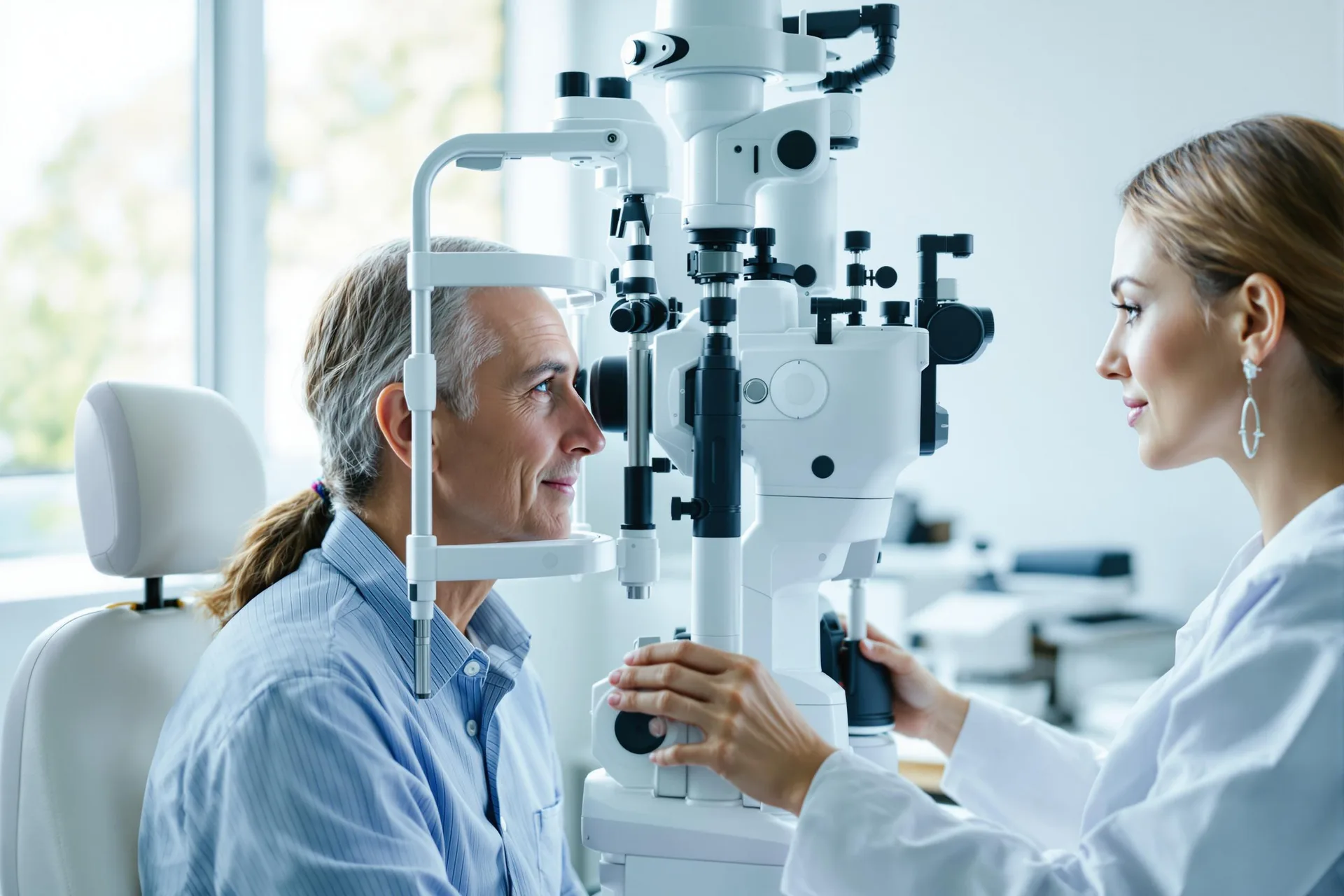
To receive a subsidy for your glasses from statutory health insurance, you must follow a few steps. First, a visit to an ophthalmologist is essential in order to have an eye test and obtain a prescription for the glasses. This applies in particular to the initial prescription. The costs of this eye test at the doctor’s office are covered by the health insurance fund if there is a medical necessity. You then take the prescription to an optician who is a contractual partner of your health insurance fund. The optician will advise you on suitable lenses and bill the fixed amount directly to the health insurance fund.
At the optician, you only pay any difference for higher-quality lenses, the cost of the frame and the statutory co-payment. The statutory co-payment is ten per cent of the insurer’s share, with a minimum of five euros and a maximum of ten euros per visual aid for adults. Prior approval by the health insurance fund is usually not required for glasses. Do not submit an invoice retrospectively, as this is generally not reimbursed. For a cost estimate from the health insurance fund, you should obtain information in advance.
The necessary steps are:
- Visit an ophthalmologist and have an eye test.
- If medically necessary, have a prescription for glasses issued (not a private prescription).
- Take the prescription to a contract optician affiliated with your health insurance fund.
- Have the glasses fitted and be advised about possible additional costs.
- The optician bills the fixed amount directly to the health insurance fund.
- You pay the remaining amount and the statutory co-payment to the optician.
Do not forget that the health insurance fund only covers standard lenses; extras such as anti-reflective coatings or special hardening usually have to be paid for by yourself.
Expert depth: fixed amounts, special cases and what else is important
The level of reimbursement for spectacle lenses through statutory health insurance is based on so-called fixed amounts. These are set by the National Association of Statutory Health Insurance Funds (GKV-Spitzenverband) and are uniform nationwide. The fixed amounts vary depending on the type and power of the lenses required and can range from around ten euros to 112 euros per lens. Our expert tip: Ask your optician specifically for spectacle lenses that are fully covered by the fixed amount in order to minimise additional payments. The cost of the spectacle frame is generally not covered by the GKV.
Patients must also pay themselves for extras such as anti-reflective coatings, tinting or extra-thin lenses, unless a higher-specification supply is medically essential and certified. An optical insurance policy can be a useful addition here. There is only a contribution for contact lenses in very limited medical exceptional cases, for example in cases of intolerance to spectacle lenses or very high dioptre values (often over eight dioptres). The cost of contact lens care products is never covered. A workplace pair of glasses (computer workstation glasses) is not a benefit covered by the GKV; in such cases, the employer is generally responsible, provided the requirements under occupational health and safety regulations are met.
Some health insurance funds offer contributions towards glasses as part of bonus programmes or as a voluntary benefit under their rules, which go beyond standard statutory provision; it is worth checking with your fund. The upper limit of statutory health insurance does not refer directly to aids such as glasses, but to contribution assessment ceilings.
Supplementary insurance: a useful addition?
As statutory health insurance often covers only a fraction of the cost of a pair of glasses, private supplementary health insurance for vision aids can be a worthwhile option. Such policies can cover the cost of spectacle frames, higher-quality lenses, special coatings or contact lenses, which are not paid for by statutory health insurance. Benefits and premiums vary widely between providers and tariffs. When choosing supplementary cover, pay attention to the reimbursement rates, any waiting periods and annual limits. Many tariffs, for example, reimburse a set amount for a new pair of glasses every two years. For families, a glasses insurance policy can be particularly interesting, as it helps offset the recurring cost of children's glasses. Compare offers carefully to find an insurance policy that meets your individual needs and budget. A good vision aid insurance can significantly reduce the financial burden.
Latest rulings and developments in the field of visual aids
The legal position regarding the assumption of costs for visual aids by statutory health insurance is repeatedly the subject of court decisions. A ruling by the Federal Social Court on 19 April 2024 (case no. B 3 KR 16/22 R), for example, confirmed the entitlement of a child with strabismus and severe visual impairment to be supplied with special bifocal plastic lenses, as the therapeutic care was the primary focus here. In such therapeutic cases, the Medical Aids Directive often does not provide for any restrictions regarding the refractive index of the lenses, unlike glasses that serve only to improve visual acuity.
Another ruling made it clear that, even when in receipt of citizen's allowance, the claim against the health insurance provider for repairing glasses is first examined if the medical requirements under Section 33(2) sentence 2 no. 2 of the SGB V are met (e.g. more than seven dioptres). It is advisable to stay informed about current rulings, as they can influence the interpretation of the law. Eye specialist screening covered by health insurance is an important component in the early detection of visual impairments. Developments such as the 2017 Act to Improve the Supply of Remedies and Aids (HHVG) have already led to adjustments, particularly for adults with severe visual impairment.
Optimise your supply: Contact us
The rules on coverage for glasses through statutory health insurance can be complex. However, with the right information and good planning, you can assert your entitlements and save costs. Individual advice helps you find the best solution for your situation. At nextsure, we are happy to help you keep track of the insurance maze and optimise your cover. Make use of our expertise for your eye health. Request an individual risk analysis now: Have your insurance situation checked free of charge and receive specific suggestions for optimisation.
Frequently asked questions
- What costs for glasses are covered by statutory health insurance?
Statutory health insurance (GKV) only covers part of the cost of spectacle lenses for adults under certain conditions, usually in cases of severe refractive error (more than six dioptres of short-/long-sightedness, more than four dioptres of astigmatism) or if visual acuity despite correction is no more than thirty per cent. For children and young people under 18, the cost of spectacle lenses is generally covered. The cost of the frame and extras such as anti-reflective coatings is not covered. Fixed allowances apply to the lenses.
- Do I always need a prescription from an eye doctor for glasses?
Yes, for the initial reimbursement of spectacle lenses by statutory health insurance, a medical prescription (prescription) from an ophthalmologist is always required. For follow-up prescriptions for adults, a refraction test by an optician may be sufficient in some cases if the values have changed by at least 0.5 dioptres. For children under 14, a new prescription from an ophthalmologist is always required.
- How much does the health insurance provider contribute towards spectacle lenses?
The health insurance fund pays a fixed amount for spectacle lenses. This amount depends on your prescription and the type of lens and is typically between ten and 112 euros per lens. You must cover the remaining amount for more expensive lenses as well as the cost of the frame and any extras yourself.
- Does the health insurance also cover the cost of contact lenses?
The costs of contact lenses are only covered by statutory health insurance in medically essential exceptional cases, for example with very high prescription strengths (often over eight dioptres), certain eye conditions or if glasses cannot be worn. The costs of care products are never reimbursed.
- What about workplace glasses or computer glasses?
The costs for special workplace or computer glasses are not covered by statutory health insurance. In such cases, the employer is generally responsible if the need exists under occupational health and safety regulations.
- Can I claim the cost of my glasses as a tax deduction?
Yes, the cost of a self-funded pair of glasses can be claimed in your tax return as an exceptional expense, provided it exceeds the reasonable burden threshold.
Sources
- [1]Federal Ministry of Health offers comprehensive information on medical aids in the German healthcare system.
- [2]GKV-Spitzenverband provides the official directory of medical aids of statutory health insurance funds.
- [3]Wikipedia offers a detailed overview of statutory health insurance in Germany.
- [4]Consumer Advice Centre informs about the conditions under which health insurance funds cover the cost of a new pair of glasses.
- [5]National Association of Statutory Health Insurance Physicians provides information on medical aids from a medical perspective and their prescription.
- [6]SGB V §33 contains the exact statutory text on health insurance benefits for medical aids.
- [7]Joint Federal Committee (G-BA) explains the guidelines and regulations on medical aids within the framework of prescribed services.
- [8]AOK provides information about its specific benefits for visual and hearing impairments, including visual aids and glasses.
- [9]Barmer offers detailed information on cost coverage for glasses and contact lenses through its health insurance fund.
- [10]Techniker Krankenkasse (TK) provides information about its benefits and the conditions for cost coverage of glasses and contact lenses.