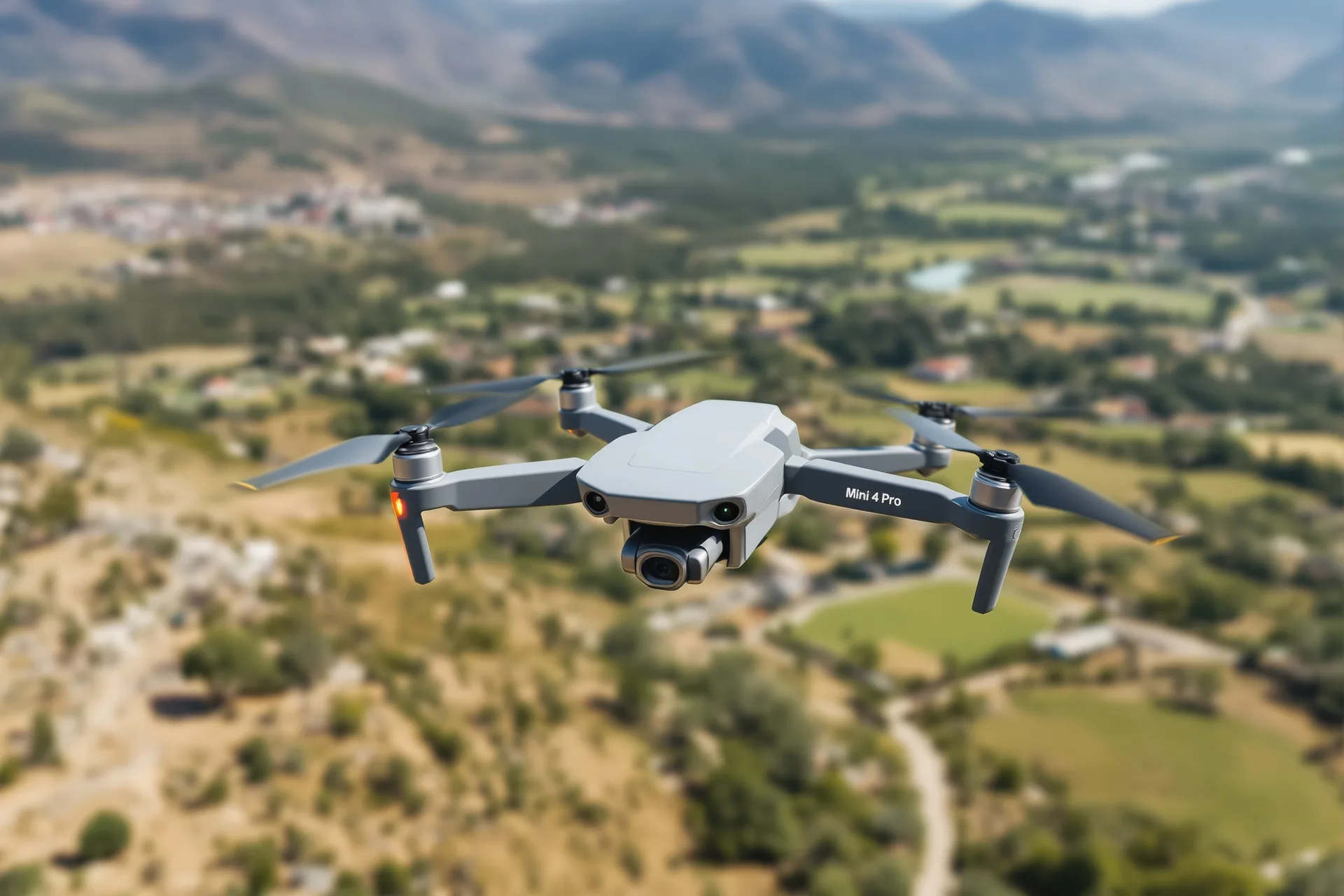
DJI Mini 4 Pro insurance worldwide
Protect your DJI Mini 4 Pro worldwide with optimal cover. Find out everything about liability and comprehensive cover. Request your risk analysis now!
 Katrin StraubManaging DirectorInsurance expert with over 20 years of experience in the insurance industry.
Published on
Last updated on
12 min read
Table of Contents
Your DJI Mini 4 Pro is packed for the next trip, but what about your insurance cover abroad? A small mistake can quickly result in costs of several thousand euros without the right policy. This article shows you how to ensure comprehensive DJI Mini 4 Pro insurance for adventures worldwide.
Global drone protection: the three pillars of cover
For worldwide use of your DJI Mini 4 Pro, you need multi-layered protection that goes beyond national requirements. Liability insurance is the foundation for every individual flight. Comprehensive insurance protects your investment of around €800 in the drone itself. The crucial third pillar is checking the worldwide validity of your policies.
Many pilots underestimate that standard cover is often not sufficient. Damage to a luxury vehicle abroad can quickly result in costs of more than €20,000. Without an explicit foreign travel clause, you are solely liable for the damage. The majority of tariffs exclude flights in the USA and Canada by default. A precise analysis of your insurance policy is therefore essential before every trip.
The following points summarise the key basics:
- Liability is mandatory: In Germany, no drone pilot can do without liability insurance that covers damage to third parties.
- Comprehensive cover is optional: Comprehensive insurance protects damage to your own drone, for example after a crash.
- Worldwide validity is crucial: Check the geographical scope of cover to avoid gaps in protection abroad.
- Observe EU law: Registration as a drone operator is mandatory and requires a valid insurance number.
These basics form the foundation for the safe operation of your drone, but the details of the policy terms determine the actual cover.
Legal obligation: Essential drone liability insurance
Drone liability insurance is the statutory minimum requirement in Germany and most EU countries. It covers personal injury, property damage and financial losses that you cause to third parties with your DJI Mini 4 Pro. Imagine a gust of wind catches your drone in Italy and it collides with the glass façade of a hotel, causing damage worth 5,000 euros. It is precisely such cases that liability insurance covers.
The statutory minimum cover in Germany is 750,000 special drawing rights, which is roughly equivalent to 900,000 euros. However, experts recommend policies with cover of at least ten million euros, as personal injury can quickly lead to costs that threaten your financial existence. Make sure that your policy explicitly meets the requirements of the EU Drone Regulation. You can find a good overview of a drone pilot's obligations in our article on liability insurance for drone pilots.
Before taking out a policy, check whether the tariff also covers flights outside designated model airfields. Many low-cost policies include restrictive clauses here. The next step is to insure your own valuable equipment.
Investment protection: the optional hull insurance for your drone
While third-party liability insurance covers damage to others, comprehensive insurance protects your own DJI Mini 4 Pro. A typical real-world case: during a landing on uneven terrain, the drone tips over, the gimbal breaks and causes repair costs of 350 euros. Without drone comprehensive insurance, you would have to bear these costs in full yourself.
A good comprehensive policy covers a wide range of risks. These include user error, crashes caused by technical defects, transport damage and often theft. Many policies also insure accessories such as batteries or the remote controller up to a value of ten per cent of the sum insured. Pay attention to the amount of the excess, which typically lies between 150 and 300 euros per claim.
The cost of comprehensive insurance starts at around 60 euros per year and depends on the value of the drone and the level of cover selected. Given the purchase price of the DJI Mini 4 Pro, this is a sensible investment to protect your equipment. However, the best protection for the device is of little use if the policy is not valid in the country you are travelling to.
Global coverage: What “worldwide” means in an insurance contract
The term „worldwide“ in insurance policies is often subject to restrictions. A DJI Mini 4 Pro insurance with worldwide cover usually excludes the USA and Canada. For flights in these countries, you must take out separate, locally valid insurance. War and crisis zones are also excluded from cover by default.
If you are planning a trip, you should check the local laws carefully. In some countries, such as Thailand, local registration and proof of insurance with a minimum cover amount of one million baht are required. A violation can lead to heavy fines. Therefore, always check in advance with the aviation authority of the destination country.
Our expert tip: Always carry international proof of insurance in English. Many insurers issue this document on request, and it makes checks abroad much easier. A good travel insurance policy is a useful addition, but it usually does not cover drone damage.
To fully understand global protection, it is necessary to take a look at the underlying legal framework.
Legal framework: EU regulation and national laws in harmony
The operation of your DJI Mini 4 Pro is governed by a combination of EU law and national legislation. The EU Drone Regulation (EU) 2019/947 creates a uniform framework for drone operations throughout the European Union. Among other things, it requires the registration of the drone operator – not the drone itself.
In Germany, this registration is carried out with the Federal Aviation Office (LBA). During the online process, you must provide the number of your valid liability insurance policy. Without proof of insurance, you will not receive an operator ID (e-ID), which you must attach visibly to your drone. The insurance requirement itself arises from the German Aviation Act (§ 43 LuftVG).
For legally compliant operation at home and abroad, four steps are essential:
- Take out insurance: Choose public liability cover with an adequate sum insured and suitable territorial scope.
- Register as an operator: Register with the LBA and provide your insurance number.
- Attach the e-ID: Affix the operator ID you receive to your DJI Mini 4 Pro in a fire-resistant manner.
- Check local rules: Before each flight, find out about local airspace restrictions and no-fly zones.
With this knowledge, you are on solid legal ground and can now turn your attention to choosing the right insurance plan.
Optimise tariff selection: A checklist for the best cover
Choosing the right DJI Mini 4 Pro insurance for worldwide flights requires a detailed comparison of the available offers. A high coverage sum of 50 million euros provides comprehensive protection and often costs only a few euros more per year. A policy that can be cancelled daily offers maximum flexibility should you decide to sell the drone again.
Pay attention to the small print, especially when insuring additional pilots. If friends or family members also fly the drone, they must be explicitly included in the contract. Another important point is protection in the event of infringements of data protection or personal rights, which is included in many premium policies. Our guide to camera and drone insurance offers more in-depth information on this.
Compare not only the price, but the full scope of cover. A good policy can protect you from financial consequences in the six-figure range. With the right cover, your DJI Mini 4 Pro becomes the perfect companion for unforgettable footage all over the world.
Frequently asked questions
- What level of cover is recommended for drone liability insurance?
Although the statutory minimum cover amount is around 900,000 euros, experts recommend a cover amount of at least 10 million euros, preferably 50 million euros. Personal injury claims can quickly result in costs running into the millions, so a higher sum offers significantly more security.
- What is the difference between drone liability insurance and hull insurance?
Third-party liability insurance is required by law and covers damage you cause to third parties (people or property). Hull insurance is optional and covers damage to your own drone, for example caused by a crash, operator error or theft.
- Are other pilots also insured when they fly my drone?
This depends on the respective plan. In many basic plans, only the policyholder is insured as the pilot. Higher-quality plans often also include family members or even any third parties (so-called „external operators“). Check this point carefully in the insurance terms and conditions.
- Does the insurance also cover indoor flights?
The statutory insurance requirement applies primarily to public airspace, i.e. flights outdoors. However, damage can also occur indoors. Most good drone insurance policies explicitly include flights in buildings and halls.
- What do I need to bear in mind when travelling to the USA or Canada?
European drone insurance policies generally do not apply in the USA and Canada. You must take out separate local insurance for these countries. Also, please familiarise yourself with the FAA (Federal Aviation Administration) regulations in the USA.
- Do I need proof of insurance?
Yes, you should always carry proof of your valid liability insurance with you. For trips abroad, a confirmation in English is recommended, which many insurers can provide on request.
Sources
- [1]The Federal Aviation Office (LBA) provides comprehensive information on drones and their regulation in Germany.
- [2]The Federal Ministry for Digital and Transport (BMDV) provides articles and guidelines on the operation of drones in Germany.