A second colic operation: will the insurer pay?
A second operation for the same colic counts as one extended insured event at Barmenia. What that means for aftercare, limits and your excess.
All details are taken from the provider's linked product page and the contract documents (IPID/policy conditions) published there; the insurer's documents prevail. Premiums, benefits and the insurance product itself may change – please verify the details directly with the partner before signing up; only the information provided there is binding.
 Katrin StraubManaging DirectorInsurance expert with over 20 years of experience in the insurance industry.
Published on
6 min read
Table of Contents
When a horse has to go back under the knife for the same colic, the fear of runaway costs is very real. Here is a clear account of how Barmenia handles the "extended insured event", and when the insurer pays for that second operation too.
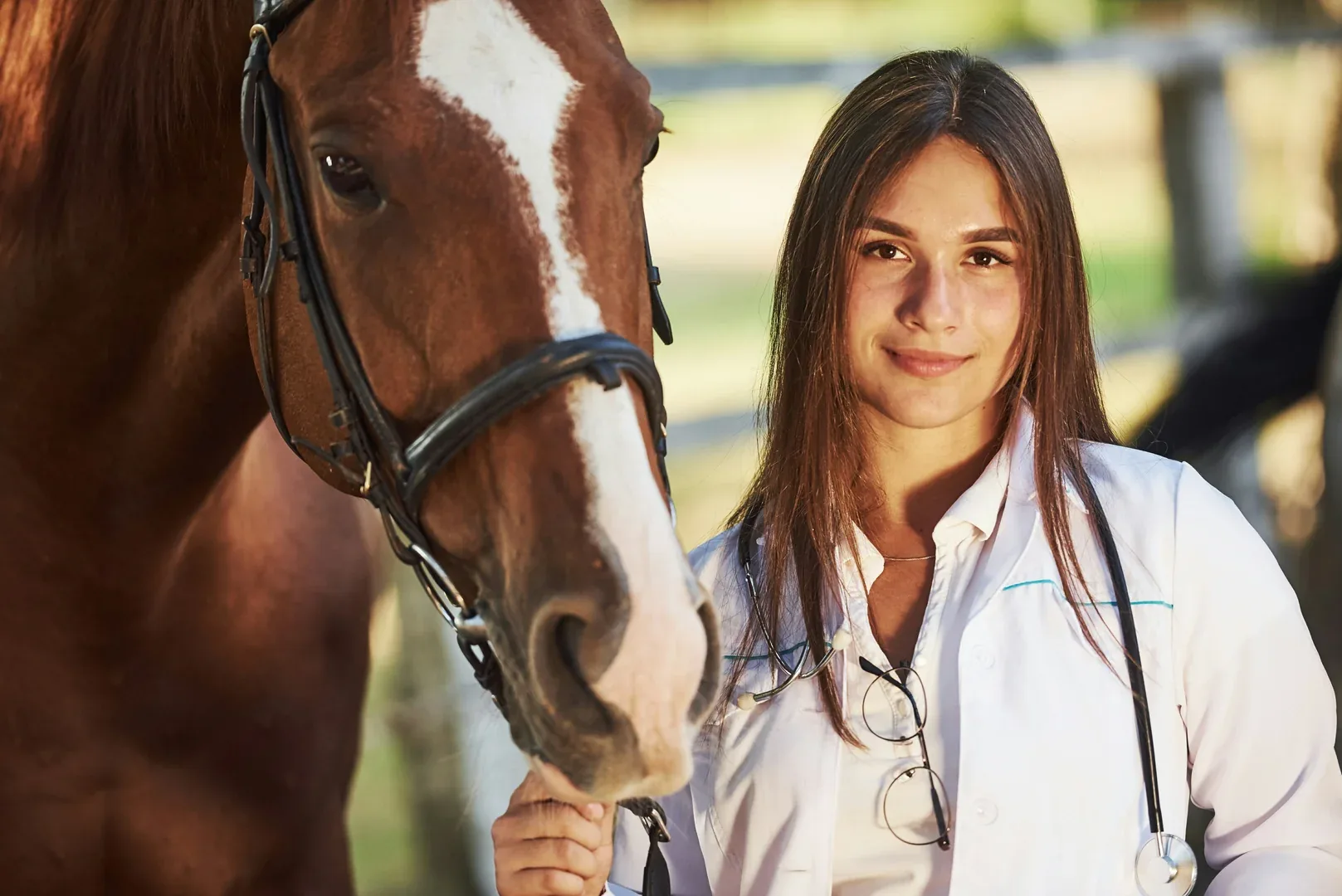
Equine surgery insurance
Horse surgery insurance via nextsure: Three flexible tariffs, reimbursement up to twice the GOT rate, and free choice of clinic worldwide. Protect your horse from high surgery costs – digital, transparent and uncomplicated.
Learn moreThe shock that arrives twice: a second colic operation
Colic is among the most threatening emergencies in a horse's life. When a horse shows colic symptoms again after surgery, or a complication such as an obstruction forces a second operation, it hits the owner hard both emotionally and financially. Figures from equine practice suggest that roughly one horse in ten is affected by colic each year. Most cases are managed conservatively, but the moment surgery becomes necessary, the animal's life is at stake.
The financial burden is severe. Since the veterinary fee schedule (GOT) was reformed, colic surgery including anaesthesia, the clinic stay and aftercare typically costs 5,000 to 12,000 euros, and considerably more where the case is complex and inpatient aftercare drags on. If the horse has to be operated on a second time within days or weeks, the pressing question for a worried owner is immediate: does horse surgery insurance cover that second procedure in full, or does a limit bite?
- Diagnostics and fresh preparation for anaesthesia when a recurrence is suspected
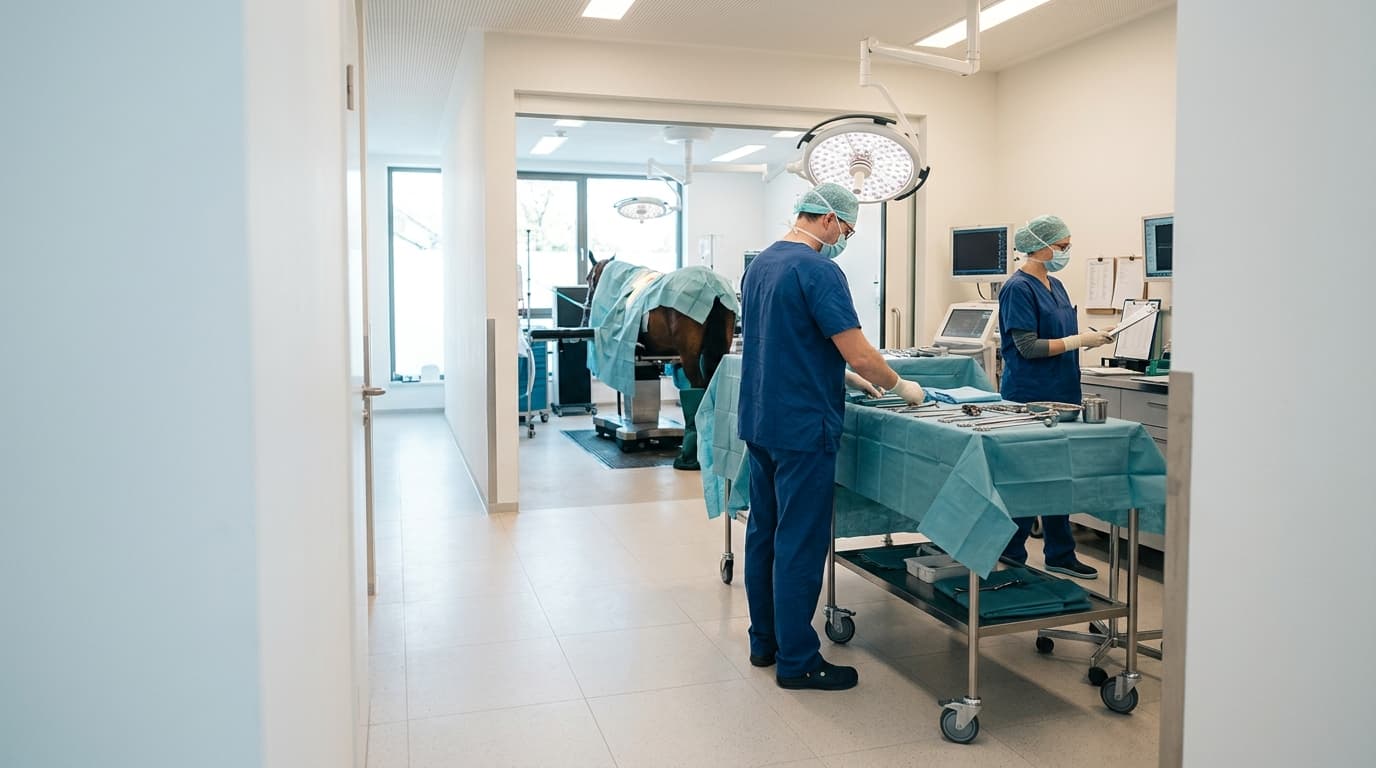
- A second surgical procedure (repeat laparotomy) under general anaesthetic
- Intensive-care monitoring and medication afterwards
- A longer inpatient stay at the equine clinic
The extended insured event at Barmenia
The contractual basis for covering a repeat procedure is the conditions of Barmenia Allgemeine Versicherungs-AG (AVB Pferde-OP-Kosten, as at 01.01.2024). Clause 2.1.2.3 sets out the extended insured event without ambiguity: where several operations are veterinarily necessary because of the same illness or the same accident, those operations, their respective pre-operative examinations and their aftercare all count as one connected insured event.
That clause gives owners real certainty. A follow-up procedure for the same cause — releasing an adhesion, say, or a further displacement of the intestine shortly after the first operation — is not treated as a separate new claim with a new waiting period. Instead, the insured event ends only when the aftercare period following the last operation performed expires. The cost of several operations therefore stays covered within the limits agreed.
- Every follow-up operation assessed together, as a single insured event
- The necessary work-up before each individual operation covered
- Aftercare covered continuously until the deadline following the last operation
- No fresh general waiting period for a follow-up procedure
Waiting period and the timing of the first symptoms
For the insurer to pay for colic surgery, the basic conditions of cover have to be met. For abdominal surgery (colic), clause 2.2.2 sets a waiting period of five days — very fair by market standards. That short deadline means a newly signed contract responds quickly in an emergency.
What decides the claim, though, is when the very first symptoms appeared. If clinically relevant signs of colic, or the first diagnosis, predate the start of cover or fall inside the five-day waiting period, that illness and every consequence of it are permanently excluded. If the colic first appears after those five days have run, both the first procedure and a medically necessary second operation arising from the same course of illness are covered.
- Start of cover: the date the policy schedule gives for cover taking effect
- Colic waiting period: five days from the start of cover for procedures in the abdomen
- Freedom from symptoms: no clinical signs whatsoever before that deadline
- Permanent exclusion: symptoms before or during the waiting period end cover for that condition
Costs and limits: cover tailored to an emergency
Even where several procedures for one colic count as a single connected insured event, total reimbursement is bounded by the limits in the policy. Barmenia caps its liability through the maximum agreed in the schedule per operation and per policy year, and through sublimits for the inpatient stay and for diagnostics. If two consecutive operations approach that ceiling, the policyholder carries what is left.
The reimbursement rate under the veterinary fee schedule deserves particular attention. Colic surgery often happens at night, at the weekend or on a public holiday, as an emergency call-out, and vets may then bill up to four times the GOT rate. Policies that cover the full four-times rate and carry no percentage excess give you the most financial headroom when complications force a second procedure at a higher GOT rate.
- Check the annual maximum and the reimbursement ceiling per claim
- Secure a reimbursement rate covering emergency call-outs up to four times the GOT rate
- Check the daily allowance and the ceilings for a stay at the equine clinic
- Budget for the excess agreed per insured event
Prognosis and survival rates after colic surgery
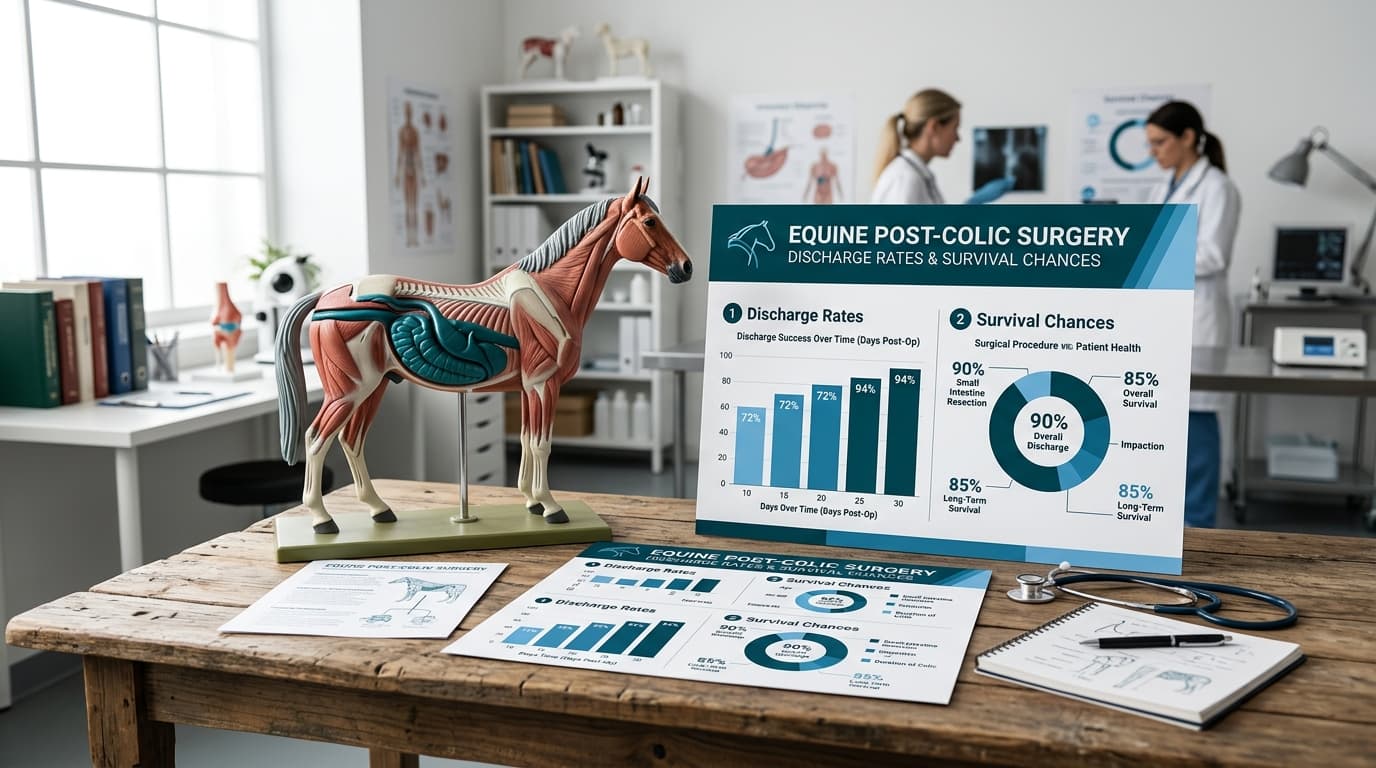
Beyond the money, what weighs heaviest is whether the horse will survive a repeat laparotomy. The research here is solid, and it is encouraging. A multi-centre study involving the universities of Bologna, Perugia and Turin analysed the course of illness in 451 horses that needed colic surgery. Of the horses operated on, 68.5 per cent recovered well enough to be discharged from the clinic and return to their home stable.
Once a horse has come through the critical phase of anaesthesia and getting back to its feet, the probability of survival over the rest of the treatment rises to around 80 per cent. Where the finances are settled by a reliable policy, owner and vet can decide on a medically indicated second operation without hesitating — which gives the horse its best chance of full recovery.
Expert advice on your own policy
A second colic operation is a dramatic event, but clauses such as the extended insured event (clause 2.1.2.3 of Barmenia's conditions) protect owners transparently. As long as the first colic appeared after the five-day waiting period and the limit you chose is generous enough, the cost of the follow-up procedure and the extended aftercare is covered as well.
As a digital marketplace and comparison platform, nextsure helps you analyse policies transparently and match them to what you actually need. With independent advice and a fully digital application, nextsure helps you find tailored cover so that you are protected without complications when it matters.
- Check the conditions for reimbursement rates up to four times the GOT rate
- Verify the waiting periods for abdominal surgery in your contract
- Set the annual maximum against what clinics actually charge
- Take independent digital advice so no gaps are left
Frequently asked questions
- Does Barmenia pay for a second colic operation on the same horse?
Yes. Where a second operation is medically necessary for the same colic, Barmenia treats it transparently as one connected insured event. Benefits are paid within the agreed limits, GOT rates and sublimits for diagnostics.
- How long is the waiting period for colic surgery at Barmenia?
For abdominal surgery (colic), the Barmenia horse surgery policy sets a sharply reduced and straightforward waiting period of just five days. Most other illness-related operations carry a general waiting period of three months.
- Does the aftercare period end after the first or the second operation?
Under clause 2.1.2.3 of the conditions (extended insured event), the insured event — and with it reimbursable aftercare — ends only when the regular aftercare period following the last operation performed expires.
- What if the first colic symptoms fell inside the waiting period?
If the first clinically relevant colic symptoms appeared during the five-day waiting period or before cover started, that illness and everything arising from it, second operations included, are permanently excluded.
- What does equine colic surgery cost under the revised GOT?
Following the changes to the veterinary fee schedule (GOT), colic surgery including the clinic stay and aftercare typically costs between 5,000 and 12,000 euros, and considerably more where the case is complex and inpatient aftercare is long.
- How good are the survival rates after colic surgery?
Care in equine clinics has improved markedly. A multi-centre study of 451 horses that underwent surgery found that 68.5 per cent survived to discharge and returned home to their stable in good health.
Sources
Conclude directly online
Verified partner tariffs at no extra cost. The button takes you straight to the provider's calculator.
 Barmenia
Horse surgery insurance
Surgery cost cover for horses in case of illness and accidents, including diagnostics and after-care.
- Waiting period:
- 3 months (colic surgery: 5 days, accidents: none)
- Coverage abroad:
- worldwide, up to 12 months
- Maximum benefit:
- depends on the cover level, as stated in the policy
- Surgery costs for illness and accidents, including tooth extractions and root canal treatment
- Pre-surgical examination (X-ray, endoscopy, biopsy, lab work)
- After-care including acupuncture, homeopathy, physiotherapy, laser therapy
- Emergency veterinary service up to 4x the standard veterinary fee schedule (GOT) rate plus the emergency callout fee
- Premium cover: up to 5 physiotherapy sessions (max. 60 minutes each) after the after-care period ends
- Once per animal: surgery costs for a birth-related, medically necessary caesarean section
Key exclusions
- Illnesses and developmental abnormalities known at the time of application
- Hoof abscesses and hoof ulcers (exception: hoof cancer)
- Surgery due to cryptorchidism
- Neutering that isn't medically necessary
Service-Champions GOLD: Nr. 1 der Versicherer im Multikanalvertrieb (ServiceValue, 10/2024)
Barmenia (Anbieter der Pferde-OP-Versicherung)
Special waiting periods: 12 months for joint surgery (chip fragments, OC/OCD, Birkeland fractures), 6 months for medically necessary neutering; Premium cover includes a waiver of the insurer's right to cancel from the 7th insurance year.
Fact sheet: benefits, exclusions and waiting periods in detail
All details are taken from the provider's linked product page and the contract documents (IPID/policy conditions) published there; the insurer's documents prevail. Premiums, benefits and the insurance product itself may change – please verify the details directly with the partner before signing up; only the information provided there is binding.
Information last updated: July 2026 · Source: provider product information (IPID/policy conditions)