Insure classic cars with a short appraisal
Find out how to insure your classic car correctly with a short-term valuation and when a full valuation is necessary for optimal protection.
All details are taken from the provider's linked product page and the contract documents (IPID/policy conditions) published there; the insurer's documents prevail. Premiums, benefits and the insurance product itself may change – please verify the details directly with the partner before signing up; only the information provided there is binding.
 Katrin StraubManaging DirectorInsurance expert with over 20 years of experience in the insurance industry.
Published on
Last updated on
3 min read
Table of Contents
Would you like to insure your classic car quickly and easily? A short-term appraisal may seem the simplest solution, but it often carries the risk of costly underinsurance. Find out how to properly insure the value of your classic.
Classic car insurance
Discover nextsure's tailor-made classic car insurance. Optimal protection, digital processing, and expert advice for your automotive treasure.
Learn moreShort appraisal: the quick valuation indication for under €200
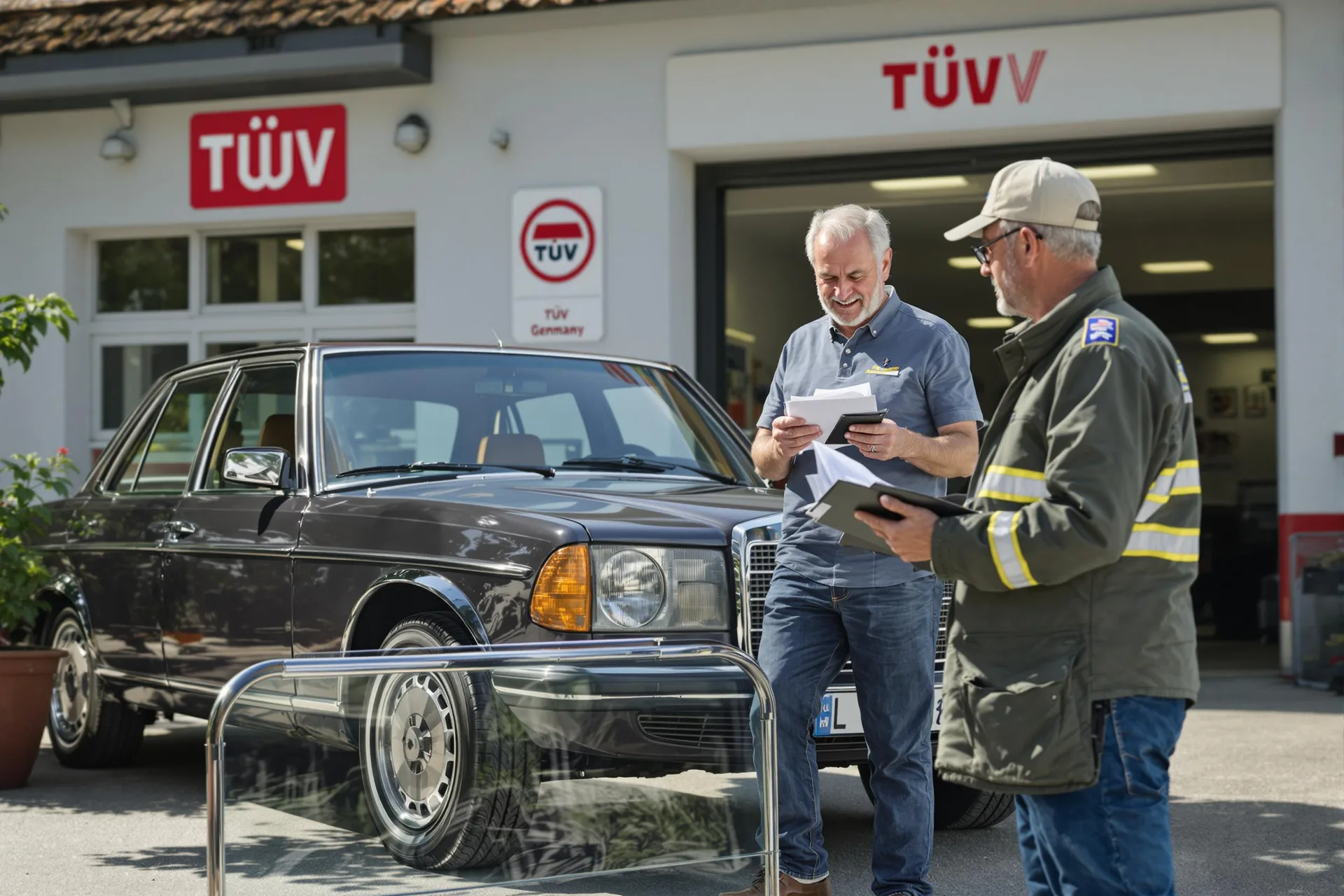
A short appraisal is the most common entry point into the world of classic car insurance. For costs between 90 and 200 euros, an expert inspects the vehicle externally for around 30 minutes. The result is an initial, superficial assessment of the market value and a condition rating. Many insurers accept this document for vehicles with a value of up to 50,000 euros, some even up to 80,000 euros. The main aim of the short appraisal is to create a quick and cost-effective basis for calculating your insurance premium. It serves as proof of identity and condition, but does not cover technical details or restoration quality. However, this appraisal is not sufficient for applying for an H licence plate; a comprehensive appraisal in accordance with § 23 StVZO is required for this. The short appraisal is therefore purely an insurance tool for getting started.
Underinsurance risk: When a short valuation becomes a costly trap
The greatest risk of an outdated or overly superficial appraisal is underinsurance. Let us assume you buy a Mercedes-Benz 190 SL for EUR 75,000 and insure it on the basis of an appraisal at this value. After one year, you invest EUR 20,000 in an engine overhaul and a new paint job. The vehicle’s actual value is now almost EUR 100,000. In the event of theft or a total loss, however, the insurer will only reimburse the originally insured EUR 75,000. You suffer a direct financial loss of EUR 25,000 because the appraisal was not updated. The cost of classic car insurance depends directly on the vehicle’s value, but cutting costs in the wrong place can be expensive. Regular updates every two to three years are therefore essential in order to keep pace with changes in value.
Properly reflecting value increases: switching from a short appraisal to a full appraisal
A full valuation report is the logical next step when the value of your classic car rises or you have carried out extensive work. While a short valuation report is merely a snapshot, a full valuation report for 400 euros and upwards documents in detail all major assemblies, the vehicle history and the quality of restorations. This step is crucial for choosing the right valuation and adjusting insurance cover. A change is strongly recommended in several cases:
- After major investments or restorations of over 10,000 euros.
- If the vehicle value exceeds a critical threshold set by the insurer, often at 50,000 or 80,000 euros.
- For particularly rare vehicles, where market fluctuations play a major role.
- At the latest every three years, to keep the replacement value up to date.
The full valuation report not only protects against underinsurance, but also serves as a valuable document in the event of a later sale.
Market value versus replacement value: Know the crucial difference
In appraisals and insurance policies, two key terms appear: market value and replacement value. Market value is the average price that would be achieved in a private sale – it is generally VAT-neutral. Replacement value, on the other hand, denotes the amount you would need to spend to purchase an equivalent vehicle from a dealer at short notice. This value is often 15 to 20 per cent above the market value, as it includes dealer margin and VAT. For complete protection, it is essential that your suitable classic car insurance covers the replacement value. A good appraisal should state this value explicitly so that, in the event of a claim, the actual costs of a replacement are covered.
Expert tip: Using the report as a tool for tariff optimisation
Do not view the valuation report as a tiresome obligation, but as a strategic tool. An up-to-date and detailed full appraisal from a recognised expert (e.g. from Classic Data, TÜV or DEKRA) is the best basis for negotiation with your insurer. It not only justifies the insured sum, but can also give you access to better premiums with extended benefits such as all-risk cover. Insurance without an appraisal is possible with some providers for lower values, but offers little in the way of security. Instead, proceed strategically:
- Choose an expert who specialises in your vehicle make.
- Prepare all relevant documents, such as invoices, the vehicle history and photos of the restoration.
- Clarify with the surveyor that the document is intended for submission to the insurer and must include the replacement value.
- Submit the completed appraisal proactively to your insurer so that the contract can be adjusted.
That way, you can ensure that your insurance cover always reflects the value of your vehicle.
Conclusion: The short-term survey as a starting point for seamless protection
The question of how to insure a classic car with a short-term appraisal can be answered clearly: it is a good and pragmatic first step for many vehicles valued at up to EUR 50,000. It provides a quick and recognised basis for taking out insurance. However, it reaches its limits as soon as the value of the vehicle rises due to restorations or market developments. The key to consistently fair cover lies in the proactive and regular updating of the valuation. Only then does a simple insurance policy become genuine protection that truly safeguards your passion and your investment in your automotive heritage.
Request an individual risk analysis now: Have your insurance situation reviewed free of charge and receive concrete suggestions for optimisation.
Frequently asked questions
- What does an appraiser check in a short appraisal?
In a short appraisal, the vehicle is subjected to a superficial visual inspection. The assessor records the vehicle data, the external condition of the paintwork, chrome and bodywork, the interior and carries out a brief engine inspection. It is a purely visual inspection without dismantling any parts.
- Can I also insure my classic car without an appraisal?
Some insurers offer policies for low-value vehicles (e.g. under 10,000 euros) based on a self-assessment with photos. However, this carries the risk of an incorrect valuation and is not recommended. For most tariffs, at least a short appraisal is required.
- What is the difference between a short valuation report and a valuation report?
A short appraisal is a quick, superficial assessment for insurance purposes. A (full) valuation report is much more detailed, examines individual assemblies, takes the vehicle’s history and restoration quality into account, and is necessary for high-value vehicles or for historic vehicle registration.
- Who is allowed to prepare a short appraisal for classic cars?
Short reports are offered by officially recognised inspection organisations such as TÜV, DEKRA, GTÜ or KÜS, as well as by specialist experts and organisations such as Classic Data.
- My classic car is worth more than the short appraisal says. What should I do?
Contact an expert immediately and have a new valuation (short or full valuation, depending on the value) prepared that reflects the current value. Submit this new valuation to your insurer straight away in order to adjust the sum insured and avoid underinsurance.
- Why is the reinstatement value higher than the market value?
Market value reflects the price in a private sale. Replacement value calculates the costs for a quick replacement through a professional dealer, which includes their profit margin, warranty and VAT. Therefore, it is typically 15 to 20 per cent higher.
Sources
- [1]TÜV Nord offers private customers guides and tips on the subject of classic cars.
- [2]DEKRA provides comprehensive information on the historic vehicle licence plate for classic cars.
- [3]The TÜV Association provides information on the requirements and benefits of the historic vehicle licence plate for classic cars.
- [4]The Federal Motor Transport Authority (KBA) publishes press releases that also shed light on current developments in the classic car sector.
- [5]The Federal Ministry for Digital and Transport provides an overview of the various vehicle registration plates in Germany.
- [6]GTÜ Classic provides detailed information on valuation reports for classic cars.
Conclude directly online
Verified partner tariffs at no extra cost. The button takes you straight to the provider's calculator.
 OCC
OCC
Classic car insurance
Modular motor insurance for classic and collector vehicles: liability, partial and comprehensive cover, plus optional add-on modules.
- Coverage area:
- Europe and non-European EU territories
- Notice period:
- 1 month before the end of the insurance year
- Payment frequency:
- monthly to annual
- Motor liability for third-party damage caused by the insured vehicle
- Partial comprehensive: theft, hail, storm, glass breakage
- Comprehensive: additionally covers vandalism and accidents
- ComprehensivePlus (VollkaskoPlus): further damage while operating the vehicle
- Roadside assistance package, driver protection, and vehicle environmental-damage cover are optional
Key exclusions
- Damage caused intentionally
- Participation in motorsport events and races
- Damage to cargo
- Wear-and-tear damage (Comprehensive/ComprehensivePlus)
Sums insured and the deductible are set out in the individual application or policy document. Insurer: Provinzial Nord Brandkasse AG
Fact sheet: benefits, exclusions and waiting periods in detail
All details are taken from the provider's linked product page and the contract documents (IPID/policy conditions) published there; the insurer's documents prevail. Premiums, benefits and the insurance product itself may change – please verify the details directly with the partner before signing up; only the information provided there is binding.
Information last updated: July 2026 · Source: provider product information (IPID/policy conditions)