Which small pets can you keep and insure?
Which small pets can you keep? Species, species-appropriate keeping, vet costs and insurance cover for small mammals, birds and reptiles.
All details are taken from the provider's linked product page and the contract documents (IPID/policy conditions) published there; the insurer's documents prevail. Premiums, benefits and the insurance product itself may change – please verify the details directly with the partner before signing up; only the information provided there is binding.
 Katrin StraubManaging DirectorInsurance expert with over 20 years of experience in the insurance industry.
Published on
12 min read
Table of Contents
The pets that are allowed and common are above all rabbits, guinea pigs, hamsters, rats, degus, chinchillas, ornamental birds and reptiles. Which species fits depends mainly on your daily routine: diurnal or nocturnal, group or solitary, children in the house or not. And because vet bills, calculated under the fee schedule for veterinarians (GOT), the nationwide fee regulation for veterinary services, quickly reach three figures, it is worth taking a look at small pet insurance.
Exotenversicherung
Find personalised tariffs, compare services, and benefit from transparent information and personal advice – digital and straightforward.
Learn moreSmall pets you can keep in Germany
Yes: in Germany you may keep rabbits, guinea pigs, hamsters, rats, mice, degus, chinchillas, ornamental birds and terrarium animals such as reptiles without any special permit. These species are considered the classic small pets — that is, small companion animals kept indoors which, unlike dogs or cats, usually do not require you to register them with your landlord. Which animals are a good fit in detail depends on space, daily routine and budget. So the answer to the question of which small pets you can keep is broad, but not unlimited: exotic species are subject to special rules, which we cover further below.
Just how widespread these little co-inhabitants are is shown by the pet market: in 2025, according to ZZF and IVH, around 4.4 million small pets such as rabbits, guinea pigs, hamsters or mice lived in 5 percent of households in Germany.[1] In addition, there were 3.3 million ornamental birds in 3 percent of households, as well as 2.1 million aquariums and 1 million terrariums.[1]
- Rabbits and guinea pigs: the most common rodents, social group animals; guinea pigs are diurnal, rabbits active at dusk
- Hamsters, rats, mice, degus, chinchillas: rodents with very different activity times
- Ornamental birds: from budgerigar to parrot, partly relevant under species protection law
- Reptiles in the terrarium: lizards, snakes, turtles, partly with documentation requirements
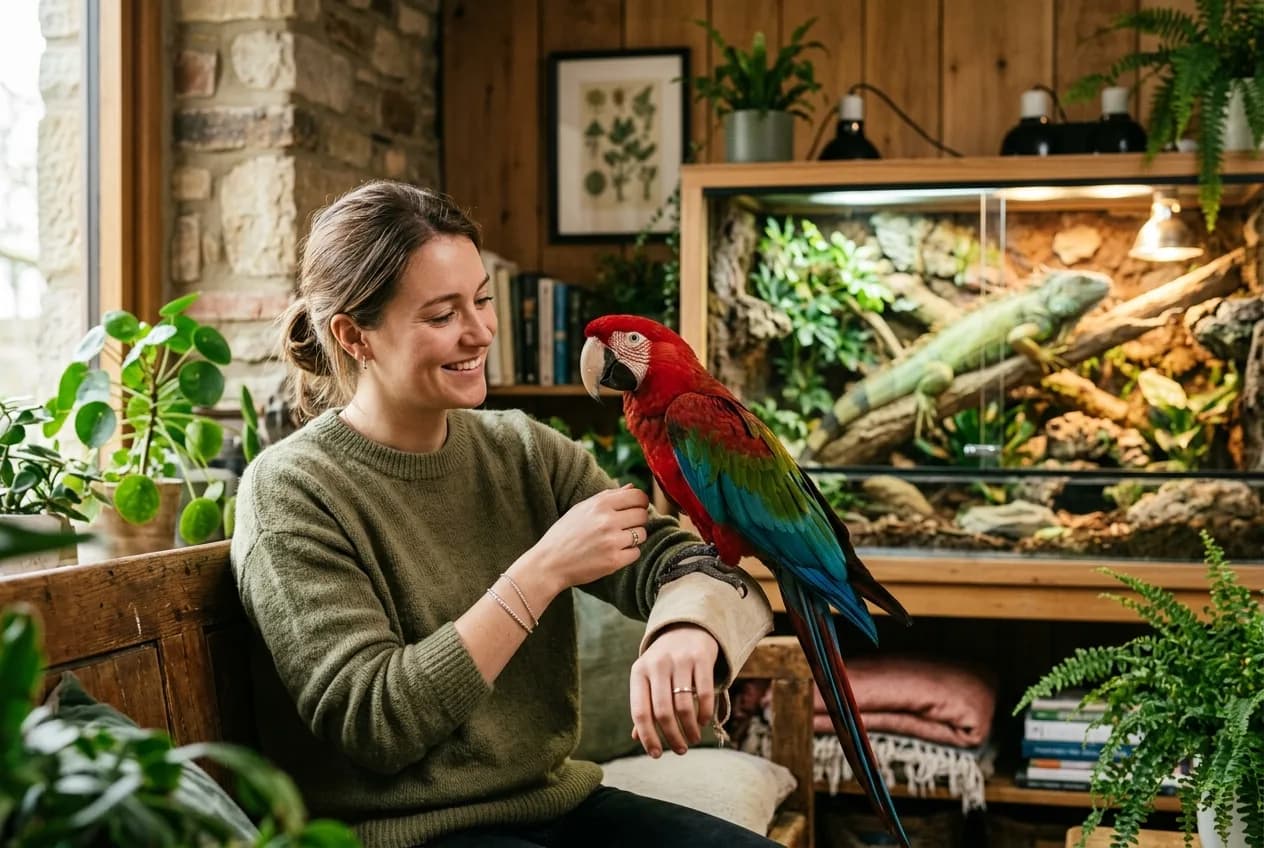
Important upfront: not every small pet is automatically an easy companion animal. Reptiles, parrots and other exotic species are subject to species protection law, and some species may not be kept at all. You can read what this means for your choice in the section on the legal rules for exotics.
What species-appropriate keeping means in practice
The better question is not which small pets exist, but which ones fit your everyday life. Four criteria decide: social behavior, space requirements, diet and enrichment. Anyone who honestly checks these criteria before getting a pet avoids the most common mistakes — namely animals ending up in cages that are too small or kept alone.
The most important point is social behavior. Rabbits and guinea pigs are group animals and must not be kept alone — at least two animals are mandatory. Keeping rabbits and guinea pigs together, on the other hand, is controversial, because the two species have different body language and different needs. Hamsters are strict loners, while rats should be kept in groups of at least three, ideally in a pack of four or more.[2]
- Social behavior: group animals such as rabbits, guinea pigs, rats and degus need companions of their own kind; hamsters must be kept alone
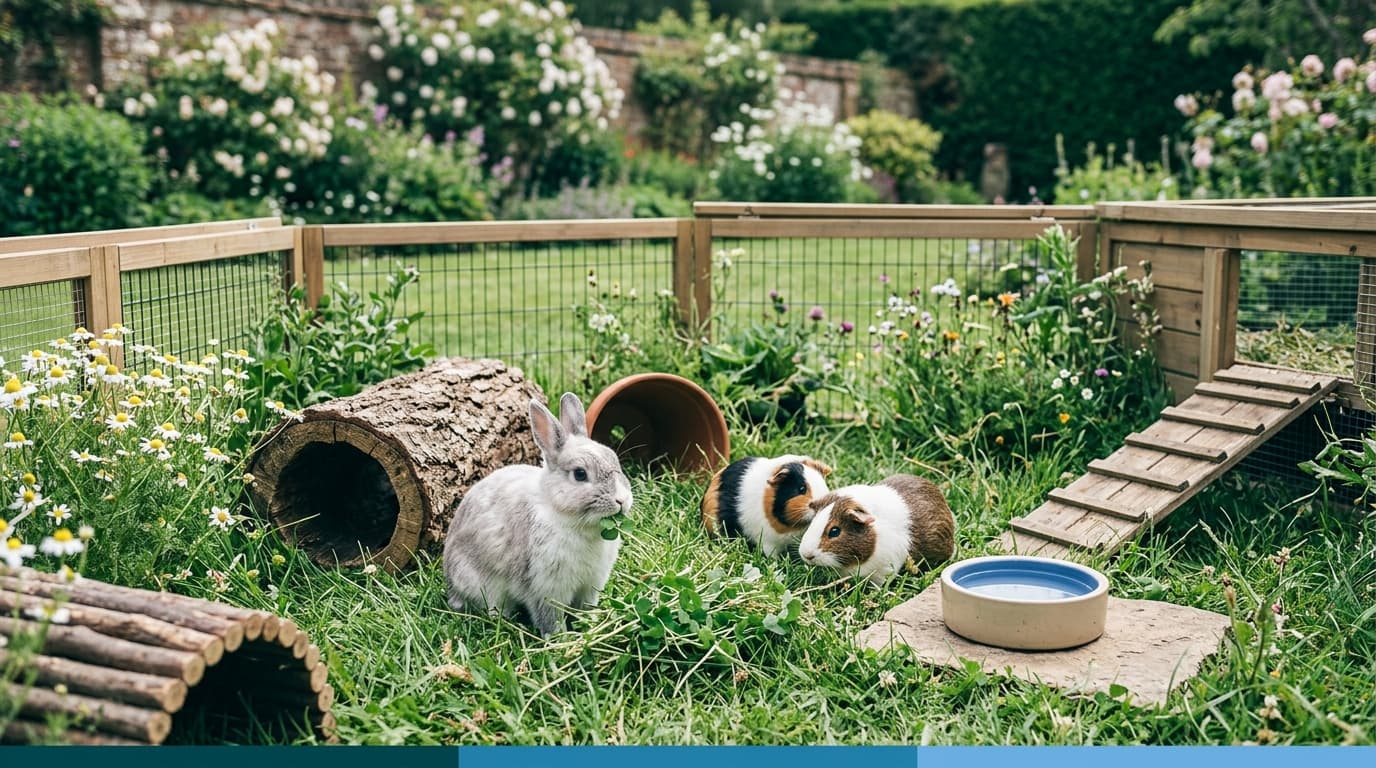
- Space requirements: guinea pigs need at least 2 square meters of floor-level space, a pair of rabbits permanently 4 to 6 square meters, plus daily exercise time[3][4]
- Diet: hay around the clock, fresh vegetables daily, and guinea pigs need vitamin C
- Enrichment: tubes, boxes and climbing opportunities instead of an exercise ball, otherwise behavioral problems develop
The location of the enclosure matters too: drafts and intense sunlight are harmful, so the spot should be free of drafts and out of direct sun, with daily exercise time. When kept outdoors, enclosures need protection from birds of prey and shaded areas.[5] And an honest word about responsibility: it lies solely with the adults, not with the children. Species-appropriate keeping is hardly compatible with a child's wish to cuddle and carry around an animal.
Diurnal or nocturnal: which small pet fits your daily routine
The question of activity patterns and the question of the right pet for children drive the same decision: you want an animal you and your children can actually experience in everyday life. Guinea pigs are mainly diurnal and vocal, rabbits are mostly active at dusk and therefore lively in the early morning and evening. Golden hamsters are predominantly nocturnal and must not be woken during the day, while chinchillas are mainly active at dusk and at night.[6] If you want to watch a lively animal in the evening, a hamster or chinchilla is a good fit; if you want to see activity during the day, a guinea pig is more suitable.
| Small pet | Activity time | Special feature |
|---|---|---|
| Guinea pigs | diurnal | highly social, not cuddly pets, squeal loudly |
| Rabbits | active at dusk | [4]at least in pairs, 4 to 6 square meters of space |
| Golden hamsters | nocturnal | [6]loners, do not wake during the day |
| Rats | active at dusk and at night | [2]at least three, better in a pack of four or more, very quick learners |
| Chinchillas | active at dusk and at night | need winter rest and plenty of climbing opportunities |
For children, diurnal, calm animals that can be observed without being stressed are best suited. Children from about age 8 can help with feeding and cleaning the cage, but responsibility for the animal remains with the parents. An honest caveat belongs here: guinea pigs are purely observation animals — they do not like being stroked or picked up, squeal loudly, and need fresh vegetables daily and regular cage cleaning. A small pet is not a toy but a multi-year commitment that also incurs costs when the animal gets sick.
Keeping exotics: what to consider legally
The more exotic the animal, the stricter the rules. The Washington Convention on International Trade in Endangered Species (CITES), the international agreement on protecting endangered animal and plant species, today classifies a large number of species into different protection levels.[7] The Federal Agency for Nature Conservation is the German enforcement authority for its implementation.[7]
- When buying protected reptiles and birds, you need a valid CITES certificate or proof of captive breeding — without these papers you are committing an offence
- Some species may not be kept at all; keeping bans apply regardless of whether an insurance policy exists
- Damage caused by animals kept illegally is excluded by insurers, so the cover does not apply
In practical terms: ask the breeder or dealer actively for the papers before you buy, and keep them permanently. Anyone who acquires a protected species without documentation risks not only fines but also, in the event of a claim, the loss of any insurance cover. The rules also change constantly — new CITES trade regulations have recently come into force.[7]
What the vet costs for small pets
Small pets are small — their bills do not have to be. Veterinarians bill according to the fee schedule for veterinarians (GOT), a legally binding regulation valid nationwide with fixed fee ranges. It does not set fixed prices; instead, depending on effort, difficulty and circumstances such as emergency service, it allows one to three times the base rate, on a sliding scale.[8]
| Service for a rabbit | Fee at the 1x rate (net, as of 2026) |
|---|---|
| General examination and consultation | [9]15.39 euros |
| X-ray, first image | [9]26.03 euros |
| Intravenous infusion by gravity | [9]42.00 euros |
| Venous blood draw | [9]10.26 euros |
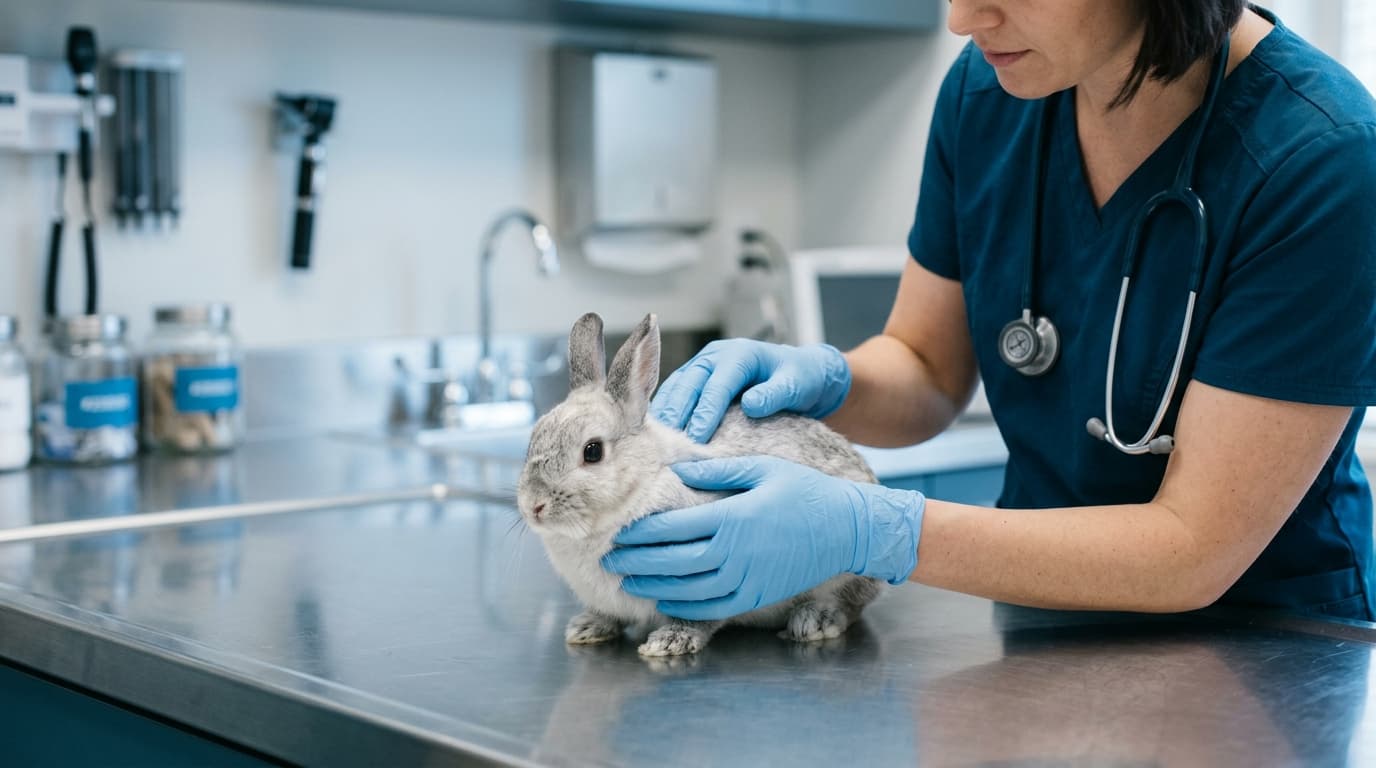
A worked example: a rabbit with a suspected tooth root infection receives a general examination (15.39 euros), an X-ray (26.03 euros) and an infusion (42.00 euros) — together, at the 1x rate net, roughly 83 euros (fee level 2026).[9] If the vet charges double the rate due to effort or emergency service, the amount doubles accordingly. With surgery involving anaesthesia, follow-up treatment and medication, the bill quickly adds up to several hundred euros — and that can happen to an animal that was bought for under 50 euros.
This very discrepancy is why insurance cover for small pets is a topic at all. Treatment costs are independent of the animal's size — the GOT does not differentiate by the patient's weight. Anyone who does not want to cover these costs out of pocket should look early into what services a policy for rabbits, guinea pigs, birds or reptiles will pay for.
Insuring small pets: small pet insurance at a glance
Small pet insurance is a pet health insurance for small mammals, birds and reptiles. It reimburses the costs of medically necessary operations, treatments and follow-up care up to the agreed GOT maximum rate. Special conditions are included, such as egg binding — the difficulty or impossibility of laying eggs in female birds and reptiles — or malocclusion, a misalignment of the jaw or teeth. So the very conditions from the cost section above are the typical claim cases.
Just as honest is a look at the limits, because that is where it is decided whether a policy really pays out in an emergency:
- Sum insured: the maximum benefit is limited per insurance year to the agreed amount; you pay any higher bills yourself
- Deductible: if one was agreed, it is deducted per claim submission; all bills from one calendar day count as a single submission
- Waiting periods: 30 days in general, 6 months for special conditions and operations; no waiting period applies in the event of an accident (terms as of June 2025)
- Policyholder obligations: you must have recommended vaccinations and preventive measures carried out and keep the animals in a species-appropriate way; violations can lead to termination or loss of benefits
So the general rule is: small pet insurance is worthwhile as soon as the animal needs veterinary care and the treatment costs would fall on you personally. The decisive difference for your case is the species of animal and its risk of illness: rabbits with dental problems, birds and reptiles with egg binding, or rodents with acute emergencies need different coverage priorities. Whether your specific animal, with its age and history, will be accepted, and which tariff fits it, is something a general article like this cannot settle — that depends on the health declaration and the insurer's acceptance decision. And one note for context: tariffs, conditions and waiting periods change constantly; the concrete cover always depends on the chosen tariff and the contract documents, so check the current conditions before taking out a policy.
If this check shows that small pet insurance makes sense for your animal, it is worth taking a closer look at the small pet insurance from nextsure: there you will see tariffs for rabbits, guinea pigs, birds and reptiles with benefits, waiting periods and premiums compared directly.
Frequently asked questions
- Which small pets can you keep in Germany?
Common and permitted are rabbits, guinea pigs, hamsters, rats, mice, degus and chinchillas, as well as ornamental birds such as parakeets and canaries. Reptiles can be kept in a terrarium, although protected species may require certificates under the Washington Convention on International Trade in Endangered Species. What matters is species-appropriate keeping: many species need companions of their own kind, sufficient space and daily activity.
- Which small pets are diurnal?
Guinea pigs are mainly diurnal and are therefore better suited to families who want to watch the animals during the day. Rabbits are mostly active at dusk, meaning lively in the morning and evening. Golden hamsters are nocturnal, chinchillas active at dusk and at night. If you work during the day and have time in the evening, a hamster or chinchilla is more likely to be a good match.
- Which small pets are suitable for children?
Diurnal, calm species such as guinea pigs and the dusk-active rabbits suit children better than nocturnal hamsters. Children from about age 8 can help with feeding and care. Important: sole responsibility lies with the parents, because species-appropriate keeping, cage cleaning and vet visits cannot be delegated to children.
- Can you keep rabbits and guinea pigs together?
This is disputed and animal welfare sites generally advise against it. The two species have different needs, communication and dietary requirements, and neither replaces companions of its own kind for the other. It is better to keep each species in its own group of at least two to three animals.
- How much does a vet visit for a small pet cost?
Veterinarians bill according to the fee schedule for veterinarians (GOT), a nationwide regulation with a fee framework; depending on the effort, 1 to 3 times the rate is permitted. At the 1x rate, a general examination of a rabbit costs about 15.39 euros net, the first X-ray 26.03 euros. With surgery and follow-up treatment, costs quickly add up to several hundred euros.
- Which animals does small pet insurance cover?
Insurable are small mammals, birds and reptiles as well as other animals named in the application process. Reimbursed are operations, medical and follow-up treatments up to the agreed maximum rate of the fee schedule for veterinarians, including special conditions such as egg binding and malocclusion. Sum insured, deductible and waiting periods depend on the specific tariff.
- Do I need to consider anything with small pet insurance?
Yes. Cover depends on the specific tariff, the health declaration and the insurer's acceptance decision. There are also policyholder obligations: recommended vaccinations and preventive measures must be carried out and the animals must be kept in a species-appropriate way, otherwise the insurer may reduce benefits or terminate the policy in the event of a claim. nextsure compares tariffs, advises independently and brokers the contract, but is not itself an insurer.
Sources
Conclude directly online
Verified partner tariffs at no extra cost. The button takes you straight to the provider's calculator.
 Cleos Welt
Liability insurance for exotic animals
Liability cover for owners of exotic animals such as snakes, spiders, or alpacas, with coverage of up to €10 million.
- Sum insured:
- up to €10 million
- Number of animals:
- up to 200 smaller animals or a maximum of 5 larger animals
- Events:
- covered (e.g. trade fairs)
- Personal injury, property damage, and financial loss: up to €10 million
- Search, rescue, and recovery operations: up to €1.5 million
- Damage to rented premises up to €300,000; up to €5,000 in vacation accommodation
- Commercial use covered up to €22,000 in annual revenue
- Young animals up to 12 months old are covered
- Meets the mandatory insurance requirement under the NRW Venomous Animals Act (Gifttiergesetz, €1 million)
Key exclusions
- Animals subject to a keeping ban
- Herds of more than 5 larger animals (e.g. alpacas, donkeys)
Google Rezensionen: 4,5/5 Sterne (210 Bewertungen)
Cleos Welt insgesamt (Anbieterbewertung, alle Versicherungen)
Includes an update guarantee and a grandfathering guarantee (Besitzstandsgarantie); proof for authorities is provided directly after the policy starts.
Fact sheet: benefits, exclusions and waiting periods in detail
Cleos Welt
Small pet insurance
Health insurance for small mammals, birds, and reptiles: reimburses surgery, treatment, and after-care costs up to the agreed maximum veterinary fee schedule (GOT) rate.
- Waiting period:
- 30 days, 6 months for specific surgeries
- Coverage abroad:
- up to 12 months
- Age-based adjustment:
- 3% premium increase per year
- Surgery, treatment, and after-care up to the agreed maximum GOT rate
- Medication as well as boarding and feeding during clinic stays
- Specific surgeries (egg binding, otitis, malocclusion) after a 6-month waiting period
- Remote diagnostics and consultation with a veterinarian
- Optional: vaccinations, neutering, physiotherapy, and supplemental dental cover
- Accidents are covered with no waiting period
Key exclusions
- Pre-existing conditions and treatments recommended before the policy started
- Myxomatosis/RHD in rabbits without proof of vaccination
- Neutering/spaying without a separate agreement
- Damage from Encephalitozoon cuniculi without a negative test (test max. 1 year old)
Google Rezensionen: 4,5/5 Sterne (210 Bewertungen)
Cleos Welt insgesamt (Anbieterbewertung, alle Versicherungen)
Cancellation possible at any time with 14 days' notice; sum insured and deductible (Selbstbeteiligung) as stated in the policy. Insurer: Uelzener Allgemeine Versicherungs-Gesellschaft a.G.
Fact sheet: benefits, exclusions and waiting periods in detail
All details are taken from the provider's linked product page and the contract documents (IPID/policy conditions) published there; the insurer's documents prevail. Premiums, benefits and the insurance product itself may change – please verify the details directly with the partner before signing up; only the information provided there is binding.
Information last updated: July 2026 · Source: provider product information (IPID/policy conditions)