Sheep Liability Insurance: Risks, Costs & Tariff Comparison
Do you need sheep liability insurance? Learn about liability risks, homeowner policy limits, and the right coverage for hobby farmers.
All details are taken from the provider's linked product page and the contract documents (IPID/policy conditions) published there; the insurer's documents prevail. Premiums, benefits and the insurance product itself may change – please verify the details directly with the partner before signing up; only the information provided there is binding.
 Katrin StraubManaging DirectorInsurance expert with over 20 years of experience in the insurance industry.
Published on
12 min read
Table of Contents
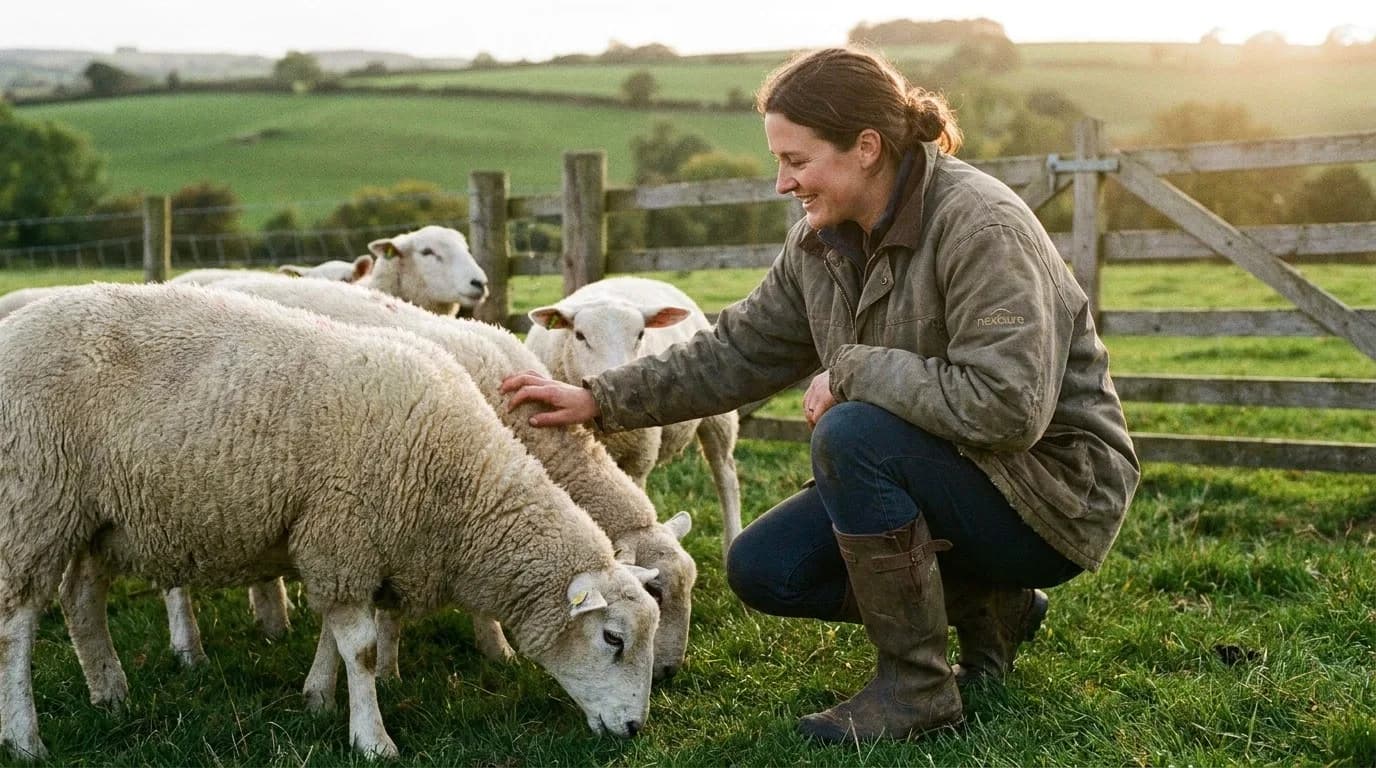
Sheep liability insurance protects owners from the financial consequences of strict liability under Section 833 of the German Civil Code (BGB). The financial risk is high. While some private liability policies cover a few sheep kept purely as a hobby, larger flocks or landscape-maintenance work require dedicated animal-owner liability cover. This covers legitimate compensation claims for personal injury, property damage, and financial loss, fends off unjustified claims, and covers the existential risk of traffic accidents caused by escaped animals.
Hobby-Nutztier-Versicherung
Find personalised tariffs, compare services, and benefit from transparent information and personal advice – digital and straightforward.
Learn moreLegal basics of sheep liability insurance
Strict liability under the German Civil Code
The legal basis for sheep liability insurance rests on the German Civil Code (Bürgerliches Gesetzbuch, BGB). Anyone who keeps sheep in Germany is subject to what is known as strict liability (Gefährdungshaftung) under Section 833 BGB. This provision clearly states that animal owners must cover all damage their animal causes. It legally makes no difference whether the owner is directly at fault. The law, however, draws a strict distinction between agricultural livestock and animals kept purely as a hobby. Professional livestock owners, whether farming as a main or secondary occupation, benefit from reduced liability provided they meet the required herding-safety standards [1].
Hobby owners, however, are always fully liable if their animals escape [1]. The liability relief for agricultural livestock explicitly does not apply to them. This strict distinction makes a precise risk analysis essential. A single escape can lead to claims that threaten your entire livelihood. That is why tailored coverage is essential for every sheep owner. The financial scale of a claim is often massively underestimated. Personal injury claims can quickly run into the millions.
Distinguishing hobby keeping from farming
The exact classification of how the animals are kept largely determines the coverage needed. Purely hobby keeping applies when the animals are kept solely for private interest. There must be no intention to make a profit. As soon as wool, meat, or milk are sold regularly, the legal classification shifts. Landscape maintenance carried out for payment also counts as a commercial activity. In these cases, private cover is no longer sufficient. The mechanisms of commercial liability insurance then apply. Many owners operate in a legal gray area. They keep five sheep to maintain their own land but occasionally sell lambs. These situations require detailed disclosure in the insurance contract. False statements inevitably lead to loss of coverage in the event of a claim. nextsure systematically analyzes these borderline cases. Our tariffs are structured so that hybrid forms of keeping are covered in a legally sound way. Transparency at the application stage prevents coverage gaps later on.
The reversal of the burden of proof and its consequences
A central aspect of animal-owner liability is the burden of proof. For hobby animals, the injured party only has to prove that the animal caused the damage. The owner cannot exculpate themselves by proving they fulfilled all duties of care. An intact fence does not free the hobby owner from liability. This is a fundamental difference from agricultural livestock keeping. There, the farmer can avert liability by proving they exercised the required care in supervision. For hobby owners, this means a permanent, incalculable risk. Sheep liability insurance serves a dual function in this system. It settles legitimate claims quickly and efficiently. At the same time, it acts as passive legal protection. The insurer fends off unjustified or excessive claims at its own expense. This legal support is invaluable in complex claims. It protects the owner's personal assets from unjustified access.
Private liability vs. animal-owner liability for sheep
When private liability insurance is enough
Private liability insurance already provides basic protection for some sheep owners. Provided sheep, chickens, or bees are kept purely for private purposes, they fall under private liability insurance with many providers [5]. This inclusion, however, comes with strict conditions. The number of animals is usually strictly limited. Some tariffs allow a maximum of two to five sheep. In addition, the animals must be kept on the owner's own privately used property. Leased land or external pastures are often excluded. The breed can also play a role. Anyone relying on this cover must meticulously check the policy terms. Blanket trust in private liability insurance is risky. Important coverage elements, such as field damage or unwanted mating incidents, are often missing. For very small-scale owners, this solution can make economic sense. It does, however, require continuous monitoring of how the animals are kept. As soon as the flock grows, cover is automatically lost.
The need for dedicated animal-owner liability insurance
Dedicated animal-owner liability insurance becomes unavoidable for larger flocks or external pastures. It is precisely tailored to the specific risks of keeping sheep. With pure animal-owner liability insurance, unlike commercial liability insurance, only the risks directly arising from the animals are insured [2]. This specialization ensures seamless cover. It also covers animals escaping from pastures that are not directly next to the home. In addition, larger numbers of animals can be insured without any problem. The premium structure is transparent and usually based on the exact number of animals. Another advantage is flexibility when flock numbers change. Lambs are generally co-insured free of charge for a certain period. Anyone looking for specialized hobby livestock insurance will find handpicked tariffs at nextsure. These tariffs close the gaps that standard private liability policies leave open. They provide the legal certainty ambitious hobby owners need.
Coverage gaps in standard tariffs
Standard tariffs often have significant coverage gaps when it comes to livestock keeping. A classic example is field damage. If sheep escape and strip the neighbor's vegetable patch bare, basic tariffs often refuse to pay. Unwanted mating incidents and the resulting costs can also be included in the cover of animal-owner liability insurance [4]. Standard private liability policies almost always lack this element. Another problem area is the third-party carer clause. If neighbors or friends look after the sheep while the owner is on vacation, they need to be included in the cover. If this isn't done, the owner is personally liable for mistakes made by the carer. These fine but essential differences are what make a specialized policy worthwhile. Analyzing these details requires professional expertise. nextsure handles this review. Our algorithm filters out tariffs that specifically cover these critical scenarios. That way, owners avoid unpleasant surprises when a claim arises.
| Feature | Private liability (basic) | Dedicated animal-owner liability |
|---|---|---|
| Number of animals | Often limited to 2–5 | Flexibly adjustable |
| External pastures / leased land | Usually excluded | Fully covered |
| Field damage | Rarely included | Included as standard |
| Third-party carer risk | Often unclearly defined | Clearly regulated and covered |
The exact terms vary by insurer. Individual review is essential.
Scope of cover under sheep liability insurance
Cover for personal injury
The scope of cover of sheep liability insurance must include a sufficient level of cover for personal injury. Personal injury represents the greatest financial risk for any animal owner. If a sheep causes a cyclist to fall and they suffer serious injuries, costs mount rapidly. Treatment costs, pain and suffering compensation, lost earnings, and lifelong pension payments can reach millions. Animal-owner liability insurance typically covers personal injury, property damage, and damage to rented property [4]. The sum insured for personal injury should never be below €10 million. Experts now standardly recommend €50 million as a flat sum for personal injury and property damage combined. These high sums cost only a few euros more in premium. But they provide the crucial protection against financial ruin. A solid tariff first checks the question of liability. If the claim is legitimate, the insurer pays out up to the agreed limit. If it is not, the insurer fends it off.
Property damage and damage to rented property
Besides personal injury, the policy also reliably settles property damage claims. This includes damaged vehicles from collisions, destroyed fences, or ruined gardens. Special attention should be paid to what's known as damage to rented property. Anyone who has leased pastureland or stabling absolutely needs this inclusion. If the sheep destroy the leased fencing or damage the barn, this component applies. Many basic tariffs blanket-exclude damage to rented, leased, or borrowed items. For sheep owners, this exclusion is fatal. Tariffs on the nextsure platform are specifically checked for these clauses. We make sure that lessees of pastureland are fully protected. Damage to borrowed transport trailers can also be included. The precise definition of property damage in the contract text determines the quality of the policy. A good tariff leaves no room for interpretation here. It comprehensively protects third-party property.
Financial loss and field damage
Financial loss forms the third important pillar of liability cover. True financial loss occurs when someone suffers a financial disadvantage without any prior personal injury or property damage. One example: escaped sheep block access to a commercial business, causing it to lose customers. Far more common, however, is field damage. If the flock escapes onto the neighboring rapeseed field and destroys the crop, this creates significant economic damage. Compensation is based on the yield value of the destroyed plants. For owners interested in a combined liability and veterinary-cost cover for sheep and goats, field-damage cover is a must. It prevents drawn-out disputes with neighbors. The insurer determines the objective value of the damage and compensates the farmer. This safeguards not just finances but also peace within the community. A policy without field-damage cover is effectively worthless for sheep owners.
Key coverage elements of sheep liability insurance
- Personal injury (at least €10 to €50 million sum insured).
- Property damage, including damage to rented or leased pastures.
- Field damage (grazing and trampling damage on someone else's farmland).
- Third-party carer risk (cover for people looking after the animals unpaid).
- Mating-damage cover (unwanted mating with other people's animals).
Check the exact sub-limits for field damage and damage to rented property in the policy terms.
Traffic accidents: the biggest risk for sheep owners
Escaping the pasture
Traffic accidents represent the absolute nightmare scenario for any sheep owner. If grazing animals escape and run onto a country road or highway, serious collisions are hard to avoid. The kinetic energy when a vehicle hits an 80-kilogram sheep is enormous. The resulting personal injury and property damage can quickly exceed anything you'd expect. In these cases, the owner is fully liable under strict liability. It makes little legal difference whether the fence was built to code. The risk materializes purely through the animal hazard itself. In this case, the insurance takes over settling vehicle damage, recovery costs, and medical care for the injured. Fast, professional handling by the insurer is essential here. It shields the owner from direct action by opposing lawyers. An accident of this scale underscores the absolute necessity of a high sum insured.
Requirements for herding safety
Even though hobby owners are liable regardless of fault, insurers require basic safety standards to be met. Herding safety must be objectively ensured. Fences must be appropriate for the type of animal and the terrain. A dilapidated, knee-high fence for a flock of sheep prone to jumping counts as gross negligence. If the insurer can prove gross negligence, it can seek recourse from the owner internally. It still pays the third party's claim, but then reclaims the money from the owner. Documenting the fencing is therefore important. Regular checks of pasture boundaries should be recorded in a grazing log. Some modern tariffs waive the objection of gross negligence altogether. This is a major quality advantage. nextsure highlights these customer-friendly clauses. They give owners the ultimate security, even if they made a mistake.
Claims handling in multi-vehicle pile-ups
Handling claims becomes especially complex when an escaped sheep triggers a multi-vehicle pile-up. Multiple damaged vehicles, injured occupants, and blocked roads create legal chaos. In this case, sheep liability insurance consolidates the claims handling. It acts as the central point of contact for all those affected. The €50 million sum insured ensures that enough capital is available even with many parties involved. The insurer checks causation and contributory negligence for each individual claimant. If, for example, a driver was clearly going too fast, their compensation claim is reduced. This kind of professional claims defense is impossible for private individuals to handle on their own. It requires specialized lawyers and expert assessors. The policy thus protects the owner not just financially but also relieves them of the enormous psychological burden of such a major incident. That is the true value of excellent liability cover.
Landscape maintenance and commercial use
The line to commercial activity
The line to commercial activity is often blurry in sheep keeping. If sheep are specifically used for landscape maintenance on municipal land and the owner receives payment for it, this counts as a commercial activity. Regularly selling meat, wool, or hides to third parties also indicates a business. In these cases, private animal-owner liability insurance no longer applies. The owner then needs agricultural commercial liability insurance. This distinction is fundamental, since the risk structure is completely different. Commercial owners do benefit from the liability relief under Section 833 sentence 2 BGB, but bear the risk of running a commercial operation. Anyone who ignores this transition and continues to declare their animals as a hobby risks losing coverage entirely. Insurers scrutinize the actual keeping conditions very carefully in the event of major claims. Transparent communication when taking out the policy is therefore the best protection against coverage being denied.
Insurance solutions for part-time farmers
Insurers offer special concepts for part-time farmers. These tariffs combine elements of private liability with commercial liability. They cover the sale of agricultural products and include the farmer's private liability. Members of sheep-breeding associations can often take out special animal-owner liability insurance through favorable group contracts [2]. These group contracts are precisely tailored to the needs of breeders and landscape managers. They take into account, for example, participation in livestock shows or the use of herding dogs. A herding dog generally needs its own dog-owner liability insurance but can be included in agricultural tariffs. Structuring such contracts requires expertise. It's not enough to simply take out a policy. The exact business structure, leased areas, and type of marketing must all be recorded. Only then does a watertight coverage concept emerge that actually holds up in the event of a claim.
Special breeds and breeding risks
Breeding special breeds brings its own liability challenges. Valuable breeding rams represent a higher risk, especially during mating season. If a neighbor's breeding ram escapes and unintentionally mates with a flock, this causes significant financial loss through the lost breeding value. This mating-damage claim must be explicitly insured. Keeping rare breeds also requires attention. Cover for special breeds such as Ouessant miniature sheep differs in risk assessment from large meat-sheep breeds. Miniature sheep escape en masse less often, but they can slip through tightly meshed fences. Tariffing should take these breed-specific characteristics into account. Some insurers offer discounts for small breeds or very small flocks. Precisely stating the breed and type of use in the application secures optimal coverage. It's worth going into detail here and seeking tailored solutions.
Health costs and theft: supplements to liability cover
Health insurance for sheep
Health costs and theft are risks that liability insurance naturally does not cover. Liability insurance protects the owner's assets from third-party claims, but not the animal itself. For the health protection of the flock, general animal health insurance is needed. Vet costs for sheep can quickly rise with complicated births, infectious diseases, or injuries. Health or surgical insurance covers these costs and secures the best possible medical care for the animals. This cover makes particular sense for valuable breeding animals or beloved hobby animals. It prevents financial constraints from deciding whether the animal lives or dies. Combining liability and health insurance offers perfect all-round protection. It covers both external liability risks and internal health risks. Owners should compare tariffs carefully, as reimbursement rates for livestock vary widely.
Animal-life and theft insurance
Another existential risk is losing animals through theft or sudden death. Besides liability, sheep can also be insured against theft or death from accidents and illness [3]. Life insurance for sheep pays compensation for death, emergency slaughter, or theft of the animals [3]. Thefts from pastures have increased significantly in recent years. Entire flocks are transported away overnight from remote pastures. For the owner, this means a massive financial and emotional loss. Compensation is based on the market or breeding value of the animals. A prerequisite for payment in the event of theft is usually a police report and proof that the pasture was secured. These specialized policies are indispensable, especially for breeders and owners of valuable breeds. They cushion the economic blow of a total loss of stock and enable rebuilding the flock.
Holistic risk management for owners
Holistic risk management looks at all the risk sources in keeping sheep. It starts with liability, extends to the animals' health, and ends with theft protection. The owner's own personal cover must not be forgotten either. Anyone injured while trimming hooves or catching the animals needs private accident insurance. Statutory accident insurance generally does not apply to purely hobby owners. Liability insurance for private poultry owners or sheep owners is only one building block in the overall concept. nextsure analyzes individual needs holistically, identifies coverage gaps, and recommends sensible additions without overloading you with unnecessary policies. This structured approach prevents the hobby of keeping sheep from turning into a financial nightmare. Prevention and precisely tailored coverage go hand in hand here. That gives the owner the peace of mind they need.
Steps toward holistic risk management
- Analyze the liability risk: define the number of animals, pasture locations, and type of use.
- Take out suitable animal-owner liability insurance (at least €10 million in cover).
- Assess health risks: is animal health insurance worthwhile for the flock?
- Check theft risk: are the pastures remote? Evaluate animal-life insurance.
- Ensure personal protection: check private accident insurance for handling the animals.
An annual policy check-up ensures that changes in flock size are correctly reflected.
Comparing tariffs and structuring contracts
Criteria for the optimal tariff
Comparing tariffs for sheep liability insurance requires looking at specific details. The annual premium alone is a poor guide. What matters is the sum insured, the included benefit packages, and flexibility when flock size changes. An excellent tariff offers at least €15 to €50 million in cover for personal injury. It includes field damage without high deductibles and covers the third-party carer risk. In addition, co-insuring lambs should be arranged free of charge for at least six to twelve months. This spares the owner from constantly having to report new animals during lambing season. Notice periods and the term of the contract also matter. One-year contracts offer the greatest flexibility. Discounts for multi-year contracts often tie the customer to outdated terms for too long. Digital policy management enables quick adjustments. This is a clear advantage of modern insurtech platforms over traditional paper contracts.
Deductibles and premium structure
Agreeing a deductible is an effective way to reduce the premium. A deductible of €150 to €250 per claim often noticeably lowers the annual premium. For the owner, this means paying minor damage, such as a knocked-over flowerpot at the neighbor's, out of pocket. The insurance then acts as genuine catastrophe protection for expensive accidents or major field damage. This strategy makes excellent economic sense. It also prevents the insurer from canceling the contract after several reported minor claims. Premiums are usually tiered by the number of animals. Up to five sheep often cost a flat amount, with each additional animal billed separately. Some providers grant discounts for members of sheep-breeding associations or for combining policies. A transparent comparison calculator shows these effects immediately. It makes pricing understandable for the customer.
Taking out cover via digital broker platforms
Taking out cover via digital broker platforms like nextsure revolutionizes access to specialty insurance. Instead of laboriously requesting quotes from various companies, the owner immediately gets a transparent overview of the market. The algorithm filters out unsuitable tariffs and presents only solutions precisely tailored to sheep keeping. The entire process, from needs analysis to policy issuance, happens digitally and paper-free. In the event of a claim, the platform provides a central point of contact for reporting and documentation. This significantly speeds up claims handling. In addition, the digital broker continuously monitors the market. If terms improve or premiums fall, the customer is proactively informed. This service ensures that coverage always stays up to date. For modern hobby owners, this is the most efficient way to insure their animals in a legally sound and cost-effective way. It saves time, money, and stress.
Frequently asked questions
- Is dedicated animal-owner liability insurance mandatory for sheep?
Yes, hobby owners are subject to strict liability under Section 833 BGB. They are liable, without limit and with their personal assets, for all damage their sheep cause. Dedicated animal-owner liability insurance is therefore essential, especially to cover the extremely high costs of traffic accidents caused by escaped animals.
- Are sheep covered under standard private liability insurance?
In some basic tariffs, a few sheep (often a maximum of 2 to 5) kept purely as a hobby on your own property are co-insured. This cover, however, is often patchy. Field damage, external pastures, or leased land are usually excluded. A careful review of the policy terms is absolutely essential here.
- Who is liable if a sheep escapes and causes an accident?
With hobby keeping, the owner is always liable, regardless of whether the fence was intact or not (strict liability, independent of fault). In this case, sheep liability insurance takes over settling the personal injury and vehicle damage claims and fends off unjustified claims.
- How many sheep can be insured under one tariff?
The number is flexibly adjustable under a dedicated animal-owner liability policy. While private liability tariffs often stop at 5 animals, specialty policies can insure flocks of 20, 50, or more animals. The premium is then transparently based on the exact number of sheep kept.
- Is landscape maintenance with sheep automatically covered?
That depends on the type of landscape maintenance. If your own land is maintained without payment, this counts as a hobby. But if you receive payment from a municipality or third party, it counts as a commercial activity. This requires agricultural commercial liability insurance.
- Does liability insurance also pay if the sheep gets sick?
No, liability insurance only covers damage the sheep causes to third parties. For your own vet costs, surgery, or medication, separate animal health insurance or surgical insurance for sheep is needed. This protects against high veterinary treatment costs.
Sources
Conclude directly online
Verified partner tariffs at no extra cost. The button takes you straight to the provider's calculator.
 Cleos Welt
Small pet insurance
Health insurance for small mammals, birds, and reptiles: reimburses surgery, treatment, and after-care costs up to the agreed maximum veterinary fee schedule (GOT) rate.
- Waiting period:
- 30 days, 6 months for specific surgeries
- Coverage abroad:
- up to 12 months
- Age-based adjustment:
- 3% premium increase per year
- Surgery, treatment, and after-care up to the agreed maximum GOT rate
- Medication as well as boarding and feeding during clinic stays
- Specific surgeries (egg binding, otitis, malocclusion) after a 6-month waiting period
- Remote diagnostics and consultation with a veterinarian
- Optional: vaccinations, neutering, physiotherapy, and supplemental dental cover
- Accidents are covered with no waiting period
Key exclusions
- Pre-existing conditions and treatments recommended before the policy started
- Myxomatosis/RHD in rabbits without proof of vaccination
- Neutering/spaying without a separate agreement
- Damage from Encephalitozoon cuniculi without a negative test (test max. 1 year old)
Google Rezensionen: 4,5/5 Sterne (210 Bewertungen)
Cleos Welt insgesamt (Anbieterbewertung, alle Versicherungen)
Cancellation possible at any time with 14 days' notice; sum insured and deductible (Selbstbeteiligung) as stated in the policy. Insurer: Uelzener Allgemeine Versicherungs-Gesellschaft a.G.
Fact sheet: benefits, exclusions and waiting periods in detail
All details are taken from the provider's linked product page and the contract documents (IPID/policy conditions) published there; the insurer's documents prevail. Premiums, benefits and the insurance product itself may change – please verify the details directly with the partner before signing up; only the information provided there is binding.
Information last updated: July 2026 · Source: provider product information (IPID/policy conditions)