Equine Surgery Insurance: Direct Billing with Vet Clinics
How direct billing between equine surgery insurance and vet clinics works. Tariffs, GOT rates, and waiting periods compared.
All details are taken from the provider's linked product page and the contract documents (IPID/policy conditions) published there; the insurer's documents prevail. Premiums, benefits and the insurance product itself may change – please verify the details directly with the partner before signing up; only the information provided there is binding.
 Katrin StraubManaging DirectorInsurance expert with over 20 years of experience in the insurance industry.
Published on
12 min read
Table of Contents
Equine surgery insurance with direct billing lets the equine clinic bill the operation costs directly with the insurer. This means horse owners do not have to advance the money. A signed assignment declaration is required. Leading providers such as Barmenia, Uelzener, and R+V offer this service. Reimbursement is based on the agreed rate under the fee schedule for veterinarians.
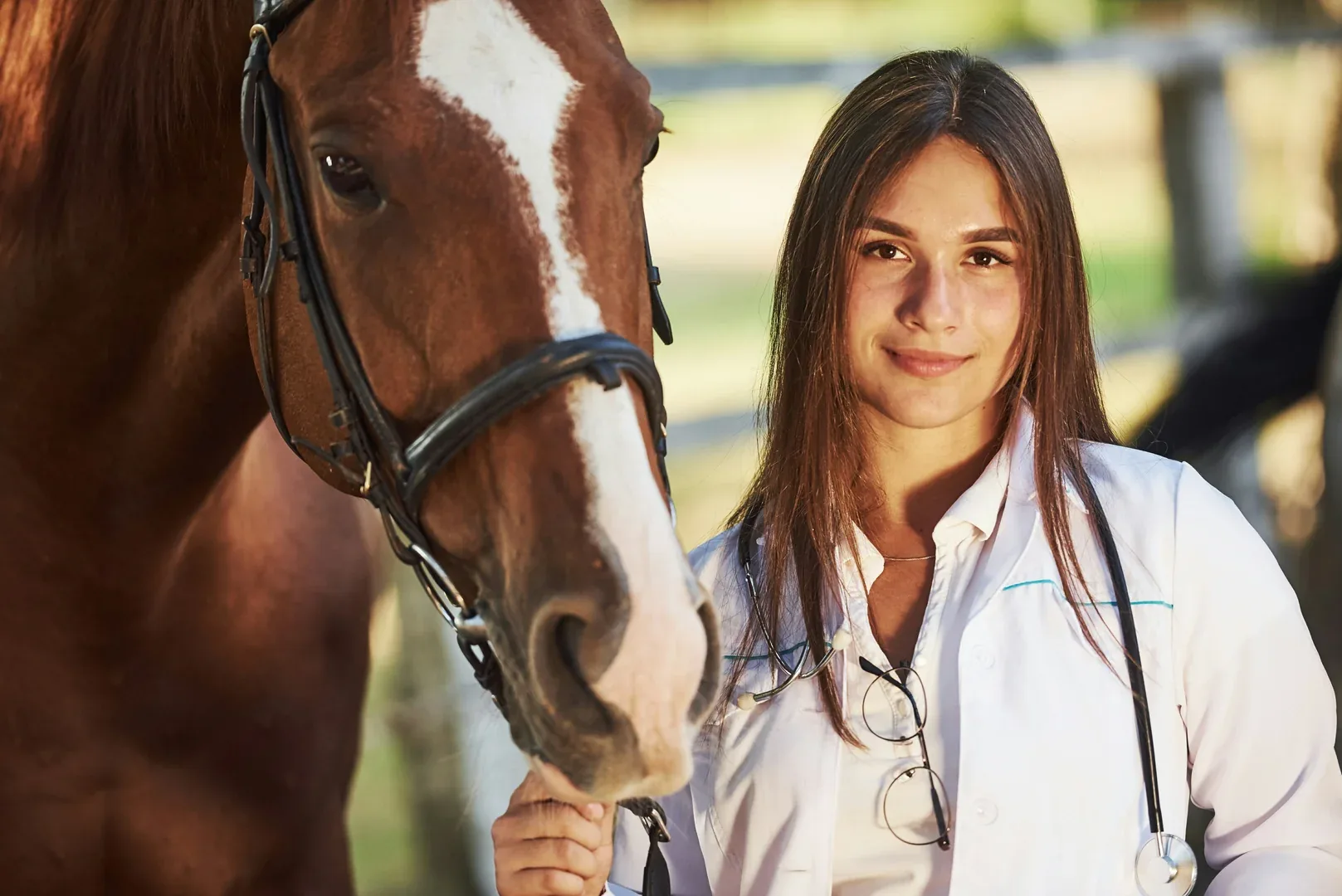
Equine surgery insurance
Horse surgery insurance via nextsure: Three flexible tariffs, reimbursement up to twice the GOT rate, and free choice of clinic worldwide. Protect your horse from high surgery costs – digital, transparent and uncomplicated.
Learn moreHow direct billing works for equine operations
The legal framework for cost coverage
The mechanics of direct billing under equine surgery insurance are based on a clear contractual agreement between the horse owner, the treating equine clinic, and the insurance company. In the regular course of veterinary treatment, the horse owner is the clinic's direct contracting party and is therefore primarily liable for payment. When an operation causes costs in the mid to high four-figure range, this obligation to pay upfront poses a massive liquidity problem for many owners. Direct billing solves this problem through a formal assignment declaration. The owner assigns their reimbursement claim against the insurer to the clinic.
That saves valuable time. Large veterinary medical centers routinely provide corresponding forms for established insurers [1]. Once this document is signed, the clinic communicates directly with the insurer's claims department. Barmenia Allgemeine Versicherungs-AG clearly states in its terms that, at the policyholder's explicit instruction, billing can be done directly with the vet or the equine clinic. The reimbursable amount then flows directly to the service provider. This does, however, require prior coordination between the owner and the treating facility to avoid administrative delays.
Reviewing the coverage commitment through the clinic
Before a planned surgical procedure, the equine clinic generally submits a detailed cost estimate to the insurance company. This estimate lists all expected line items from the fee schedule for veterinarians, including necessary imaging procedures such as MRI or CT. The insurer then checks the active insurance status, the chosen tariff, and any existing coverage exclusions. After a successful review, the insurer issues a binding coverage commitment. This commitment gives the clinic the financial security to carry out the operation without bearing the risk of the owner defaulting. In acute emergencies that allow no delay for a prior coverage request, clinics operate immediately. Billing then happens retrospectively based on the insurance policy number. For the final review, insurers require detailed invoices that include the owner's name, the horse's chip number, the exact diagnosis, and the billed service items in line with the applicable GOT. Without this precise information, direct billing is blocked.
Financial relief in an emergency
The main advantage of this process is the immediate financial relief for the policyholder. Given the high veterinary costs for horses, direct billing protects against having to take out short-term loans or dip into savings. After treatment and the contractually agreed aftercare period are complete, the clinic sends the final invoice electronically to the insurer. Claims handlers check the billed items for medical necessity and compliance with the tariff. The approved amount is then transferred directly to the equine clinic's business account. Should the invoice amount exceed the tariff's maximum limits or include uninsured additional services, the clinic simply bills the horse owner privately for this difference. The system works efficiently. If the insurer's inquiries are not completed within one month of the claim being reported, policyholders can, under the general terms, demand advance payments amounting to the expected minimum sum. This provides an additional layer of security in case the formal review of complex invoices takes longer.
Cost coverage under the fee schedule for veterinarians (GOT)
The structure of veterinary billing
Cost coverage by the insurer is strictly based on the current fee schedule for veterinarians, which forms the legal framework for veterinary billing in Germany. This regulation ensures that veterinary services are billed transparently and traceably [2]. Every surgical procedure, every injection, and every examination has a fixed base value set out in the GOT. Vets are legally required to bill at least the standard rate. Depending on the complexity of the operation, the time involved, and local conditions, the vet can increase the rate up to three times the base value. Specialized equine clinics with high technical standards routinely bill two to three times the rate for complex operations. Costs rise rapidly. Uelzener Versicherung, for example, offers tariffs that reimburse up to 100 percent of costs regardless of the billed GOT rate [4]. This is a decisive factor, since the choice of clinic often depends on medical expertise rather than the cheapest billing rates.
Billing for veterinary emergency service
Veterinary emergency service presents a particular financial challenge. When an operation must be carried out at night, on weekends, or on public holidays, stricter billing rules apply. In these cases, the GOT prescribes a flat emergency-service fee of 50 euros. In addition, the vet must bill at least twice the rate and may increase costs up to four times the rate. A strong insurance policy must cover these peak costs. Providers such as Barmenia reimburse fees under the GOT up to four times the rate in documented emergencies, provided this was explicitly agreed in the policy. This prevents nasty surprises in emergency operations. The existence of an emergency must be formally confirmed by the treating vet. If there is no emergency, insurers only reimburse fees up to the rate documented in the regular tariff, which would create a massive coverage gap for the owner if the clinic bills at four times the rate.
Tariff limits and reimbursement rates
When choosing strong equine surgery insurance, horse owners must carefully check up to which GOT rate the respective tariff pays. Basic tariffs often limit reimbursement to twice the rate. If the clinic bills three times the rate, the owner has to pay the difference out of pocket. Premium tariffs offer considerably more security here, since they typically pay up to three times the rate, and up to four times in emergency service. The insurance terms also precisely define which pre-operative examinations and aftercare treatments are included. Barmenia, for example, reimburses the cost of the examination required to establish the diagnosis, as well as subsequent further examinations such as X-rays or endoscopy.
This secures cost coverage. If the operation ultimately is not carried out, however, these preparatory examinations are generally not covered. If, on the other hand, the insured animal dies after anesthesia has begun, the operation is contractually deemed to have been carried out, even if the actual surgical procedure had not yet started.
| GOT rate | Typical application | Cost factor |
|---|---|---|
| 1x rate | Simple standard procedures without complications | Base value (100%) |
| 2x rate | Increased complexity, regular clinic billing | 200% of base value |
| 3x rate | Complex operations, high equipment requirements | 300% of base value |
| 4x rate | Life-saving emergency operations (night/weekend) | 400% of base value |
A statutory flat fee of 50 euros also applies for emergency service.
Waiting periods and their impact on cost coverage
The general waiting period for illnesses
Waiting periods define the exact point at which coverage becomes legally effective after the contract is concluded. Insurance companies use this instrument to protect themselves against opportunistic sign-ups, where a policy is only applied for once the animal already shows symptoms of illness. The general waiting period for operations needed due to illness is three months with most providers. If clinically relevant symptoms occur or a diagnosis is made within this period, that specific illness and all its resulting consequences are permanently excluded from coverage. Horse owners must therefore plan ahead. Signing up while the horse is healthy is essential. If comparable insurance cover existed with another insurer before the current contract and continues without interruption, the general waiting period is often waived. However, this only applies to the scope of benefits that were also covered under the previous policy. Higher reimbursement rates or expanded coverage amounts under the new tariff still remain subject to the regular waiting period.
Shortened waiting periods for acute colic
An important exception to the three-month rule is cost coverage for colic surgery. Since colic is an unpredictable, life-threatening condition requiring immediate surgical intervention, quality-focused insurers drastically reduce the waiting period for it. At Barmenia, the waiting period for abdominal surgery due to colic is just five days. This customer-friendly rule reflects the fact that colic is among the most common causes of death in horses, and delaying surgery for financial reasons would have fatal consequences. The short deadline provides quick cover for this specific, existential risk. However, if colic occurs within the first four days after the contract begins, there is no entitlement to benefits. In these borderline cases, precise documentation of when symptoms first appeared, by the treating vet, is crucial for the insurance company's claims review.
Special waiting periods and accidents
Extended waiting periods apply for certain, often chronic or developmental, conditions. Joint operations for isolated shadowing, osteochondrosis dissecans (OCD), Birkeland fractures, or so-called bone chips are often subject to a special waiting period of twelve months. A period of six months also applies at providers such as Barmenia for castrations that become medically necessary due to gynecological, andrological, or oncological conditions. In contrast, the waiting period is waived entirely for accidents. If, for example, the horse suffers a fracture in a pasture accident, the insurance pays out from the first day of the agreed contract start. Accidents are covered immediately. The prerequisite is that the treatment is demonstrably and exclusively attributable to the sudden accident. Health damage from ingesting poisoned or contaminated bait is also contractually treated as an accident, which is an important extension of the classic definition of an accident.
The difference between basic and premium tariffs
Annual maximum limits as a key criterion
The difference between the tariff tiers available on the market is especially clear in the fixed annual maximum limits for reimbursement. Basic tariffs often attract customers with low monthly premiums but cap the maximum payout per insurance year at amounts between 2,500 and 5,000 euros. This limit is quickly reached for a complex fracture repair or a serious colic operation, meaning the owner must make substantial co-payments despite having insurance. Premium tariffs, by contrast, waive an annual maximum compensation limit entirely [3]. They cover the costs of surgical procedures without limit, which is what truly fulfills the actual purpose of insurance - protection against financial ruin. R+V Versicherung, for example, offers equine surgery insurance where reimbursement is independent of the billed GOT rate and has no annual maximum compensation limit [5]. This guarantees that full cover is maintained even if several operations are necessary within one insurance year.
Imaging procedures and diagnostics
Another distinguishing feature is coverage of expensive imaging procedures as part of preparing for surgery. Modern equine clinics increasingly use MRI or CT to make precise diagnoses before the actual incision. These procedures quickly cost over 1,000 euros. While basic tariffs often only cover conventional X-rays or ultrasound, premium tariffs also include advanced cross-sectional imaging, provided it serves to prepare for the operation. The exact definition of the preparation period varies by provider. Good tariffs cover examinations carried out up to ten days before the actual procedure. The documentation must be correct. If special laboratory tests or diagnostic procedures such as an ECG or ultrasound were necessary and billed for treatment of the insured animal, the corresponding examination documents must be submitted to the insurer on request. This serves to verify the medical necessity and proportionality of the billed measures.
Aftercare and regenerative therapies
The quality of a tariff also proves itself in the postoperative phase. The aftercare period is contractually fixed and ranges from a few days in basic tariffs up to 20 or more days in premium products. High-quality policies cover not only medication and dressing materials during this time but also inpatient boarding costs at the clinic. A special feature of top tariffs is the inclusion of regenerative therapies such as IRAP, PRP, or stem-cell treatments, which massively speed up healing after joint operations. Under Premium cover, Barmenia additionally offers up to five physiotherapy treatments of up to 60 minutes each after the agreed period has ended. Premium tariffs offer more security. These physiotherapy treatments can be carried out by a vet or a recognized animal physiotherapist following a prior referral by the vet. Alternative treatment methods such as acupuncture or laser therapy are also often included, provided their effectiveness is backed by veterinary science.
Process in an emergency: colic surgery as a practical example
The critical decision-making phase
The process in a life-threatening emergency requires everyone involved to make fast decisions without financial delays. Severe gas colic or a twisted intestine often occurs at night or on the weekend. When the vet who was called out refers the horse to the clinic, every minute counts. Once at the clinic, the owner must consent to the operation immediately. Without an insurance policy, many clinics at this point demand a deposit of several thousand euros by debit or credit card before putting the horse under anesthesia. Every minute counts here. Existing surgery insurance with direct billing completely eliminates this dramatic hurdle. The owner only needs to provide the policy number and sign the assignment declaration. The clinic relies on the creditworthiness of the large insurance companies and immediately begins life-saving measures. This considerably reduces the emotional stress for the owner in an already extremely difficult situation.
Cost structure of an emergency operation
The financial scale of colic surgery in emergency service is enormous. The pure surgical service is billed at three to four times the GOT rate. On top of that come the costs of intensive anesthesia monitoring, large amounts of IV fluids, and expensive special medications. Postoperative intensive care at the clinic often lasts one to two weeks, with the horse needing round-the-clock monitoring. Total costs for such a case realistically amount to 6,000 to 10,000 euros. When the insurer, such as Uelzener, offers tariffs with up to 100 percent reimbursement regardless of the billed GOT rate, the financial risk for the owner is averted [4]. If several operations are veterinary-medically necessary due to the same illness, these operations, along with their respective preliminary examinations and aftercare, are contractually treated as one connected claim. This only ends once the aftercare period following the last operation performed has expired.
Handling the case after the procedure
Once the horse has been stabilized and the critical phase is over, the clinic's administration handles the commercial processing. The horse owner signs the assignment declaration, and the clinic submits the detailed invoice, including all surgical reports, directly to the insurer. The insurer reviews the case based on the submitted documents. Since colic surgery is a clearly defined and undisputed indication, the funds are generally released quickly. The horse owner only receives an information copy of the invoice. This efficient process underlines the enormous practical value of a well-chosen policy in existential crisis situations. If the claim occurs while traveling abroad, insurers reimburse costs up to the level of the usual fees charged in the respective country, but no more than the level set by the GOT applicable in Germany. During temporary stays abroad, cover often applies worldwide for up to twelve months.
Distinction from full health insurance
The conceptual difference between the policies
Distinguishing from classic full health insurance is a central aspect of a thorough needs analysis for horse owners. The difference between surgery cover and full health insurance lies in the defined scope of benefits. Full health insurance also covers conservative treatments that do not require surgery. This includes, for example, treatment of mild respiratory illness, lameness diagnostics without a subsequent operation, vaccinations, deworming, or treatment of gastric ulcers. This comprehensive cover, however, has its price: monthly premiums for full insurance are often well above 100 euros. Surgery cover protects livelihoods. It focuses exclusively on the catastrophic financial risk of a surgical procedure. In the insurance terms, an illness is defined as a physical condition that is abnormal and unforeseeable according to the current state of veterinary science. Only if this condition requires an operation does surgery cost insurance apply.
Cost-benefit analysis for horse owners
Financial experts and consumer advocates often recommend pure surgery cost insurance to horse owners. The reasoning lies in the risk structure: smaller veterinary bills for a cough or mild lameness in the range of 200 to 500 euros can be covered by most owners from regular income or reserves. An operation costing 8,000 euros, on the other hand, often exceeds financial capacity. Depending on the horse's age and breed, surgery insurance usually costs only between 20 and 40 euros a month. It thus functions as genuine catastrophe cover, outsourcing the existentially threatening risk while minor damage is borne privately. That is economically rational. Insurers also reserve the right to review and adjust premiums annually. This review is based on past claims and cost development as well as changes to the fee schedule for veterinarians. If the review results in a higher premium, the policyholder has a special right of termination.
Definition of the term "operation"
To avoid misunderstandings when billing, the insurance terms define the term operation very precisely. A procedure is contractually considered an operation if it is a veterinary-medically necessary surgical procedure on or in the body of the animal. It must be carried out under anesthesia, sedation, local anesthetic, or standing anesthesia. In addition, the skin or underlying tissue must be cut through by more than a mere puncture. Modern tariffs now also explicitly include wound care by suturing or stapling, extraction of wolf teeth, and root canal treatments within the definition of an operation. Conservative therapies, however, remain strictly excluded. Medications, consumables, and aids are only reimbursed if they were prescribed by the vet in direct connection with the insured operation. Dietary and supplementary feed as well as preventive vitamin preparations are generally excluded from reimbursement, even if used for postoperative treatment.
Requirements for clinic billing
Identification and formal requirements
The requirements for successful direct billing include strict formal and medical proof that guarantees the claim is unambiguously assigned. The absolute basic requirement for any coverage is unambiguous identification of the treated animal. The horse must have an implanted microchip number or a registered passport number that exactly matches the data in the policy. Without this match, insurers refuse to pay benefits in order to rule out fraud. The equine clinic scans the chip before the procedure and documents the number on all invoices and surgical reports. The documentation must be correct. If the owner makes a claim, they must allow the insurance company to have the animal examined by a vet appointed by the insurer. The insurer generally bears the costs for this specific follow-up examination. This serves for final verification in cases of unclear diagnoses or extremely high billed amounts.
Requirements for invoicing
The invoice submitted by the equine clinic must meet detailed specifications to be accepted by the insurer. It must include the horse owner's name, the horse's unique identification number, the exact treatment date, and a sound medical diagnosis. In addition, all billed services must be shown with the corresponding line-item numbers from the fee schedule for veterinarians (GOT). Lump-sum invoices without a breakdown of individual services are consistently rejected by claims departments. The documentation must be correct. If special diagnostic procedures such as ultrasound or ECG are billed, the insurer reserves the right to request the corresponding examination documents and images for review. The horse owner is also obliged to take all possible and reasonable measures to prevent illness and accidents to the insured animal in advance. A grossly negligent breach of these obligations can lead to a reduction in the insurance benefit.
Handling exclusions
An efficient billing process requires that no contractual exclusions apply. Illnesses or congenital developmental defects that were already known to the owner at the time of application are excluded from cover. Insurers often check the veterinary history very closely for expensive procedures. In addition, certain procedures are generally not covered. These include operations that serve to achieve a breed standard, cosmetic dental treatments, or procedures due to cryptorchidism. Alternative methods such as gold acupuncture or gold wire implants are also explicitly excluded in most standard terms. Hoof abscesses and hoof ulcers are also often not covered, unless the operation is due to a vet-diagnosed case of hoof cancer. If the clinic provides such excluded services, the owner must pay this part of the invoice privately. Transport costs for the horse to the clinic, as well as the preparation of health certificates or expert opinions, are also not covered by the insurers.
Typical exclusions in equine surgery insurance
- Pre-existing conditions that were already known when the contract was concluded.
- Routine examinations and prophylactic treatments unrelated to illness.
- Cosmetic dental treatments and correction of jaw abnormalities.
- Travel fees, waiting fees, and travel costs of the treating vet.
- Operations related to pregnancy (exception: medically necessary Caesarean section).
- Castrations without medical indication (e.g., without a tumor present).
- Special alternative procedures such as gold acupuncture or gold wire implants.
These exclusions are standard in the industry and should be discussed with the clinic before a procedure.
The role of the digital broker in choosing a tariff
Objective comparison of market leaders
The role of a digital broker like nextsure is to transparently filter the complex insurance market for the benefit of the horse owner. Unlike tied agents, who may only sell the products of a single company, nextsure operates as an independent intermediary under Section 34d of the German Trade, Commerce and Industry Regulation Act (Gewerbeordnung). The platform is operated via iMatch GmbH, which is registered in the intermediary register at the DIHK under registration number D-4ZF9-E88H6-53. This enables an objective comparison of leading providers in the animal insurance sector. Tariffs from Uelzener, R+V Versicherung [5], or Barmenia are analyzed in detail for their strength of benefits, the GOT rates applied, and reliability in direct billing. nextsure compares objectively. The focus is on hand-picked premium tariffs that provide real protection in an emergency and are not undermined by hidden clauses. The portfolio includes over 70 products across seven categories.
Digital needs analysis and sign-up
The tariff selection process is radically simplified by nextsure's digital platform. Horse owners can enter their specific requirements online - such as the horse's age, the desired annual maximum compensation, and a preference for direct billing. The algorithm filters out unsuitable offers and presents a curated selection of the best policies. This digital approach eliminates tedious paperwork and long wait times. At the same time, personal expert advice is available for complex questions, such as the classification of pre-existing conditions or the exact terms of direct billing. This combination of digital efficiency and professional depth ensures that the chosen tariff exactly matches the horse's individual risk profile. Advice and signing up online are free of charge for end customers, since nextsure is paid through commissions from the insurance companies. Tariff premiums are billed directly by the respective insurer.
Holistic protection for animal owners
Beyond pure surgery cost insurance, nextsure takes a holistic view of the risk profile of animal owners. Anyone who owns a horse also urgently needs strong animal owner liability insurance to protect against damage the animal causes to third parties. The platform also offers solutions for insuring other hobby and farm animals, in case other animals also live on the property. By bundling these specialty insurance products on one central platform, customers keep an overview of their policies. In the event of a claim or an upcoming operation, they benefit from a single point of contact who professionally supports them in communicating with insurance companies and equine clinics. This is especially valuable when it comes to quickly submitting assignment declarations or clarifying coverage commitments in emergency service. Digitally managing all contracts in one place creates transparency and security for the animal owner.
Frequently asked questions
- Does equine surgery insurance bill directly with the equine clinic?
Yes, most strong equine surgery insurance policies offer the option of direct billing. This requires the horse owner to sign a formal assignment declaration. The equine clinic then submits the invoice directly to the insurer, which transfers the reimbursable amount directly to the clinic's account.
- Do surgery costs have to be advanced first?
If a signed assignment declaration is in place before the operation and the insurer issues a coverage commitment, there is no obligation to advance payment. Only amounts above the tariff's maximum limits, or for uninsured additional services, are billed privately by the clinic afterward.
- How does direct billing work in an emergency?
In life-threatening emergencies such as colic, the clinic operates immediately without waiting for a prior coverage commitment. On admission, only the insurance details are provided and the assignment declaration is signed. Commercial review and billing between the clinic and insurer then take place retrospectively once the horse has been stabilized.
- By when must the invoice be submitted?
If the invoice is submitted by the owner themselves, the insurance terms generally require prompt submission. At Barmenia, proof must be provided no later than one month after treatment ends. With direct billing, the equine clinic handles this timely submission.
- Is there an advance payment if processing takes a long time?
The German Insurance Contract Act (Versicherungsvertragsgesetz) provides for advance payments if the insurer's inquiries are not completed within one month of the claim being reported. The insurer then pays out the expected minimum amount - provided the policyholder did not cause the delay themselves.
- Which GOT rate is covered under direct billing?
Coverage depends on the chosen tariff. Basic tariffs often only reimburse up to twice the rate of the fee schedule for veterinarians (GOT). Premium tariffs regularly cover three times the rate and, in documented veterinary emergency service, even pay up to four times the rate, including the statutory emergency-service fee.
Sources
Conclude directly online
Verified partner tariffs at no extra cost. The button takes you straight to the provider's calculator.
 Barmenia
Horse surgery insurance
Surgery cost cover for horses in case of illness and accidents, including diagnostics and after-care.
- Waiting period:
- 3 months (colic surgery: 5 days, accidents: none)
- Coverage abroad:
- worldwide, up to 12 months
- Maximum benefit:
- depends on the cover level, as stated in the policy
- Surgery costs for illness and accidents, including tooth extractions and root canal treatment
- Pre-surgical examination (X-ray, endoscopy, biopsy, lab work)
- After-care including acupuncture, homeopathy, physiotherapy, laser therapy
- Emergency veterinary service up to 4x the standard veterinary fee schedule (GOT) rate plus the emergency callout fee
- Premium cover: up to 5 physiotherapy sessions (max. 60 minutes each) after the after-care period ends
- Once per animal: surgery costs for a birth-related, medically necessary caesarean section
Key exclusions
- Illnesses and developmental abnormalities known at the time of application
- Hoof abscesses and hoof ulcers (exception: hoof cancer)
- Surgery due to cryptorchidism
- Neutering that isn't medically necessary
Service-Champions GOLD: Nr. 1 der Versicherer im Multikanalvertrieb (ServiceValue, 10/2024)
Barmenia (Anbieter der Pferde-OP-Versicherung)
Special waiting periods: 12 months for joint surgery (chip fragments, OC/OCD, Birkeland fractures), 6 months for medically necessary neutering; Premium cover includes a waiver of the insurer's right to cancel from the 7th insurance year.
Fact sheet: benefits, exclusions and waiting periods in detail
All details are taken from the provider's linked product page and the contract documents (IPID/policy conditions) published there; the insurer's documents prevail. Premiums, benefits and the insurance product itself may change – please verify the details directly with the partner before signing up; only the information provided there is binding.
Information last updated: July 2026 · Source: provider product information (IPID/policy conditions)