Osteopathy private health insurance: reimbursement
Find out how your private health insurance covers osteopathy costs. Tips on reimbursement and choosing a plan. Learn more at nextsure now!
 Katrin StraubManaging DirectorInsurance expert with over 20 years of experience in the insurance industry.
Published on
Last updated on
4 min read
Table of Contents
More and more people are placing their trust in osteopathy, yet there is often uncertainty about cost coverage by private health insurance (PKV). Many policies cover these services, often up to one hundred per cent. Understand the key plan details and requirements for smooth reimbursement.
Understanding the basics: What can osteopathy do for your health?
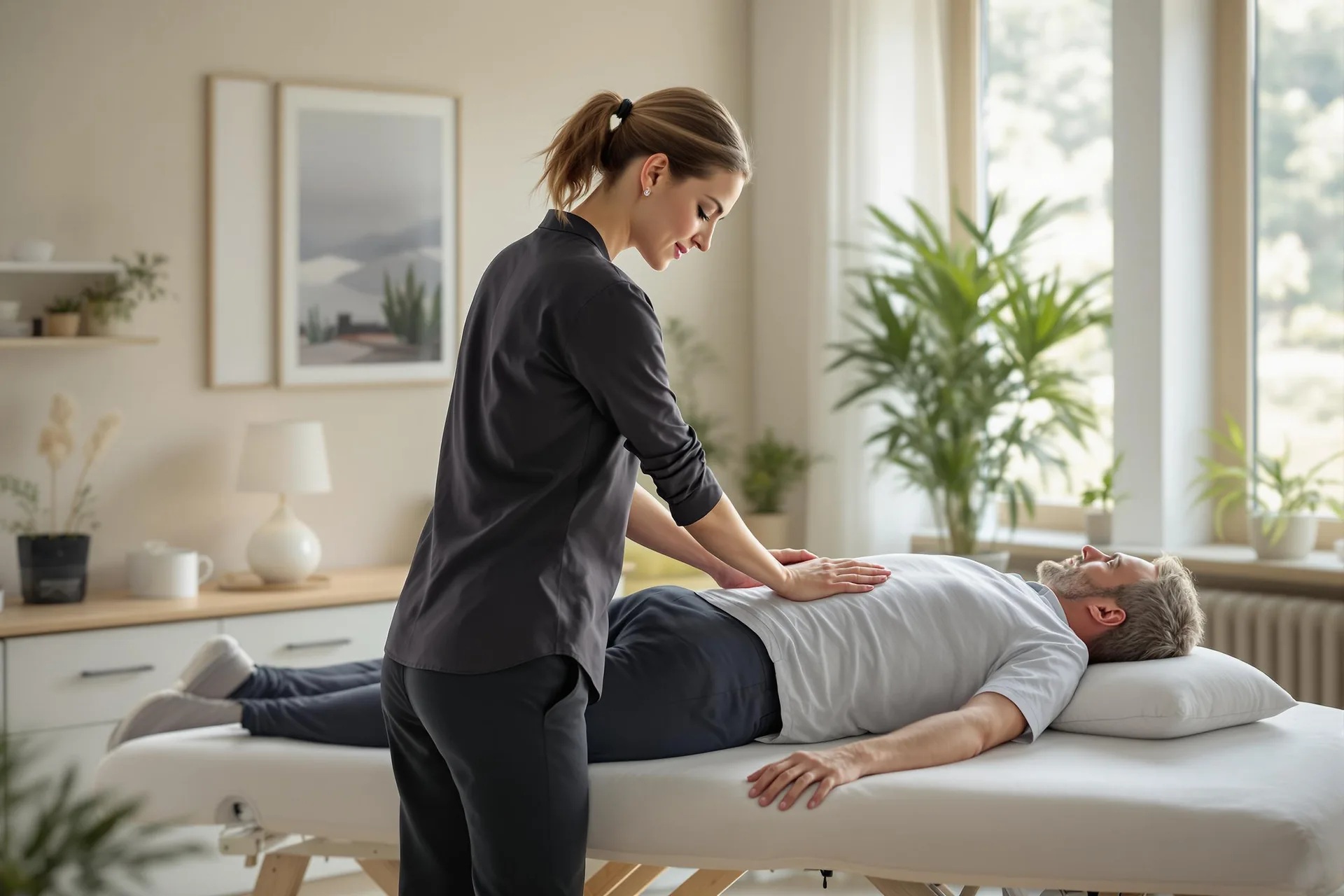
Osteopathy is a manual therapy that views the body as a whole and diagnoses and treats functional disorders using the hands. Therapists aim to activate the body’s self-healing powers through targeted techniques, often for complaints such as back pain, migraines or digestive problems. A typical osteopathic session lasts between 30 and 60 minutes, although several appointments are often needed for chronic conditions. The cost per session varies by region and according to the practitioner’s qualifications, usually between 60 and 150 euros. This holistic approach distinguishes osteopathy from many other treatment methods and makes it attractive to many patients. Clarifying reimbursement is therefore an important first step.
Securing Cost Coverage: Requirements for Private Health Insurance Benefits for Osteopathy
The reimbursement of osteopathy costs through your private health insurance depends on several factors. The crucial point is that alternative healing methods or naturopathic treatments are explicitly included in your plan’s list of benefits. Many premium plans reimburse up to one hundred per cent of the costs. Another important requirement is the practitioner’s qualification: the treatment must be carried out by a doctor, alternative practitioner or physiotherapist with recognised additional osteopathic training. Without this proof, reimbursement is often not granted. The services must also be billed correctly in accordance with the schedule of fees for alternative practitioners (GebüH). It is advisable to check these three points before treatment begins. This will set the course for successful cost reimbursement.
Mastering Billing: Your Path from Osteopathy Invoice to Reimbursement
For privately insured patients, the reimbursement principle applies to osteopathy services. This means you pay upfront and settle the therapist’s invoice, which usually ranges from 60 to 150 euros per session. You then submit the detailed invoice, often together with a doctor’s prescription (if required by your policy), to your private health insurer. Many insurers require an invoice that is based exactly on the scale of fees for alternative practitioners (GebüH). If the osteopath charges higher rates, the difference may not be reimbursed. To avoid surprises, it is advisable to submit a treatment and cost plan to your insurer in advance and obtain written confirmation of cost coverage. This proactive step can make the entire process considerably easier.
Check tariff details: Find the right private health insurance for osteopathy treatments
The level of reimbursement for osteopathy varies greatly between private health insurance plans. Premium plans often cover the full costs, usually up to the maximum rate of the GebüH, with no annual limit. Comfort plans may set annual maximum limits for alternative treatments, for example between €1,000 and €2,500. Basic plans, on the other hand, are more closely aligned with the benefits provided by statutory health insurers and often offer little or no advantage here. It is important to know the exact conditions of your policy. These include:
- Is osteopathy explicitly listed as a benefit or covered under natural remedies?
- Is there a maximum number of sessions per year (e.g. six to eight sessions)?
- Up to which rate of the GebüH is reimbursement provided (e.g. up to 3.5 times the rate)?
- Is a doctor’s prescription required for each treatment series?
If your current plan does not offer sufficient cover, supplementary health insurance could be an option. A detailed analysis of your needs will help you choose the right protection.
Understanding the Legal Basis: Recent rulings on osteopathy reimbursement
The legal status of osteopathy in Germany is complex, as there is no separate professional statute for osteopaths. The practice of osteopathy is regarded as the practice of medicine and may therefore only be carried out without restriction by doctors or non-medical practitioners. Physiotherapists generally require a licence as a non-medical practitioner for independent osteopathic treatment, or they must act under medical supervision. For reimbursement by private health insurance, the medical necessity of the treatment is often a decisive criterion. Court rulings, such as that of the Lemgo District Court (case no. 18 C 164/20), emphasise that insurers may not simply cap contractually promised benefits at maximum rates where a fee agreement exists. It is advisable for policyholders to seek legal advice if anything is unclear or claims are refused. A thorough understanding of the policy terms and current case law strengthens your position vis-à-vis the insurer.
Benefit from Expert Tips: Secure Maximum Osteopathy Benefits in Private Health Insurance
To maximise reimbursement for osteopathic treatments through your private health insurance, we recommend taking a few proactive steps. Before your first treatment appointment, be sure to clarify with your insurer whether, and to what extent, the costs of osteopathy are covered under your specific plan. Ideally, obtain written confirmation of reimbursement coverage. Make sure your osteopath has the necessary qualifications – completed training and, where applicable, a licence to practise as a non-medical practitioner are often crucial. Keep detailed records of all treatments and submitted invoices. Our expert tip: review regularly, at least every two years, whether your private health insurance plan still suits your needs optimally, especially if you use alternative therapies such as the supplementary insurance for alternative practitioners more frequently. Adjusting your cover can save significant costs in the long term. This careful preparation and communication paves the way for smooth reimbursement.
Request a personalised risk assessment now: Have your insurance situation reviewed free of charge and receive concrete suggestions for optimisation.
Frequently asked questions
- Does every private health insurance policy cover the cost of osteopathy?
No, not automatically. Coverage depends heavily on the selected plan. It must be checked whether alternative healing methods or osteopathy are explicitly included in the scope of benefits.
- How many osteopathy sessions does private health insurance cover?
That depends on the tariff. Some tariffs have no limit, others reimburse a maximum number of sessions per year (e.g. six to eight) or provide for an annual maximum amount.
- Does the osteopath need a specific qualification for the private health insurance to pay?
Yes, as a rule, the practitioner must be a doctor, alternative practitioner or physiotherapist with recognised additional training in osteopathy.
- What can I do if my private health insurance plan does not cover osteopathy?
You could consider changing your tariff within your private health insurance (PKV) or taking out an outpatient supplementary insurance policy that includes osteopathy benefits. Alternatively, you would have to cover the costs yourself.
- How do I submit invoices for osteopathy to my private health insurer?
You initially pay the osteopath’s invoice yourself and then submit it together with any required documents (e.g. a doctor’s prescription) to your private health insurance for reimbursement.
- Does medical necessity play a role in reimbursement?
Yes, the medical necessity of osteopathic treatment is often a criterion for reimbursement by private health insurance.
Sources
- [1]The Association of Osteopaths Germany (VOD) provides information on the certification and recognition of osteopaths, which is important for quality assurance in treatment.
- [2]The Federal Association of Osteopathy e.V. (BVO) offers patients comprehensive information on the reimbursement of osteopathic treatments.
- [3]The Federal Ministry of Health provides a statement on osteopathy that offers important insights into the official perspective.
- [4]Another statement from the Federal Ministry of Health sheds light on the legal and professional classification of osteopathy.
- [5]The German Bundestag offers background information and documents on the legal and political debate surrounding osteopathy.
- [6]The German Medical Association presents its curriculum for osteopathic procedures, which regulates medical continuing education in this field.
Free advice on this topic
Our experts advise you without obligation and find the right cover: online or by phone.
- Free & non-binding
- 100% digital