Is E-Bike Insurance Worth It? Pedelec Check 2026
Is e-bike insurance worth it for a 3,000-euro pedelec? Compare it with household contents cover, costs, and benefits.
All details are taken from the provider's linked product page and the contract documents (IPID/policy conditions) published there; the insurer's documents prevail. Premiums, benefits and the insurance product itself may change – please verify the details directly with the partner before signing up; only the information provided there is binding.
 Katrin StraubManaging DirectorInsurance expert with over 20 years of experience in the insurance industry.
Published on
Last updated on
10 min read
Table of Contents
For a €3,000 pedelec used for a daily commute, e-bike insurance is generally worth it. Household contents insurance usually only covers burglary from a locked space, not the classic theft at the train station. Specialized e-bike insurance covers theft while out and about, battery wear, fall damage, and electronics damage, worldwide.

E-bike insurance
Comprehensive protection for your e-bike: Discover the tailored e-bike insurance from nextsure and ride through everyday life with peace of mind.
Learn moreWhat Is E-Bike Insurance and Who Is It For?
Pedelec, S-Pedelec, E-Bike: The Legal Dividing Line
E-bike insurance is a property insurance policy that protects a pedelec not subject to mandatory insurance against theft, damage, battery wear, and electronics damage. Pedelecs with pedal assistance up to 25 km/h count legally as bicycles. So they don't need liability insurance with a license plate. S-pedelecs from 25 km/h and e-bikes with an actual throttle, on the other hand, are mopeds requiring a moped or insurance-plate policy, similar to insurance coverage for e-scooters.
Target Group: Daily Commuters With an Investment Worth Protecting
The typical buyer group is the urban heavy user with a pedelec worth between €2,500 and €6,000 new. The number of e-bikes in Germany stood at around 11 million in 2024, an increase of about 16 percent over the previous year [zivd market data]. According to industry data, the average sale price was just under €3,200. Anyone who commutes daily parks their bike several times a week in public spaces. That's exactly where the damage occurs that household contents insurance often doesn't cover.
What the Policy Fundamentally Covers
A modern e-bike policy covers theft, burglary, and robbery worldwide. On top of that come fall and transport damage, operating errors, fire, storm, flooding, and natural hazard events. Specific to pedelecs are electronics and moisture damage to the battery, motor, and control unit, as well as battery wear from a defined remaining capacity threshold. The andsafe terms, distributed under the Hepster brand, specify exactly this scope of benefits.
Is My Household Contents Insurance Enough for a €3,000 Pedelec?
Standard Coverage: Burglary Yes, Street Theft No
Household contents insurance primarily covers a pedelec against burglary from locked spaces - meaning a basement, apartment, or garage. If the bike is broken into at the train station, the policy only applies if simple bicycle theft is explicitly co-insured. This clause is an option, not a standard. The GDV (German Insurance Association) lists it as an optional extension in its model terms.
Away-From-Home Coverage and Percentage Sublimits
Even when simple theft is included, a percentage cap usually applies. A sublimit of 1 to 5 percent of the household contents sum insured for the bicycle is common. With a household contents sum insured of €65,000 and a 2 percent sublimit, that's €1,300. A €3,000 pedelec would then be underinsured by more than half. Higher sublimits are available for an extra fee, but are rarely unlimited.
What Household Contents Insurance Structurally Doesn't Cover
Three gaps remain systematically with household contents insurance. Battery wear is left out. So are fall, drop, and operating-error damage. Electronics damage to the motor and control unit is only reimbursed if it's caused by an insured external event such as fire. A defect in the mid-drive motor from moisture isn't a covered claim under a household contents tariff. These are exactly the risks specialty policies explicitly address.
From What Purchase Price Is E-Bike Insurance Worth It?
Rule of Thumb: From €1,500 Replacement Value
Under €1,500 in replacement value, a separate e-bike policy is rarely economical. The annual premium bears no sensible relation to the residual value. Between €1,500 and €2,500, signing up pays off for heavy users and uncertain parking situations. From €2,500 in replacement value, the numbers clearly favor a policy of your own. At a €3,000 pedelec value plus daily commuting use, it's the standard case, not a special one.
Break-Even Over the Usage Period
A typical pedelec in this class lasts 7 to 10 years. At a €120 annual premium, the policy adds up to around €900 to €1,200 over its lifetime. That's about 30 to 40 percent of the purchase price. In the event of a claim, it replaces the full new-purchase price within the first 24 or 36 months, and the residual value after that. A single total loss alone can refinance a full decade of premiums.
Value Thresholds by Needs Profile
The following overview shows when a policy pays off mathematically and when it doesn't. It doesn't replace individual advice. A needs analysis means evaluating value, intensity of use, and parking location together.
| Pedelec Value | Use | Is Household Contents Enough? | Recommendation |
|---|---|---|---|
| up to €1,000 | occasional | yes, with a theft clause | Extend household contents cover |
| €1,000–1,500 | weekly | usually yes | Check household contents cover, verify the sublimit |
| €1,500–2,500 | several times a week | partially | Specialty policy recommended |
| €2,500–4,000 | daily, commuter | no | Specialty policy clearly worthwhile |
| from €4,000 | daily, commuter | no | Specialty policy with replacement-value cover |
Reference values based on typical market household-contents sublimits and premium curves.
What Does E-Bike Insurance Actually Cost per Year?
Price Range: €60 to €180
The typical market annual premium for a €3,000 pedelec in 2026 runs between €90 and €150. Tariffs without theft protection start at around €60 per year. Full coverage with worldwide theft protection, battery wear, and all-risk cover typically runs €120 to €180. Stiftung Warentest (a German consumer testing organization) regularly rates bicycle insurance as sensible for high-value bikes, provided the tariff includes theft while out and about [stiwa-bicycle].
What Drives the Price
Four factors determine the premium. First, the purchase price. Second, the region of residence, since big cities with a high theft rate are rated more expensive. Third, the deductible - €0, €50, or €150 are common. Fourth, the scope of coverage, meaning whether battery wear and breakdown assistance are included. Police crime statistics recorded just under 266,000 bicycle thefts in Germany in 2023, a growing share of them pedelecs [BKA crime statistics].
Monthly vs. Annual Premium
With monthly payment, many providers apply a minimum term of three months. The notice period is often just three working days before the end of the period - a comparatively short window. Annual plans are usually 5 to 10 percent cheaper in total. Anyone who uses the bike seasonally is better off with the monthly plan. Anyone who uses it year-round should choose the annual contract.
What Damage Does E-Bike Insurance Actually Cover?
Theft, Robbery, and Vandalism
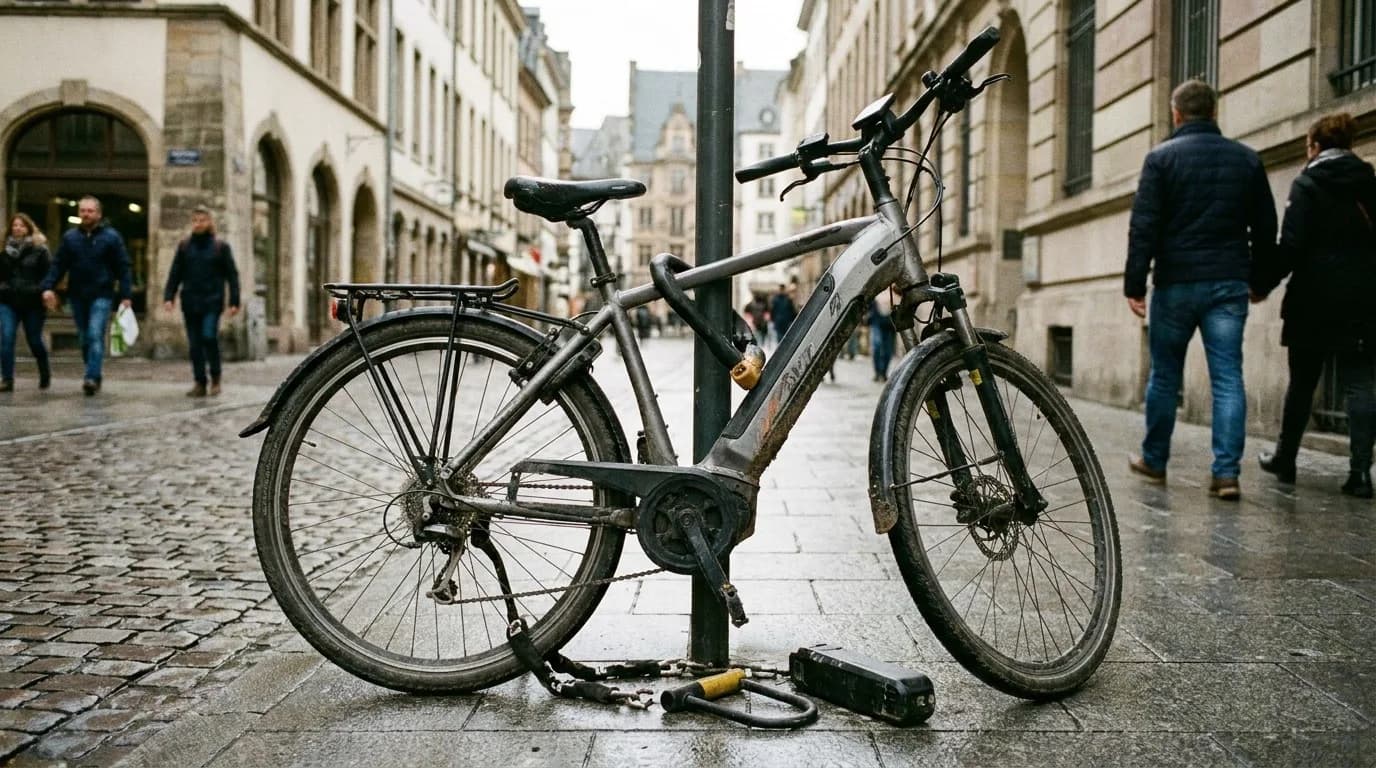
The most important component is theft protection. Covered are simple theft, burglary, robbery, and extortion by force, generally worldwide. The requirement is usually that the pedelec was secured to a fixed object with a certified lock in a manner customary in traffic. Anyone who just leans it against something risks reduced benefits. Vandalism is co-insured in most full-coverage tariffs, but often not in basic variants.
Technical Damage and Battery Wear
Electronics coverage is pedelec-specific. It covers moisture damage to the motor, battery, and control unit, as well as operating errors during charging or cleaning. Battery wear is its own component: if remaining capacity falls below an agreed threshold - often 50 to 60 percent - after a defined period, the insurer replaces it with a new battery. An original battery costs between €600 and €1,200 depending on the brand. This item alone often pays for the policy on its own.
What's Usually Excluded
Standard exclusions apply for intentional acts, tampering with the drive system such as tuning, damage from rust, and commercial use. Special sporting uses such as downhill riding, bike-park runs, jumps, or race training are excluded in almost all hobby tariffs. Carbon components are often not insured without explicit agreement. A waiting period of six weeks is also common if the bike is older than 12 months from the purchase date.
Is Coverage Also Worth It for Occasional Riders?
When a Specialty Tariff Is Overkill
Anyone who only uses the pedelec on weekends and parks it in their own garage has a significantly lower risk profile. Here, household contents insurance with bicycle theft included and a sufficient sublimit is enough in many cases. A separate policy adds €60 to €120 to the annual insurance burden without the extra benefit ever coming into play in a realistic claim scenario. That's not worth the money for every occasional rider.
When It Still Pays Off
Three situations tip the math even for occasional use. A pedelec worth more than €3,500 new. A parking location without a lockable space, such as an open courtyard. Frequent travel with the bike on vacation. The specialty policy's worldwide theft coverage is the decisive advantage here. Household contents away-from-home coverage typically applies for only three months and only within Germany.
Similar Logic for Other Micromobility Vehicles
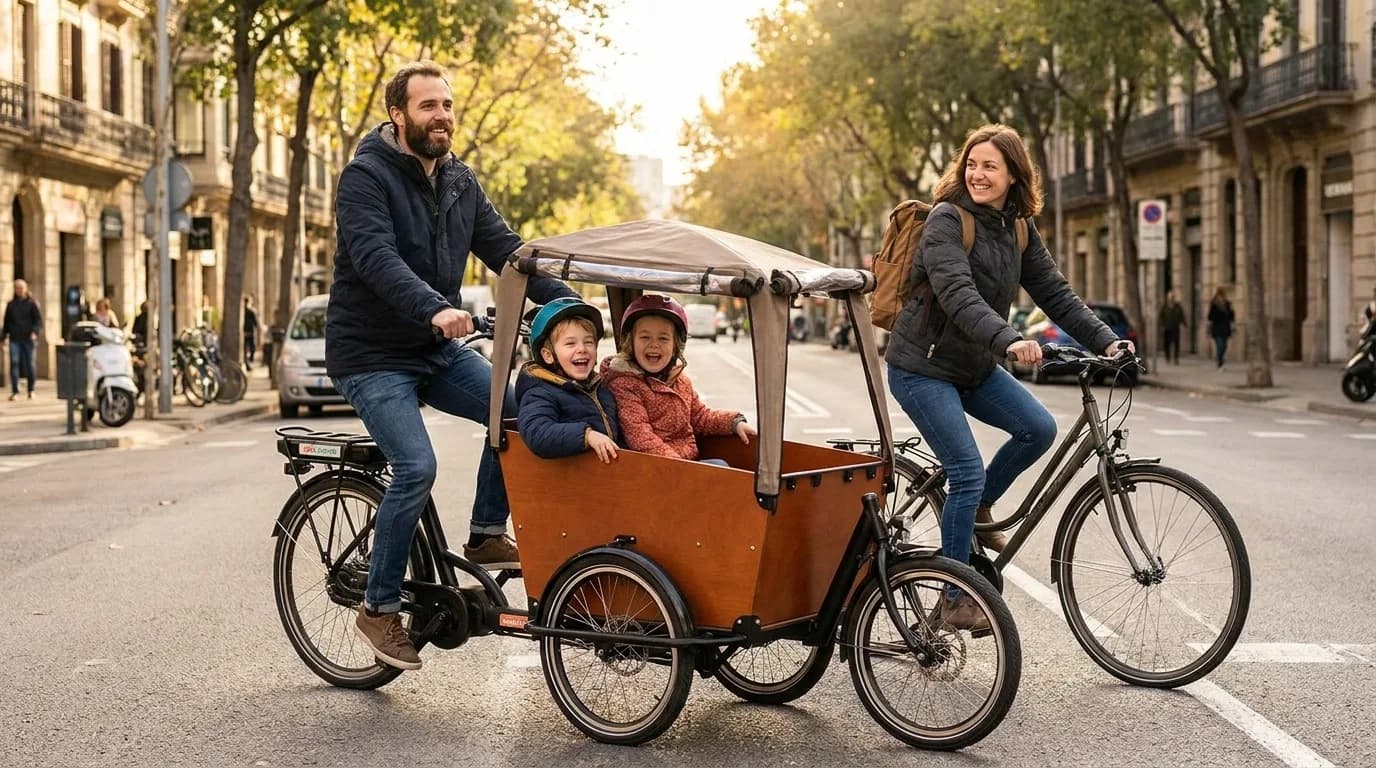
The same assessment also applies to e-cargobikes, which are increasingly replacing cars and trailers. Anyone using a €5,000 cargobike daily should likewise comprehensively insure their cargo bike through a specialty policy. Here too, the sublimit caps of standard household contents contracts are too low. The needs question is always the same: value, use, parking location.
How Does Specialized E-Bike Insurance Differ From Household Contents Coverage?
Three Key Differences in Practice
Household contents insurance and a specialty policy play in different leagues. First, on theft: household contents insurance covers it only with an add-on clause and a sublimit. A specialty policy covers it worldwide at the full replacement price. Second, on technical damage: household contents insurance effectively excludes battery and motor damage, while a specialty policy is built exactly for that. Third, on battery wear: household contents insurance doesn't even recognize this need.
All-Risk Coverage as the Premium Logic
Most specialty tariffs for pedelecs operate on the all-risk coverage principle. Everything not explicitly excluded is covered. Household contents insurance works the other way around, on the principle of named perils - a positive list. This exact difference in the burden of proof is what matters in the event of a claim. For unclear fall damage, the specialty policy pays out, while household contents insurance asks for the exact cause of the damage.
What nextsure's specialized e-bike insurance Delivers
The e-bike insurance in nextsure's Auto and Mobility category bundles these components. It's tailored to commuters and heavy users. Included are worldwide theft protection, battery wear, electronics damage, and short notice periods from the fourth month onward. Advice and sign-up run entirely digitally, with no branch appointment and no broker fee.
What to Specifically Watch for When Signing Up and Choosing a Lock
Lock Category and the Securing Obligation
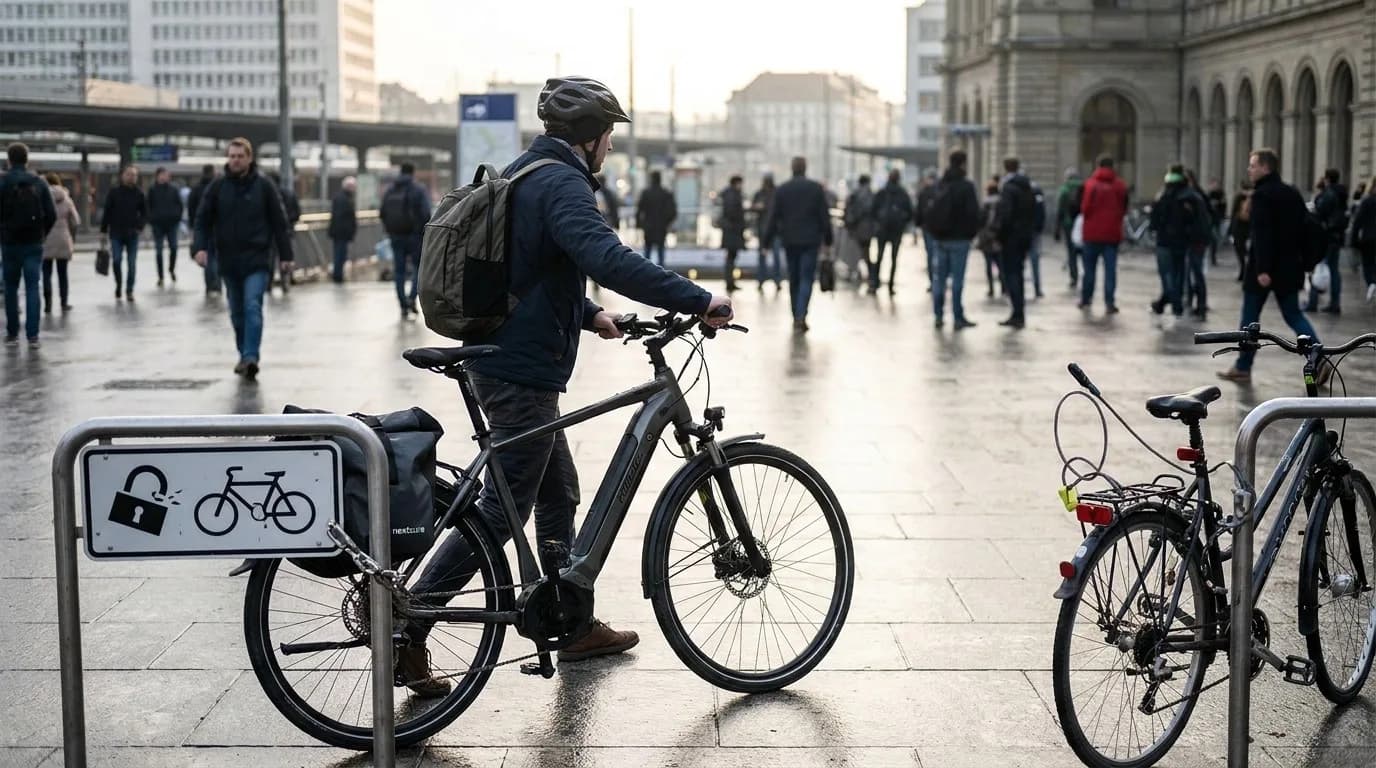
In the event of a claim, providers check two things. Whether it was secured to a fixed object. The quality of the lock. Tariffs typically require a certified U-lock or folding lock, usually with a minimum price recommendation of €80 upward. Cheap cable locks lead to reduced benefits. Anyone parking at a train station should additionally look for a lockable communal bike storage facility.
Frame Number and the Documentation Requirement
The application always requires the frame number. It's typically found on the bottom bracket or the head tube and should be photographed before signing up. In the event of a claim, proof of purchase, proof of the lock, and the police report must be submitted within a few days. Anyone who forgets this risks reduced benefits.
Term, Cancellation, and Switching
Modern providers rely on flexible models. Monthly plans with a three-month minimum term and a three-working-day notice period at the end of the period are standard. Annual plans automatically renew for another year unless canceled in time. Switching after a claim is possible on both sides. Anyone who reviews their tariff annually comes out financially ahead.
Conclusion: Is E-Bike Insurance Worth It for the €3,000 Commuter?
A Clear Answer for the Example Case
For a €3,000 pedelec used daily for the commute to work, the answer is: yes. Household contents insurance won't cleanly cover this risk profile. Sublimits are usually below the pedelec's value. Theft while out and about isn't included as standard. Battery wear and technical damage are systematically excluded.
What the Policy Costs and Protects
A full-coverage policy costs €100 to €150 per year. It secures replacement-value compensation for a total loss within the first 24 to 36 months. It replaces the battery with a new one once capacity loss is measurable. It applies worldwide, without a three-month limit. With a single theft claim, the policy pays for itself over ten years.
When the Answer Tips the Other Way
Three situations justify skipping it. A pedelec value under €1,500. Exclusively garage use at the place of residence. Household contents insurance with a sufficient bicycle sublimit and an away-from-home coverage clause. Anyone who doesn't fall into any of these categories shouldn't overburden their household contents insurance and should instead take out a specialized policy.
Frequently asked questions
- Is E-Bike Insurance Worth It?
From a replacement value of around €1,500, it's worth looking at a separate policy; from €2,500, it's standard for heavy users. For a €3,000 pedelec used for daily commuting, the value clearly exceeds the usual household contents sublimit. A specialty policy is the economically sound solution here.
- Is My Household Contents Insurance Enough for My E-Bike?
Only to a limited extent. Household contents insurance by standard only covers burglary from a locked space. Simple theft at the train station or workplace is only co-insured through an optional clause, usually capped at 1 to 5 percent of the household contents sum insured. Battery wear and technical damage are left out.
- What Does E-Bike Insurance Cost per Year?
For a €3,000 pedelec, typical market annual premiums for full coverage run between €90 and €150. Pure theft-only policies start at around €60 per year. Place of residence, deductible, and coverage components like battery wear affect the price more than the pedelec's brand.
Under full coverage: worldwide theft, robbery, vandalism, fall and transport damage, operating errors, fire, natural hazard events, electronics and moisture damage to the motor and battery, as well as battery wear from a defined remaining capacity. Excluded are intentional acts, tuning, special sporting uses such as downhill riding, and carbon components without explicit agreement.
- Is E-Bike Insurance Also Worth It for Occasional Riders?
Rarely. Anyone who only uses the bike on weekends and in their own garage is usually better off with a household contents extension. The specialty policy only pays off for occasional riders with pedelecs over €3,500, unsecured parking locations, or frequent bike trips abroad.
- Does a Waiting Period Apply if I Insure My Pedelec Retroactively?
Yes. If a pedelec is insured for the first time more than 12 months after purchase, a waiting period of 6 weeks often applies for theft protection. Anyone who insures the bike right at purchase has immediate coverage. Policyholders should therefore keep their proof of purchase on hand.
Sources
- [1]nextsure | E-Bike Insurance
- [2]How Much Does E-Scooter Insurance Cost?
- [3]Bicycle Insurance: Comprehensive Protection
- [4]https://www.ziv-zweirad.de/marktdaten/
- [5]https://www.konsument.at/cs/Satellite?pagename=Konsument/MagazinArtikel/Detail&cid=318900000761
- [6]https://www.bka.de/DE/AktuelleInformationen/StatistikenLagebilder/PolizeilicheKriminalstatistik/pks_node.html
Conclude directly online
Verified partner tariffs at no extra cost. The button takes you straight to the provider's calculator.
 Hepster
E-bike insurance
Worldwide cover for your pedelec with selectable modules for damage and theft.
- Coverage area:
- worldwide
- Waiting period:
- 6 weeks (waived for e-bikes up to 12 months old from purchase)
- Insurable:
- pedelecs not subject to mandatory insurance
- Destruction, damage, operating errors, and improper handling
- Electronic and moisture damage to the battery, motor, and control units
- Wear and tear on the battery and e-bike is covered
- Theft module: theft, burglary, robbery, and looting
- Fire, explosion, storm, hail, flooding, avalanches, landslides
Key exclusions
- E-bikes subject to mandatory insurance (S-pedelecs)
- Carbon components (CFRP) without a separate agreement
- Downhill riding, bike parks, sporting events, and jumps
- Tampering with the drive system (tuning)
Trusted Shops: 4,5/5 „Sehr gut“ (2.600 Bewertungen)
hepster insgesamt (Anbieterbewertung, alle Versicherungen)
Monthly subscription: minimum term 3 months, notice period 3 business days; benefits may be reduced for theft if not locked to a fixed object. Insurer: andsafe Aktiengesellschaft
Fact sheet: benefits, exclusions and waiting periods in detail
All details are taken from the provider's linked product page and the contract documents (IPID/policy conditions) published there; the insurer's documents prevail. Premiums, benefits and the insurance product itself may change – please verify the details directly with the partner before signing up; only the information provided there is binding.
Information last updated: July 2026 · Source: provider product information (IPID/policy conditions)