Cargo Bike Insurance for Families: Protect Your Bike
Cargo bike insurance for families: the right policy for a 5,500-euro bike, whether kids are covered, and what it costs.
All details are taken from the provider's linked product page and the contract documents (IPID/policy conditions) published there; the insurer's documents prevail. Premiums, benefits and the insurance product itself may change – please verify the details directly with the partner before signing up; only the information provided there is binding.
 Katrin StraubManaging DirectorInsurance expert with over 20 years of experience in the insurance industry.
Published on
Last updated on
11 min read
Table of Contents
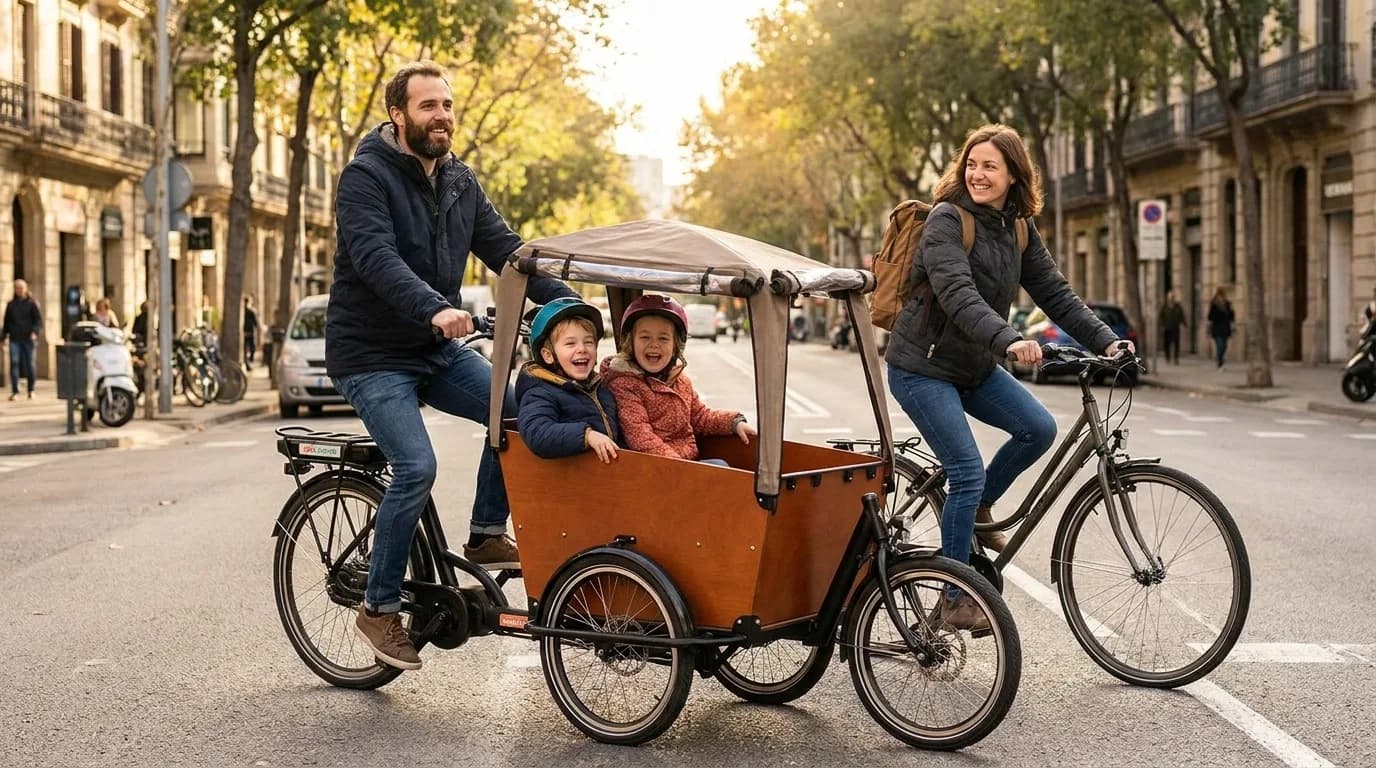
Cargo bike insurance for families means: a specialized cargo bike policy combined with private liability insurance. It covers theft, falls, battery and motor damage on a €5,500 cargobike, as well as damage that parents or children cause while transporting things. Children as passengers are co-insured under the policy; liability gaps in household contents insurance are closed this way.

E-bike insurance
Comprehensive protection for your e-bike: Discover the tailored e-bike insurance from nextsure and ride through everyday life with peace of mind.
Learn moreWhat Is Cargo Bike Insurance for Families and Who Needs It?
Definition: A Specialty Contract for the Cargobike
Cargo bike insurance is a standalone property insurance contract for cargobikes with or without an electric motor. It covers theft, vandalism, fall and operating damage, as well as electronic components on the bike itself. A suitable cargo bike insurance policy is not a motor vehicle contract. It supplements private liability insurance, which settles personal injury and property damage claims against third parties. The framework for German insurers is § 34d para. 1 of the German Trade Regulation Act (Gewerbeordnung, GewO); policies are brokered exclusively through registered brokers [insurance intermediary register].
Target Group: Families With a Daycare Commute
Prudent families like the Beckers transport children, groceries, and sports equipment by cargobike every day. That makes the cargo bike an everyday vehicle, not a hobby item. Insurers treat exactly this kind of use as the standard case for the family policy, with protection for the battery, motor, and transport box. According to the German Federal Statistical Office (Statistisches Bundesamt), around 8.2 million families with minor children lived in Germany in 2024 [destatis-families]. A significant share commutes by bike every day.
Distinction From Regular Bicycle Coverage
Regular bicycle tariffs have sums insured of €1,500 to €3,000. An e-cargobike, however, typically costs €4,000 to €8,000. Cargo bike insurance scales accordingly. It offers higher sums insured, its own battery clauses, and extended theft protection. Anyone who insures a €5,500 bike under a standard bicycle tariff is underinsured. In the event of a claim, compensation is reduced proportionally.
Which Cargo Bike Insurance Makes Sense for Families?
Components a Family Policy Must Cover
A sensible policy for families covers four claim classes: theft, falls/drops, battery and motor damage, and vandalism. The sum insured corresponds to the replacement price including accessories - meaning the child seat, rain cover, and straps. Hepster regulates this exactly this way. The product information sheet grants an additional 15 percent buffer on top of the sum insured to cushion price increases [hepster-pib].
Worldwide Coverage as Standard
Families don't just ride the cargobike in their home city. Vacation trips, visiting relatives, and weekend outings are part of it too. Specialized cargo bike tariffs are valid worldwide [hepster-pib]. That's not an optional add-on, it's the standard. Household contents insurance, by contrast, typically offers away-from-home coverage only for a limited period of a few months and only up to a percentage share of the sum insured.
Waiting Period, Deductible, and Contract Term
For a new purchase within 12 months, coverage applies immediately. Anyone insuring an older bike after the fact waits six weeks [hepster-pib]. Deductibles range between €0 and €150. The monthly plan has a minimum term of three months with a three-working-day notice period; the annual plan renews automatically [hepster-pib]. Families usually choose the annual plan because the premium works out cheaper.
Are Children Co-Insured While Being Transported on the Cargo Bike?
Parents Are Liable for Injuries to Their Own Child
If the cargo bike falls and the parents' own child is injured, most families settle this through two separate types of insurance: statutory health insurance for treatment costs, and children's accident insurance for lasting consequences. The cargo bike insurance itself only pays for the bike. Personal injury to your own child is a family matter. One note: private liability insurance normally excludes your own children as co-insured parties.
Damage Children Cause From the Seat
If the child pushes a parked car from the cargo bike seat, or the helmet hits a shop window, that's damage to a third party. Here, the family's private liability insurance applies, provided children are co-insured. nextsure always checks during the advisory conversation whether existing private liability insurance explicitly includes transporting children. Clauses on children not liable for damages (deliktunfähige Kinder) are decisive here.
Co-Insurance of the Transport Box and Straps
Specialty tariffs also insure permanently installed child seats, safety straps, and rain covers as part of the cargobike. Requirement: the accessories are listed in the sum insured when the contract is signed. Anyone who installs a second seat afterward must adjust the policy. That can be done online within minutes. An adjustment usually costs no surcharge as long as the total stays under the maximum limit.
What Does Cargo Bike Insurance Cost for a €5,500 Cargobike?
Price Range by Scope of Coverage
Premiums for a €5,500 cargobike typically range between €90 and €220 per year at German specialty insurers. The lower end covers pure theft and fall protection. The upper end includes full battery protection, breakdown assistance, and a protection letter (Schutzbrief). One concrete figure: at Hepster, an e-cargobike tariff with theft protection and all-risk coverage starts at around €8 per month for the lowest tier, with significantly higher premiums for expensive e-cargobikes [hepster-pib].
Factors That Determine the Premium
Five levers determine the price: replacement value, battery capacity, postcode area, deductible, and contract term. Big cities with a high theft rate pay more. The GDV theft radar (a German insurance industry database) recorded around 232,000 police-reported bicycle thefts in Germany in 2024. The clearance rate is under ten percent. Thieves specifically target cargobikes because the resale value is high.
Premium Example and Cost Table
For an e-cargobike with a replacement value of €5,500, a medium deductible, and a residence in a large German city, the following picture emerges. The table shows tariff tiers that families should typically compare. The figures are reference values from the 2025 market average.
| Tariff Tier | Coverage | Deductible | Premium per Year |
|---|---|---|---|
| Basic | Theft, falls, vandalism | €150 | approx. €95 |
| Comfort | Basic + battery, motor, electronics | €100 | approx. €145 |
| Premium | Comfort + breakdown assistance, protection letter | €0 | approx. €215 |
| Premium Plus | Premium + rental bike in the event of a claim | €0 | approx. €245 |
Reference values from the German specialty insurance market; actual premiums depend on postcode and provider.
Is My Household Contents Insurance Enough for My Cargo Bike?
The Away-From-Home Coverage Clause Is Narrow
Household contents insurance covers bicycles only through the away-from-home coverage clause. Theft on the street typically only counts as covered in the case of burglary from a locked space. Anyone who wants to co-insure cargobike theft needs a separate bicycle clause with a sum insured and a night clause. Even then, the cap is usually one to five percent of the household contents sum insured. For €60,000 in household contents coverage, that's a maximum of €3,000.
Battery and Electronics Damage Left Out
Household contents tariffs don't settle claims for deep battery discharge, motor defects, or falls unrelated to theft. That's exactly what a specialty policy covers. The same logic cluster applies here as with insuring e-bikes: electrical components need their own clauses. According to industry estimates, battery damage accounts for a significant share of all e-bike claims.
When the Combination Is Still Enough
Anyone who owns an inexpensive cargo bike without a motor that's kept overnight in their own locked garage can get by with good household contents insurance plus a bicycle clause. As soon as the bike is regularly kept outside or has a battery, the specialty policy pays off. The math is simple. At a €5,500 replacement value, the extra premium pays for itself with the first partial claim.
Does Coverage Also Apply When Parked Outdoors Overnight?
The Lock and Securing Obligation
Parking outdoors overnight is covered if the bike is secured to a fixed object with a certified lock. Hepster spells this out explicitly as a policy obligation in its terms [hepster-pib]. Without securing it to a bike rack or lamppost, compensation is reduced or denied. The lock recommendation is: a folding lock or U-lock rated ART or Sold Secure class 2 or 3. Chain locks under 1.5 kg are often considered insufficient.
Location-Specific Clauses
Some tariffs distinguish between private property, an enclosed courtyard, and public space. In Hamburg, Berlin, or Cologne, some insurers require an additional night clause between 10pm and 6am. Anyone who needs this clause pays a surcharge of 10 to 25 percent. Families should state the parking location precisely when signing the contract. Incorrect information leads to reduced benefits in the event of a claim.
A Practical Checklist for Parking
Before parking, three things should be checked. First: is the lock threaded through the frame and a fixed object? Second: are the battery and removable display kept inside the house, not on the bike? Third: has the bike been photographed and the frame code documented? These three steps satisfy most policy obligations. One photo a month is enough as proof of location.
5 Steps to the Right Family Tariff
Steps 1 to 3: Needs, Comparison, Choice
Step one: add up the replacement value plus accessories. Step two: define the residential area and parking location. Step three: compare three to five tariffs with an identical sum insured. Important: the deductible and the battery clause are the two most common cost drivers. Anyone who compares these carelessly pays €30 to €50 a year too much. The nextsure platform filters by exactly these parameters in under two minutes.
Steps 4 and 5: Signing Up and Documentation
Step four: sign the contract online and save the policy digitally. Step five: keep the frame number, proof of purchase, and lock photos in the same folder. Insurance coverage begins with payment of the premium [hepster-pib]. A delay postpones the start date. In the event of a claim, these documents are the basis for every settlement.
What Matters After Signing Up
After signing the contract, families should check once a year whether the replacement value still matches the sum insured. Cargobikes lose value more slowly than cars. A two-year-old e-cargobike often still holds 70 to 80 percent of its replacement value. Anyone who sets the value too low risks being underinsured. Anyone who sets it too high pays unnecessarily high premiums.
How Does Claims Reporting Work in the Event of Theft?
The First 24 Hours
Theft is reported to the police first, then to the insurer. The police report is typically available within hours and includes the time, location, and frame number of the incident. No insurer pays without a police report. Hepster requires the report to be filed without delay via the web portal or by email [hepster-pib]. Further guidance on reliable theft protection for your e-cargobike helps you document proof of the lock and parking location cleanly in advance. Other providers have app-based reporting channels. The deadline is usually seven days.
What Documents Insurers Require
The insurer checks three documents: proof of purchase, the police report, and proof of the lock. A photo record from the start of the contract helps with proof of the lock. Anyone without a receipt can name witnesses, but the risk remains higher. Once the file is complete, settlement typically takes two to four weeks.
Compensation: Residual Value or Replacement Value
Up to 24 months after the purchase date, most tariffs pay the full replacement value. After that, the residual value applies - that is, the current replacement cost. For a €5,500 cargobike after three years, that means a payout of around €3,500. For an extra fee, families can agree on a replacement-value clause covering the full contract term. This clause typically costs an extra €10 to €20 per year.
What Additional Components Round Out the Family Policy?
Breakdown Assistance and a Protection Letter
Breakdown assistance components arrange a pickup service to a workshop in the event of a battery defect, tire damage, or a broken chain. Families with a daycare commute benefit concretely. Anyone stranded with two children doesn't need a bus ride, they need a van. Protection letters cost an extra €15 to €40 per year. They're often included in the premium tier.
Rental Bike Clause in the Event of a Total Loss
In the event of theft or a total loss, it takes two to four weeks until payout. During that time, the cargo bike is missing from the family's daily routine. A rental bike clause pays €15 to €30 per day for a replacement from cargobike sharing or a local rental service. This clause is new to the market. nextsure lists all the tariffs that include it.
Liability Extension for Trailers
Anyone who attaches a cargo trailer to the cargobike needs extended private liability insurance. Standard policies often exclude trailers. A simple add-on component for €5 to €15 per year covers this case. At nextsure, advisors systematically check this interface. Gaps between private liability insurance and specialty tariffs are the most common advisory mistake in the market.
Frequently asked questions
- Which Insurance Makes Sense for a Family Cargo Bike?
A specialized cargo bike insurance policy with theft, fall, battery, and motor protection, combined with family private liability insurance, makes sense. The sum insured should be based on the replacement value including accessories. For a €5,500 cargobike, it should be at least €5,500, ideally including a 15 percent buffer. Worldwide coverage and a clear night clause are standard.
- Are Children Covered as Passengers on the Cargo Bike?
Children as passengers are covered under two contracts: private liability insurance for damage they cause to third parties, and children's accident insurance for their own injuries. The cargo bike insurance itself only covers the bike. Parents should check before the first family outing whether their private liability insurance explicitly includes transporting children.
- What Does Cargo Bike Insurance for Families Cost?
Premiums typically range between €90 and €220 per year. Basic tariffs with theft and fall protection start at around €8 per month. Premium tariffs with full battery protection, a protection letter, and a rental bike clause cost €18 to €22 a month. Place of residence, deductible, and battery capacity significantly determine the price.
- Is Household Contents Insurance Enough for the Cargo Bike?
Household contents insurance only covers the cargo bike through a bicycle clause and only up to one to five percent of the household contents sum insured. Battery, motor, and fall damage are excluded. For a €5,500 e-cargobike, that's not enough. A specialty policy closes these gaps and offers worldwide protection, including theft on the street.
- Is the Cargo Bike Insured When Parked on the Street?
Yes, provided the bike is secured to a fixed object with a certified lock. In big cities, some insurers require an additional night clause between 10pm and 6am, which increases the premium by 10 to 25 percent. The battery and display should be kept inside the house overnight. Incorrect information about the parking location leads to reduced benefits.
- When Does Insurance Coverage Start After Signing Up?
Coverage starts with payment of the first premium. For a new purchase within 12 months, the policy applies immediately. Anyone insuring an older bike after the fact waits six weeks before theft and damage benefits are paid out. This waiting period is standard in the industry and can be found in the product information sheet of every insurer.
Sources
- [1]Cargo Bike Insurance
- [2]E-Cargobike Insurance: Courier and Theft Protection
- [3]A Loan for Buying an E-Cargobike for Families
- [4]https://www.hepster.com/de-de/fahrradversicherung
- [5]https://www.vermittlerregister.info/recherche
- [6]https://www.destatis.de/DE/Themen/Gesellschaft-Umwelt/Bevoelkerung/Haushalte-Familien/_inhalt.html
Conclude directly online
Verified partner tariffs at no extra cost. The button takes you straight to the provider's calculator.
 Hepster
E-bike insurance
Worldwide cover for your pedelec with selectable modules for damage and theft.
- Coverage area:
- worldwide
- Waiting period:
- 6 weeks (waived for e-bikes up to 12 months old from purchase)
- Insurable:
- pedelecs not subject to mandatory insurance
- Destruction, damage, operating errors, and improper handling
- Electronic and moisture damage to the battery, motor, and control units
- Wear and tear on the battery and e-bike is covered
- Theft module: theft, burglary, robbery, and looting
- Fire, explosion, storm, hail, flooding, avalanches, landslides
Key exclusions
- E-bikes subject to mandatory insurance (S-pedelecs)
- Carbon components (CFRP) without a separate agreement
- Downhill riding, bike parks, sporting events, and jumps
- Tampering with the drive system (tuning)
Trusted Shops: 4,5/5 „Sehr gut“ (2.600 Bewertungen)
hepster insgesamt (Anbieterbewertung, alle Versicherungen)
Monthly subscription: minimum term 3 months, notice period 3 business days; benefits may be reduced for theft if not locked to a fixed object. Insurer: andsafe Aktiengesellschaft
Fact sheet: benefits, exclusions and waiting periods in detail
All details are taken from the provider's linked product page and the contract documents (IPID/policy conditions) published there; the insurer's documents prevail. Premiums, benefits and the insurance product itself may change – please verify the details directly with the partner before signing up; only the information provided there is binding.
Information last updated: July 2026 · Source: provider product information (IPID/policy conditions)