House and Property Liability
Protect your assets with home and property liability insurance. Information on costs and benefits. Get advice from nextsure now!
All details are taken from the provider's linked product page and the contract documents (IPID/policy conditions) published there; the insurer's documents prevail. Premiums, benefits and the insurance product itself may change – please verify the details directly with the partner before signing up; only the information provided there is binding.
 Katrin StraubManaging DirectorInsurance expert with over 20 years of experience in the insurance industry.
Published on
Last updated on
7 min read
Table of Contents
A loose roof tile, a slippery pavement – as a property owner, you are liable for damage. Building and property owner’s liability insurance protects you against the often underestimated financial consequences. Find out how this insurance works and why it is indispensable for many.

Personal liability insurance
Your everyday shield: nextsure's personal liability insurance reliably protects you from the financial consequences of damage you cause to others.
Learn moreUnderstanding house and property liability insurance: The basics
Property owners’ liability insurance is a key policy for property owners. It covers damage suffered by third parties on your property or caused by your property. For example, a passer-by may slip on an uncleared pavement and injure themselves. Without cover, you are liable with your personal assets for medical expenses and compensation for pain and suffering. The insurer settles justified claims and defends against unjustified ones, which constitutes passive legal protection. Many owners underestimate the liability risks that can arise from even minor oversights. The legal basis is primarily Section 836 of the German Civil Code (BGB), which regulates the liability of the property owner. This cover is particularly relevant for landlords and owners’ associations. Understanding these basics is the first step towards comprehensive protection.
Minimise risks: When is insurance indispensable?
House and property owners’ liability insurance is not always legally required, but is often essential. Landlords of single-family or multi-family homes urgently need this cover. Owners’ associations also need to insure communal property, such as stairwells or outdoor areas. Even owners of undeveloped plots of land carry risks, for example from falling trees. For owner-occupied single-family homes, cover may already be included in the personal liability insurance; checking the policy here provides clarity. The cost of house and property owners’ liability insurance is low compared with potential claims. An annual premium can start at less than 50 euros. The need arises from the owner’s unlimited liability for damage.
The following groups benefit especially:
- Landlords of flats and houses: assumption of liability for damage caused to tenants or third parties.
- Owners’ associations (WEG): protection against risks arising from communal property.
- Owners of undeveloped plots of land: protection against claims due to hazards on the property.
- Owners of multi-family houses, including where there is partial owner-occupation: cover for the rented units and communal areas.
These examples illustrate the many possible uses and the importance of suitable insurance cover.
Costs and benefits in detail: What is covered?
The cost of house and landowners' liability insurance varies depending on the type of property and the sum insured. An undeveloped plot of land is cheaper to insure than an apartment building with 15 residential units. For rented properties, the premiums can often be passed on to tenants as service charges. A recommended sum insured is at least five, preferably ten million euros for personal injury and property damage. The insurance covers personal injury, property damage and resulting financial losses. Make sure gradual damage and construction projects up to a certain amount are included. Typical claims include falls caused by poorly maintained paths or damage caused by falling roof parts. A insurance comparison can help you find the right tariff. Careful review of the insurance terms and conditions is crucial for optimal protection.
Practical cases: Where house and property liability insurance applies
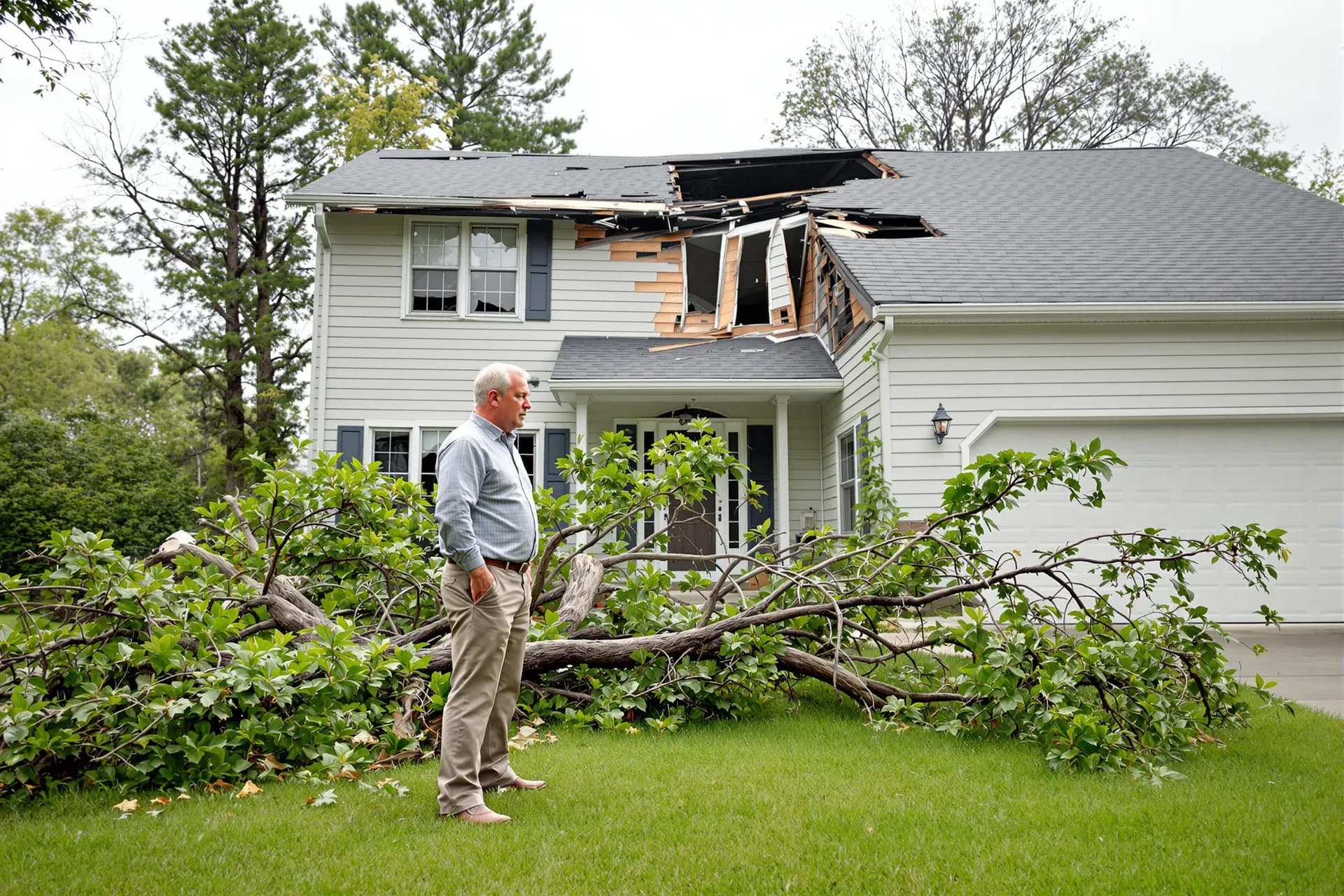
A classic example is a pedestrian slipping in winter on the uncleared pavement in front of your house. The insurance covers the costs of medical treatment and any compensation for pain and suffering. Another example: A rotten branch from your tree breaks off and damages a parked car. Here too, home and property liability insurance applies. Even faulty stairwell lighting can lead to costly falls for which you are liable. The insurer checks liability and rejects unfounded claims. This saves you not only costs, but also legal disputes. The buildings insurance covers damage to your own building, not third-party liability claims.
Here are some typical claims examples where the insurance pays out:
- A visitor slips on a freshly mopped, unmarked floor in the stairwell and breaks a leg.
- A roof tile comes loose in a storm and damages the neighbour's car.
- A child is injured on inadequately secured play equipment in the communal garden of a residential complex.
- Water escapes through a crack in an external water pipe and undermines the pavement, causing an accident.
- Oil from a leaking tank on the property contaminates the neighbour's soil.
These scenarios show how quickly a liability claim can arise.
Expert knowledge: Legal foundations and obligations
As an owner, you are subject to the duty to ensure safety and the duty to maintain the property. The duty to ensure safety means that you must eliminate sources of danger, e.g. clear snow or repair loose paving slabs. The duty to maintain the property requires keeping the building in a safe condition, for example removing rotten branches or keeping the roof intact. The basis is Section 836 of the German Civil Code (BGB), which regulates the liability of the property owner in the event of collapse or detachment of parts.
Section 823 of the BGB is also relevant regarding general liability for damages. Our expert tip: document regular inspections and maintenance work so that you can prove you acted with due care in the event of a claim. In cases of gross negligence, the insurer may reduce the benefit. A landlord liability insurance policy is a special form of this insurance. A precise understanding of your obligations is essential.
Recent rulings and drafting tips for optimal protection
Case law is continually evolving. For example, a ruling by the Federal Court of Justice (BGH) confirmed that homeowners are liable for damage caused by tradespeople they commissioned if the tradesperson is unable to pay themselves. This underlines the importance of an adequate sum insured of at least ten million euros. Make sure that environmental risks such as oil pollution are also covered. Our expert tip: Check whether your policy includes cover for uninsured claims; this applies if you suffer damage, but the person responsible cannot pay and has no liability insurance of their own. For owners of photovoltaic systems, it is relevant whether these are included in the cover provided by home and property liability insurance or whether separate insurance is required. Advice helps to avoid pitfalls and optimise cover, similar to the question of which insurance policies are generally worthwhile for landlords. Regular review and adjustment of your insurance cover is advisable.
Distinguishing it from other insurance policies: clarity in the insurance maze
House and property liability insurance is often confused with other insurance policies. The private liability insurance covers damage you cause to others as an individual. As mentioned, it can include cover for the owner-occupied detached house. Buildings insurance, by contrast, covers damage to your own property, e.g. caused by fire, storm or water damage from pipes. Contents insurance covers your belongings. House and property liability insurance is specifically designed for third-party liability claims in connection with your property or land. For anyone commissioning a build, separate builders' liability insurance is important. Natural hazard insurance can be a useful addition to buildings insurance. Understanding these differences helps you avoid insurance gaps.
Your next step towards comprehensive security
House and property owners’ liability insurance is a fundamental building block in protecting your assets as a property owner. It protects you against third-party claims that could potentially threaten your very existence. The costs are low in relation to the protection provided and are often tax-deductible or apportionable. Careful selection of the tariff and sum insured is crucial for tailored cover. Bear in mind that traffic safety and maintenance obligations must be taken seriously in order not to jeopardise your insurance cover. At nextsure, we support you in finding the solution that suits your situation. Get in touch now for an individual risk analysis.
Frequently asked questions
- Who needs buildings and landowners liability insurance?
Property owners, homeowners’ associations (for joint property) and owners of undeveloped land need this insurance. Owners of owner-occupied detached houses should check whether their personal liability insurance is sufficient.
- Can I pass on the costs of house and land liability insurance to my tenants?
Yes, premiums for building and property liability insurance can be allocated to tenants as operating costs, provided this is agreed in the tenancy agreement.
- What should the coverage amount be?
Experts recommend a cover amount of at least five million euros, preferably ten million euros or more, especially for personal injury claims.
- What happens if I do not fulfil my duty to ensure safety?
If you breach your duty to ensure safety (e.g. the duty to spread grit in winter) and this causes damage, you are liable. Home and property owners' liability insurance covers justified claims, but may reduce benefits in the event of gross negligence.
- Are damages caused by construction work on my property also covered?
Smaller building or remodelling work may be co-insured up to a certain construction sum. For larger construction projects, a separate builders' liability insurance policy is generally required. Check the terms of your policy.
- What is the difference between house and property liability insurance and buildings insurance?
House and property liability insurance covers damage caused to third parties by your property. Buildings insurance, on the other hand, covers damage to your own property (e.g. caused by fire, storm, water damage).
Sources
- [1]Wikipedia provides a comprehensive overview of homeowners' and landowners' liability insurance in Germany.
- [2]Laws on the Internet contains Section 823 of the German Civil Code (BGB), which governs liability for damages.
Conclude directly online
Verified partner tariffs at no extra cost. The button takes you straight to the provider's calculator.
 Hepster
Private liability insurance
Private liability cover in three tariffs (Basis, Premium, Superior) with worldwide protection for you and your family.
- Tariffs:
- Basis, Premium, Superior
- Coverage area:
- worldwide; unlimited in Europe, up to 5 years outside Europe
- Sum insured:
- as stated in the insurance certificate
- Damage as a pedestrian, cyclist, or while doing sports
- Drones and model aircraft: up to 250g (Basis/Premium) or up to 5kg (Superior)
- Owners of tame pets, tamed small animals, and bees are covered
- From Premium: loss of third-party keys and damage in vacation accommodation
- Superior: key loss including keycards, safe keys, and vehicle keys
- Additional persons are co-insured (e.g. spouse/partner, children)
Key exclusions
- Professional activities
- Keeping dogs or horses (separate cover required)
- Driving motor vehicles subject to mandatory insurance
- Damage caused intentionally
Trusted Shops: 4,5/5 „Sehr gut“ (2.600 Bewertungen)
hepster insgesamt (Anbieterbewertung, alle Versicherungen)
Monthly subscription: minimum term 12 months, notice period 3 business days before the end of the billing period. Insurer: andsafe Aktiengesellschaft
Fact sheet: benefits, exclusions and waiting periods in detail
All details are taken from the provider's linked product page and the contract documents (IPID/policy conditions) published there; the insurer's documents prevail. Premiums, benefits and the insurance product itself may change – please verify the details directly with the partner before signing up; only the information provided there is binding.
Information last updated: July 2026 · Source: provider product information (IPID/policy conditions)