Car loan for classic cars with valuation report
Find out how you can secure a favourable car loan for your classic car with a valuation report. Get informed now and find tailored solutions.
All details are taken from the provider's linked product page and the contract documents (IPID/policy conditions) published there; the insurer's documents prevail. Premiums, benefits and the insurance product itself may change – please verify the details directly with the partner before signing up; only the information provided there is binding.
 Katrin StraubManaging DirectorInsurance expert with over 20 years of experience in the insurance industry.
Published on
Last updated on
11 min read
Table of Contents
The dream of owning a classic car is an emotional life goal for many car enthusiasts. However, financing is often a hurdle, as classic vehicles place special demands on banks. A professional valuation report is not only a formal requirement, but your strongest argument for top terms.
Classic car insurance
Discover nextsure's tailor-made classic car insurance. Optimal protection, digital processing, and expert advice for your automotive treasure.
Learn moreThe valuation report: your ticket to classic car financing
A valuation report is an essential requirement for lending for most banks. Unlike with modern vehicles, it serves as proof that the classic car is not just a collector's item, but a stable investment. A short appraisal, which is often sufficient for insurance purposes, costs between 90 and 200 euros. For financing, however, banks usually require a full appraisal, which starts at around 300 euros and assesses the condition of all assemblies in detail. This appraisal classifies the classic car by condition grades from one (pristine) to five (in need of restoration), which directly affects the market value. A vehicle rated two can already be worth 15 to 30 per cent more than a vehicle rated three. With a professional insurance appraisal, you create a reliable basis for negotiations with the bank. Investing in a good appraisal therefore pays off several times over and significantly speeds up loan approval.
Compare credit options and reduce interest costs by up to 40 per cent
For financing a classic car, various loan models are available. In addition to the classic personal loan, some institutions offer special, purpose-bound car loans, which often have lower interest rates. With such a loan, the vehicle serves as security, which is why the bank retains the registration certificate part two (vehicle document) until the loan has been fully repaid. A comparison of interest rates is essential, as the terms vary greatly and can save you more than 40 per cent. The following options are available to you:
- Purpose-bound car loan: Often the cheapest option, with effective annual interest rates starting at around five per cent, as the vehicle value serves as security.
- Unrestricted personal loan: Offers more flexibility, as the money can also be used for upcoming repairs, but is often one to two percentage points more expensive.
- Balloon financing: Allows low monthly instalments and a high final payment, reducing ongoing costs. This flexible financing option is ideal if you expect a larger sum at the end of the term.
Our expert tip: Check offers from specialist banks that have experience with classic cars, as they often assess the value and potential of the vehicle more accurately than a conventional local bank. Choosing the right loan model depends heavily on your financial planning and the value of the vehicle.
The application process: Four steps to your ideal loan
The path to a car loan for your classic car can be divided into four clear steps. Good preparation can shorten the entire process from several weeks to just a few days. Most steps can now be completed entirely digitally, which significantly reduces the effort involved. Here is a step-by-step guide:
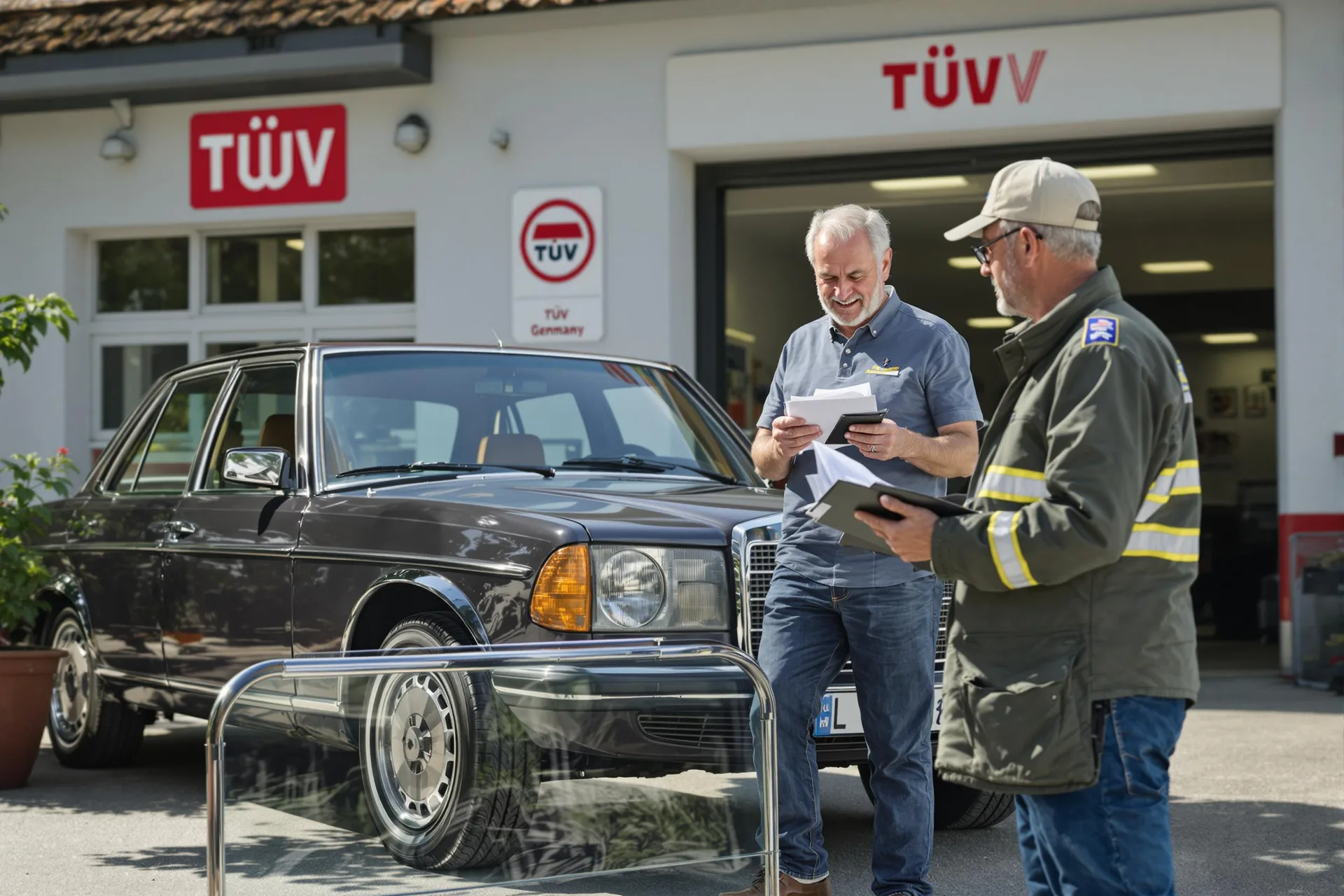
- Have a valuation report prepared: Find a certified expert (for example from TÜV or DEKRA) and have a full valuation report prepared for the vehicle you want. This should not be more than two years old in order to reflect the current value trend.
- Obtain loan offers: Use online comparison portals to submit non-binding and SCHUFA-neutral terms enquiries to several banks. Have your creditworthiness documents ready for this (salary statements for the last three months, copy of the employment contract).
- Submit documents: Submit the loan application together with the valuation report, the draft purchase agreement and your personal documents to the bank you have chosen. Many direct banks allow completely digital document uploads within ten minutes.
- Loan decision and disbursement: After your documents have been reviewed positively, you will often receive the loan approval within 24 to 48 hours. The money is transferred directly to your account, so you can transfer the purchase price to the seller and make your dream of owning a classic car come true.
A structured approach helps you avoid pitfalls and speeds up the loan disbursement. This ensures that the financing runs smoothly while you prepare for the first drive.
Legal aspects: security transfer of ownership and insurance requirements
When taking out a purpose-bound car loan for a classic car, a security transfer of ownership is legally agreed. This means that the bank remains the legal owner of the vehicle until the loan has been repaid in full, even though you are the owner and use the car. The bank therefore retains the registration document part II. This approach reduces the bank’s risk by more than 50 per cent and, in return, enables more favourable interest rates. It is important that you take out fully comprehensive insurance for the vehicle, as this is a common requirement of the financing bank. A good classic car insurance not only covers damage, but also takes into account the market value determined in the appraisal.
Some insurers only require a comprehensive appraisal from a vehicle value of €50,000 onwards. Clarify the exact requirements for classic car insurance at an early stage to avoid gaps in cover. This protection safeguards both you and the bank in the event of theft or a total loss.
Avoid common mistakes and calculate total costs realistically
A common mistake in classic car financing is underestimating running costs. The purchase price often accounts for only 70 to 80 per cent of the total costs in the first three years. So plan a budget for maintenance, repairs, insurance and taxes, which can amount to four to six per cent of the vehicle's value each year. Another mistake is choosing an unsuitable appraiser. An overly optimistic valuation may be challenged by the bank, while a value set too low reduces your chances of financing. Rely exclusively on recognised experts. Avoid setting the loan amount too tightly; allow a buffer of at least ten per cent for unforeseen repairs. An online loan comparison for classic cars helps you find not only the interest rates, but also flexible repayment options such as free early repayments. Careful planning protects you from financial surprises and secures your enjoyment of your classic car in the long term.
Frequently asked questions
- How long is a valuation report for a classic car valid for?
An appraisal report is valid indefinitely, but it is recommended to update it every two to three years. This documents the vehicle's current value development, which is important when applying for a loan later or for insurance.
- Do I always need a historic vehicle registration plate for financing?
Not essential, but it is a strong advantage. An historic vehicle registration plate confirms the vehicle’s original and well-preserved condition, which banks view as a positive signal. In addition, you benefit from a flat tax rate of around 192 euros per year.
- What happens if I can no longer pay the instalments?
If you can no longer meet the instalments, you should contact the bank immediately. In the case of a purpose-specific loan with transfer of ownership by way of security, the bank has the right to sell the vehicle to cover the remaining debt. Residual debt insurance can minimise this risk.
- Can I also use the loan for a restoration?
Yes, an unrestricted personal loan is suitable for this. It is generally slightly more expensive than a purpose-bound car loan, but offers the necessary flexibility to finance restoration work alongside the purchase, which further increases the vehicle's value.
- What role does my credit rating play?
Your credit rating is a decisive factor for the interest conditions. A good credit rating (e.g. a high SCHUFA score) leads to lower interest rates. Together with a solid valuation report, it forms the basis for a positive loan decision.
- Can I repay the loan early?
Yes, with most modern loans, free unscheduled repayments or early full repayment are possible. When choosing a loan, look out for these terms so you can remain flexible and save on interest costs.
Sources
- [1]TÜV provides detailed information on classic car valuation reports and forensic investigations.
- [2]TÜV-Verband provides information on valuation reports for classic cars.
- [3]VDA (Association of the Automotive Industry) publishes press releases, including on the development of classic car prices.
- [4]KBA (Federal Motor Transport Authority) offers official press releases and statistics on classic cars.
- [5]Wikipedia provides a comprehensive article with definitions and general information on classic cars.
- [6]DAT (German Automobile Trust) provides information on experts for historic vehicles and their valuation.
- [7]Association of German Banks provides general information about the German banking system and financing topics.
- [8]Deutsche Bundesbank provides detailed banking statistics.
Conclude directly online
Verified partner tariffs at no extra cost. The button takes you straight to the provider's calculator.
 OCC
OCC
Classic car insurance
Modular motor insurance for classic and collector vehicles: liability, partial and comprehensive cover, plus optional add-on modules.
- Coverage area:
- Europe and non-European EU territories
- Notice period:
- 1 month before the end of the insurance year
- Payment frequency:
- monthly to annual
- Motor liability for third-party damage caused by the insured vehicle
- Partial comprehensive: theft, hail, storm, glass breakage
- Comprehensive: additionally covers vandalism and accidents
- ComprehensivePlus (VollkaskoPlus): further damage while operating the vehicle
- Roadside assistance package, driver protection, and vehicle environmental-damage cover are optional
Key exclusions
- Damage caused intentionally
- Participation in motorsport events and races
- Damage to cargo
- Wear-and-tear damage (Comprehensive/ComprehensivePlus)
Sums insured and the deductible are set out in the individual application or policy document. Insurer: Provinzial Nord Brandkasse AG
Fact sheet: benefits, exclusions and waiting periods in detail
All details are taken from the provider's linked product page and the contract documents (IPID/policy conditions) published there; the insurer's documents prevail. Premiums, benefits and the insurance product itself may change – please verify the details directly with the partner before signing up; only the information provided there is binding.
Information last updated: July 2026 · Source: provider product information (IPID/policy conditions)