When is bicycle insurance worth it?
When is bicycle insurance really worth it? A clear yes-if/no-if answer, typical costs, comparison with home contents insurance and a checklist before you sign.
All details are taken from the provider's linked product page and the contract documents (IPID/policy conditions) published there; the insurer's documents prevail. Premiums, benefits and the insurance product itself may change – please verify the details directly with the partner before signing up; only the information provided there is binding.
 Katrin StraubManaging DirectorInsurance expert with over 20 years of experience in the insurance industry.
Published on
11 min read
Table of Contents
Bicycle insurance is worth it if your bike is valuable enough that theft or a total loss would hit you financially, and if your home contents insurance does not cover everyday risks. For inexpensive bikes that are usually kept in locked rooms, home contents insurance is usually enough
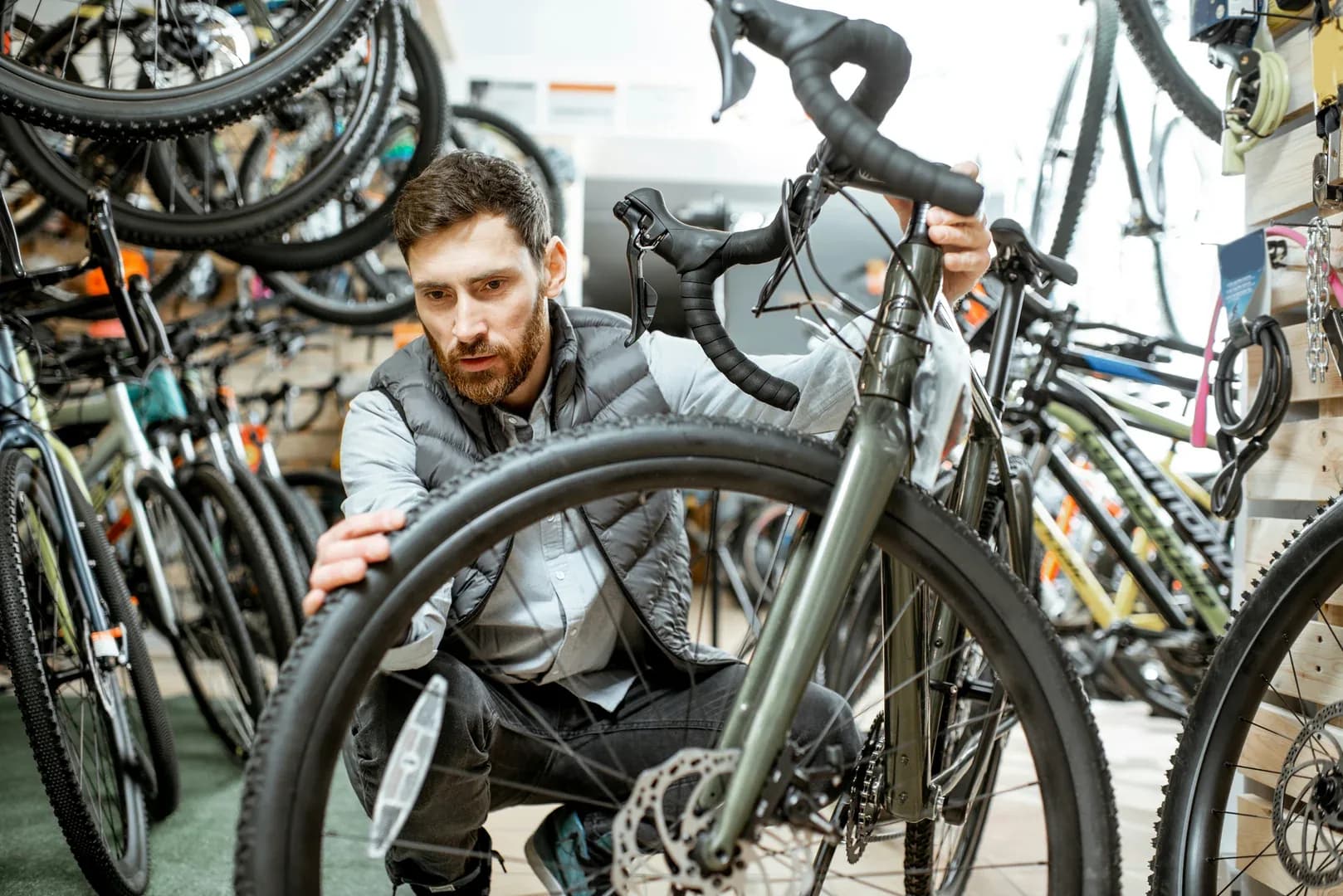
Bicycle theft insurance
Reliably protect your bicycle against theft – with nextsure's bicycle theft insurance. Comprehensive cover, concluded digitally and hassle-free.
Learn moreThe short answer: Yes, if - No, if
Yes, bicycle insurance is generally worth it if your bike is worth around 1,500 euros or more, you regularly park it outside or in a big city, and your home contents insurance does not cover theft on the street, or only to a limited extent. No, if an inexpensive bike is mostly kept in a locked basement or garage: then the residual risk stays small, and the annual premiums hardly pay off.
The question is as topical as it has been in a long time. According to police crime statistics, around 214,300 bicycles were stolen in 2025, about 13 percent fewer than in the previous year, and the true figure is likely to be significantly higher.[1] The clearance rate was recently just under 10 percent.[2] Because thieves deliberately target high-value road bikes, e-bikes and mountain bikes, the average theft loss reached a new record high of 1,270 euros in 2025.[1]
- Bike value: From what value would a total loss really strain your household budget?
- Parking and usage habits: Parked outside in a big city or in a locked room? Many kilometres per year or occasional rides?
- Existing home contents coverage: Does your policy include a bicycle clause, and up to what amount does it reimburse?
If one of these conditions applies to you, the next step is exactly this check on your own bike. And because a general guide cannot know your policy, a consultation before you sign is a good idea, where you can go through your specific situation in detail.
What bicycle insurance covers (and what it doesn't)
Bicycle insurance is a property insurance policy that covers the financial consequences of your bike being destroyed, damaged or going missing. It therefore kicks in where home contents insurance usually ends: in everyday use, on the road, and for wear and tear. Which perils are actually insured is set out in the policy documents; typically this includes:
- Destruction and damage, including through operating errors and improper handling
- Fire and explosion
- Natural hazard damage such as storms, hail, flooding, avalanches and landslides
- Wear and tear on the bicycle
- In the extended theft module additionally: theft, burglary, looting as well as robbery and extortion
Burglary means the bike is taken from a locked space such as a cellar or garage, while simple theft on the open street requires the theft module. Cover generally applies worldwide. Note the waiting period: it is often six weeks if the bike was not already insured within twelve months of purchase (with proof).
The exclusions are just as important. Not insured, for example, are CFRP components (carbon) unless separately agreed, downhill rides, rides in bike parks, jumps, participation in sporting events, damage from rust or oxidation, and commercial use. E-bikes that require insurance (S-Pedelecs) are excluded; for pedelecs that do not require insurance there is a separate e-bike insurance policy. A compact overview of benefits, exclusions and conditions of a specific policy is provided by the fact sheet on bicycle insurance.
Is home contents insurance not enough?
The most common objection is: my home contents insurance takes care of that. Only partly true. As standard, it covers bicycles mainly in cases of burglary from locked spaces such as a cellar or garage. If the bike is taken from the street outdoors, that is simple theft, and the basic home contents policy often offers no or only limited protection in that case.[3]
The bicycle clause provides a remedy: an additional agreement that also protects the bike against theft outside locked spaces, usually on the condition of a customary lock. According to the Gesamtverband der Deutschen Versicherungswirtschaft (GDV), however, only just under half of the roughly 27 million home contents insurance policies in Germany include this clause.[1]
- The compensation is usually capped at a percentage of the sum insured.[1]
- If several bikes are stolen in one theft, it counts as a single case, and the value can exceed the cover.[3]
- Reimbursement is based on the replacement value, i.e.[1] the amount for an equivalent bike.
The takeaway of this section: home contents insurance is a solid basis for burglary from the cellar. For an expensive bike and for everyday risks such as fall damage, operating errors or wear and tear, you need the separate policy, which covers more broadly and is based on the bike's value rather than the home contents sum.
What bicycle insurance costs: a worked example
Concrete figures instead of platitudes: according to the ADFC, pure theft insurance for ordinary bikes is available for an annual premium well under 50 euros, and for electric bikes from around 50 euros. Policies with additional benefits such as wear-and-tear and repair protection cost from around 70 euros, but can also run well over 250 euros a year.[3] For a bike worth 3,000 euros, the Verbraucherzentrale NRW quotes annual prices of roughly 40 to over 100 euros. What annual premiums are realistic and where the price differences come from is shown in our guide to annual premiums.
| Worked example (assumptions) | Trekking bike, 1,500 euros | E-bike, 2,650 euros |
|---|---|---|
| Annual premium (example) | 100 euros | 120 euros |
| Premium after 5 years | 500 euros | 600 euros |
| Payout for theft in the 3rd year | 1,500 euros | 2,650 euros |
| Balance in the event of a claim | 1,200 euros plus | 2,290 euros plus |
| Years until the premium reaches the bike's value | 15 years | around 22 years |
The e-bike price corresponds to the average price according to ZIV market data; the premiums are example values. The calculation shows: for a theft in the early years, the payout clearly exceeds the premiums paid. Conversely, an undamaged, inexpensive bike needs many years before the premium reaches the bike's value. The rule of thumb is therefore: the higher the bike's value and the higher the annual mileage, the sooner the policy pays off. The premium depends on the bike's value, the scope of cover and, in some cases, your place of residence.[3] How much this matters is shown by a price example from the ADAC: for a city bike with a sum insured of 1,500 euros in Leipzig, both modules together cost 241.68 euros per year, and the combination received a rating of Good (1.8) from Stiftung Warentest.[4] Whether that is a good fit, however, is decided by your own comparison along the criteria in the next section.
What you need to look out for before taking out a policy
The pitfalls only become apparent when a claim is made. Four points you should clarify before signing.
- Lock and security requirements: If the bike was not secured to a fixed object in the customary manner at the time of the theft, the benefit may be reduced or lost.[1] Some insurers specify lock models or minimum prices; the ADAC, for example, requires a lock worth at least 49 euros.[4] Our guide to lock requirements explains what is typically expected.
- Policyholder obligations, i.e. your duties under the contract: keep the proof of purchase and frame number, report the loss immediately, follow the manufacturer's maintenance intervals and make all statements truthfully and completely.
- Benefit details: Does the tariff reimburse the replacement value (the price of an equivalent new bike) or only the current value (today's second-hand value)? Are there caps on the purchase price or a deductible, i.e. your own contribution per claim? Is accessories included, and does the cover apply worldwide, for example on holiday?
No tariff is simply the best across the board. Instead, compare these criteria against your usage profile: someone who parks their bike at the station every day needs different theft cover than someone who keeps it in a locked basement at the weekend.
Outlook and conclusion: your next step
A brief, deliberately open outlook: tariffs, conditions and theft figures change constantly, as the declining case numbers alongside record claim totals in 2025 show.[1] What future tariffs and premiums will look like cannot be said reliably today.
The general rule is: bicycle insurance is worthwhile from a bike value at which a total loss would really strain your household budget. Whether that applies to you depends on three things: your bike's value, how and where you park and use it, and the bicycle cover in your existing home contents insurance. A general article like this one cannot settle your individual case, because whether a specific tariff will accept your bike and on what terms depends on the tariff, the health declaration and the insurer's acceptance decision. The next step is therefore to book a consultation and have your situation calculated in concrete terms.
Finally, the practical answer: nextsure's bicycle insurance covers destruction, damage, operating errors, natural hazard damage and wear and tear to the bike worldwide; the extended variant additionally covers theft, burglary and robbery. nextsure compares tariffs, advises independently and brokers the contract; it does not insure anything itself.
Frequently asked questions
- Is bicycle insurance worth it for a cheap bike?
Usually not. The consumer advice centre (Verbraucherzentrale) found annual premiums between 48 and 370 euros for a typical 1,500-euro bike and concluded that it is hardly worthwhile for such a bike. A separate policy is mainly worthwhile for high-value bikes and e-bikes whose loss would noticeably strain the household budget.
- How much does bicycle insurance cost per year?
It depends on the bike's value, the scope of cover and, in some cases, where you live. According to ADFC, theft-only policies for ordinary bikes are available well under 50 euros a year, and for e-bikes from around 50 euros. Complete packages with repair and wear-and-tear cover start at around 70 euros and can cost over 250 euros a year.
- Is my home contents insurance enough for my bike?
Only partially. By default, home contents insurance covers burglary from locked rooms such as a basement or garage. Theft on the street is only covered by the bicycle clause, which according to GDV is included in just under half of the roughly 27 million home contents policies. In addition, the payout is capped at a percentage of the sum insured.
- What happens if my stolen bike was not locked?
Then the payout may be reduced or the claim lost. The usual requirement is that the bike was secured in a customary manner with an independent lock to a fixed object. Some insurers also specify particular lock models. Frame locks do not always count as an independent lock.
- Does bicycle insurance also apply abroad?
With many tariffs, yes — the cover then applies worldwide. This is especially relevant for cycling holidays. Before taking out a policy, it is worth checking the insurance terms, because where and for how long the cover applies abroad differs from provider to provider.
- Is wear and tear on the bike also covered?
In some tariffs yes, in simple theft-only policies no. Wear-and-tear cover is mainly worthwhile for frequent riders with high annual mileage, because wear parts such as brakes need regular replacement. The more benefits the policy includes, the higher the annual premium.
- Is bicycle insurance worth it for an e-bike?
Often yes. According to the Zweirad-Industrie-Verband, an e-bike cost an average of 2,650 euros in 2024 and is particularly popular with thieves, which is why the average theft loss reached a record high of 1,270 euros in 2025. For pedelecs that are not subject to mandatory insurance, there are dedicated e-bike insurance policies that also cover electronics and battery damage.
- When does bicycle insurance take effect after signing up?
It depends on the tariff and the bike's purchase date. In some terms and conditions, a waiting period of 6 weeks applies if the bike was not insured within 12 months of the purchase date (with proof). Anyone who insures a new bike straight after buying it usually avoids this waiting period.
Sources
- [1]gdv.de
- [2]zdfheute.de
- [3]adfc.de
- [4]adac.de
Conclude directly online
Verified partner tariffs at no extra cost. The button takes you straight to the provider's calculator.
 Hepster
Bicycle insurance
Worldwide cover for your bicycle against damage and wear, with theft also covered in the extended variant.
- Coverage area:
- worldwide
- Waiting period:
- 6 weeks (waived for bikes up to 12 months old from purchase)
- Minimum term:
- 3 months (monthly subscription)
- Destruction and damage, including through operating errors
- Fire, explosion, storm, hail, flooding, avalanches, landslides
- Wear and tear on the bicycle is covered
- Extended variant: theft, burglary, robbery, and looting
- A 15% contingency allowance on top of the sum insured
Key exclusions
- Carbon components (CFRP) without a separate agreement
- Downhill riding, bike parks, sporting events, and jumps
- E-bikes and motor vehicles subject to mandatory insurance
- Commercial use
Trusted Shops: 4,5/5 „Sehr gut“ (2.600 Bewertungen)
hepster insgesamt (Anbieterbewertung, alle Versicherungen)
Benefits may be reduced for theft if the bike was not locked to a fixed object as customary; notice period 3 business days before the end of the billing period. Insurer: andsafe Aktiengesellschaft
Fact sheet: benefits, exclusions and waiting periods in detail
All details are taken from the provider's linked product page and the contract documents (IPID/policy conditions) published there; the insurer's documents prevail. Premiums, benefits and the insurance product itself may change – please verify the details directly with the partner before signing up; only the information provided there is binding.
Information last updated: July 2026 · Source: provider product information (IPID/policy conditions)