Surgery Insurance for Cats
What surgery insurance for cats costs in 2026: premiums with and without a deductible, GOT rate and annual maximum benefit explained.
All details are taken from the provider's linked product page and the contract documents (IPID/policy conditions) published there; the insurer's documents prevail. Premiums, benefits and the insurance product itself may change – please verify the details directly with the partner before signing up; only the information provided there is binding.
 Katrin StraubManaging DirectorInsurance expert with over 20 years of experience in the insurance industry.
Published on
10 min read
Table of Contents
In 2026, surgery insurance for cats usually costs 10 to 30 euros per month. The tariff tier determines the annual maximum benefit and the GOT rate (the official veterinary fee schedule multiple), while the deductible lowers the premium and shifts costs to the point of claim.
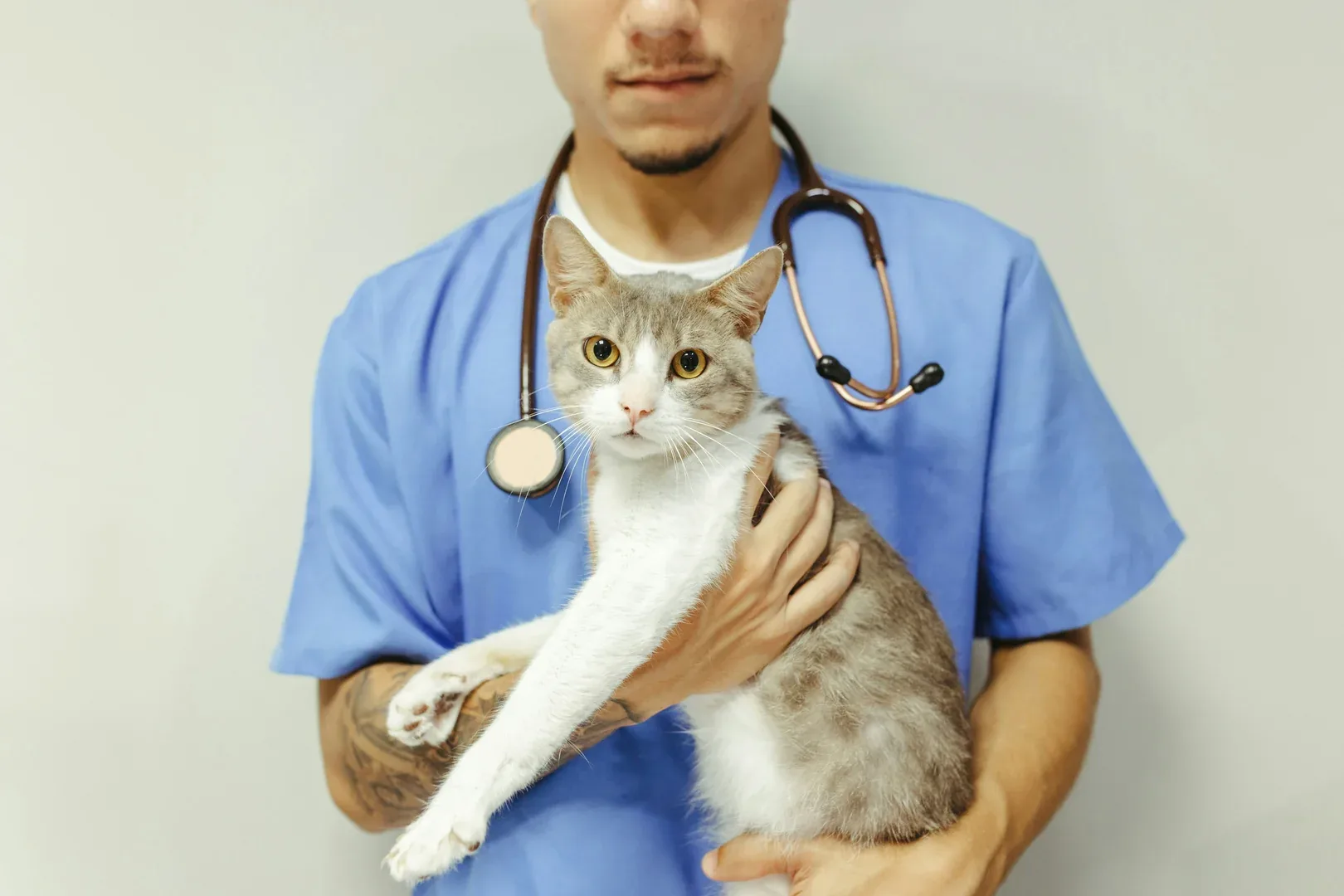
Cat health insurance
Comprehensive protection for your feline friend: The cat health insurance from nextsure covers vet costs and ensures financial security in case of illness or accident involving your cat.
Learn moreWhat surgery insurance for cats costs in 2026
Yes, surgery insurance for your cat is affordable in 2026: according to a market overview, most monthly premiums sit between roughly 10 and 35 euros, with entry-level prices below that. But the condition behind the number is what matters: every premium applies only to a specific tariff version, a specific entry age (the cat's age when the policy is taken out) and an agreed deductible. An entry-level price without these three details unfortunately tells you nothing about your own premium.
This makes the premium the cheapest tier in pet protection: surgery-only cover kicks in only when your cat actually needs an operation. Four factors determine where you land in 2026:
- Entry age: the older the cat is when the policy is taken out, the higher the premium. The maximum entry age is often around ten years depending on the provider — beyond that, no policy is available at all.
- Living situation: outdoor cats have a higher accident risk than indoor cats and are priced accordingly.
- Deductible: if you cover a share of the costs yourself in the event of a claim, you pay less per month.
- GOT tier: up to which multiple of the official veterinary fee schedule (GOT) the insurer reimburses is the biggest lever on both benefits and price.
To draw the distinction in one sentence: according to the consumer advice centre Verbraucherzentrale, comprehensive pet health cover costs roughly three times as much as pure surgery insurance, because it also covers outpatient treatment without surgery. That comparison belongs in its own article and is not explored further here.
Why the tiers differ in price: GOT rate and annual maximum benefit
The premium jumps between tariff tiers because the benefits jump too. Two levers explain almost the entire price difference: the reimbursed GOT rate (official veterinary fee schedule multiple) and the annual maximum benefit. The GOT (Gebührenordnung für Tierärztinnen und Tierärzte) is a nationwide legal regulation that sets out what vets may charge. It defines a fee range from one to three times the base rate, continuously and without fixed prices.[1] For services in the veterinary emergency service — at night, on weekends or on public holidays — the rates rise under § 4 of the regulation to up to four times the base rate.[2]
The reimbursement rate determines up to which GOT multiple the insurer pays. The annual maximum benefit caps the reimbursement per policy year. Together, the two determine how much of a large bill actually reaches you. Using the market example cleos (tariff status 2026, entry premiums for young cats without a deductible), the tier logic can be read off directly:
| Tariff (cleos, 2026) | Annual maximum benefit | Reimbursement up to | Entry premium per month |
|---|---|---|---|
| Basis | [3]up to €3,000 | [3]3x GOT rate | [3]from €13.99 |
| Rundum | [3]up to €10,000 | [3]4x GOT rate | [3]from €14.69 |
| Rundum Plus | [3]unlimited | [3]4x GOT rate | [3]from €16.09 |
So the jump in the premium follows the jump in the benefits: Rundum Plus costs only around two euros more than Basis at entry level, but reimburses unlimited amounts and up to 4x the GOT rate instead of 3x. That is exactly why it pays to look at the benefit cells before looking at the price.
How a deductible lowers the premium
The deductible is the share of the vet bill that you bear yourself when a claim arises. It is the second price lever alongside the GOT tier and the annual cap: the higher it is, the lower the monthly premium — but the more risk shifts into the claim / event of loss.
How it is settled depends on the tariff. Three common variants:
- Percentage per claim: According to the Verbraucherzentrale, the market standard is a reimbursement of 80 percent of eligible costs, meaning you bear a 20 percent share yourself.
- Fixed euro amount: Some tariffs agree on a fixed amount per claim or per year.[4]
- Deduction per submission day: With cleos, the deductible is deducted from the reimbursement per submission day; all bills you submit on one day count together as one submission.[3]
The rule of thumb: a higher deductible lowers the monthly premium but shifts costs into the claim / event of loss. Whether that pays off depends on how often your cat needs surgery. The calculation follows in the next section.
Worked example: premium versus surgery costs in 2026
Only the reverse calculation shows what the premium is worth. An example with real figures, tariff status cleos 2026, young cat, without a deductible: the entry premium in the Rundum Plus tariff is €16.09 per month.[3] That works out to around €193 in 2026 (€16.09 × 12 = €193.08). In return, the tariff reimburses unlimited amounts up to 4x the GOT rate.
Set against this are the costs of a single operation. Cleos cites the following as example costs for cat surgery:[3]
- Broken bone: up to €3,000
- Torn cruciate ligament: up to €2,500
- Swallowed foreign object: up to €2,500
- Fall from a window: up to €3,000
The counter-calculation with a deductible, again as an example: with a typical reimbursement rate of 80 percent, you would pay around €500 of a €2,500 foreign-object operation yourself. If the deductible hypothetically saves €3 per month on the premium, that is €36 per year. The break-even point then only comes after many claim-free years: the deductible variant only pays off if no claim — or a cheap one — occurs during the year. If a major operation happens, you give the savings straight back. Whether that risk is acceptable is decided by your cat's profile, not the monthly price.
Does surgery insurance suit your cat?
Whether the premium ends up low — or whether cover is out of the question at all — is decided by your cat's profile. Three questions to check:
- Entry age: As a rule of thumb, the older the animal is when the contract is taken out, the higher the premium. Many providers set the maximum acceptance age at around ten years.[4] Important: once the maximum entry age is exceeded, there is no higher premium — the application is declined. A dedicated article on taking out cover in later life covers the details.
- Housing type and health: Only healthy animals are insurable in principle. Outdoor cats and pedigree cats often pay more than indoor cats because of the higher risk. The comparison for outdoor cats and indoor cats shows how to compare by housing type.
- Check the limits honestly: There is a general waiting period (the time from the start of the contract before illness-related costs are covered) of 30 days, and 6 months for particular procedures and illnesses; for accidents it does not apply at all (tariff status cleos 2026).[3] On top of that come benefit limits such as the annual maximum benefit. The article on cat surgery insurance with no waiting period explains what applies from day 1.
Does this apply to you? If your cat is young, healthy and the housing type is clear, the premium can be calculated precisely in a few minutes. Calculate the premium and compare your own terms with and without a deductible side by side.
Outlook and next step
A short, deliberately open outlook: the GOT rate (official veterinary fee schedule multiple), the tariff structures and therefore the premiums change constantly. The current fee schedule has been in force since 22 November 2022; when and how it will be adjusted again is impossible to predict today. So do not extrapolate today's amounts into future years, and check the tariff status before taking out a policy.[2]
As a next step, cat surgery insurance from nextsure is worth a look. nextsure is a digital marketplace and broker, not an insurer; the risk carrier is Towarzystwo Ubezpieczen Europa S.A. The cat surgery insurance covers the costs of medically necessary veterinary operations, including pre-operative examinations, aftercare and clinic stays, in four tariff variants: Basis, Premium, Superior10 and SuperiorO. The fact sheet on cat surgery insurance summarises what each variant covers in detail; the cat health insurance comparison gives an overview across tariffs.
To be honest: no general article can tell you the exact premium for your cat. It depends on the chosen tariff, the entry age, the health declaration and the insurer's acceptance decision. Calculate the premium and compare the four tariff variants with and without a deductible directly.
Frequently asked questions
- How much does surgery insurance for cats cost?
In 2026, monthly premiums typically range between 10 and 30 euros according to market overviews. Entry prices start below that, for example at 13.99 euros per month for one provider's basic tariff. The actual premium depends on entry age, housing type, tariff tier and deductible, so always calculate it with your own cat's profile.
- How much does cat surgery insurance cost from 10 years of age?
There is no blanket answer: the premium rises with entry age, and many insurers no longer accept older cats at all because they set a maximum entry age. If your cat is declined, there is no higher premium — there is simply no offer. The individual price can only be determined in the calculator using age, breed and housing type.
- Is a deductible worth it with cat surgery insurance?
Yes, if you can cover smaller amounts yourself in an emergency and the premium savings over the years exceed the out-of-pocket payment in a claim. No, if your cat needs surgery early on: then you pay the deductible immediately and the savings have not yet accumulated. The math only works with your own cat's profile.
- What does the GOT rate mean for the premium?
The GOT is the fee schedule for veterinarians, a legally binding regulation valid throughout Germany. It sets a fee framework from 1 to 3 times the base rate, in steps and without fixed prices; in emergency service, up to 4 times the rate is permitted. A tariff that reimburses only up to 3 times the rate is cheaper than one up to 4 times, but leaves you with more residual costs at expensive clinics.
- How is the deductible settled in cat surgery insurance?
It depends on the tariff: some insurers deduct a fixed euro amount per claim, others a percentage of the reimbursement. One provider calculates the deductible per submission day, so invoices submitted together are only charged once. Also common in the market are tariffs that cover only 80 percent of eligible costs anyway.
- Up to what age can I still get surgery insurance for my cat?
Each insurer sets its own maximum entry age; after that, no new policy can be taken out. As a rule of thumb: the younger the cat when the policy is taken out, the lower the premium. For an older cat, it is worth reading the fine print and using the calculator, because acceptance and price depend on the health declaration and the insurer's acceptance decision.
- Why is surgery insurance so much cheaper than cat health insurance?
Because it only pays out in connection with an operation, including pre-operative examinations and aftercare, but not for outpatient treatments or preventive care. According to Verbraucherzentrale, comprehensive pet health cover costs around three times the premium of pure surgery insurance. If you only want to cover the major cost risk of an operation, surgery cover is usually the cheaper option.
Sources
Conclude directly online
Verified partner tariffs at no extra cost. The button takes you straight to the provider's calculator.
 Hepster
Cat health insurance
Full health coverage for cats across four tariffs, from Basis to Superior0, with reimbursement of up to 100% and no annual limit.
- Reimbursement:
- 80-100% depending on the tariff
- Deductible (Selbstbeteiligung):
- 0-20% depending on the tariff
- Waiting period:
- 1 month
- GOT rate:
- up to 4x (from Premium)
- Treatment and surgery for illness and accidents, with reimbursement of up to 100% depending on the tariff
- Post-surgery physiotherapy: 3 sessions (Basis), 5 (Premium), 10 (Superior)
- Veterinary clinic stays: up to 10, 15, or 20 days depending on the tariff
- From Premium: dental treatment, neutering, homeopathy/acupuncture, and a wellness allowance of up to €150/year
- Vet fees covered up to 2x the standard veterinary fee schedule (GOT) rate on Basis, up to 4x from Premium
- Coverage abroad: 12 months in Europe; Superior extends worldwide for up to 12 months
Key exclusions
- Known chronic or congenital conditions
- Pregnancy, false pregnancy, and birth
- Illnesses treated in the 6 months before the policy started
- Diagnoses made during the waiting period (permanently excluded)
Trusted Shops: 4,5/5 „Sehr gut“ (2.600 Bewertungen)
hepster insgesamt (Anbieterbewertung, alle Versicherungen)
Monthly subscription: minimum term 12 months, notice period 3 business days before the end of the billing period; prosthetics/orthotics have a 12-month waiting period. Insurer: Towarzystwo Ubezpieczen Europa S.A.
Fact sheet: benefits, exclusions and waiting periods in detail
 Cleos Welt
Cat health insurance
Combined health and surgery cover for cats, reimbursing vet costs up to the agreed maximum veterinary fee schedule (GOT) rate.
- Reimbursement:
- up to the agreed maximum GOT rate
- Coverage abroad:
- 12 months
- Notice period:
- 14 days before the end of the month
- Treatment for illness and accidents
- Surgery, including pre-surgical diagnostic examinations
- Pre- and post-treatment following a covered surgery
- Lab work and imaging diagnostics, plus medically necessary medication
- Coverage abroad: 12 months
Key exclusions
- Treatments and surgeries already known or recommended before the policy started
- Illnesses occurring before the waiting period ends
- War, earthquakes, floods, epidemics, and pandemics
- Damage caused intentionally
CHECK24 Tarifnote 1,0 „exzellent“
Cleos Welt Katzenkrankenversicherung, Tarif Rundum Plus
CHECK24 Tarifnote 1,0 „exzellent“
Cleos Welt Katzen-OP-Schutz (Rundum Plus inkl. SOS-Schutz)
Google Rezensionen: 4,5/5 Sterne (210 Bewertungen)
Cleos Welt insgesamt (Anbieterbewertung, alle Versicherungen)
Contract term at least 1 year with automatic renewal; sum insured and deductible (Selbstbeteiligung) as stated in the policy. Insurer: Uelzener Allgemeine Versicherungs-Gesellschaft a.G.
Fact sheet: benefits, exclusions and waiting periods in detail
Hepster
Cat surgery insurance
Surgery-only cover for cats across four tariffs; the top tariff has no deductible and no annual limit on surgery costs.
- Reimbursement:
- 80-100% depending on the tariff
- Deductible (Selbstbeteiligung):
- 0-20% depending on the tariff
- Waiting period:
- 1 month
- Surgery under anesthesia or sedation for illness and accidents
- Post-treatment: up to day 14, 15, or 20 depending on the tariff
- Veterinary clinic stays: up to calendar day 10, 15, or 20 depending on the tariff
- From Premium: neutering, tooth extractions, post-surgery physiotherapy (up to 10 days)
- Prosthetics/orthotics: up to €400 (Basis), up to €500 (Premium/Superior)
- Emergency transport allowance of up to €50 per claim
Key exclusions
- Known chronic or congenital conditions
- Illnesses that required surgery in the 6 months before the policy started
- Surgery performed to meet breed-standard appearance
- Basis: dental treatment of any kind
Trusted Shops: 4,5/5 „Sehr gut“ (2.600 Bewertungen)
hepster insgesamt (Anbieterbewertung, alle Versicherungen)
Monthly subscription: minimum term 12 months, notice period 3 business days before the end of the billing period; prosthetics/orthotics have a 12-month waiting period. Insurer: Towarzystwo Ubezpieczen Europa S.A.
Fact sheet: benefits, exclusions and waiting periods in detail
Hepster Cat health insurance: Cat health insurance tariff overview
| Tariff | Reimbursement | Deductible | Annual maximum |
|---|---|---|---|
| Basis | up to 80% | 20%, min. €250 per claim | Year 1: €1,000, from year 2: €2,000 |
| Premium | up to 80% | 20% per claim | €10,000 |
| Superior10 | up to 90% | 10% per claim | none |
| Superior0 | up to 100% | none | none |
Hepster Cat surgery insurance: Cat surgery insurance tariff overview
| Tariff | Reimbursement | Deductible | Annual maximum |
|---|---|---|---|
| Basis | up to 80% | 20%, min. €250 per claim | €1,000 |
| Premium | up to 80% | 20% per claim | €10,000 |
| Superior10 | up to 90% | 10% per claim | none (surgery costs only) |
| Superior0 | up to 100% | none | none (surgery costs only) |
All details are taken from the provider's linked product page and the contract documents (IPID/policy conditions) published there; the insurer's documents prevail. Premiums, benefits and the insurance product itself may change – please verify the details directly with the partner before signing up; only the information provided there is binding.
Information last updated: July 2026 · Source: provider product information (IPID/policy conditions)