Barmenia Equine Surgery Insurance: Chip ID Required?
Does your horse need a chip or passport number to be identifiable with Barmenia? Identification rules and claims billing explained.
All details are taken from the provider's linked product page and the contract documents (IPID/policy conditions) published there; the insurer's documents prevail. Premiums, benefits and the insurance product itself may change – please verify the details directly with the partner before signing up; only the information provided there is binding.
 Katrin StraubManaging DirectorInsurance expert with over 20 years of experience in the insurance industry.
Published on
12 min read
Table of Contents
Does my horse need to be identifiable via chip or passport number with Barmenia? Yes. Barmenia's General Insurance Terms (AVB) require that the treated horse can be uniquely identified via a passport number (Lebensnummer) or chip number. This proof is a basic prerequisite for coverage. At the latest when a veterinary invoice is submitted in a claim, the insurer strictly checks this identification to rule out mix-ups.
Equine surgery insurance
Horse surgery insurance via nextsure: Three flexible tariffs, reimbursement up to twice the GOT rate, and free choice of clinic worldwide. Protect your horse from high surgery costs – digital, transparent and uncomplicated.
Learn moreThe identification requirement in Barmenia's equine surgery insurance
Contractual basis for identification
The contractual identification requirement is the absolute foundation for benefit approval at Barmenia. Under Section 1 of the General Insurance Terms (AVB), coverage is strictly tied to the treated horse being uniquely identifiable via a passport number or chip number. Without this unambiguous assignment, the insurer consistently refuses to cover costs. Horse owners must therefore ensure that the animal's identification data is entered correctly and without errors already at the time the contract is concluded. A subsequent correction during a claim regularly leads to massive delays in the review process. The rules are strict. Through this clause, Barmenia protects itself against the risk of invoices being submitted for uninsured animals. Especially in larger stables with several horses of the same breed and color, visual description alone is completely inadequate. The transponder chip is the only tamper-proof method here to verify the insured risk beyond doubt and to legitimize the contractual claim to cost reimbursement.
Verification in an actual claim
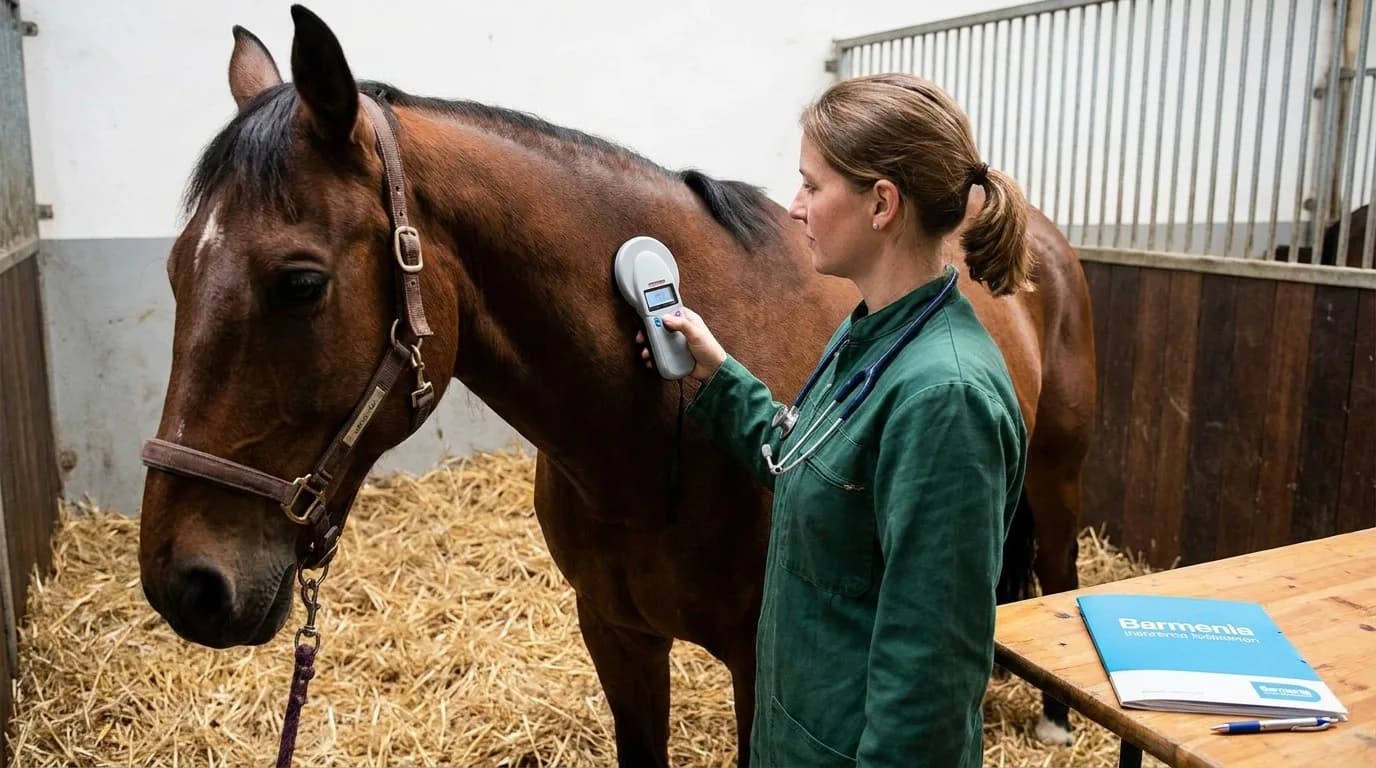
The obligation for unambiguous identification of the insured animal takes effect at the latest in the actual claim [2]. Before a planned operation, veterinarians routinely scan the implanted transponder chip and note the 15-digit ISO number in detail in the patient file. Alternatively, the official passport number (UELN) from the equine passport serves as a valid reference for the insurer. This strict rule protects the entire community of policyholders from potential fraud attempts through the covert swapping of animals before expensive procedures. A missing chip, a defective transponder, or incomplete documentation on the invoice significantly jeopardizes the entire insurance cover. The risk is enormous. Owners should therefore briefly have the vet check the chip's position and readability during the annual vaccination. This small step prevents nasty surprises if the horse is suddenly admitted to the clinic as an emergency and its identity must be proven beyond doubt under time pressure.
Managing several horses
Anyone who, as a breeder or ambitious rider, keeps several horses particularly benefits from this clear administrative separation. Barmenia requires a separate insurance contract with an individual risk assessment for each individual animal. The benefits of equine surgery insurance are, in a claim, provided exclusively for the specifically named and electronically identified horse. Transferring the policy to another horse in the same stable is contractually excluded. nextsure strongly recommends that its customers transfer the chip number to the platform's digital insurance folder directly after implantation by the vet. That way, all relevant identification data is immediately at hand in an emergency and can be sent to the insurer together with the claim notification at the touch of a button. That saves valuable time. This digital preparation reduces administrative stress to an absolute minimum in what is already an emotionally taxing exceptional situation surrounding a serious equine operation.
Billing and invoicing in a claim
Formal requirements for the veterinary invoice
Fast reimbursement requires formally correct documents. Section 4.1 of the Barmenia AVB defines precisely which specific details a veterinary invoice must contain to be recognized as reimbursable. In addition to the policyholder's full name and a detailed medical diagnosis, Barmenia strictly requires the horse's name and passport number or chip number on the invoice. If this unambiguous proof of identity is missing, payment is inevitably delayed, since the claims handler must return the invoice to the vet for correction. That costs valuable time. The billed service items must also strictly comply with the current fee schedule for veterinarians (GOT). The claims department generally does not accept lump-sum billing without a detailed breakdown of individual treatment steps, medications, and consumables. Horse owners should therefore explicitly tell the clinic administration at admission that this is an insurance claim and that the chip number must be shown on the final invoice.
Direct billing with the equine clinic
Owners send veterinary invoices directly by email to Barmenia for review and reimbursement [3]. The contractual submission deadline is one month after the veterinary treatment has definitively ended. For particularly costly operations, such as a complicated fracture repair, Barmenia offers direct billing with the treating equine clinic at the owner's explicit instruction. That provides financial security. This considerably relieves the owner financially, since they do not have to advance amounts running into several thousand euros. In this case, the insurer transfers the contractually reimbursable amount directly to the veterinarian. The owner only has to settle any agreed deductible or uninsured additional costs, such as special dietary feed, directly on site. Clinic, owner, and insurer typically coordinate this assignment declaration in writing before the horse is discharged.
Entitlement to advance payments
Given the high veterinary costs that can quickly arise with horses, rapid liquidity is crucial for the owner. If the insurer's internal review of a case takes longer than one month, policyholders have a contractually anchored right to a reasonable advance payment. The prerequisite, however, is that the owner did not cause the delay themselves through missing documents or incomplete information. For questions about the current processing status of a claim, Barmenia's customer service is available by phone [3]. Anyone who manages their policy through a digital broker benefits from an additional service layer here. The experts take over communication with the claims department, proactively follow up on delays, and ensure that all formal AVB requirements are met. That saves valuable time. This way, legitimate claims are paid promptly and without unnecessary bureaucratic hurdles into the account of the policyholder or the clinic.
Important details on the veterinary invoice
- Full name and address of the horse owner.
- Unambiguous identification of the horse via chip or passport number.
- Detailed medical diagnosis of the condition treated.
- Breakdown of service items according to the current GOT.
- Date the veterinary services were provided.
If any of these details is missing, Barmenia can reject the invoice for correction.
Barmenia's tariff structure and scope of cover
Three levels of cover compared
Barmenia's tariff structure is divided into three tiers building on one another that cover different security needs. Barmenia offers three tariffs (Basis, Top, and Premium), which differ significantly in reimbursement limits and specific benefits such as joint-chip surgery [1]. The Basis tariff covers basic surgical procedures but limits reimbursement rates to lower GOT rates and restricts aftercare periods to a few days. Top cover extends the scope to include additional diagnostic imaging procedures such as MRI or CT ahead of an operation. Premium cover offers the most comprehensive coverage on the market, including extended physiotherapy and the highest reimbursement limits. The choice is wide. This modular design allows the horse owner to tailor the premium precisely to their personal budget and the animal's value. A leisure horse may need a different level of cover than a high-value competition horse that is regularly used in international top-level sport and faces a higher risk of injury.
Emergency-service fees and age limits
A key distinguishing feature between the three tariffs is the coverage of costly emergency-service fees. In the Premium tariff, Barmenia reimburses the vet's fees up to four times the standard GOT rate, provided the life-saving service is rendered at night, on a weekend, or on a public holiday. There are also, pleasingly, no age restrictions for enrolling horses in Barmenia's surgery insurance [1]. This makes the tariffs highly attractive even for older animals or retired horses, since many competitors flatly reject animals from the age of twelve or only insure them with massive premium surcharges. In the Premium plan, Barmenia also waives the ordinary right of termination in a claim from the seventh year of insurance onward, provided the horse was no more than seven years old when the contract was concluded. That creates real security. This clause offers the owner enormous planning security for the entire lifetime of their four-legged companion.
Surgery cover versus full insurance
Choosing the right tariff requires a precise and unsparing analysis of the individual risk profile. A key difference between pure surgery cover and full health insurance for horses lies in the scope of cover for purely conservative treatments. While the surgery policy covers only surgical procedures under general or standing anesthesia, full insurance also covers regular medication, blood work, and treatments without an incision. nextsure supports owners with a data-driven, objective comparison to define the optimal depth of cover for their animal. The broker not only analyzes the pure premiums but dissects the terms and conditions for hidden sublimits and exclusions. That prevents horse owners from cutting corners in the wrong place and being left sitting on thousands of euros in an emergency because a specific imaging procedure was unfortunately not included in the chosen basic tariff.
| Tariff | Reimbursement rate | Emergency-service fee | Physiotherapy |
|---|---|---|---|
| Basis | Limited | No | No |
| Top | Extended | No | No |
| Premium | Highest rate | Yes (up to 4x) | Yes (up to 5 sessions) |
The exact reimbursement limits depend on Barmenia's current AVB.
Waiting periods and special rules for pre-existing conditions
General waiting periods and the colic exception
The contractual waiting periods protect the pool of policyholders from high costs from conditions that already existed before the contract began. For regular illnesses, Barmenia's equine surgery insurance applies a general waiting period of three months from the documented start of cover. An extremely important exception is abdominal surgery for life-threatening colic. Here, Barmenia reduces the waiting period, in a customer-friendly way, to just five days. That protects all customers. This short period appropriately reflects the acute, unpredictable, and life-threatening nature of colic. Without this shortening, the greatest financial risk for horse owners would be completely uncovered in the first few months. If a claim occurs during the waiting period, the insurer permanently refuses cover for this specific diagnosis. It is therefore essential not to take out cover only once the horse already shows initial unclear symptoms or the vet expresses a vague suspicion of an emerging illness.
Extended waiting periods for joint surgery
Special caution is required for orthopedic joint operations. For procedures due to isolated shadowing, osteochondrosis (OC), osteochondrosis dissecans (OCD), or Birkeland fractures, a significantly extended waiting period of twelve months applies. Castrations that become necessary for compelling medical reasons, such as tumors or severe inflammation, are subject to a six-month period. For genuine accidents, however, the waiting period is waived entirely. In this case, though, the treatment must demonstrably and exclusively be attributable to the sudden, externally caused accident. A classic example is a pasture accident in which the horse suffers a deep laceration on a fence that must be stitched under sedation. Barmenia also treats the ingestion of poisoned bait as an accident under the terms, so immediate cover applies from the first day of the contract term.
Transparency about pre-existing conditions
Pre-existing conditions require absolute transparency and honesty when applying. Illnesses, accidents, or congenital developmental defects that were already known to the owner when the contract was concluded are permanently and irrevocably excluded from cover. If a clinically relevant symptom occurs within the waiting period, the obligation to pay benefits for this specific diagnosis also lapses for the entire contract term. Comprehensive horse health insurance should therefore ideally be taken out already at foal age or directly the day after the animal is purchased, once the veterinary pre-purchase examination (AKU) has certified a clean bill of health. If the owner conceals pre-existing conditions when taking out the policy, they risk not only the rejection of the current claim but termination of the entire contract without notice for breach of the pre-contractual duty of disclosure. In such a case of fraudulent misrepresentation, the insurer generally does not refund the premiums paid.
Aftercare and alternative healing methods
Duration and scope of aftercare
Aftercare is a central and often underestimated cost factor after any surgical procedure. In its terms, Barmenia defines aftercare as all veterinary measures medically necessary to restore health after an operation. The number of insured aftercare days varies greatly depending on the chosen tariff and is documented precisely in the policy. While basic tariffs often cover only a few days, Premium variants offer a significantly longer protective umbrella for the critical convalescence phase. If the insurance contract ends as scheduled before this phase is complete, ongoing treatments remain reimbursable within the agreed scope for the documented period. In addition to the pure veterinary examination, reimbursable costs also include prescribed medication, necessary consumables, and inpatient boarding costs at the equine clinic if the horse must remain on site for monitoring. The costs add up.
Regenerative and complementary therapies
Barmenia's range of benefits pleasingly also includes modern and alternative therapy approaches that are gaining increasing importance in modern veterinary medicine. Regenerative therapies such as IRAP, PRP, or innovative stem-cell treatments are explicitly covered depending on the tariff. The same applies to complementary methods such as acupuncture, magnetic field therapy, neural therapy, or laser therapy. The strict requirement here is always that the method's efficacy is backed by veterinary science and that billing strictly follows the line items of the fee schedule for veterinarians (GOT). Gold acupuncture or gold wire implants, however, are explicitly excluded by the AVB; the owner always bears these costs privately. This clear delineation helps avoid disputes in a claim and gives the policyholder planning certainty regarding covered healing methods.
Physiotherapy under Premium cover
Premium cover offers clear, measurable advantages in rehabilitation for animal welfare. That is crucial. Here, up to five physiotherapy sessions of a maximum of 60 minutes each are additionally covered after the regular aftercare period ends. Recognized animal physiotherapists also carry out these sessions following a prior veterinary referral - this massively speeds up the healing process after serious orthopedic procedures. Anyone who, alongside equestrian sport, is also looking for cover for other hobby and farm animals will find tailored specialty tariffs at nextsure that integrate similar rehabilitation components for other animal species. The digital platform makes it possible to manage the entire animal portfolio clearly in one dashboard. This way, owners always keep track of the various aftercare deadlines, reimbursement limits, and therapy options for their animal companions, without having to leaf through thick paper folders.
Exclusions and limits of coverage
Prevention and cosmetic procedures
The contractually defined exclusions clearly and unambiguously limit the insured risk for the provider. Barmenia's equine surgery insurance under no circumstances reimburses routine examinations, preventive vaccinations, deworming, or voluntary health checks without a direct link to an acute illness or accident. Cosmetic dental treatments, routine tartar removal, or operations that merely serve to achieve a particular breed standard are also completely excluded from cover. Travel fees, waiting fees, and travel costs of the treating vet are likewise excluded, which is especially important to note for house calls at the home stable. The owner generally bears transport costs for the horse to the equine clinic themselves, for example for a special horse ambulance. That avoids unnecessary disputes. These exclusions are standard in the industry and serve to keep insurance premiums for the actual, existentially threatening surgery risk at an affordable level.
Specific diagnoses without cover
Certain diagnoses and specific treatment reasons are explicitly excluded in the terms to keep the risk calculable for the pool. Cover has clear limits. Operations due to hoof abscesses or hoof ulcers are generally not covered, unless it is a veterinarian-diagnosed case of hoof cancer. Procedures directly related to pregnancy, covering, or a false pregnancy are likewise not covered by the insurer. An important exception here is only the medically essential Caesarean section, which is covered once per insured animal. Castration or sterilization of stallions is also excluded, unless it must be performed for strictly medical reasons. For these medically indicated castrations, the previously mentioned special waiting period of six months then applies.
Feed and administrative costs
Special dietary feed and supplements are another frequently discussed ground for exclusion. Even if the treating vet expressly prescribes special vitamin mixes, minerals, or expensive supplementary feed to support recovery after a serious operation, Barmenia does not reimburse these costs under the terms. The owner must also pay for the preparation of expert opinions, official health certificates, or detailed medical vet letters out of their own pocket. Operations that become necessary due to damage arising from acts of war, earthquakes, floods, or epidemics are covered by the general risk-exclusion clause. Anyone who knows the exact limits of their tariff experiences no nasty surprises in an emergency. nextsure places great value on radical transparency and communicates these exclusions clearly and comprehensibly already during the digital advisory process, so customers have realistic expectations of their policy.
Policyholder obligations
Duties of care before a claim
The contractual obligations demand a high degree of personal responsibility and care from the horse owner. Before an insured event occurs, the owner must take all possible and reasonable measures to actively prevent accidents or illnesses of the insured animal. This also includes strict compliance with official safety regulations for keeping the animal, such as intact pasture fences or species-appropriate stabling. If the owner intentionally violates these fundamental duties, Barmenia is fully released from its obligation to pay benefits. In cases of gross negligence, for example if the horse is knowingly kept on a heavily littered pasture with a risk of injury, a proportional reduction in benefits is applied, based on the severity of the individual fault. In such cases, the owner bears the burden of proof that there was no gross negligence or that it was not the cause of the specific loss. The rules are strict.
Duties to cooperate in claims processing
In an actual claim, extensive duties to provide information and cooperate apply, which must be fulfilled promptly. The policyholder must truthfully provide Barmenia with all necessary information and expressly permit the insurer to obtain detailed information from the treating veterinarians. At the insurer's specific request, the horse must be examined by an independent veterinarian appointed by the insurer. Barmenia naturally bears the costs for this expert second opinion in this case. A lack of cooperation has consequences. Delays in the review process caused by a lack of cooperation or the withholding of patient records are entirely at the owner's expense and can forfeit the right to advance payments. In addition, the insurer must be informed without delay if benefits can be claimed from another insurance contract for the same claim.
The pre-contractual duty of disclosure
The pre-contractual duty of disclosure is by far the most critical moment when taking out the contract. If the applicant answers the detailed health questions incorrectly, glosses over them, or answers them incompletely, the entire insurance cover is at risk of being lost. In the case of fraudulent misrepresentation, Barmenia can rescind the contract immediately, or withdraw from the contract in the case of gross negligence. Even if the concealed pre-existing condition has nothing to do with the current reason for surgery, the insurer can terminate the contract or retroactively impose risk surcharges. nextsure guides customers through this sensitive process and ensures that all pre-existing conditions, veterinary treatments from recent years, and chronic conditions are documented in a legally sound and complete manner. This conscientious preparation at the time of taking out the policy secures reliable cover in an emergency, when every euro counts.
nextsure as digital broker for horse insurance
Transparent comparison of niche tariffs
As a specialized digital broker, nextsure deliberately focuses on niche risks and complex insurance needs. The platform does not offer a confusing jumble of standard policies but hand-picked, thoroughly vetted tariffs for specific needs such as equine surgery insurance. The intelligent digital comparison process analyzes the rider's individual requirements and matches them in real time against the insurers' complex terms and conditions. This lets owners immediately and transparently see whether affordable Basis cover is enough for their leisure horse or whether the extended benefits of a Premium tariff with high GOT rates make more economic sense. nextsure's technology translates the legal small print of the AVB into understandable, comparable data points. That creates real clarity. This breaks open the often opaque price-performance structure of the insurance industry and enables the customer to make a fact-based, confident decision for their animal.
Independent advice and digital administration
Personal expert advice perfectly complements the fully digital sign-up. Under Section 34d of the German Trade, Commerce and Industry Regulation Act (Gewerbeordnung), nextsure operates as a licensed, independent insurance broker that legally represents the customer's interests and does not represent the interests of a particular insurance company. When it comes to complex detail questions such as crediting prior insurance periods, the waiver of waiting periods for accidents, or the correct disclosure of pre-existing conditions, the specialized team delivers solid, legally sound answers. All the tedious paperwork is eliminated entirely, since all policies, endorsements, and veterinary invoices are managed and archived centrally and securely in the digital customer account. This hybrid approach of technological efficiency and human expertise ensures that horse owners not only sign up quickly but also receive optimal support in an emergency.
Efficiency in a claim
The true quality of the brokerage proves itself in an actual claim. When Barmenia has follow-up questions about the chip number or passport number of the treated horse, this sensitive data is already structured and ready to retrieve in nextsure's system. This smooth, digital flow of information significantly speeds up payment of veterinary costs and relieves the owner in a situation that is already emotionally very tense. Through its consistent focus on specialty insurance, nextsure closes exactly the advisory gaps that large standard portals often leave open when it comes to insuring valuable animals, e-scooters, or expensive camera equipment. The platform proves that digital speed and technical depth do not have to be mutually exclusive but, combined, offer the best protection for discerning customers and their special risks.
Frequently asked questions
- Why does Barmenia need the chip or passport number?
Barmenia strictly needs the chip or passport number to unambiguously assign the treated horse to the insurance contract. This strict identification requirement protects the community of policyholders from fraud, for example through the swapping of animals before expensive operations. Without this proof on the invoice, the insurer refuses to cover the costs.
- What if my horse isn't chipped?
If a horse is not chipped, identification takes place via the official passport number (UELN) from the equine passport. If this is also missing, a legally valid contract and later claims settlement with Barmenia is not possible. A transponder chip is the most secure method of identification.
- How do I prove the insured horse in a claim?
In a claim, the treating vet scans the transponder chip and notes the 15-digit ISO number directly on the treatment invoice. Alternatively, the passport number is noted. Then submit this formally correct invoice to Barmenia to provide the identification proof required under the contract.
- Does the number have to be on the veterinary invoice?
Yes, the chip or passport number must strictly be shown on the final veterinary invoice. Barmenia's General Insurance Terms explicitly require this note. If the number is missing, the invoice is rejected for correction, which significantly delays payment of the reimbursement amount.
- Can I insure several horses with Barmenia?
Yes, you can easily insure several horses with Barmenia. However, a separate insurance contract with an individual risk assessment must be concluded for each animal. The unambiguous identification via chip number ensures that benefits are correctly assigned to the right horse in a claim.
- Does Barmenia also pay for operations abroad?
Yes, Barmenia provides worldwide cover for up to twelve months during temporary stays abroad. Reimbursement of the operation costs is capped at the level of the fee schedule for veterinarians (GOT) applicable in Germany. Here too, the horse must be unambiguously identifiable on the foreign invoice.
Sources
Conclude directly online
Verified partner tariffs at no extra cost. The button takes you straight to the provider's calculator.
 Barmenia
Horse surgery insurance
Surgery cost cover for horses in case of illness and accidents, including diagnostics and after-care.
- Waiting period:
- 3 months (colic surgery: 5 days, accidents: none)
- Coverage abroad:
- worldwide, up to 12 months
- Maximum benefit:
- depends on the cover level, as stated in the policy
- Surgery costs for illness and accidents, including tooth extractions and root canal treatment
- Pre-surgical examination (X-ray, endoscopy, biopsy, lab work)
- After-care including acupuncture, homeopathy, physiotherapy, laser therapy
- Emergency veterinary service up to 4x the standard veterinary fee schedule (GOT) rate plus the emergency callout fee
- Premium cover: up to 5 physiotherapy sessions (max. 60 minutes each) after the after-care period ends
- Once per animal: surgery costs for a birth-related, medically necessary caesarean section
Key exclusions
- Illnesses and developmental abnormalities known at the time of application
- Hoof abscesses and hoof ulcers (exception: hoof cancer)
- Surgery due to cryptorchidism
- Neutering that isn't medically necessary
Service-Champions GOLD: Nr. 1 der Versicherer im Multikanalvertrieb (ServiceValue, 10/2024)
Barmenia (Anbieter der Pferde-OP-Versicherung)
Special waiting periods: 12 months for joint surgery (chip fragments, OC/OCD, Birkeland fractures), 6 months for medically necessary neutering; Premium cover includes a waiver of the insurer's right to cancel from the 7th insurance year.
Fact sheet: benefits, exclusions and waiting periods in detail
All details are taken from the provider's linked product page and the contract documents (IPID/policy conditions) published there; the insurer's documents prevail. Premiums, benefits and the insurance product itself may change – please verify the details directly with the partner before signing up; only the information provided there is binding.
Information last updated: July 2026 · Source: provider product information (IPID/policy conditions)