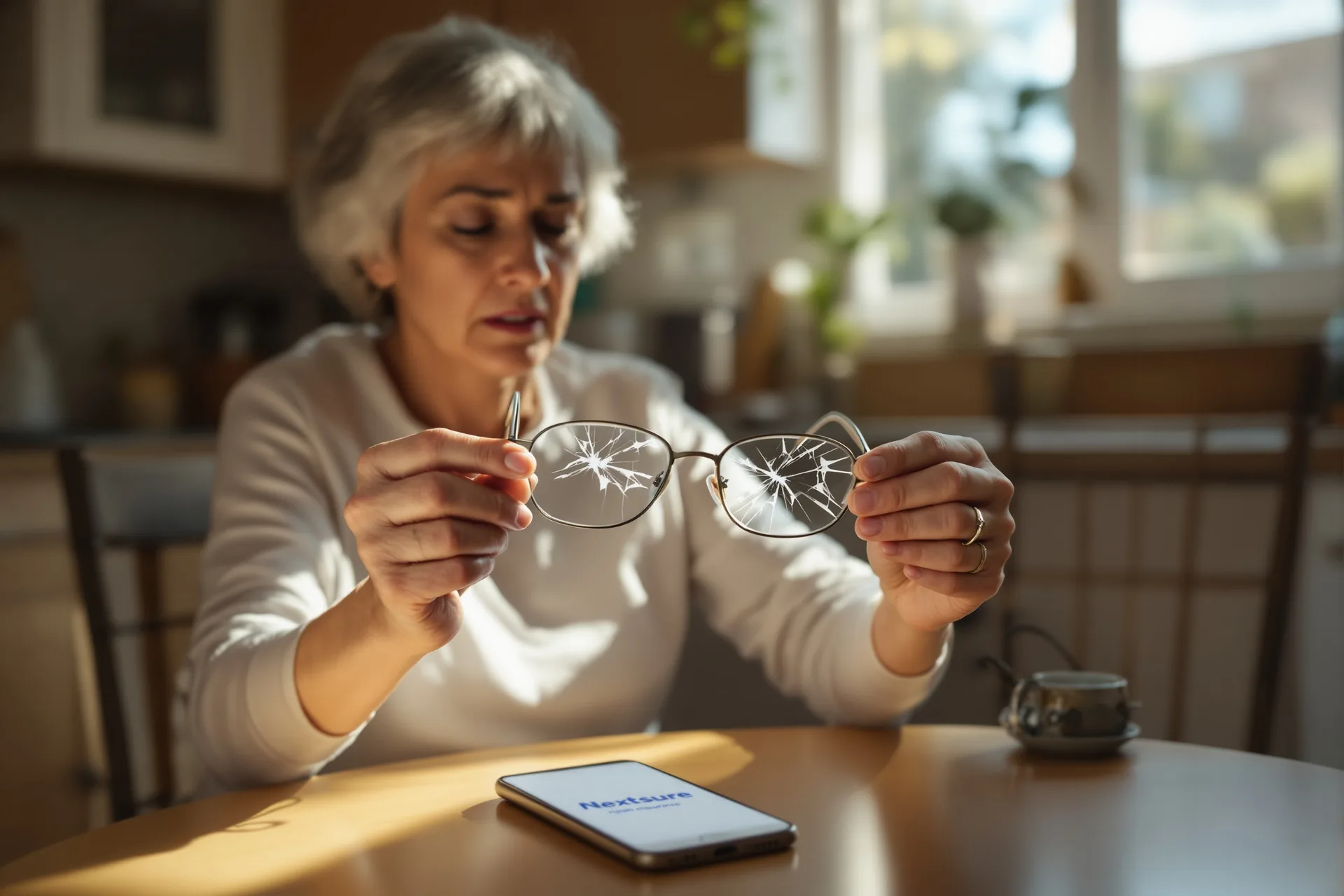
Varifocal glasses insurance breakage & theft
Protect your expensive varifocal glasses against breakage and theft. Find out when insurance makes sense. Find out more now!
 Katrin StraubManaging DirectorInsurance expert with over 20 years of experience in the insurance industry.
Published on
Last updated on
9 min read
Table of Contents
A new pair of varifocal glasses can quickly cost well over a thousand euros, yet a moment of carelessness can destroy them. A special varifocal glasses insurance policy promises protection against breakage and theft. Find out when this policy is essential and in which cases your contents insurance is already sufficient.
Analyse the scope of cover of a progressive glasses insurance policy
A specialised insurance policy for varifocal glasses usually covers two core risks: damage and theft. If the glasses are dropped and a lens breaks, the insurance covers the repair costs, often amounting to several hundred euros. In the event of a total loss or theft, the replacement is usually based on the current value or new value, depending on the respective tariff. The monthly premiums for such policies typically range between five and 15 euros. Many policies reimburse up to 100 per cent of repair costs. A good glasses insurance can therefore pay off with the very first claim. This turns a potential financial inconvenience into a predictable expense.
Assess the cost-benefit ratio of policies correctly
Whether varifocal glasses insurance is worthwhile depends on the value of your glasses and your personal risk. If your visual aid costs 1,200 euros and the insurance costs 96 euros per year, the premiums will have paid for themselves after more than twelve years. However, a single claim can completely change this calculation. When making your decision, also take a possible excess into account, which is often between 25 and 50 euros. A policy without an excess is usually the better choice for expensive glasses. The key factors for your calculation are:
- Purchase price of the varifocal glasses (relevant from around 800 euros).
- Annual cost of the insurance policy (typically eight to ten per cent of the glasses' value).
- Amount of the excess in the event of a claim.
- Scope of cover (new-for-old vs. current value reimbursement).
- Personal risk profile (e.g. during sporting activities).
A careful weighing of these four points quickly shows you whether the cover is economically worthwhile for you and contributes to the health & care of your eyes.
Understanding the distinction from contents insurance
Many spectacle wearers believe their visual aid is covered by their household contents insurance, but this is only partly true. The household contents insurance typically only covers burglary from your home or damage caused by fire and mains water. If your glasses are stolen from your bag while you are out and about (simple theft), the basic cover usually does not apply. For this, you need the additional module “cover away from home”, which often only covers up to ten per cent of the sum insured. Breakage from dropping them is almost never covered by household contents insurance. A dedicated varifocal glasses insurance policy closes this gap in cover for breakage and theft. You should therefore check the terms of your existing policies carefully.
Review contract details and exclusions carefully
The devil is in the detail, especially when it comes to insurance clauses. A good policy reimburses replacement value, while cheaper tariffs often only replace depreciated value, which can already fall significantly after two years. Also pay attention to waiting periods, which can exclude benefits in the first three months after the contract is concluded. It is particularly important to check the exclusions. The following items are often not covered:
- Damage caused by normal wear and tear.
- Pure scratches that do not impair visibility.
- Loss or mislaying of the glasses (this is not theft).
- Deliberately caused damage.
- Damage that already existed when the contract was concluded.
A careful reading of the small print before taking out vision insurance will save you from nasty surprises in the event of a claim.
Correctly submit a damage report in case of breakage or theft
In the event of a claim, prompt and correct action is crucial for a smooth reimbursement. In the event of theft, you must report it to the police immediately, usually within 48 hours. A copy of the police report is a key document for the insurer. In the event of damage, you should photograph the damage immediately and notify your insurer, often digitally via a customer portal. Keep the damaged glasses until the case has been closed, as the insurer may wish to inspect them. Also keep the original invoice for your varifocal glasses to hand at all times so that you can prove the purchase price. Complete and prompt submission of all documents speeds up processing by up to 50 per cent.
Frequently asked questions
- What exactly does progressive glasses insurance cover?
A good insurance policy typically covers breakage, damage caused by third parties, robbery and simple theft. Some premium plans even include the loss of your glasses. Cosmetic defects such as scratches or normal wear and tear are usually excluded.
- What is the difference between new-for-old and current value reimbursement?
Replacement value means that the insurer reimburses the cost of a comparable new pair of glasses. Current value takes depreciation due to age and use into account, so you only receive back part of the original purchase price. Replacement value compensation is always preferable.
- Do I always have to file a police report in the event of theft?
Yes, a police report is a mandatory requirement for the insurance to provide cover in the event of theft. It serves as official proof of the incident. Please therefore report the theft to the nearest police station without delay.
- Is the insurance also valid abroad?
Most spectacle insurance policies offer worldwide cover, often for a period of up to six or twelve weeks per trip. Check the exact terms in your policy if you travel frequently.
- Can I still insure glasses I’ve already bought?
It depends on the provider. Many insurance policies must be taken out directly at purchase or within a short period, for example 14 days. However, there are also providers that allow retrospective insurance for spectacles up to an age of six or twelve months.
- What happens if my prescription changes?
A change in visual acuity is generally not an insured event for a standalone property insurance policy against breakage and theft. However, some tariffs, often structured as a 'glasses subscription', offer subsidies for new lenses when prescription values change after a certain period.
Sources
- [1]Augeninfo.de provides comprehensive information on various aspects of progressive lenses.
- [2]Statista contains statistical data on wearing glasses and contact lenses in Germany.
- [3]Artemiskliniken discusses the costs of varifocal glasses, influencing factors, comparisons and alternatives.
- [4]Verbraucherzentrale provides information on when health insurance pays for a new pair of glasses.
- [5]Krankenkassen.de describes the benefits provided by statutory health insurers in relation to glasses.
- [6]Verbraucherzentrale Bundesverband (vzbv) provides a factsheet on small insurance policies, which also examines glasses insurance.
- [7]Gesamtverband der Deutschen Versicherungswirtschaft (GDV) provides statistics and definitions on burglary and theft.