Find insurance for classic lorries
Find the right insurance for your classic lorry. Understand costs, requirements and cover options. Find out more now!
All details are taken from the provider's linked product page and the contract documents (IPID/policy conditions) published there; the insurer's documents prevail. Premiums, benefits and the insurance product itself may change – please verify the details directly with the partner before signing up; only the information provided there is binding.
 Katrin StraubManaging DirectorInsurance expert with over 20 years of experience in the insurance industry.
Published on
Last updated on
9 min read
Table of Contents
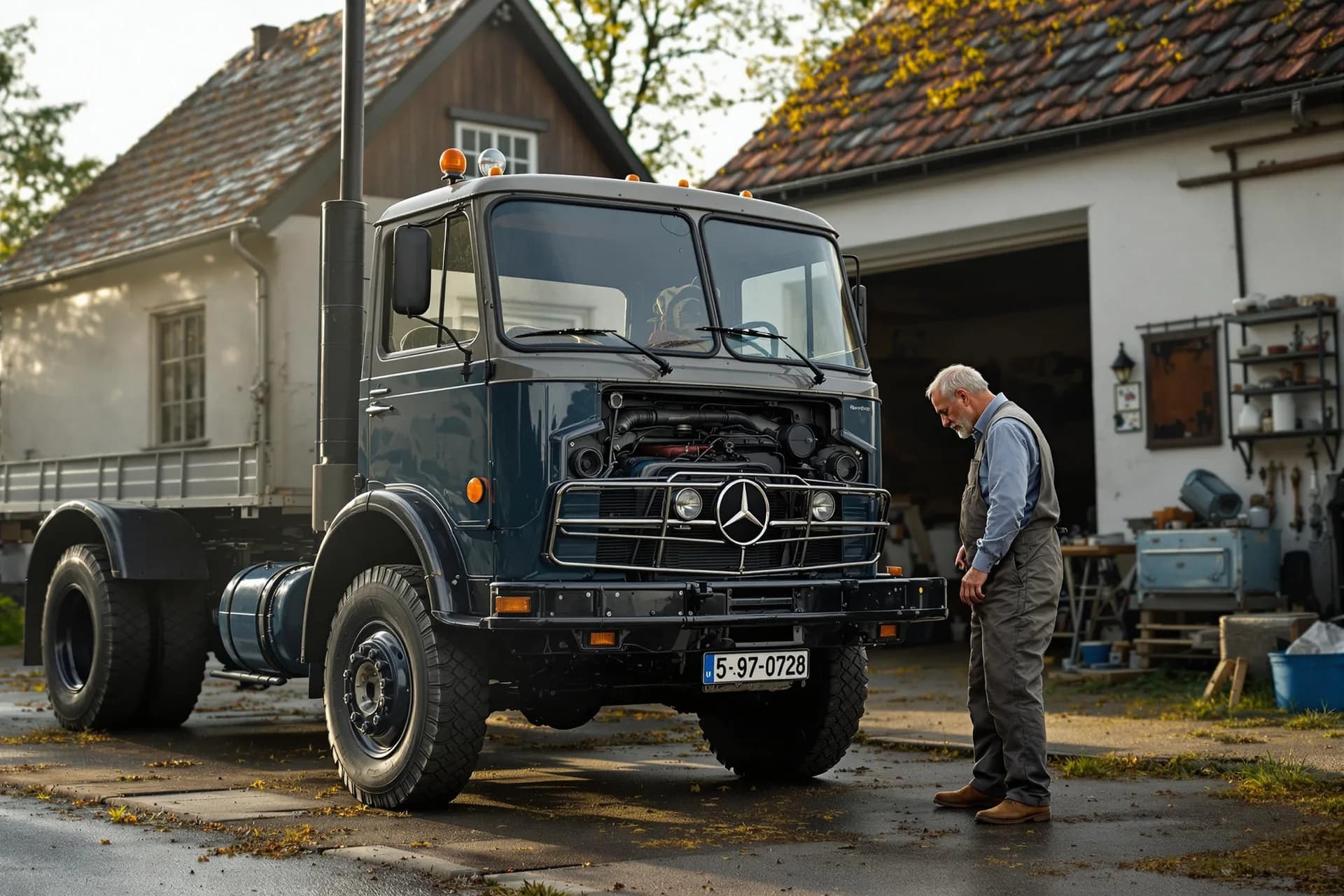
Do you own a classic lorry and wonder how to insure it optimally? Many policies overlook the special requirements that a 30-year-old commercial vehicle brings. This article shows you how to find insurance for your vintage lorry that really fits.
Classic car insurance
Discover nextsure's tailor-made classic car insurance. Optimal protection, digital processing, and expert advice for your automotive treasure.
Learn moreDefining status: When your lorry becomes an insurable classic
The most important requirement for classic car insurance is a vehicle age of at least 30 years from first registration. This regulation is crucial for recognition as a motor vehicle cultural heritage item pursuant to Section 23 of the German Road Traffic Licensing Regulations. A positive report under this provision is the basis for the sought-after H registration plate, which is often a prerequisite for favourable premiums. Many insurers also require a good original condition with a condition rating of three or better. Classification as a classic car enables a flat-rate vehicle tax of just 191.73 euros per year, which represents a significant saving. This clear definition separates collector’s items from ordinary used vehicles and opens the door to specialised insurance products.
Analysing cost factors: How the insurance premium is made up
The premium for your classic lorry insurance depends on four key factors. The vehicle value, determined by a professional appraisal, is the basis for calculating the comprehensive cover premium. Annual mileage is also decisive; many tariffs cap this at under 9,000 kilometres per year. A valuation report, which is often mandatory for vehicles valued at over €60,000, can cost up to €500, but ensures the correct insured value. In addition, most providers require proof of a daily-use vehicle to rule out regular use of the classic vehicle. Meeting these criteria is the key to a favourable tariff that reflects the value of your vehicle.
Choose your cover: third-party liability, partial cover or comprehensive cover for your lorry
Choosing the right insurance cover is one of the most important decisions for every classic car owner. A purely third-party liability policy, which only covers damage to third parties, is usually insufficient for a collector's item. Partial comprehensive cover already offers enhanced protection, which is indispensable for many. A good classic car insurance policy should cover at least the following points:
- Liability: Statutorily required, with a cover limit of up to 100 million euros.
- Partial comprehensive: Covers theft, fire, glass breakage and often vandalism too.
- Fully comprehensive: Also covers at-fault accidents and is strongly recommended for high-value vehicles from a value of 30,000 euros.
Expert tip: Make sure that partial comprehensive cover already includes damage caused by vandalism, which is not always the case with standard policies. Choosing the right comprehensive cover protects your invested capital and ensures lasting driving pleasure.
Review contract details: recognise typical pitfalls and performance clauses
The small print of an insurance policy often contains surprising restrictions. One of the most common clauses is the prohibition on everyday use, the breach of which can jeopardise cover for damage worth €10,000. Many policies restrict the drivers to people over 23 or even 30 years of age. Another important point is the requirement to use a specified repair shop; the freedom to choose your own garage is essential for the proper repair of a classic car. Our expert tip: look for policies with an agreed value uplift provision of at least 20 per cent so that you are not underinsured in the event of a total loss. A careful comparison of classic car insurance policies helps you avoid such pitfalls and find the protection your classic deserves.
Commissioning an appraisal: determining the vehicle value correctly for insurance
A current valuation report is the basis for a fair insured sum and is indispensable in the event of a claim. Insurers require different reports depending on the vehicle’s value. For lorries valued at up to €10,000, informative photos are often sufficient. For values of up to €60,000, a short appraisal for around €150 is usually required. For particularly valuable lorries above this amount, a full appraisal, which can cost up to €500, is often mandatory. This appraisal documents not only the market value, but also the originality and condition, which is crucial for the cost of classic vehicle insurance. Plan to update it every two to three years in order to provide continuous proof of any increase in value.
Take out a policy: Five steps to the right classic truck insurance
The path to the right insurance for your vintage truck can be broken down into a few clear steps. Careful preparation ensures that you receive the best possible protection. Here’s how to proceed systematically:
- Prepare documents: Have the vehicle documents, the H appraisal in accordance with § 23 StVZO, and recent photos ready.
- Check requirements: Make sure your truck meets the criteria (over 30 years old, in good condition, and with an everyday car available).
- Obtain quotes: Contact specialist providers, as standard insurers often do not have suitable tariffs.
- Compare cover: Don’t just look at the price, but also at details such as cover for vandalism or a value-increase clause.
- Submit the application: Fill in the application truthfully and wait for the electronic insurance confirmation (eVB).
This structured process helps you make an informed decision and find the right protection for your vehicle.
Frequently asked questions
- What requirements must my lorry meet for classic vehicle insurance?
Your truck must generally be at least 30 years old, be in a good, original condition (grade 3 or better) and must not be used for everyday use. In addition, a daily-use vehicle is usually also required.
- Is a valuation report always necessary?
It depends on the insurer and the vehicle value. For lorries with a low value (e.g. under 10,000 euros), photos may be sufficient. For more expensive vehicles, a brief valuation or a full appraisal is usually required to determine the insured value.
- What difference does the H registration plate make to insurance?
The H licence plate is often the ticket to particularly favourable classic car rates. It officially confirms the status as a vehicle worthy of preservation and enables a flat, low vehicle tax, which insurers interpret as a sign of careful use.
- What does partial comprehensive insurance cover for a classic lorry?
A good partial comprehensive policy for classic cars covers damage caused by theft, fire, storms, hail, animal bites and broken glass. Many specialist policies also include damage caused by vandalism, which is often not the case with standard insurance policies.
- Can I drive my classic lorry into low-emission zones?
Yes, if your lorry has historic vehicle registration, you are exempt from the restrictions in environmental zones and may drive in them without a green emissions sticker.
- What should the maximum annual mileage be?
Most policies for classic trucks limit annual mileage. Typical limits are between 5,000 and 9,000 kilometres per year. Higher mileage can lead to significantly higher premiums or make it impossible to take out a specialist policy.
Sources
- [1]The Federal Motor Transport Authority (KBA) provides information in this press release on current developments and figures on classic cars in 2023.
- [2]A short report by the Federal Motor Transport Authority (KBA) offers detailed statistics on the vehicle stock and the age of classic cars in Germany in 2023.
- [3]The TÜV provides comprehensive information on the requirements and process of classic car appraisals, which are important for recognition and insurance.
- [4]TÜV Nord explains the criteria and process for determining the value of classic cars, a crucial basis for the correct insurance sum.
- [5]The GTÜ (Society for Technical Monitoring) provides detailed information on the H licence plate for classic cars, including the requirements for obtaining it.
- [6]The ADAC offers a clear definition of classic cars and youngtimers as well as useful legal notes and tips for owners of these vehicles.
- [7]Statista presents a current statistic on the number of classic cars with H licence plates in Germany, providing insights into the development of the classic car stock.
Conclude directly online
Verified partner tariffs at no extra cost. The button takes you straight to the provider's calculator.
 OCC
OCC
Classic car insurance
Modular motor insurance for classic and collector vehicles: liability, partial and comprehensive cover, plus optional add-on modules.
- Coverage area:
- Europe and non-European EU territories
- Notice period:
- 1 month before the end of the insurance year
- Payment frequency:
- monthly to annual
- Motor liability for third-party damage caused by the insured vehicle
- Partial comprehensive: theft, hail, storm, glass breakage
- Comprehensive: additionally covers vandalism and accidents
- ComprehensivePlus (VollkaskoPlus): further damage while operating the vehicle
- Roadside assistance package, driver protection, and vehicle environmental-damage cover are optional
Key exclusions
- Damage caused intentionally
- Participation in motorsport events and races
- Damage to cargo
- Wear-and-tear damage (Comprehensive/ComprehensivePlus)
Sums insured and the deductible are set out in the individual application or policy document. Insurer: Provinzial Nord Brandkasse AG
Fact sheet: benefits, exclusions and waiting periods in detail
All details are taken from the provider's linked product page and the contract documents (IPID/policy conditions) published there; the insurer's documents prevail. Premiums, benefits and the insurance product itself may change – please verify the details directly with the partner before signing up; only the information provided there is binding.
Information last updated: July 2026 · Source: provider product information (IPID/policy conditions)