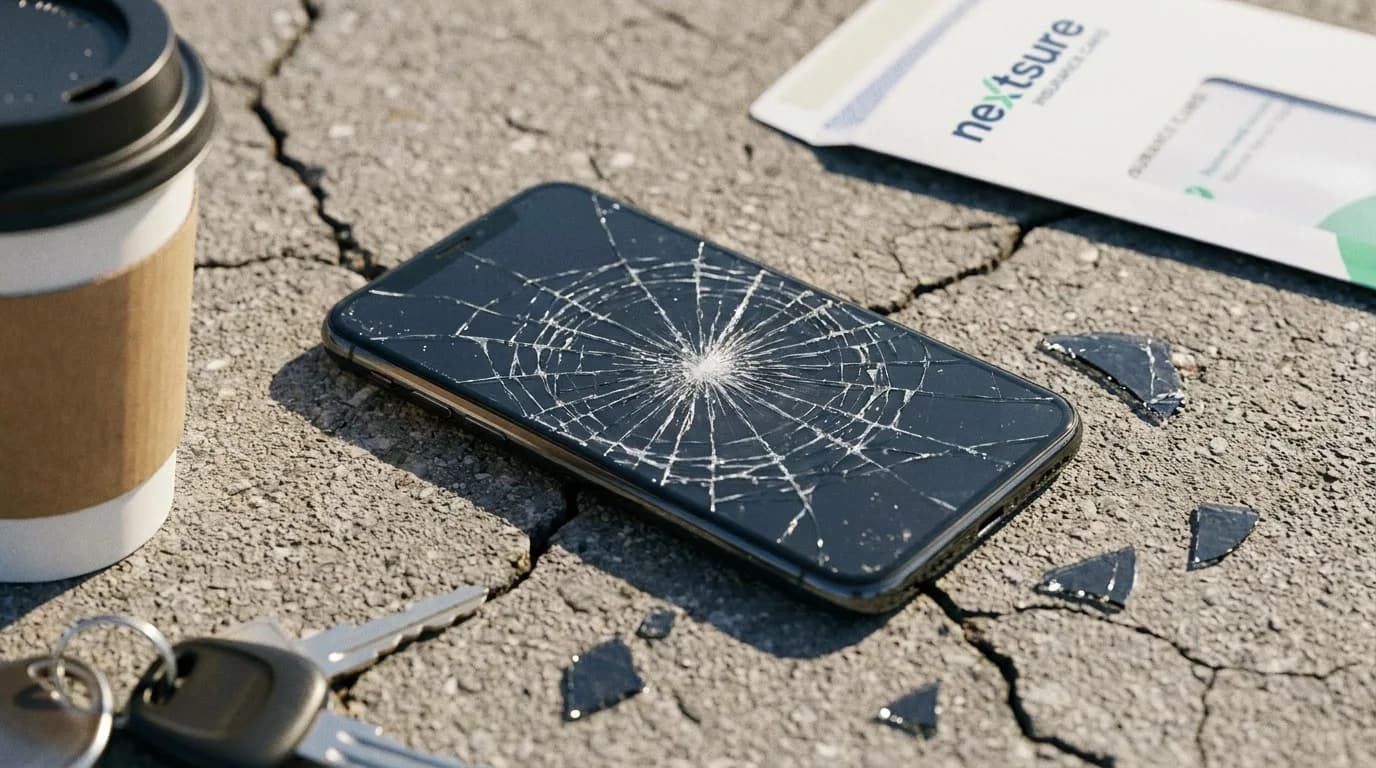

Smartphone Insurance Battery Replacement: Who Really Pays?
Which smartphone insurance policies cover battery replacement, when batteries count as wear and tear, and what to watch for.
All details are taken from the provider's linked product page and the contract documents (IPID/policy conditions) published there; the insurer's documents prevail. Premiums, benefits and the insurance product itself may change – please verify the details directly with the partner before signing up; only the information provided there is binding.
 Katrin StraubManaging DirectorInsurance expert with over 20 years of experience in the insurance industry.
Published on
Last updated on
8 min read
Table of Contents
Smartphone insurance only replaces the battery if the policy explicitly includes battery wear and tear. Many tariffs treat the battery as a wear part and won't pay out. Specialized phone insurance usually only pays after 12 months and up to a maximum device age of five years, and only once capacity has dropped to 20 percent of the manufacturer's rated output. It's the remaining capacity that decides, not how the battery feels in daily use.
Smartphone insurance
Your smartphone optimally protected against screen breakage, theft, and water damage – with nextsure's smartphone insurance. Concluded digitally.
Learn moreSmartphone insurance and battery replacement: what's actually covered
Battery as a wear part or an insured component
Smartphone insurance with a battery clause is not a given. Many standard tariffs classify the battery as a wear part. This matters, because wear on the original battery [1] is only covered if the terms explicitly provide for it. The Hepster tariff examined here does exactly that, turning battery wear into an insured event. Anyone wanting to cover an older device should check this point first.
What other damage is typically covered
Besides the battery, classic risks make up the rest of the coverage. Covered are damage from drops, breakage, sand, liquid, and weather, provided this impairs the device's intended use — in particular the screen's visibility and touch area, or otherwise its functioning [1]. Also covered is damage from fire, explosion, implosion, power surge, induction, short circuit, as well as sabotage, vandalism, and intentional, unlawful damage by unauthorized third parties, plus damage from operating errors [1]. Battery replacement is therefore just one component among several. It's what makes the policy especially worthwhile for devices used over a longer period.
Who benefits most
For equipment-focused users with an expensive smartphone, it's worth taking a close look. Anyone doing photo, video, or creative work on their phone can't afford a sudden drop in capacity. This is exactly where the battery component comes in. It extends the device's usable lifetime. And it significantly reduces unplanned repair costs.
When the battery counts as a wear part for a claim
The 20 percent threshold
The definition of wear and tear determines whether smartphone insurance covers a battery replacement. Tariffs with a battery clause work with a hard technical threshold. Specifically, the battery is considered worn once it delivers no more than 20% of the manufacturer's rated performance capacity [1]. Only then does the insurer pay out. Before that point, the battery is considered sufficiently functional.
Waiting period and age limit
Time windows matter too. For wear on the original battery, coverage applies at the earliest after 12 months have passed and up to a maximum device age of 5 years (from the date of original purchase, with proof) [1]. Anyone insuring a two- or three-year-old flagship phone falls right in the target range. For devices older than five years, coverage ends. This matches the experience that a battery's lifespan is usually much shorter than the device's, with capacity decreasing as usage time and charge cycles add up [2].
What users can influence themselves
Care measurably extends battery lifespan. The German Environment Agency (Umweltbundesamt) recommends, among other things, storing the device at around 40 to 60 percent charge and at room temperature [1]. This pushes the capacity loss further into the future. Insuring and taking care of the battery aren't mutually exclusive. Both work together.
| Criterion | Rule |
|---|---|
| Minimum age from contract start | 12 months |
| Maximum device age | 5 years from original purchase date |
| Capacity threshold | max. 20% remaining output per manufacturer |
| Claims per year | up to 2 insured events |
| Proof required | original invoice from an authorized dealer |
Figures are examples for the Hepster tariff; other providers may set different thresholds.
Warranty, guarantee, or insurance: what applies first to the battery
Warranty before insurance
A simple logic governs the order of claims. Statutory warranty rights apply first, then any manufacturer's guarantee, and only after that does the smartphone insurance apply. This also follows from the obligation to keep the insured device in proper, working condition throughout the policy period and to observe all relevant duties of care [1]. A battery that suddenly fails in the first few months is more likely a warranty case. Age-related capacity loss is the classic insurance case.
Sudden failure vs. gradual wear
In practice, the distinction is clean. If the battery swells, shuts off unexpectedly, or causes a short circuit, that's a defect. Tariffs with battery cover also cover damage from fire, explosion, implosion, power surge, induction, and short circuit [1]. If capacity, on the other hand, slowly drops below the 20 percent mark, that's wear and tear. Both paths lead to reimbursement — just under different clauses.
What consumer advocates recommend
The Verbraucherzentrale (consumer advice center) takes a critical view of phone insurance. Phone insurance often costs 10 to 30 percent of the device price per year, and many policies exclude wear parts such as batteries [3]. Stiftung Warentest also classifies phone insurance as a "feel-good product," since the fine print often hides exclusions for wear and theft [4]. A tariff with an explicit battery clause is therefore the exception.
Repair route: manufacturer, third-party workshop, or insurer
A cost estimate is mandatory
The insurer sets the pace for the repair process. The terms clearly require: in the event of a repair, you must submit a cost estimate from a specialist electronics store. This cost estimate must be approved by MOIN Servicegesellschaft mbH before the repair begins [1]. Anyone who goes to the Apple Store or an independent workshop without approval loses their claim to reimbursement. Green light first, then the screwdriver.
Reporting a claim and deadlines
Reporting is digital and fast. All notices and statements intended for the insurer (e.g. claim reports) must be sent either via the web portal https://hepster.com/de-de/schaden or to de@support.hepster.com, addressed to MOIN Servicegesellschaft mbH [1]. In addition, criminal offenses related to a claim must be reported to the police within 24 hours [1]. This mainly concerns theft. For a straightforward battery replacement, the digital report is enough.
What happens with total loss versus partial damage
The reimbursement logic distinguishes between two cases. In the event of partial damage, we pay compensation for the repair up to the current market value of the insured device [1]. In the event of a total loss of the insured device, we pay the current market value, but no more than the agreed sum insured [1]. A battery replacement is almost always partial damage. Up to 2 insured events [1] are possible per year.
Cost and benefit: is smartphone insurance worth it for battery replacement
Price range in the market
The cost of smartphone insurance is a major factor in whether it's worth it. The Hamburg Verbraucherzentrale takes a conservative view: insurance premiums can reach 34 percent of the purchase price, and often only the current market value is reimbursed, with tiered deductions [5]. Battery replacement at the manufacturer for current flagship phones often costs between €100 and €130. A cheap tariff can pay off. An expensive one rarely does.
Subscription, term, and cancellation
Contract structure and term affect the calculation. Once you've chosen the monthly or annual subscription, the insurance period automatically renews month to month (monthly subscription) or year to year (annual subscription) [1]. For the monthly subscription, a minimum term of 12 months applies, along with a notice period of 3 business days before the end of the insurance period [1]. Anyone who wants to stay flexible should choose the monthly subscription. Anyone who wants to lock in the price should choose the annual subscription.
When taking out the policy pays off
The logic is straightforward. It's worthwhile when the device price is high, usage is intensive, and battery wear is explicitly covered. It's less worthwhile if the smartphone was cheap or the tariff explicitly excludes the battery. Further reading is available in smartphone insurance abroad. Insurance for used and refurbished iPhones is also relevant.
| Scenario | Paying out of pocket | With battery clause |
|---|---|---|
| Flagship phone, 2.5 years, capacity 78% | approx. €100–130 replacement | no cover, 20% threshold not reached |
| Flagship phone, 3 years, capacity below 20% | approx. €100–130 replacement | reimbursed per the terms |
| Device 6 years old | approx. €80–130 replacement | no cover, beyond the age limit |
| Battery defect from power surge | repair costs vary | covered under short circuit/power surge |
Prices are market indications; actual repair costs vary by model and workshop.
What equipment users should watch for when taking out a policy
Screen check and proof of purchase
Formalities matter when taking out the policy. Covered are new, refurbished, and used phones, including the original accessories included at purchase, provided a screen check is carried out within 14 days of signing the contract and an original invoice from an authorized dealer is available [1]. Anyone who misses the screen check loses coverage. If no screen check is carried out, there is no insurance cover. If the screen check is carried out but not passed, display damage is not covered [1].
Scope of coverage and tariff variants
The scope of coverage is generous. Insurance cover applies worldwide. Benefits under this insurance contract are provided in Germany [1]. There are two tariff levels. The basic variant covers damage including battery wear. The extended variant additionally covers damage from theft, burglary theft, robbery, and looting, as well as wear on the original battery [1]. This is relevant for frequent travelers. More context is available in the article on iPhone insurance against water damage and theft.
Exclusions you need to know
Three exclusions deserve special attention. First: damage caused by gross negligence or intentional acts [1]. Second: damage from the insured device going missing through being left behind, forgotten, lost, or in any other way [1]. Third: damage that already existed before the insurance contract was taken out [1]. Anyone insuring a device that already has a weak battery gets nowhere here. Parallels can be found in the article insurance cover for older electronic devices and the note on MacBook insurance for technical defects.
Comparing tariffs: finding the right smartphone insurance
A curated selection instead of a grab-bag
When comparing smartphone insurance tariffs, curation pays off. Instead of hundreds of tariffs with unclear clauses, nextsure bundles handpicked policies with clear terms covering battery, breakage, theft, and wear. This simplifies the decision. And it saves time reading the fine print — especially for equipment users who use their smartphone professionally.
Checklist before signing up
Before clicking to sign up, five questions need to be answered. First: is battery wear explicitly named as a covered benefit? Second: how is the capacity threshold defined? Third: what age limit applies? Fourth: is theft and worldwide cover included? Fifth: how does the repair process and cost-estimate approval work?
When the battery gives out, the clause decides
In the event of a claim, only the policy wording matters. The Hamburg Verbraucherzentrale doesn't warn against blanket enthusiasm without reason [5]. But anyone who takes out a clearly defined product with a battery clause gets real added value. This applies especially between year two and year five — exactly where the manufacturer's warranty runs out and replacement becomes due.
Frequently asked questions
- Which phone insurance covers a battery replacement?
Only policies with an explicit battery clause. Tariffs like the Hepster cover examined here explicitly name wear on the original battery as a covered benefit and define fixed thresholds for age and capacity.
- When does a battery count as a wear part and stop being covered?
In most tariffs, the battery is a wear part from the start, with no special clause. With a battery clause, cover typically only applies after 12 months of contract duration, up to a maximum device age of 5 years, and once remaining capacity drops to 20 percent or less.
- What does a battery replacement cost for a current flagship phone?
At the manufacturer, the cost for current flagship smartphones is usually between about €100 and €130. Independent workshops are sometimes cheaper, but for insurance claims they must be approved beforehand.
- Is the replacement covered when done by the manufacturer or by a third-party workshop?
Both are possible, provided a cost estimate from a specialist electronics store is submitted and approved by the claims handler before the repair begins. Without approval, reimbursement is at risk.
- Does the warranty or the insurance apply first for a battery defect?
First the statutory warranty, then the manufacturer's guarantee, then the insurance. For a sudden defect, the warranty is usually responsible. For age-related capacity loss, smartphone insurance with a battery clause takes over.
Sources
Conclude directly online
Verified partner tariffs at no extra cost. The button takes you straight to the provider's calculator.
 Hepster
Phone insurance
Worldwide cover for new, used, and refurbished phones, including original accessories.
- Coverage area:
- worldwide
- Screen check:
- required within 14 days
- Claims:
- max. 2 per year
- Sum insured:
- up to the original purchase price
- Drop, breakage, sand, liquid, and weather damage
- Fire, explosion, power surge, short circuit, vandalism
- Wear on the original battery (covered after 12 months, up to a device age of 5 years)
- Theft variant including robbery and call charges up to €100
- Partial damage: repair up to the current value; total loss: current value up to the sum insured
- Maximum of 2 claims per year
Key exclusions
- Losing, forgetting, or leaving the device behind
- Screen damage without a passed screen check
- Gross negligence or intentional acts
- Damage that already existed before the policy started
Trusted Shops: 4,5/5 „Sehr gut“ (2.600 Bewertungen)
hepster insgesamt (Anbieterbewertung, alle Versicherungen)
Monthly subscription: minimum term 12 months, notice period 3 business days; theft must be reported to the police within 24 hours. Insurer: andsafe Aktiengesellschaft
Fact sheet: benefits, exclusions and waiting periods in detail
All details are taken from the provider's linked product page and the contract documents (IPID/policy conditions) published there; the insurer's documents prevail. Premiums, benefits and the insurance product itself may change – please verify the details directly with the partner before signing up; only the information provided there is binding.
Information last updated: July 2026 · Source: provider product information (IPID/policy conditions)