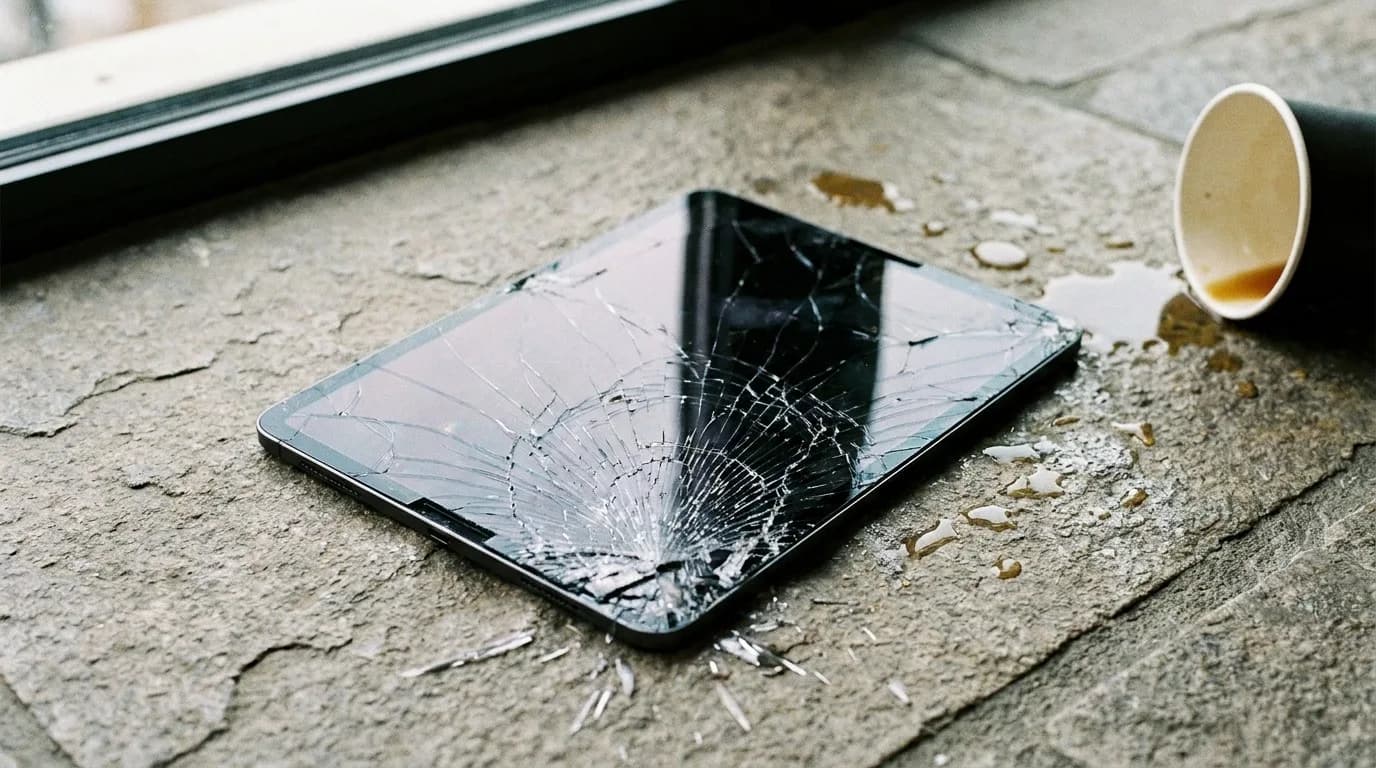
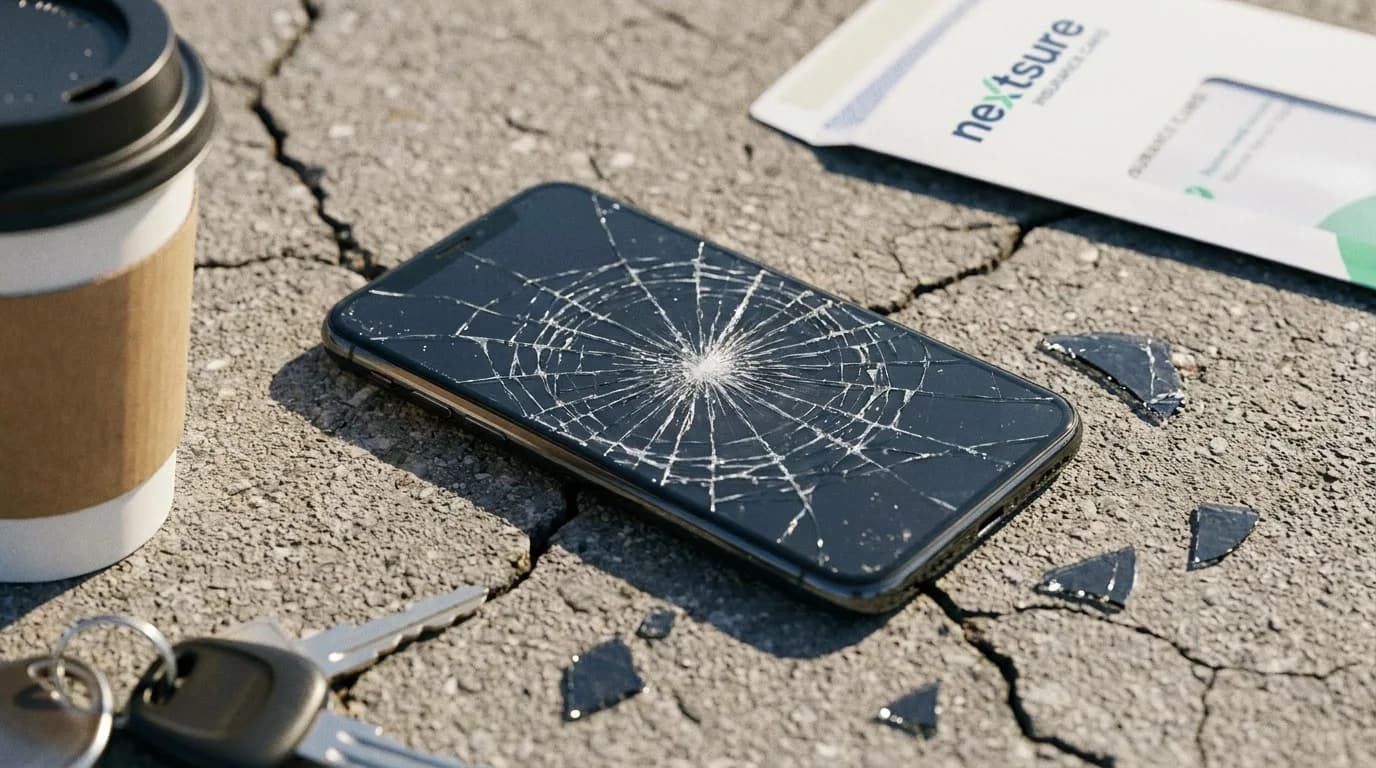
Phone Insurance for Cracked Screens, No Deductible
Phone insurance for cracked screens with no deductible: which tariffs cover 100% of repairs, and how fast claims are paid.
All details are taken from the provider's linked product page and the contract documents (IPID/policy conditions) published there; the insurer's documents prevail. Premiums, benefits and the insurance product itself may change – please verify the details directly with the partner before signing up; only the information provided there is binding.
 Katrin StraubManaging DirectorInsurance expert with over 20 years of experience in the insurance industry.
Published on
Last updated on
9 min read
Table of Contents
Phone insurance for cracked screens with no deductible covers 100% of repair costs up to the sum insured, provided a screen check and the original receipt are on file. Claims are usually settled as a repair via an approved cost estimate; processing and shipping take 3 to 7 business days at the fastest providers. A €0 deductible isn't the default — it has to be actively chosen.
Smartphone insurance
Your smartphone optimally protected against screen breakage, theft, and water damage – with nextsure's smartphone insurance. Concluded digitally.
Learn moreWhat does phone insurance for cracked screens with no deductible actually mean?
Definition: zero deductible, full reimbursement
Phone insurance for cracked screens with no deductible reimburses 100% of the approved repair costs in the event of a claim, up to the agreed sum insured and at most up to the device's current market value. No personal share, no percentage contribution per claim. The insurer pays the repair partner directly or reimburses against the invoice. That's the difference from the standard tariff, which typically requires the customer to pay €50 to €100 per claim.
The wording in the insurance certificate is decisive: "no deductible" or "€0 deductible" has to be stated there in black and white. Blanket phrases like "full protection" aren't enough. With most providers, going deductible-free is booked as a tariff option, not the default.
What the deductible means economically
Repairing an iPhone Pro display regularly costs between €400 and €500. With a €100 deductible, the customer pays €100 out of pocket and the insurer pays €300 to €400. With a €0 deductible, the full amount runs through the insurer. Set against an annual premium of around €80 to €130 for deductible-free tariffs (depending on model and provider), the policy regularly pays for itself on the very first claim.
Distinction from warranty and contents insurance
A cracked screen is mechanical damage and is NOT covered by the manufacturer's warranty. A warranty covers material and manufacturing defects [gewerbeordnung-34d]. A robust smartphone insurance policy is also not the same as the extended manufacturer's warranty some brands offer for an extra fee. Contents insurance only applies to classic household risks such as burglary or fire, not to a drop.
Which phone insurance covers a cracked screen with no deductible?
The tariff criteria that actually matter
A deductible-free tariff alone isn't enough; four points need checking before you sign. First: the maximum sum insured (it must match the purchase price, otherwise underinsurance is a risk). Second: the number of claims per year, typically two in the industry. Third: the market-value cap in the event of a total loss. Fourth: the waiting period and the mandatory screen check within 14 days of the contract starting.
What nextsure checks as a broker
As a broker licensed under § 34d(1) GewO (German Trade Regulation Act) [vermittlerregister], nextsure matches hand-picked tariffs against exactly these criteria. Smartphone insurance is one of the most in-demand niches in the portfolio, alongside camera, e-scooter and drone policies. More than 70 products across 7 categories are available, curated rather than offered indiscriminately — pre-filtered by depth of cover and claims ratio. The regulatory minimum requirements for brokers are set out in § 34d of the Trade Regulation Act [gewerbeordnung-34d].
What Stiftung Warentest says about insurance apps
Stiftung Warentest tested online brokers' insurance apps in 2024; the verdict ranged from "satisfactory" to "poor" [stiftung-warentest-apps]. The lesson for choosing a tariff: advice quality and claims service beat app polish. A deductible-free smartphone tariff is only as good as the hotline on the day the screen actually breaks. This is exactly where a broker model has the edge over a pure comparison portal. On top of that come mandatory coverage amounts for brokers' professional liability insurance [ihk-merkblatt-vermittler].
| Tariff variant | Deductible | Insurer payment | Customer's share |
|---|---|---|---|
| Premium, no deductible | €0 | €450 | €0 |
| Comfort, fixed deductible | €50 | €400 | €50 |
| Standard, fixed deductible | €100 | €350 | €100 |
| Basic, 25% deductible | 25% per claim | €337.50 | €112.50 |
| No insurance | n/a | €0 | €450 |
Figures are a worked example. Actual tariff terms vary by provider and model.
What does a screen repair cost for a flagship smartphone?
Real price ranges in 2026
Screen replacement for a current flagship device regularly runs between €350 and €550 at the manufacturer's own service, depending on the model. Foldable devices are considerably higher: €600 to €800 is not unusual. Independent repair shops charge 20 to 40% less, though at the cost of voiding the warranty and potentially getting a lower-quality replacement screen. This exact range is what makes the policy worth calculating.
Why repairs over €400 justify the policy
Above roughly €400 in repair costs, the economics tip in favor of the insurance. With a deductible-free tariff at €120 a year in premiums, a single cracked screen every three years is enough to recoup the cost. With two claims in two years, which the policy covers under the usual "2 claims per year" limit, the deal clearly pays off. For more detail, see the article Insurance for expensive flagship models.
Market value as a cost cap
Important in a repair case: the insurer pays out at most up to the device's current market value. If repair costs come in just under the market value, the device gets repaired; if they come in above it, the market value is paid out as a total-loss settlement. For a two-year-old top model with a current market value of €450 and repair costs of €480, the total-loss mechanism kicks in. The insurer transfers €450, and the device stays with the customer.
Is the screen replaced immediately, or repaired?
Repair is the default
Repair, not immediate replacement, is the standard. The process is clearly defined: report the claim online, submit a cost estimate from an authorized electronics repair shop, wait for approval, then commission the repair. Only after that does the insurer start settling directly or reimbursing against the receipt. Anyone who repairs the device on their own initiative beforehand risks having the claim rejected. Insurance brokers are subject to clear supervisory obligations toward BaFin (the Federal Financial Supervisory Authority).
A realistic view of processing time
With online insurers, claims are reported via a web portal or app, often within minutes. Approval of the cost estimate usually takes 1 to 3 business days. Shipping to the repair partner plus the actual repair adds 3 to 5 business days. From the drop to a working device, that's realistically 5 to 10 business days. Top providers manage it faster; weaker providers take longer.
When a payout is made instead of a repair
Three scenarios lead to a market-value payout instead of a repair. First: repair costs exceed the market value. Second: the model is no longer available as a spare part. Third: it's a total loss, for example after a drop that destroys the housing. In all three cases, the customer receives the market value in cash; the device usually stays with the customer or goes to the insurer, depending on the policy terms.
Does contents insurance cover a cracked screen at home?
Contents insurance covers named perils, not a drop
Contents insurance only pays out for the perils explicitly listed: fire, burglary theft, water from pipes, storm, hail. A classic cracked screen from a drop onto the living room floor falls through the cracks. A drop is not an insured contents peril. That's exactly why the dedicated smartphone tariff exists — it's the only thing that actually covers the risk of an everyday accident.
When contents insurance does pay out
There are cases where contents insurance applies: the phone burns in a house fire, is stolen during a burglary, or falls into the sink through a burst water pipe. Here, contents insurance is responsible, not the smartphone policy. For theft outside the home, contents insurance only applies with away-from-home cover; for theft directly off your person, that's a classic case for the specialty policy with the theft option.
The clean dividing line
Rule of thumb: home damage with the phone as collateral damage means contents insurance; phone damage as the main event means smartphone insurance. A cracked screen from a drop is always a smartphone insurance case. Anyone holding both policies should report the claim to the right place specifically. Reporting to both delays processing and can cause recourse problems.
Is consequential damage from a cracked screen covered?
Touch function and screen glass as one unit
If a cracked screen simultaneously disables the touch sensor or causes pixel errors, these immediate effects are part of the repair job. The insurer treats this economically as one claim, not several. Important: impairment of the display and control surface is explicitly covered.
Water ingress after a cracked screen
If moisture gets in through a cracked screen and damages the electronics, this consequential damage is covered under most tariffs. Condition: the crack and the water ingress must be causally connected. Anyone who keeps using the device for days after the crack and only then lets water get inside risks the insurer raising a breach-of-obligation defense. Reporting the claim quickly protects you.
Data loss isn't covered
Data loss remains the user's own risk. Backing up before a repair is mandatory practice. Standard smartphone tariffs only cover the device itself, not lost photos, chats or settings. Anyone who wants data recovery covered needs a separate data-recovery policy or tablet insurance with an extended scope of cover.
What requirements do customers need to meet before a claim?
Screen check and original receipt
Two obligations determine whether the claim pays out. First: the screen check within 14 days of the contract starting, carried out via app or photo upload, which documents that the screen was undamaged when cover began. Second: the original receipt from an authorized dealer. If either is missing, a cracked screen isn't covered.
IMEI and device identification
Cover applies to exactly one device, identified in the insurance certificate by its IMEI number. Switching devices means adjusting the contract, not silently carrying it forward. Anyone who swaps their smartphone and forgets to register the new IMEI has no cover if a claim arises. Online brokers usually offer this update via a self-service portal.
Duty of care in everyday use
Gross negligence reduces or voids the payout. Classic cases: leaving the phone on the roof of a car, leaving it unattended on the beach, intentional damage. Leaving it behind, forgetting it, and losing it also fall outside cover, since these aren't insured damage but rather loss of possession. Anyone who wants theft covered needs the corresponding tariff add-on.
How fast is a phone insurance claim settled?
The first 24 hours
Act immediately. Report the claim online, attach a photo of the cracked screen, describe how it happened in 2 to 3 sentences. For tariffs with theft cover, reporting to the police within 24 hours is mandatory. The claim number usually arrives automatically by email and is the reference number for all further steps.
Cost estimate and approval
A cost estimate from an authorized electronics repair shop is a mandatory step. Repair may only begin after the insurer approves it. Top providers approve within 24 to 48 hours; weaker ones can take up to a week. Anyone considering switching providers should check exactly this figure in reviews, not the premium price.
Repair and return shipping
After approval, the repair partner handles shipping, the swap, and return shipping. The actual repair time for most common models is 2 to 4 business days. Including logistics, the working device is back with the customer 5 to 10 business days after the claim was reported. For rare models or parts shortages, this takes longer, in which case a loaner device applies under some tariffs (as a fixed agreement, not universally).
What damage does smartphone insurance cover besides a cracked screen?
Classic breakage damage
Covered are drop, breakage, sand, liquid and weather damage, to the extent they impair normal use or the display. This covers 90% of everyday damage cases: dropping it on asphalt, a glass of water spilled over the coffee table, forgetting the smartphone out in the rain. Operating errors are also covered, such as an accidental reset that triggers a hardware fault.
Fire, short circuit, vandalism
Fire, explosion, implosion, power surge, induction and short circuit affecting the insured device are typically covered as well. So are sabotage, vandalism and intentional damage by unauthorized third parties. The latter is relevant in public, for example when someone else deliberately knocks the device off a table.
Theft as an add-on component
Theft, burglary theft, robbery and looting are only covered in the tariff variant with the theft add-on. The basic breakage-only policy excludes theft. Anyone who travels a lot or frequently uses the device in public should add this component. Details in the article Protection against smartphone theft abroad.
Frequently asked questions
- What does phone insurance for a cracked screen with no deductible cost per year?
Annual premiums for deductible-free smartphone tariffs range from around €60 to €180, depending on device value. A top-model device costing €1,200 typically comes in at €100 to €130 a year for the deductible-free comfort tariff. Cover matters more than price. At nextsure, tariffs are compared on depth of cover rather than price alone, because saving €20 on the premium is worthless if the screen repair gets rejected over a clause.
- What documents do I need to take out the policy?
The original receipt from an authorized dealer and the device's IMEI number are mandatory. This uniquely identifies the smartphone in the insurance certificate. On top of that comes the screen check within 14 days of the contract starting, usually done via app. Refurbished and used devices can be insured, provided the original receipt is available.
- What happens with a second cracked screen in the same year?
Most tariffs pay out for up to two claims per year. The second claim is settled the same way as the first, provided the sum insured hasn't been exhausted yet. From the third claim in the same insurance year, there's typically no more entitlement until a new insurance period begins.
- Is a cracked screen from my own carelessness covered?
Yes, ordinary negligence is covered; the classic "the phone slipped out of my hand" drop is the core use case. Grossly negligent behavior, however, can lead to reduced payouts or rejection. Leaving the smartphone on the roof of a car is grossly negligent. Knocking it off the living room table is not.
- Can I cancel the insurance at any time?
With the monthly subscription, there's a minimum term of 12 months with a 3-business-day notice period before the end of the insurance period. With the annual subscription, the contract renews every year, likewise with a 3-business-day notice period. After a claim, both parties to the contract have a special right of termination.
- Does the insurance cover apply abroad too?
Yes, cover typically applies worldwide; however, the actual service is delivered within Germany. Anyone who damages the device abroad arranges shipping to the repair partner themselves, or gets it repaired locally and submits the receipts afterward. For theft abroad, reporting to the local police within 24 hours is mandatory.
Sources
- [1]iPhone 17 Pro Max Insurance: Water Damage & Theft
- [2]Smartphone Insurance for Theft Abroad
- [3]https://www.vermittlerregister.info/recherche
- [4]https://www.test.de/Versicherungs-Apps-im-Test-5227792-0/
- [5]https://www.gesetze-im-internet.de/gewo/__34d.html
- [6]https://www.ihk-bonn.de/fileadmin/dokumente/Downloads/Recht_und_Steuern/Versicherungsvermittler/Merkblatt_fuer_Versicherungsvermittler.pdf
Conclude directly online
Verified partner tariffs at no extra cost. The button takes you straight to the provider's calculator.
 Hepster
Phone insurance
Worldwide cover for new, used, and refurbished phones, including original accessories.
- Coverage area:
- worldwide
- Screen check:
- required within 14 days
- Claims:
- max. 2 per year
- Sum insured:
- up to the original purchase price
- Drop, breakage, sand, liquid, and weather damage
- Fire, explosion, power surge, short circuit, vandalism
- Wear on the original battery (covered after 12 months, up to a device age of 5 years)
- Theft variant including robbery and call charges up to €100
- Partial damage: repair up to the current value; total loss: current value up to the sum insured
- Maximum of 2 claims per year
Key exclusions
- Losing, forgetting, or leaving the device behind
- Screen damage without a passed screen check
- Gross negligence or intentional acts
- Damage that already existed before the policy started
Trusted Shops: 4,5/5 „Sehr gut“ (2.600 Bewertungen)
hepster insgesamt (Anbieterbewertung, alle Versicherungen)
Monthly subscription: minimum term 12 months, notice period 3 business days; theft must be reported to the police within 24 hours. Insurer: andsafe Aktiengesellschaft
Fact sheet: benefits, exclusions and waiting periods in detail
All details are taken from the provider's linked product page and the contract documents (IPID/policy conditions) published there; the insurer's documents prevail. Premiums, benefits and the insurance product itself may change – please verify the details directly with the partner before signing up; only the information provided there is binding.
Information last updated: July 2026 · Source: provider product information (IPID/policy conditions)