Best Bicycle Insurance with Wear-and-Tear Cover
Best bicycle insurance with wear-and-tear cover: honest criteria, costs from around 30 euros a year and the answer to when protection is worth it.
All details are taken from the provider's linked product page and the contract documents (IPID/policy conditions) published there; the insurer's documents prevail. Premiums, benefits and the insurance product itself may change – please verify the details directly with the partner before signing up; only the information provided there is binding.
 Katrin StraubManaging DirectorInsurance expert with over 20 years of experience in the insurance industry.
Published on
10 min read
Table of Contents
There is no single best bicycle insurance. This article shows you how to recognise a good policy with wear-and-tear cover, what it costs, and when it is genuinely worth it for your bike.
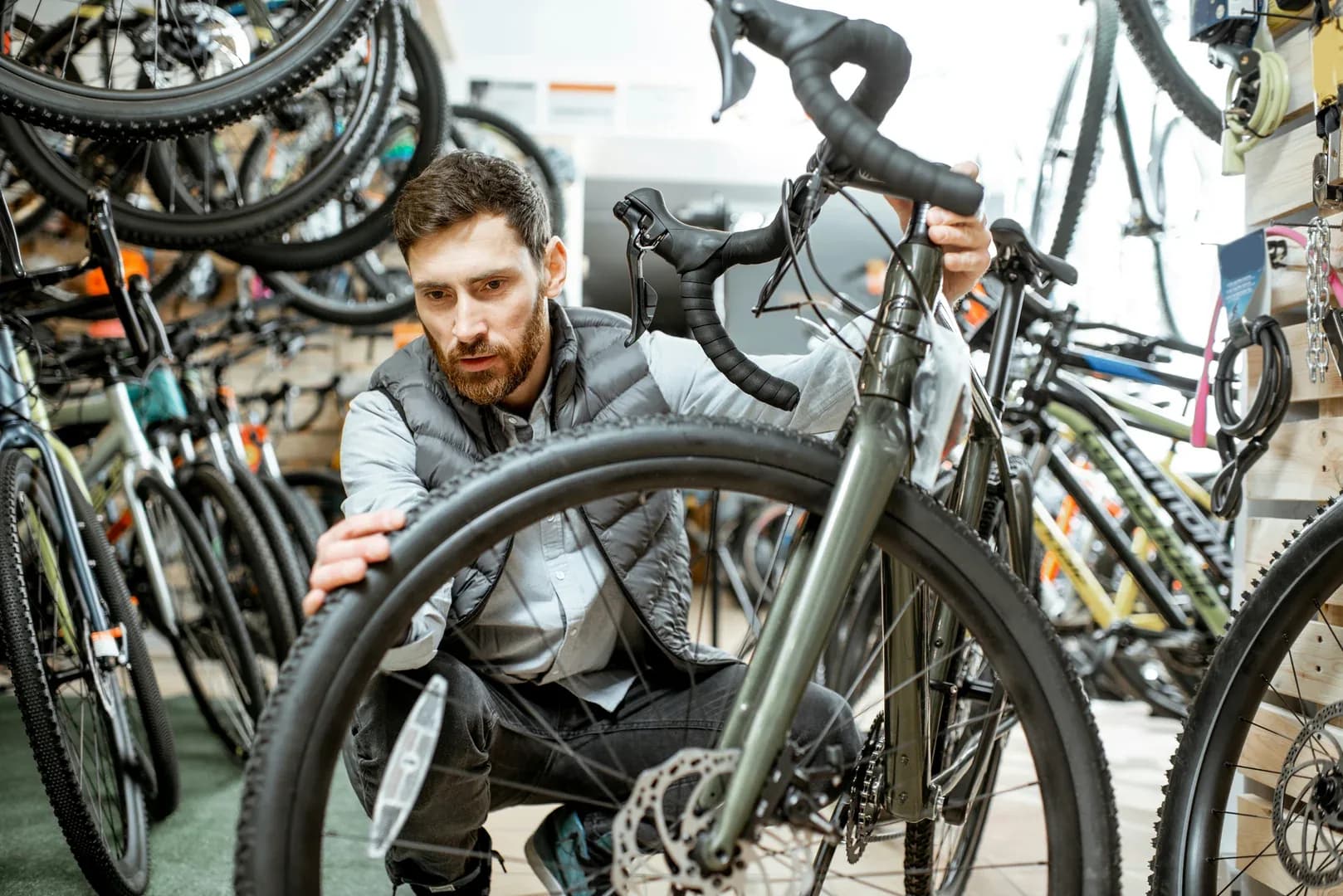
Bicycle theft insurance
Reliably protect your bicycle against theft – with nextsure's bicycle theft insurance. Comprehensive cover, concluded digitally and hassle-free.
Learn moreWhat makes a good bicycle insurance?
The honest answer first: there is no single best bicycle insurance. The best policy is the one that fits your bike, where you live and how you use it. The market is large enough to offer a solution for every case: in March 2026, Stiftung Warentest examined 112 tariffs from 45 providers, and 35 of them scored very good.[1] The range spans from pure theft protection to comprehensive (Kasko) cover that also pays out for accidents, vandalism and wear and tear.
Five criteria for recognising a good policy
- New-for-old replacement, meaning reimbursement of the amount an equivalent new bike would cost, over several years and for the entire bike including individual components. Top tariffs replace the new value with no time limit.[1]
- Cover for partial theft, meaning the theft of individual parts such as the saddle, wheels or battery. You get money even if only parts of the bike are gone.[1]
- Permanently attached parts such as tyres and the saddle are covered as well.[1]
- Straightforward lock requirements, with no prescribed lock models or minimum prices. Our guide to lock requirements explains what tariffs may ask for.
- No or a low deductible, meaning the amount you bear yourself in the event of a claim.
And the ADAC? Its bicycle insurance is one option among the 45 providers tested — that is all you can take from it. A blanket verdict, good or bad, falls short in this market. What the tariff costs and how it is structured, you can read in the guide to ADAC bicycle insurance. What matters is whether the tariff meets the five criteria above and fits your bike.
When is bicycle insurance worth it?
Yes, if your bike is valuable, you live in a major city or university town, and you regularly park it outdoors. Rather no, if an inexpensive bike sits securely in a locked basement. The numbers show why your place of residence carries so much weight: in 2025, around 214,300 bicycles were stolen according to the police crime statistics, and the average loss per theft reached a record high of 1,270 euros in 2025 according to the GDV.[2] Only 9.7 percent of thefts reported in 2024 were solved.[3]
| City | Bicycle thefts per 100,000 inhabitants (2024) |
|---|---|
| Göttingen | [1]2,147 |
| Berlin | [1]716 |
| Remscheid | [1]52 |
For your decision, the expected value helps — the statistical annual loss without insurance: bike value times the probability of theft at your place of residence. An example from Stiftung Warentest: a 1,000-euro bike with a 5 percent probability of theft per year means an expected value of 50 euros.[1] If the premium is below that, the policy pays off purely on paper; the reverse conclusion does not hold, however, because the expected value says nothing about whether your bike in particular gets stolen.[1]
Quick check: bike value, place of residence, parking spot. If this pattern applies to you, take a look at concrete tariffs and weigh the annual premiums against your statistical loss at your place of residence.
What does bicycle insurance cover?
Specialised bicycle insurance works with modules. The theft module applies when the bike is gone, the comprehensive (Kasko) module when it is damaged. Here is the cover at a glance:
| Module | Typical benefits |
|---|---|
| Theft module | Theft, burglary, looting, robbery and extortion |
| Comprehensive (Kasko) module | Destruction and damage, fall and accident damage, operating errors and improper handling, fire and explosion, storm, hail, flooding as well as wear and tear |
When it comes to reimbursement, two points decide the amount: is the current value paid — that is, the value the bike would have had as a used item at the time of theft — or the new value? And does the cover also apply abroad? Good tariffs pay the new value and apply worldwide.[2] Which benefits the bicycle insurance in the nextsure range includes in detail is summarised in the fact sheet.
Just as important are the exclusions, because not every loss is covered in every tariff. Typical limits are:
- Participation in sporting events and cycling training
- Downhill rides, rides in bike parks and jumps
- Damage caused by rust or oxidation
- Intentional acts and damage from commercial use
Wear-and-tear cover: what it provides and where it ends
Wear and tear is not included in every policy — it is usually part of the comprehensive (Kasko) module. In practical terms, wear-and-tear cover means that worn parts such as tyres, brakes and the chain are replaced, and for pedelecs the battery as well. The ADFC puts this benefit in perspective: the more kilometres you ride per year, the more wear you generate, and with high annual mileage a policy that also replaces wear parts pays off.[4] For occasional cyclists, by contrast, this module is often money spent on a benefit that barely applies.
Where wear-and-tear cover ends
- Damage that does not impair the bike's usability can be reduced in the event of a claim.
- A waiting period of 6 weeks applies — a period after signing the contract during which no cover exists — unless the bicycle was insured within 12 months of the purchase date (with proof).
- In addition to the sum insured, a precautionary top-up of 15 percent applies — a surcharge on the sum insured that absorbs price increases.
- The bike must be serviced according to the manufacturer's specifications, and the service intervals must be observed.
These limits are set out in the policy terms and conditions and differ from provider to provider. Read them before you sign, because this is exactly where it is decided whether wear-and-tear cover holds what the premium promises when it matters. For pedelecs, one more thing applies: battery and electronics damage is a chapter of its own, which we examine in detail in our guide to E-bike insurance.
How much does good bicycle insurance cost?
Premiums depend on the value of the bike, and with some providers also on your place of residence and the level of cover you choose.[4] The current Stiftung Warentest comparison from March 2026 gives you an idea of the scale:
| Example bike | Annual premium according to Stiftung Warentest |
|---|---|
| Trekking bike worth 1,500 euros, theft protection | [1]from around 30 euros |
| [1]E-cargo bike worth 6,000 euros | [1]from around 60 euros |
Almost anything is possible at the top end: the consumer advice centre Verbraucherzentrale found annual premiums between 48 and 370 euros for a typical 1,500-euro bike, depending on whether only theft is covered or repair costs and assistance benefits as well.[5] Which price factors move the premium further is explained in our guide to annual premiums.
A concrete example: the E-cargo bike from the table above, worth 6,000 euros, can be insured from around 60 euros a year.[1] That is the price of the cheapest theft protection, not of full cover with comprehensive (Kasko) cover and wear and tear. Set against this is the average theft loss mentioned above: a single theft costs more than a hundred times a monthly premium. Which provider ultimately offers the best value for money depends on your criteria. Compare the policies along the five criteria from the first section.
Conclusion and outlook: finding your best policy
Outlook, brief and open: policies, premiums and conditions change constantly, and how future rules or premiums will turn out cannot be reliably said today. So always check the terms and conditions as they stand at the time you take out the policy.
The general rule is: the best policy follows the bike's value, your place of residence and how you use it. The difference that decides your case is the combination of these three factors: a high-value bike that is regularly parked outdoors clearly argues for a policy with theft protection and comprehensive (Kasko) cover, while a cheap bike in a locked cellar argues against it. A general article cannot settle this individual case, because bike value, parking location and policy details would all have to be considered together.
The next step is a concrete comparison. The bicycle insurance in the nextsure range, offered by Hepster with andsafe Aktiengesellschaft as the risk carrier, covers destruction, damage, operating errors, natural hazards and wear and tear worldwide — and in the extended variant, additionally theft, burglary and robbery. You compare the policies transparently and complete everything fully digital. Compare the concrete terms and conditions for your bike now.
Frequently asked questions
- Which is the best bicycle insurance?
A test result does not replace your own decision: of the 112 tariffs from 45 providers tested by Stiftung Warentest, 35 scored very good. Which of them suits you depends on where and how you use your bike. So check criteria such as new-for-old replacement, partial theft and wear-and-tear cover.
- When is bicycle insurance worth it?
It tends to be worth it if you own an expensive bike, face a theft risk where you live and often leave it parked outdoors. How high the risk and the average claim turn out to be, we backed up with current figures earlier in the article. Rule of thumb: if the annual premium is below your statistical loss, the protection pays off. For a cheap bike that only sits in the basement, it usually is not worth it.
- What does good bicycle insurance cost?
It depends on the bike and the scope of cover. Good theft protection for a trekking bike worth 1,500 euros starts at around 30 euros a year, for a cargo e-bike worth 6,000 euros at around 60 euros. With more comprehensive modules such as wear-and-tear cover, annual premiums between 48 and 370 euros are possible for the trekking bike, according to Verbraucherzentrale.
- Is the ADAC bicycle insurance good?
The ADAC tariff was one of 45 providers in the Stiftung Warentest comparison, in which 35 tariffs scored very good. A blanket verdict is therefore not possible: whether the tariff is good for you depends on your bike's value, where you live and the benefits you need, such as wear-and-tear cover or partial theft. Check the terms and conditions in each individual case instead of relying on the brand name.
- What does bicycle insurance cover?
Depending on the module: theft protection covers theft, burglary and robbery, sometimes also partial theft. Comprehensive (Kasko) cover additionally extends to fall and accident damage, vandalism, operating errors, fire and natural hazards as well as wear and tear. Worldwide protection and new-for-old or current value replacement are common. Many tariffs exclude sporting events, downhill and bike park rides and jumps.
- Is wear and tear included in every bicycle insurance policy?
No. Pure theft protection does not replace worn-out parts. Wear-and-tear cover is usually part of a comprehensive (Kasko) module and is worthwhile above all with high mileage, because tyres, brakes and the chain then wear out faster. Limits remain: damage that does not impair usability can be reduced, and the typical exclusions from the main section also apply here.
- Isn't my household insurance enough for my bike?
Usually not. If you often leave your bike outside, you are better protected with a separate bicycle insurance, because household insurance by default only covers burglary from locked rooms.
Sources
- [1]test.de
- [2]gdv.de
- [3]bka.de
- [4]adfc.de
- [5]verbraucherzentrale.de
Conclude directly online
Verified partner tariffs at no extra cost. The button takes you straight to the provider's calculator.
 Hepster
Bicycle insurance
Worldwide cover for your bicycle against damage and wear, with theft also covered in the extended variant.
- Coverage area:
- worldwide
- Waiting period:
- 6 weeks (waived for bikes up to 12 months old from purchase)
- Minimum term:
- 3 months (monthly subscription)
- Destruction and damage, including through operating errors
- Fire, explosion, storm, hail, flooding, avalanches, landslides
- Wear and tear on the bicycle is covered
- Extended variant: theft, burglary, robbery, and looting
- A 15% contingency allowance on top of the sum insured
Key exclusions
- Carbon components (CFRP) without a separate agreement
- Downhill riding, bike parks, sporting events, and jumps
- E-bikes and motor vehicles subject to mandatory insurance
- Commercial use
Trusted Shops: 4,5/5 „Sehr gut“ (2.600 Bewertungen)
hepster insgesamt (Anbieterbewertung, alle Versicherungen)
Benefits may be reduced for theft if the bike was not locked to a fixed object as customary; notice period 3 business days before the end of the billing period. Insurer: andsafe Aktiengesellschaft
Fact sheet: benefits, exclusions and waiting periods in detail
All details are taken from the provider's linked product page and the contract documents (IPID/policy conditions) published there; the insurer's documents prevail. Premiums, benefits and the insurance product itself may change – please verify the details directly with the partner before signing up; only the information provided there is binding.
Information last updated: July 2026 · Source: provider product information (IPID/policy conditions)